How an Order Management System Improves Inventory Management and Order Fulfillment

Summary
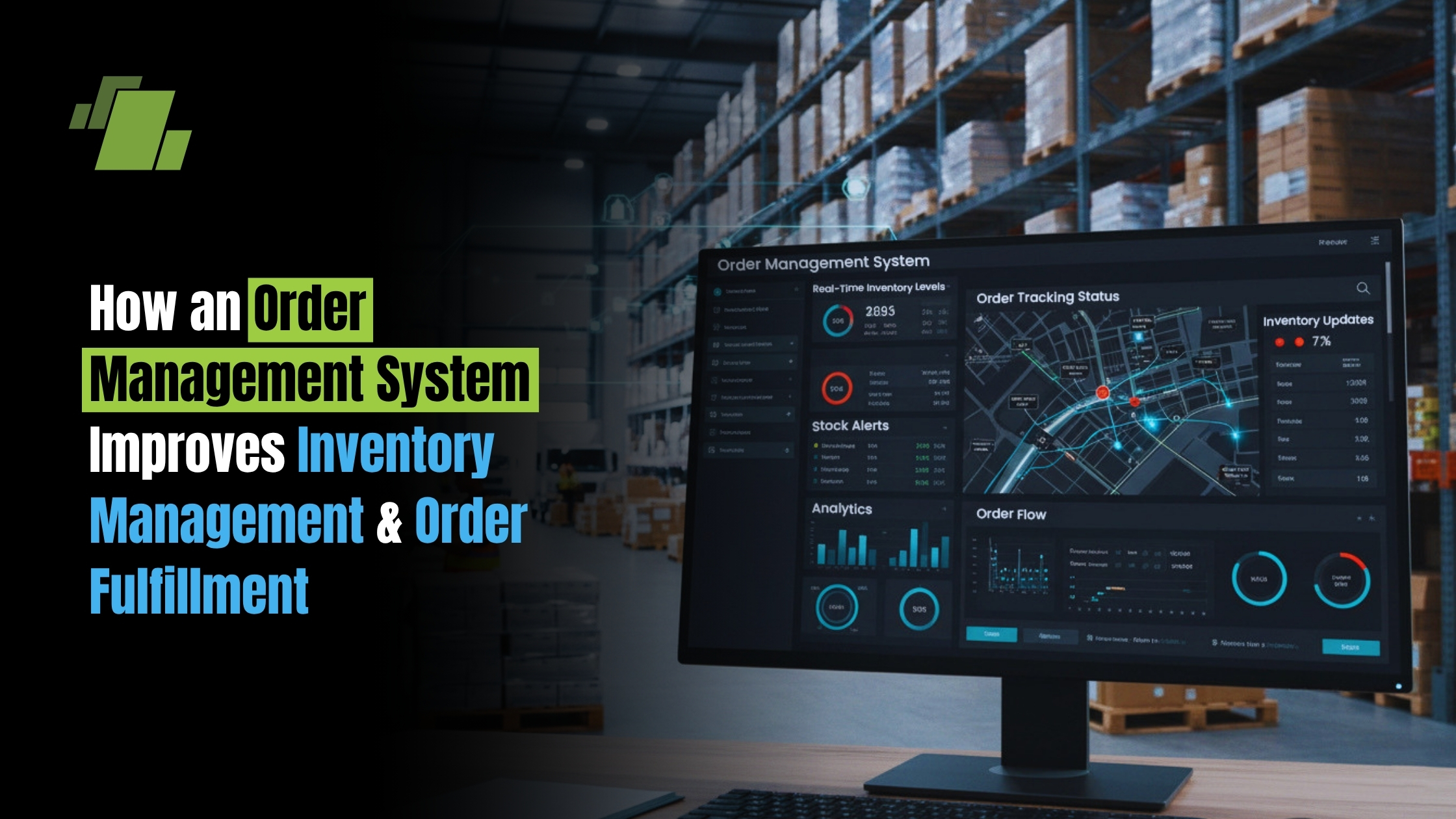
An order management system (OMS) is a powerful software solution that automates the entire order lifecycle from order capture and validation to intelligent routing, fulfillment, and returns processing. By providing real-time inventory visibility, multi-channel order integration, and seamless communication across sales, inventory, and fulfillment teams, an OMS enhances operational efficiency and delivers a superior customer experience. This article explores the key benefits, features, and implementation considerations of modern OMS platforms, helping businesses meet evolving customer expectations and scale effectively.
Key Takeaways
- An order management system (OMS) helps to automate the entire order lifecycle, from order capture to fulfillment and returns, ensuring accuracy and efficiency.
- OMS provides real-time visibility into inventory availability across multiple sales channels, preventing stockouts and overselling.
- By integrating sales channels, inventory management, and fulfillment processes, an OMS enhances customer satisfaction through timely delivery and transparent order tracking.
- Automated workflows reduce manual processes and human error, speeding up order processing and improving operational efficiency.
- Distributed order management allows businesses to fulfill orders from the optimal location, whether warehouses, retail stores, or third-party logistics partners.
- Modern OMS solutions feature cloud-native architecture, AI-powered forecasting, and API-first integration for scalability and seamless connectivity.
- Implementing an OMS leads to measurable benefits such as reduced order processing time, improved inventory accuracy, and increased customer loyalty.
- Choosing the right OMS helps businesses meet evolving customer expectations, streamline operations, and support sustainable business growth.
Introduction
Order management software is a computer software system that automates the entire order lifecycle from the moment a customer places an order through fulfillment, shipping, and returns. It connects sales channels, inventory management, and fulfillment processes into one unified platform, enabling businesses to manage orders accurately, reduce human error, and ensure timely delivery without manual processes or disconnected tools.
Finally, an Order Management System Built for Modern Retailers and Distributors
If you’re struggling with order processing delays, inventory mismatches, and customer dissatisfaction, you’re not alone. Most retailers and distributors waste hours every week reconciling data across spreadsheets, manually updating inventory levels, and chasing down order status information scattered across multiple systems.
The reality is harsh: customers expect fast, accurate fulfillment. When your order management process relies on disconnected tools and manual data entry, you’re setting yourself up for stockouts, shipping errors, and declining customer loyalty.
Managing various customer demands from differing sources is a huge logistical challenge, particularly if a retailer is using different systems across each channel.
Order management software eliminates that frustration. It streamlines the sales process from order creation to fulfillment, helping you fulfill orders faster, maintain real-time inventory visibility across all sales channels, and deliver the positive customer experience that drives business growth all without complex implementation or high technical costs.
Whether you operate in store locations, online marketplaces, or both the business channels simultaneously, the right order management system transforms chaos into efficient processes that scale with your operations.
Why Order Management Software Works
Here’s what makes order management software different from everything else you’ve tried:
- Real-Time Inventory Synchronization – Gain visibility into inventory availability across distribution centers, warehouses, and retail locations instantly. No more overselling or disappointing customers with stockouts.
- Automated Order Processing – Eliminate manual data entry that causes human error. Orders flow automatically from capture through fulfillment without staff intervention.
- Automated Invoice Creation and Accounting Integration – Automatically create invoices for each order and seamlessly integrate with your accounting functions, streamlining billing and financial reconciliation.
- Multi-Channel Order Management – Accept orders from multiple sales channels your website, Amazon, eBay, POS systems, call centers and manage orders from a single dashboard.
- Streamlined Returns and Refunds – Process returns efficiently with automated workflows that update inventory levels, accounts receivable, and customer account information simultaneously.
- Advanced Analytics and Reporting – Access robust reporting highlighting sales patterns, key performance indicators, and business intelligence that drives smarter decisions.
- Seamless Integration Capabilities – Connect with your existing enterprise resource planning systems, warehouse management software, and customer relationship management platforms through API-first design.
An OMS can also help businesses manage order exceptions effectively by providing alerts for orders at risk of missing promise dates.
Instead of forcing you to manually reconcile order data across disconnected systems, order management software gives you a unified platform where the sales and fulfillment process operates as one coordinated workflow. Customer orders flow smoothly from entry to delivery services, with every team member accessing the same accurate customer data.
How Order Management Software Works
Getting results doesn’t require complexity. The order management workflow is straightforward and designed for immediate impact.
Step 1: Order Capture and Validation
When a customer places an order through any of your sales channels whether online, in store, through call centers, or via third party logistics partners the order management system OMS automatically captures and validates the order entry.
The system performs real-time inventory availability checks, verifies pricing, validates customer information against your customer database, and flags potential issues before processing. This eliminates the frustration of accepting orders you can’t fulfill and ensures every order starts on solid footing.
Step 2: Intelligent Order Routing and Processing
Once validated, smart algorithms route orders to the optimal fulfillment center based on inventory levels, shipping costs, and delivery requirements. Whether you’re shipping from distribution centers, retail locations, or drop-ship suppliers, the system identifies the best source to ensure timely delivery while minimizing fulfillment costs.
Automated workflows coordinate picking, packing, and shipping generating labels, creating invoices, and updating all connected systems without manual intervention. Your customer service team gains instant access to order status, eliminating guesswork and reducing support tickets.
Step 3: Delivery Tracking and Customer Communication
Real-time visibility extends to your customers. Automated notifications keep buyers informed at every stage order confirmation, shipping updates, delivery confirmation. Customers can track orders through self-service portals, reducing inbound support requests.
When returns happen, the system processes them seamlessly updating inventory control, issuing refunds, and maintaining complete customer order history. This end-to-end transparency builds customer loyalty and drives repeat purchases.
Distributed Order Management: Coordinating Orders Across Channels and Locations
In today’s fast-paced retail and distribution environment, customers expect a seamless experience whether they shop online, in store, or through any of your multiple sales channels. Distributed Order Management (DOM) is the backbone that makes this possible, orchestrating the entire order management process across all your locations and platforms.
With distributed order management, your business gains the flexibility to route customer orders to the most efficient fulfillment source be it a warehouse, retail store, or third-party partner. This ensures that every order is processed quickly and accurately, regardless of where it originates. For example, an order placed online can be fulfilled from the nearest in store location if inventory is available, reducing shipping times and costs while meeting customer expectations for fast delivery.
DOM systems provide real-time visibility into inventory and order status across all channels, allowing you to manage orders holistically rather than in isolated silos. This unified approach eliminates the risk of overselling, minimizes stockouts, and enables you to fulfill orders from the optimal location every time. As a result, your business can confidently accept orders from multiple sales channels, knowing that the right products will reach your customers on time.
By integrating distributed order management into your operations, you not only streamline the order management process but also deliver the consistent, reliable service that today’s customers expect no matter how or where they choose to shop.
What Makes Modern Order Management Different
Most legacy systems force extensive customization and require significant technical expertise. Modern order management solutions take a fundamentally different approach.
- Cloud-Native Architecture – Scales instantly with business growth. No server maintenance, no capacity planning, no IT headaches. Access your data security-protected system from anywhere.
- AI-Powered Demand Forecasting – Machine learning analyzes historical sales patterns and customer demands to predict inventory needs, preventing stockouts and overstock situations before they occur.
- API-First Integration Design – Connect seamlessly with e-commerce platforms, enterprise resource planning systems, warehouse management software, and customer service systems without custom development projects.
- Mobile Accessibility – Your team gains real time visibility into order status, inventory positions, and customer service orders from any device. Decisions happen faster when data travels with you.
If legacy systems offer complexity, modern order management delivers clarity. If traditional approaches require months of implementation, cloud solutions deploy in weeks. If old systems lock you into rigid workflows, distributed order management provides flexibility to adapt as customer expectations evolve.
Industries Transforming with Order Management Software
Order management software drives results across diverse sectors. Here’s how different industries leverage these capabilities:
Retail Businesses managing both online and in store sales use order management to unify inventory visibility, enable ship-from-store fulfillment, and deliver consistent customer experiences regardless of purchase channel.
E-Commerce Companies scaling across multiple marketplaces consolidate orders from Amazon, Shopify, eBay, and proprietary websites into a single dashboard eliminating overselling and streamlining processing orders at scale.
Distributors handling complex B2B order requirements implement approval workflows, customer-specific pricing, credit term management, and batch order processing that enterprise resource planning systems alone can’t deliver.
Manufacturers coordinating direct sales and channel partners gain control over finished goods inventory while maintaining visibility into supply chain dynamics and partner order fulfillment processes.
Healthcare Providers managing medical supply orders ensure regulatory compliance, lot tracking, and chain of custody requirements while maintaining the speed that patient care demands.
Restaurant Chains coordinating inventory across locations optimize food supply orders, reduce waste, and synchronize inbound deliveries with demand patterns all while integrating with POS and delivery services.
Whether you’re an online only retailer or operate dozens of physical locations, the right order management system important to your operations exists.
Proven Benefits of Order Management Software
Results speak through measurable outcomes, not marketing claims.
Organizations implementing modern order management consistently report:
- 75% Reduction in Order Processing Time – Automated workflows eliminate manual steps. What took hours happens in minutes.
- Error Rate Drops from 5-8% to Under 2% – Removing manual data entry eliminates the human error that causes shipping mistakes, wrong items, and customer dissatisfaction.
- Inventory Accuracy Improvements of 38% – Real-time synchronization across all channels means your stock counts match reality, reducing both stockouts and excess inventory.
- ROI Achieved in Under 6 Months – Forrester research on leading order management platforms documents payback periods under six months with three-year ROI exceeding 167%.
- Enhanced Customer Experience – On-time delivery rates improve dramatically when systems automatically select optimal fulfillment locations and track orders through delivery.
- Scalable Operations Without Proportional Headcount – Process 10x the orders without hiring 10x the staff. Automation handles volume; your team handles exceptions.
Better cash flow follows naturally. When the order-to-cash cycle shortens and accounts receivable timing improves, your business operations gain financial flexibility to pursue growth opportunities.
“After implementing order management software, our processing time dropped by 70% and customer satisfaction scores increased by 25% within the first quarter.” – Operations Director, Multi-Location Retail Chain
“We eliminated three full-time positions worth of manual order entry and redirected those team members to higher-value customer service work.” – E-Commerce Manager, Consumer Goods Distributor
Why Choose LOGIC ERP for Order Management
LOGIC ERP brings three decades of focused expertise to your order management challenges.
30+ Years of Experience – We’ve solved order management problems since before e-commerce existed. That depth of experience translates into software that anticipates real-world complications others overlook.
Integrated Platform – Our order management solution connects natively with ERP, POS, and inventory management modules. No integration headaches, no data silos, no reconciliation nightmares.
Multi-Store and Multi-Location Management – Whether you operate two locations or two hundred, our distributed order management system provides centralized control with location-level flexibility.
Deployment Flexibility – Choose cloud deployment for rapid implementation and automatic updates, or on-premise installation for maximum control. Both options deliver the same powerful capabilities.
Indian Market Expertise – We understand regional compliance requirements, local business practices, and the specific challenges retailers and distributors face in Indian markets.
Proven Implementation Track Record – Thousands of successful deployments demonstrate our ability to deliver results, not just software.
Order Management Software Plans
Choose the plan that matches your current needs with room to grow.
Starter Plan – For Growing Businesses
Perfect for businesses ready to move beyond spreadsheets and disconnected systems.
- Core order management and inventory tracking
- Multi-channel order processing from unified dashboard
- Basic reporting and analytics
- Customer order history and account management
- Email and chat support
Professional Plan – For Scaling Operations
Designed for businesses experiencing growth and complexity.
- Everything in Starter plus:
- Advanced inventory optimization and demand forecasting
- Multi-location fulfillment and drop-shipping support
- Enhanced business intelligence and custom reporting
- API access for custom integrations
- Priority support with dedicated account manager
Enterprise Plan – For Large Operations
Custom solutions tailored to complex business requirements.
- Everything in Professional plus:
- Custom integrations with existing ERP and e-commerce systems
- Advanced automation and workflow customization
- Dedicated implementation team
- Custom training and ongoing consultation
- SLA-backed support with guaranteed response times
Contact our team for custom pricing based on your specific order volumes and integration requirements.
LOGIC ERP new voice-based order feature allows distributors’ sales teams to place orders effortlessly using their mobile app. No typing, no errors—just speak in your local language, and the app will save the order instantly. The order is then seamlessly retrieved in LOGIC ERP without any manual intervention. Whether you’re ordering medicines, FMCG products, or any other inventory, this feature ensures a smooth and error-free experience.
Read More: Revolutionize Order Management with LOGIC ERP’s Voice-Based Order Feature
Why Choose LOGIC ERP Order Management Software?
Choosing the right order management system is crucial for businesses aiming to streamline their order processing, improve inventory management, and enhance customer satisfaction. LOGIC ERP offers a comprehensive, cloud-native order management software solution designed to meet the needs of modern retailers, distributors, and e-commerce businesses.
Seamless Integration Across Sales Channels
LOGIC ERP’s order management system OMS consolidates orders from multiple sales channels including websites, brick-and-mortar stores, call centers, and third-party marketplaces into a single, easy-to-use platform. This unified approach provides real-time inventory visibility, ensuring accurate order fulfillment and preventing stockouts or overselling.
Automated Order Processing and Fulfillment
Our OMS automates the entire order management process, from order capture and validation to intelligent routing and fulfillment. By eliminating manual processes and reducing human error, LOGIC ERP helps businesses accelerate order processing times and reduce fulfillment costs while maintaining high service levels.
Advanced Inventory Management and Visibility
Gain complete control over your inventory with real-time synchronization across distribution centers, warehouses, retail locations, and third-party logistics partners. LOGIC ERP’s order management software enhances inventory availability tracking, enabling businesses to route orders efficiently and meet customer expectations for timely delivery.
Robust Reporting and Analytics
Make data-driven decisions with advanced business intelligence tools that provide insights into sales patterns, key performance indicators, and fulfillment costs. LOGIC ERP’s reporting capabilities empower your team to optimize the order fulfillment process and drive sustainable business growth.
Flexible and Scalable Cloud-Based Solution
Built on a cloud-native, API-first architecture, LOGIC ERP’s order management system scales effortlessly with your business. Whether you operate online, in store, or across multiple sales channels, our OMS adapts to your evolving needs, supporting distributed order management and seamless integration with enterprise resource planning, warehouse management, and customer relationship management systems.
Enhance Customer Experience and Satisfaction
By providing accurate order tracking, timely delivery, and efficient returns processing, LOGIC ERP helps businesses exceed customer expectations and build lasting loyalty. Our order management software empowers your customer service team with real-time order status and customer data, enabling responsive and personalized support.
Choosing LOGIC ERP means investing in a proven order management solution that drives operational efficiency, reduces manual processes, and supports business growth, allowing you to focus on delivering a superior customer experience across all sales channels.
Conclusion
If you’re ready to stop fighting with disconnected systems and start delivering the customer experience that builds loyalty, the next step is simple. LOGIC ERP’s order management solution eliminates the frustration of manual processes, inventory mismatches, and fulfillment delays. Join thousands of retailers and distributors who’ve transformed their order fulfillment processes with software built for real business operations.
Call at +91-73411-41176 or send us an email at sales@logicerp.com to book a free demo for order management software today!
Frequently Asked Questions
1. What is order management software and how does it work?
Order management software is a computer software system that automates the entire order lifecycle from order capture through fulfillment and returns. It works by connecting your sales channels, inventory management, and fulfillment processes into one platform that tracks orders in real time, updates inventory automatically, and routes orders to optimal fulfillment locations.
2. How quickly can businesses see ROI from order management systems?
Most businesses see measurable ROI within six months of implementation. Documented case studies show payback periods under six months with three-year returns exceeding 167%. The speed of results depends on your current order volume, complexity, and how effectively you implement automated workflows.
3. Do we need technical expertise to implement order management software?
No. Modern cloud-based order management solutions are designed for business users, not IT specialists. Implementation typically requires configuration rather than custom development. LOGIC ERP provides guided setup, training, and ongoing support to ensure your team succeeds without technical backgrounds.
4. What features should an order management system include?
Essential features include real-time inventory synchronization, multi-channel order capture, automated order routing, customer notifications, returns processing, and reporting dashboards. Advanced features to consider include AI demand forecasting, intelligent fulfillment optimization, and seamless ERP integration.
5. How does order management software integrate with existing ERP systems?
Modern order management platforms use API-first architecture to connect with enterprise resource planning systems, sharing customer data, inventory levels, pricing, and order information bidirectionally. This ensures your financial systems, inventory control, and order processing remain synchronized without manual reconciliation.
6. Can order management software handle multi-channel sales operations?
Absolutely. Multi-channel capability is fundamental to modern order management. Systems consolidate orders from e-commerce platforms, marketplaces like Amazon and eBay, POS systems, call centers, and B2B portals into a single dashboard while maintaining accurate inventory visibility across all channels.
7. What industries benefit most from order management software?
Retail, e-commerce, distribution, manufacturing, healthcare, and food service industries see the greatest benefits. Any business processing orders across multiple channels, managing inventory across locations, or requiring coordination between sales support product information and fulfillment operations gains significant value.
8. Is cloud-based order management more effective than on-premise solutions?
Cloud-based solutions offer faster implementation, lower upfront costs, automatic updates, and better scalability. On-premise solutions provide more control for highly regulated industries or organizations with specific data security requirements. Many businesses find cloud deployment delivers faster time-to-value with lower total cost of ownership.
9. Define order management system (OMS)?
An order management system (OMS) is a software application that automates the entire order lifecycle from order capture and validation to fulfillment, shipping, and returns. It integrates sales channels, inventory management, and fulfillment processes into one unified platform to ensure accuracy, efficiency, and timely delivery.
10. How does an OMS improve customer satisfaction?
By providing real-time inventory visibility, accurate order tracking, and faster fulfillment, an OMS enhances the customer experience. It reduces errors, prevents stockouts, and enables seamless returns, helping businesses meet and exceed customer expectations.
11. Can an OMS handle orders from multiple sales channels?
Yes. A modern order management system consolidates orders from various sales channels, including websites, brick-and-mortar stores, call centers, and third-party marketplaces, allowing businesses to manage all orders from a single dashboard with full inventory visibility.
12. What are the key benefits of using an order management system?
Key benefits include increased operational efficiency through automation, improved inventory control, streamlined order fulfillment processes, reduced manual errors, enhanced customer loyalty, and the ability to scale operations without proportional increases in staff.
13. How does distributed order management work?
Distributed order management (DOM) enables businesses to route orders to the most efficient fulfillment source whether warehouses, retail stores, or third-party logistics partners based on real-time inventory availability and delivery requirements, ensuring faster and cost-effective order fulfillment.
14. Is an OMS suitable for both online-only retailers and multi-location businesses?
Absolutely. OMS platforms are designed to support online-only retailers as well as businesses operating multiple physical locations, providing centralized control over inventory, orders, and fulfillment across all channels.
15. How does an OMS integrate with other business systems?
Modern OMS solutions feature API-first architecture that allows seamless integration with enterprise resource planning (ERP), warehouse management systems (WMS), customer relationship management (CRM), and accounting software, enabling unified data flow and eliminating manual data entry.
16. What features should I look for in the right order management system?
Look for real-time inventory synchronization, multi-channel order capture, intelligent order routing, automated invoice creation, returns management, advanced analytics and reporting, and seamless integration capabilities to support efficient sales and fulfillment processes.
17. How quickly can I expect ROI from implementing an OMS?
Many businesses see measurable return on investment within six months of implementing an order management system. Benefits such as reduced order processing time, improved inventory accuracy, and enhanced customer satisfaction contribute to faster payback.
18. Can an OMS help reduce fulfillment costs?
Yes. By optimizing order routing to the best fulfillment locations and automating manual processes, an OMS reduces shipping expenses, labor costs, and errors, ultimately lowering overall fulfillment costs while maintaining high service levels.
19. What is the fulfillment process in an order management system?
The fulfillment process refers to the complete sequence of steps involved in processing a customer order, from receiving the order to picking, packing, shipping, and delivering it to the customer. An efficient fulfillment process ensures timely delivery and customer satisfaction.
20. How does in store inventory visibility improve order management?
In store inventory visibility allows businesses to see real-time stock levels across physical retail locations. This visibility helps in accurately fulfilling orders from the nearest store, reducing shipping times and improving customer experience.
21. What role does a customer database play in order management?
A customer database stores essential customer information, including contact details and order history. It enables personalized service, efficient order processing, and supports customer relationship management efforts.
22. How does a distributed order management system benefit multi-channel sales?
A distributed order management system coordinates orders across multiple sales channels and fulfillment locations. It optimizes inventory allocation and order routing, ensuring faster fulfillment and consistent customer experience.
23. What is customer relationship management in the context of order management?
Customer relationship management (CRM) involves managing interactions with customers to enhance satisfaction and loyalty. Integration of CRM with order management systems allows seamless access to customer data for better service and targeted marketing.
24. How does distributed order management enhance the overall customer experience?
Distributed order management enables businesses to fulfill orders from the most efficient locations, providing faster delivery options and real-time order tracking, which leads to improved customer experience.
25. Why is inventory control important in order management?
Inventory control ensures accurate tracking of stock levels to prevent stockouts or overstock situations. Effective inventory control supports timely order fulfillment and reduces fulfillment costs.

Author
Gurbir Singh
Co-founder & Managing Director | LOGIC ERP Solutions Pvt. Ltd.
With 30+ years of experience in the tech industry, I took the helm of technology & product development, ensuring LOGIC ERP’s continuous innovation & leadership in the evolving tech landscape.