How Multi-Location Businesses Can Simplify e-Way Bill Management

Introduction
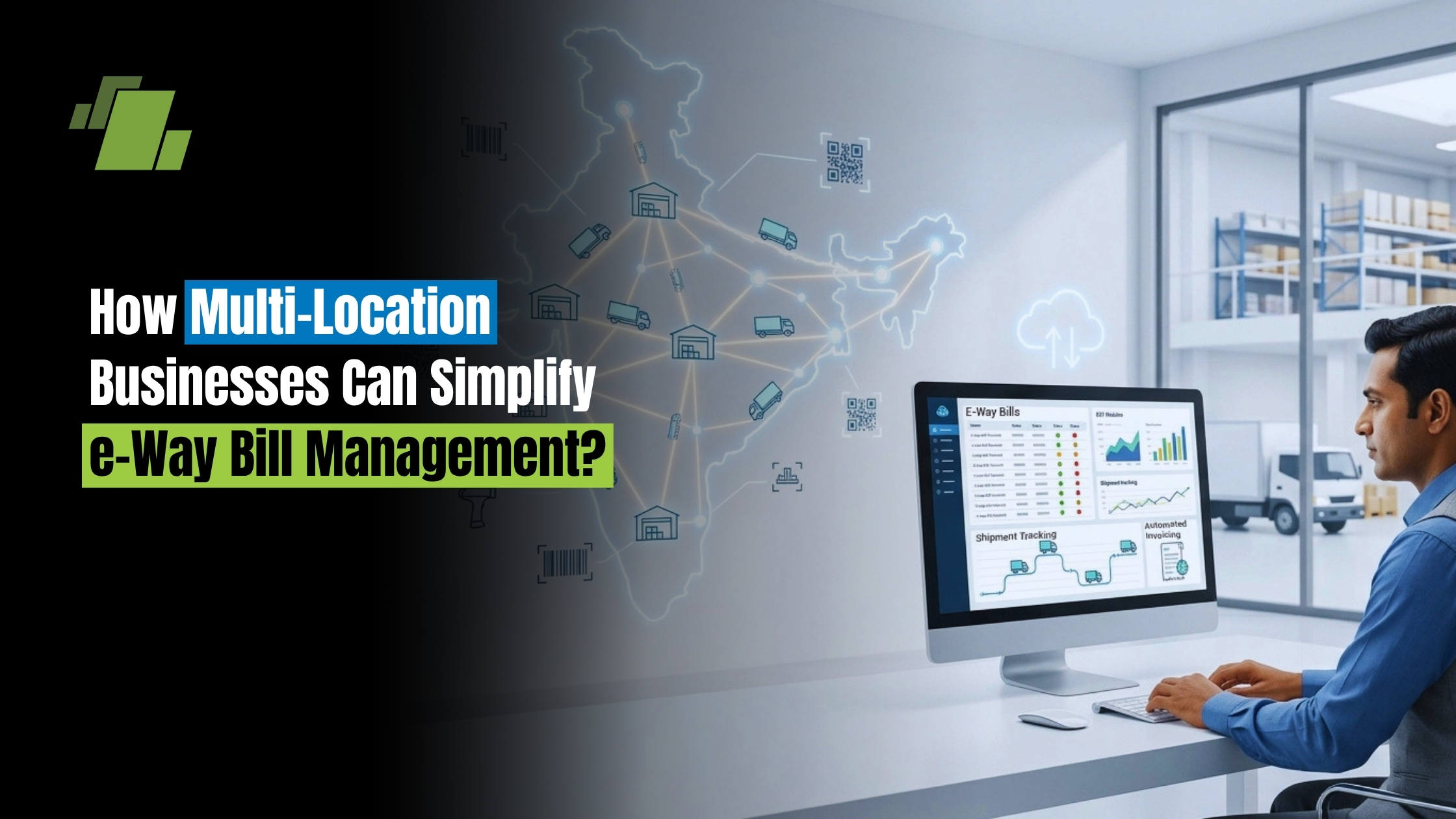
Managing e-Way Bills is already a complex task but when a business operates across multiple locations, warehouses, or states, the complexity increases significantly. Under India’s GST framework, an e-Way Bill is mandatory for the movement of goods exceeding ₹50,000, making it a critical compliance requirement for logistics-heavy businesses.
For multi-location organizations, challenges such as decentralized data, inconsistent processes, and lack of real-time visibility often lead to errors, delays, and penalties. However, with the right combination of automation, centralized systems, and strategic planning, businesses can simplify e-Way Bill management and improve operational efficiency.
What is an e-Way Bill and Why It Matters for Multi-Location Businesses
Definition and Purpose
An e-Way Bill is an electronic document generated on the GST portal that tracks the movement of goods from one place to another. It ensures transparency and helps prevent tax evasion by providing authorities with real-time shipment data.
Key Components
An e-Way Bill contains essential information such as:
- Invoice or challan details
- Consignor and consignee information
- Transporter ID and vehicle number
- Place of delivery
These details must be accurate, as any mismatch can result in penalties or shipment delays.
Compliance Importance
For businesses operating across multiple locations, compliance is non-negotiable. Failure to generate or carry a valid e-Way Bill can result in fines, goods detention, and operational disruptions. Ensuring timely and accurate generation is critical to maintaining smooth logistics.
Key Challenges Faced by Multi-Location Businesses
Decentralized Data Management
Different branches often operate independently, leading to fragmented data. This makes it difficult to maintain consistency and increases the risk of errors in e-Way Bill generation.
High Volume of Transactions
Multi-location businesses handle a large number of shipments daily. Managing such volume manually is time-consuming and prone to mistakes.
Manual Errors & Duplication
Manual data entry often results in duplicate entries, incorrect details, and compliance issues. Even small errors can lead to penalties.
Lack of Real-Time Visibility
Without a centralized system, tracking the status of shipments and e-Way Bills becomes difficult. This can cause delays and miscommunication.
Complex Logistics (Multi-Vehicle Movement)
In many cases, a single shipment is transported using multiple vehicles. Managing e-Way Bills for such scenarios requires additional coordination and accuracy.
Latest e-Way Bill Updates (2025–2026) You Must Know
E-Way Bill 2.0 System
The introduction of dual portals ensures higher system availability and reduces downtime, allowing businesses to generate e-Way Bills without interruptions.
Mandatory Multi-Factor Authentication (MFA)
To enhance security, businesses must now use multi-factor authentication while accessing the portal. This reduces the risk of unauthorized access.
Stronger Enforcement & Compliance Checks
Authorities have implemented stricter validation rules, making it essential for businesses to ensure data accuracy and compliance at every step.
Proven Strategies to Simplify e-Way Bill Management
1. Centralized e-Way Bill Management System
A centralized system allows businesses to manage e-Way Bills from a single dashboard. This ensures consistency, reduces duplication, and improves control across all locations.
2. Integration with ERP & Accounting Software
Integrating e-Way Bill systems with ERP software enables automatic data transfer from invoices, eliminating manual entry and reducing errors.
3. Automation & API Integration
Automation tools and APIs can generate e-Way Bills in real time as soon as invoices are created. This significantly improves efficiency and reduces delays.
4. Use Consolidated e-Way Bills (EWB-02)
For multiple shipments transported in a single vehicle, consolidated e-Way Bills can simplify documentation and reduce administrative workload.
5. Multi-Vehicle Feature Optimization
This feature helps manage shipments split across multiple vehicles, ensuring compliance even in complex logistics scenarios.
6. Standard Operating Procedures (SOPs)
Establishing SOPs ensures that all branches follow the same process for e-Way Bill generation, reducing inconsistencies and errors.
7. Real-Time Tracking & Alerts
Using systems that provide real-time tracking and alerts helps businesses avoid expired e-Way Bills and ensures timely updates.
Technology Stack for Efficient e-Way Bill Management
Cloud-Based GST Platforms
Cloud solutions allow businesses to access e-Way Bill data from anywhere, making it easier to manage multiple locations.
Mobile App Integration
Mobile apps enable on-the-go generation and tracking of e-Way Bills, improving flexibility and responsiveness.
AI & Analytics for Compliance
Advanced analytics tools can identify patterns, predict errors, and provide insights for better decision-making and compliance.
Benefits of Simplified e-Way Bill Management
Simplifying e-Way Bill management offers several advantages:
- Faster movement of goods
- Reduced compliance risks
- Lower operational costs
- Improved transparency
- Better coordination across locations
These benefits directly contribute to improved business performance and customer satisfaction.
Best Practices for Multi-Location Businesses
To ensure smooth e-Way Bill management, businesses should:
- Conduct regular compliance audits
- Train employees on GST rules
- Automate reconciliation processes
- Maintain accurate and updated data
- Stay informed about regulatory changes
Implementing these practices helps minimize risks and improve efficiency.
Common Mistakes to Avoid
Many businesses face issues due to avoidable mistakes such as:
- Entering incorrect vehicle numbers
- Allowing e-Way Bills to expire
- Generating duplicate bills
- Not integrating systems properly
Avoiding these errors is crucial for maintaining compliance and avoiding penalties.
Future Trends in e-Way Bill Management
The future of e-Way Bill management is driven by technology. Trends such as AI-powered compliance systems, blockchain-based logistics tracking, and fully automated tax ecosystems are expected to transform the way businesses handle GST compliance.
Businesses that adopt these innovations early will gain a competitive advantage.
Conclusion
For multi-location businesses, simplifying e-Way Bill management is not just about compliance, it’s about efficiency, scalability, and growth. By adopting centralized systems, leveraging automation, and following best practices, businesses can reduce errors, save time, and ensure seamless logistics operations.
A proactive approach to e-Way Bill management will help organizations stay compliant while focusing on core business growth. Call at +91-73411-41176 or send us an email at sales@logicerp.com to book a free demo today!
Frequently Asked Questions (FAQs)
1. What is the minimum value for generating an e-Way Bill?
An e-Way Bill is required when the value of goods being transported exceeds ₹50,000.
2. Can multiple locations generate e-Way Bills under one GSTIN?
Yes, multiple branches under the same GSTIN can generate e-Way Bills, but centralized control is recommended for better management.
3. How can businesses automate e-Way Bill generation?
Businesses can automate the process by integrating their ERP or accounting software with the GST e-Way Bill system using APIs.
4. What happens if an e-Way Bill expires?
If an e-Way Bill expires before goods reach their destination, it can lead to penalties and delays. Extensions must be applied when necessary.
5. Is e-Way Bill required for intra-state movement?
It depends on state-specific rules. Some states require it even for intra-state transportation.
6. What is a consolidated e-Way Bill?
A consolidated e-Way Bill combines multiple individual e-Way Bills into a single document for ease of transport.
7. How does the multi-vehicle option work?
The multi-vehicle option allows businesses to update vehicle details when goods are transferred from one vehicle to another during transit.

Author
Gurbir Singh
Co-founder & Managing Director | LOGIC ERP Solutions Pvt. Ltd.
With 30+ years of experience in the tech industry, I took the helm of technology & product development, ensuring LOGIC ERP’s continuous innovation & leadership in the evolving tech landscape.