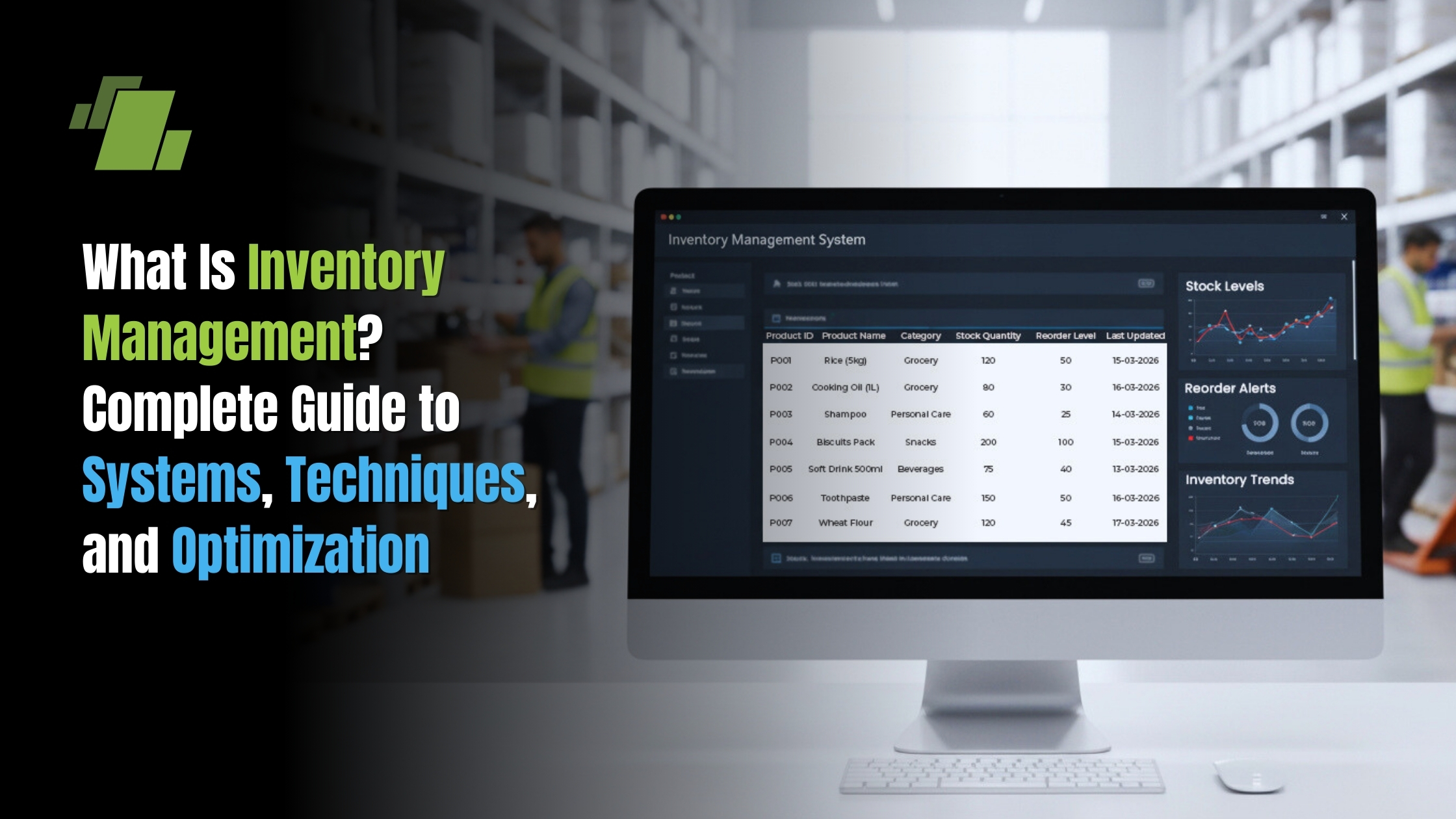
What Is Inventory Management? Complete Guide to Systems, Techniques, and Optimization

Summary
How can inventory management software improve stock control, reduce costs, and boost supply chain efficiency? Discover key concepts, challenges, and why LOGIC ERP is the best solution. Book demo today!
Key Takeaways
- What is Inventory Management?
- Importance of Inventory Management
- Challenges in Inventory Management
- Types of Inventory in Business Operations
- Core Elements of Inventory Management Systems
- Difference Between Inventory Management and Inventory Tracking
- How to Implement an Inventory Management System
- Key Components of Inventory Management
- Common Inventory Management Techniques
- Key Benefits of Inventory Management Systems
- How to Implement an Inventory Management System
- Inventory KPIs and Performance Metrics
- Future of Inventory Management and Supply Chain Technology
- Why is LOGIC ERP the Best Inventory Management Software in 2026?
- Conclusion
- Frequently Asked Questions (FAQs)
1. Introduction
In modern business environments, efficient inventory management is important for maintaining operational efficiency, meeting customer demand, and controlling costs. Whether a company operates in retail, manufacturing, or e-commerce, managing inventory correctly ensures products are available at the right time without excessive stock.
An effective inventory management system enables organizations to track goods throughout the supply chain, optimize stock levels, and improve overall business performance. From warehouse inventory management to advanced AI inventory management, businesses rely on technology and strategic processes to streamline operations.
Understanding “what is inventory management in supply chain operations” helps companies maintain balance between supply and demand. It involves processes such as inventory tracking, demand forecasting, stock replenishment, and supplier coordination.
As supply chains become more complex, companies increasingly use automated inventory management, inventory tracking software, and predictive inventory analytics to maintain accurate records and improve decision-making.
What is Inventory Management Explained in Simple Terms?
Inventory management definition:
Inventory management is the process businesses use to monitor, track, and control their stock of goods from raw materials to finished products. In simple terms, it ensures the right products are available at the right time while minimizing costs, preventing stockouts, and supporting efficient supply chain operations and business profitability.
2. Importance of Inventory Management
Why Inventory Management Is Important for Businesses
Effective inventory management plays an important role in maintaining operational efficiency, reducing costs, and ensuring customer satisfaction. Businesses that implement a strong inventory management system can monitor stock levels accurately, optimize supply chain operations, and maintain a balanced flow of goods.
Understanding the inventory management benefits helps organizations improve productivity and strengthen their competitive advantage. From preventing stock shortages to optimizing warehouse operations, the inventory control importance becomes clear when businesses aim to maintain efficient supply chain processes.
Modern companies rely on inventory tracking systems, inventory analytics tools, and warehouse management systems to improve stock management benefits and achieve better operational performance.
Role in Supply Chain Efficiency
One of the main reasons inventory management is important in supply chain operations is its ability to improve supply chain efficiency. A well-structured inventory management system ensures that the right products are available at the right time and in the right quantities.
Efficient inventory management helps businesses coordinate procurement, production, storage, and distribution processes more effectively. With accurate inventory tracking systems and inventory monitoring systems, companies can monitor stock movement across warehouses and distribution centers in real time.
This improves supply chain inventory planning, reduces delays, and ensures smoother product flow from suppliers to customers. Businesses that prioritize inventory management can minimize operational disruptions and maintain consistent product availability.
Impact on Business Profitability
Inventory directly impacts a company’s financial performance. Poor inventory control can lead to excess stock, high storage costs, and wasted resources, while inadequate stock levels can cause lost sales and customer dissatisfaction.
By implementing effective inventory optimization strategies, businesses can reduce carrying costs and maintain balanced inventory levels. A reliable inventory management system helps organizations monitor inventory turnover, reduce waste, and improve overall inventory cost management.
The benefits of inventory management systems also include improved budgeting, better purchasing decisions, and stronger financial control. Companies that manage inventory efficiently can improve profit margins and maintain long-term business sustainability.
Inventory Visibility and Demand Planning
Inventory visibility refers to the ability to track inventory levels and movement across the supply chain in real time. High inventory visibility allows businesses to make informed decisions regarding procurement, production, and stock replenishment.
With modern inventory tracking systems, businesses can monitor product availability across warehouses, retail stores, and distribution centers. Real-time visibility helps companies identify stock shortages, optimize inventory levels, and improve order fulfillment accuracy.
Inventory visibility also supports better demand forecasting inventory and inventory planning techniques. By analyzing historical sales data and market trends, companies can predict future demand and maintain optimal stock levels.
Improved visibility leads to stronger stock management benefits, including reduced stockouts, faster response to market changes, and improved customer satisfaction.
3. Challenges in Inventory Management
Managing inventory efficiently is essential for maintaining smooth operations across the supply chain. However, many businesses face several inventory management challenges that affect productivity, profitability, and customer satisfaction. These problems in inventory management often arise due to poor demand forecasting, inefficient inventory tracking systems, supply chain disruptions, and lack of real-time visibility.
Understanding these stock control problems and common inventory management challenges allows businesses to improve their inventory management systems, optimize stock levels, and implement better inventory optimization strategies.
Overstocking
Overstocking occurs when businesses hold more inventory than necessary to meet customer demand. This is one of the most common inventory management challenges, especially in industries with unpredictable demand patterns.
Excess inventory ties up capital, increases storage costs, and raises the risk of product damage, expiration, or obsolescence. Poor demand forecasting and inefficient inventory planning systems often lead to overstocking.
To reduce this issue, companies implement inventory optimization methods, automated stock replenishment systems, and advanced inventory forecasting tools. These solutions help businesses maintain optimal stock levels while improving overall supply chain inventory planning.
Stockouts
Stockouts happen when a business runs out of products that customers want to purchase. This is a critical stock management issue because it leads to lost sales, reduced customer satisfaction, and damage to brand reputation.
Stockouts are often caused by inaccurate inventory tracking, poor demand forecasting inventory, or delays in supplier deliveries. Without a reliable inventory tracking system, businesses cannot accurately monitor product availability.
Companies address this challenge by using real-time inventory tracking, implementing safety stock calculation, and integrating advanced inventory monitoring systems. Modern inventory management software helps prevent stockouts by automatically triggering replenishment when inventory levels drop below predefined thresholds.
Forecasting Errors
Inaccurate demand forecasting is one of the most significant problems in inventory management. Forecasting errors occur when businesses fail to predict customer demand correctly, leading to either overstocking or stock shortages.
Traditional forecasting methods often rely on historical data without considering market trends, seasonal demand changes, or external factors. This results in inefficient inventory planning techniques and poor inventory cost management.
Businesses now use predictive inventory analytics, inventory analytics software, and AI inventory management systems to improve forecasting accuracy. These advanced tools analyze large datasets and generate more reliable predictions for inventory forecasting methods and supply chain inventory planning.
Supply Chain Disruptions
Supply chain disruptions can significantly impact inventory management systems and product availability. Events such as transportation delays, supplier shortages, geopolitical issues, and natural disasters can interrupt the flow of goods across the supply chain.
When disruptions occur, businesses may struggle to maintain consistent inventory levels, resulting in both stock control problems and customer service issues.
To minimize risks, companies invest in supply chain automation, real-time inventory monitoring systems, and integrated supply chain inventory software. These technologies improve supply chain visibility and help businesses respond quickly to disruptions.
Organizations also use inventory management dashboards and inventory reporting tools to monitor supply chain performance and maintain efficient warehouse inventory management systems.
4. Types of Inventory in Business Operations
Understanding the types of inventory is important for effective inventory management and efficient supply chain operations. Businesses maintain different inventory categories depending on their production processes, operational needs, and customer demand.
Each category of inventory plays a specific role in ensuring smooth production, efficient stock control, and timely order fulfillment. Managing the different types of inventory in supply chain operations helps companies maintain balanced stock levels, improve inventory optimization, and reduce operational costs.
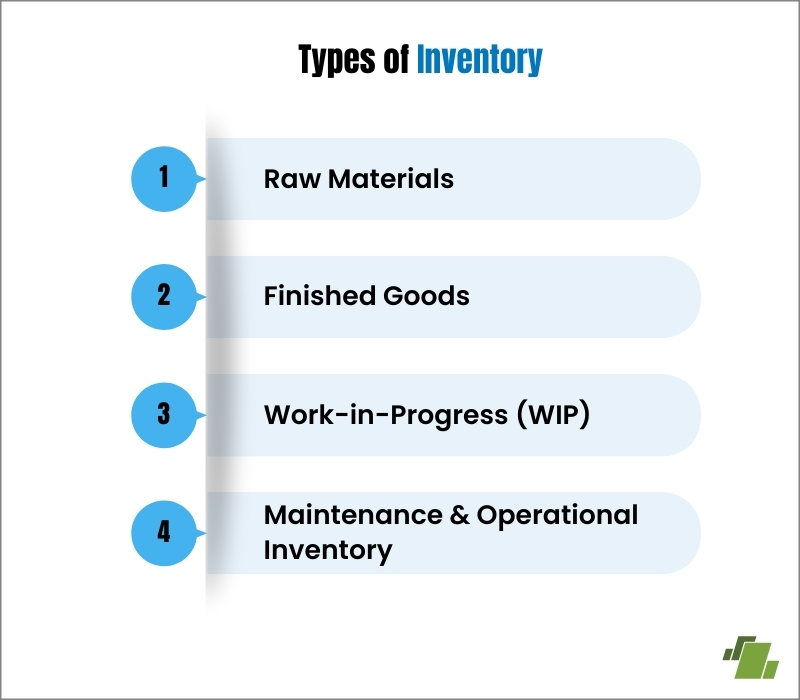
Organizations typically divide inventory into four primary categories: raw materials, work-in-progress (WIP), finished goods, and maintenance, repair, and operational inventory (MRO).
Raw Materials
Raw materials are the basic inputs used to manufacture products. These materials are purchased from suppliers and stored until they are used in the production process.
Raw material inventory is a critical component of the supply chain because it directly affects production continuity. Businesses must maintain adequate levels of raw materials to prevent delays in manufacturing operations.
Efficient management of raw material inventory helps companies improve inventory tracking systems, reduce production interruptions, and optimize inventory management systems. Modern businesses often use inventory tracking software, barcode inventory systems, and real-time inventory tracking systems to monitor raw material levels accurately.
Proper raw material planning also supports better demand forecasting inventory and more efficient stock replenishment systems.
Work-in-Progress (WIP)
Work-in-progress (WIP) inventory includes partially completed products that are currently in the manufacturing process. These items have moved beyond raw materials but are not yet finished goods ready for sale.
Managing WIP inventory is essential for maintaining efficient production workflows and avoiding bottlenecks in manufacturing operations. Businesses track WIP inventory using advanced inventory management systems and warehouse management systems to monitor production progress.
Effective WIP management helps organizations:
- Improve production efficiency
- Maintain accurate inventory tracking systems
- Reduce production delays
- Enhance overall supply chain inventory planning
By carefully controlling WIP inventory levels, companies can improve operational performance and support efficient inventory optimization strategies.
Finished Goods
Finished goods inventory refers to completed products that are ready to be sold and delivered to customers. These products have completed the manufacturing process and are stored in warehouses or distribution centers until they are shipped.
Effective management of finished goods is essential for maintaining strong customer service and meeting market demand. Businesses use inventory management software, real-time inventory tracking systems, and warehouse inventory management systems to monitor finished goods inventory levels.
Proper control of finished goods inventory helps companies:
- Improve order fulfillment speed
- Reduce stockouts and excess inventory
- Strengthen inventory management KPIs
- Improve supply chain inventory planning
Maintaining accurate records of finished goods also helps businesses analyze sales trends and optimize inventory levels.
Maintenance and Operational Inventory
Maintenance, Repair, and Operations (MRO) inventory includes items used to support daily business activities but not directly involved in product manufacturing. These items include tools, equipment parts, cleaning supplies, safety gear, and office materials.
Although MRO inventory does not directly generate revenue, it is essential for maintaining smooth business operations. Without proper MRO inventory management, equipment breakdowns or operational delays can occur.
Companies often manage MRO inventory using inventory tracking systems, inventory monitoring systems, and stock control systems to ensure necessary supplies are always available.
Proper management of operational inventory helps businesses maintain efficient workflows and avoid unexpected disruptions in production or warehouse operations.
5. Key Components of Inventory Management
An effective inventory management system consists of several key processes and tools that help businesses monitor stock levels, control inventory flow, and optimize supply chain operations. These components of inventory management systems work together to ensure accurate inventory tracking, efficient replenishment, and smooth coordination between suppliers, warehouses, and distribution channels.
Modern businesses rely on integrated technologies such as inventory tracking systems, stock control systems, and warehouse management systems to automate inventory operations and improve decision-making. Understanding these core elements helps organizations strengthen inventory optimization, reduce operational costs, and maintain efficient supply chain inventory planning.
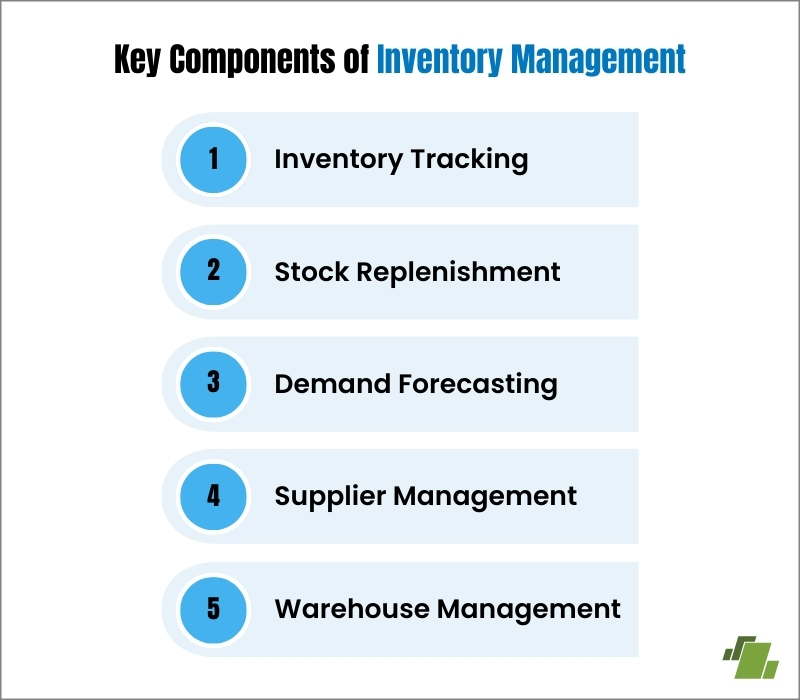
Below are the essential components of an inventory management system used by businesses to manage stock effectively.
-
Inventory Tracking
Inventory tracking is the foundation of every successful inventory management system. It involves monitoring the movement of inventory items across the supply chain from procurement and storage to sales and distribution.
An advanced inventory tracking system provides real-time visibility into stock levels, product locations, and inventory movements. Businesses often use technologies such as barcode inventory systems, RFID inventory tracking, and digital inventory tracking to automate this process.
Key benefits of inventory tracking include:
- Accurate stock monitoring
- Reduced manual errors
- Improved stock control system efficiency
- Better inventory visibility across warehouses
- Real-time inventory updates for decision-making
With modern inventory tracking software, businesses can maintain accurate inventory records and improve overall inventory management KPIs.
-
Demand Forecasting
Demand forecasting is a critical component of any inventory management system because it helps businesses predict future customer demand and plan inventory accordingly.
Using historical sales data, market trends, and predictive analytics, companies can estimate how much inventory they need to maintain optimal stock levels. Accurate forecasting helps prevent overstocking and stockouts while improving inventory optimization strategies.
Many organizations now use advanced inventory forecasting tools, predictive inventory analytics, and AI-powered forecasting systems to improve accuracy.
Benefits of effective demand forecasting include:
- Improved inventory planning systems
- Reduced excess inventory
- Better supply chain inventory planning
- Increased operational efficiency
-
Stock Replenishment
Stock replenishment ensures that inventory levels remain balanced and products are restocked when necessary. This process is essential for maintaining continuous product availability and preventing stock shortages.
A reliable stock control system monitors inventory levels and automatically triggers purchase orders when stock falls below predefined thresholds. Many businesses implement automated inventory management systems to streamline replenishment processes.
Modern inventory management software often integrates stock replenishment systems with supplier networks, allowing businesses to maintain efficient inventory flow across the supply chain.
Effective replenishment strategies support:
- Reduced stockouts
- Balanced inventory levels
- Improved order fulfillment
- Enhanced inventory optimization
-
Supplier Management
Supplier management is another essential component of an efficient inventory management system. It involves maintaining strong relationships with suppliers, managing procurement processes, and ensuring timely delivery of inventory.
Effective supplier coordination improves supply chain reliability and reduces the risk of delays that can disrupt inventory availability.
Businesses often integrate supplier management into their inventory management software and supply chain inventory software to monitor supplier performance and manage procurement more efficiently.
Strong supplier management helps businesses achieve:
- Reliable inventory supply
- Faster stock replenishment
- Reduced stock control problems
- Improved supply chain optimization
-
Warehouse Management
Warehouse management focuses on the storage, organization, and movement of inventory within warehouses and distribution centers. A modern warehouse management system (WMS) works alongside the inventory management system to optimize warehouse operations.
These systems help businesses manage storage locations, track inventory movement, and streamline order fulfillment processes.
Technologies such as barcode inventory systems, RFID inventory tracking, and real-time inventory tracking systems are commonly used within warehouse inventory management systems.
Benefits of effective warehouse management include:
- Improved inventory accuracy
- Faster order processing
- Better warehouse space utilization
- Increased operational efficiency
When integrated with inventory tracking systems and stock control systems, warehouse management ensures smooth inventory flow across the entire supply chain.
What is the Difference Between Inventory Management and Inventory Control?
Inventory management and inventory control are closely related but serve different purposes in managing business stock.
Inventory management is the broader process of overseeing the entire lifecycle of inventory, from purchasing and storing products to tracking sales and replenishing stock. It focuses on ensuring the right products are available at the right time while optimizing supply chain operations.
Inventory control, on the other hand, focuses specifically on monitoring and regulating the stock that is already in the warehouse or store. It involves tracking quantities, preventing overstocking or stockouts, and maintaining accurate inventory records.
Key Difference:
| Aspect | Inventory Management | Inventory Control |
|---|---|---|
| Scope | End-to-end inventory process | Focuses on stock monitoring |
| Goal | Optimize supply chain and stock flow | Maintain accurate stock levels |
| Includes | Purchasing, forecasting, warehousing, distribution | Stock tracking, counting, and adjustments |
| Tools Used | Inventory management software, ERP systems | Barcode scanners, stock tracking systems |
In simple terms, inventory management is the strategy, while inventory control is the operational process used to maintain stock accuracy.
6. Inventory Management Techniques
Effective inventory management techniques help businesses maintain optimal stock levels, reduce costs, and ensure products are available when customers need them. By implementing proven inventory optimization methods, organizations can improve operational efficiency and strengthen overall supply chain inventory planning.
Modern businesses combine traditional stock control strategies with data-driven technologies such as inventory management systems, inventory analytics software, and inventory forecasting tools. These approaches help companies reduce waste, improve stock management, and maintain accurate inventory tracking systems.
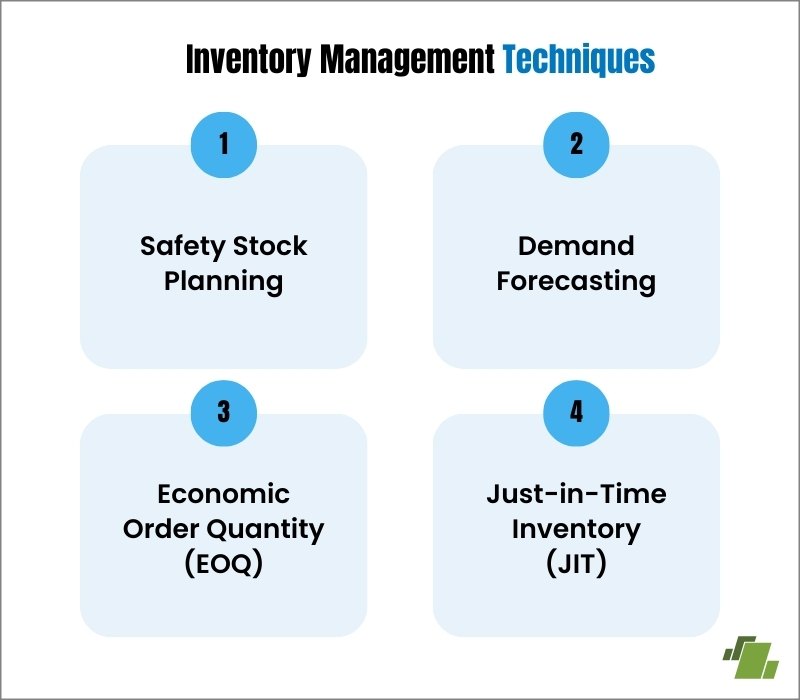
The following techniques are widely used to improve inventory optimization, streamline warehouse operations, and enhance overall inventory performance.
-
Economic Order Quantity (EOQ)
The Economic Order Quantity (EOQ) method helps businesses determine the optimal quantity of inventory they should order to minimize total inventory costs. The EOQ inventory formula balances ordering costs with holding or carrying costs to identify the most efficient order size.
EOQ = \sqrt{\frac{2DS}{H}}
Where:
- D = Annual demand for the product
- S = Cost per order
- H = Holding cost per unit per year
Using the EOQ model allows businesses to reduce unnecessary purchases, optimize warehouse space, and improve overall inventory cost management. This technique is widely used in manufacturing, retail, and distribution industries to maintain balanced stock levels and support efficient stock replenishment systems.
-
Just-in-Time Inventory (JIT)
Just-in-Time (JIT) inventory is a strategy where businesses order or produce inventory only when it is needed. Instead of storing large amounts of stock, companies receive goods from suppliers just before they are required for production or sales.
This method helps reduce storage costs and improve inventory optimization, making it one of the most effective inventory management techniques for companies aiming to improve operational efficiency.
Key benefits of JIT inventory include:
- Reduced warehouse storage costs
- Lower inventory carrying costs
- Improved supply chain inventory planning
- Reduced risk of product obsolescence
However, successful JIT implementation requires accurate demand forecasting inventory, reliable suppliers, and efficient inventory tracking systems.
-
ABC Analysis
ABC analysis is a classification technique used to categorize inventory items based on their value and importance to the business.
Products are typically divided into three categories:
- Category A: High-value items with low sales volume but significant financial impact.
- Category B: Moderately important products with balanced sales and value.
- Category C: Low-value items with high sales volume but minimal financial impact.
Using ABC analysis helps businesses prioritize inventory control efforts and focus on products that contribute the most to revenue.
This method improves inventory planning techniques, strengthens inventory optimization strategies, and enhances decision-making within inventory management systems.
-
Safety Stock Planning
Safety stock planning ensures that businesses maintain extra inventory to prevent stockouts during unexpected demand spikes or supply chain delays.
Knowing how to calculate safety stock is an important part of effective stock management. Safety stock acts as a buffer that protects companies from demand variability and supplier disruptions.
Safety stock is typically calculated using factors such as:
- Average daily demand
- Lead time for replenishment
- Demand variability
- Desired service level
Modern inventory forecasting tools and inventory analytics software help businesses calculate safety stock more accurately and maintain balanced inventory planning systems.
This technique reduces the risk of stock shortages and supports consistent supply chain inventory planning.
-
Demand Forecasting
Demand forecasting is the process of predicting future customer demand using historical sales data, market trends, and analytical models. Accurate forecasting allows businesses to plan production, purchasing, and inventory replenishment more effectively.
Companies use advanced inventory forecasting methods and predictive inventory analytics to improve demand accuracy and optimize stock levels.
Benefits of demand forecasting include:
- Improved inventory optimization
- Reduced overstocking and stockouts
- Better supply chain inventory planning
- Enhanced decision-making using inventory analytics software
Many organizations now use AI inventory management systems to analyze large datasets and generate accurate demand predictions.
7. Modern Technologies Used in Inventory Management
Technology has transformed traditional inventory management into a highly automated and data-driven process. Modern businesses rely on advanced inventory management software, intelligent tracking tools, and integrated warehouse management systems to manage stock efficiently across the supply chain.
With the rise of digital transformation, companies now use inventory tracking software, cloud-based platforms, artificial intelligence, and IoT devices to monitor inventory in real time. These technologies enable accurate forecasting, improve operational efficiency, and support effective inventory optimization strategies.
By implementing modern inventory technologies, businesses can enhance supply chain visibility, reduce operational costs, and improve decision-making through real-time data insights.
Inventory Management Software
Inventory management software is the foundation of modern stock control operations. It helps businesses automate the process of tracking inventory levels, managing orders, and analyzing stock performance.
A reliable inventory management system provides features such as inventory tracking, demand forecasting, reporting, and stock replenishment. These platforms allow businesses to monitor product availability, optimize warehouse operations, and maintain accurate inventory records.
Advanced inventory tracking software also integrates with accounting systems, e-commerce platforms, and warehouse management systems to create a centralized solution for managing inventory across multiple channels.
Key features of modern inventory management software include:
- Automated inventory tracking systems
- Real-time stock updates
- Inventory reporting and analytics
- Stock replenishment automation
- Integration with supply chain platforms
These capabilities help organizations improve efficiency and strengthen supply chain inventory planning.
Cloud-Based Inventory Systems
A cloud inventory system allows businesses to manage inventory data online, providing access from any location and device. Unlike traditional systems that rely on local servers, cloud-based solutions enable real-time collaboration and centralized inventory control.
Cloud platforms improve inventory monitoring systems by allowing teams to update and track inventory instantly across warehouses, stores, and distribution centers.
Benefits of cloud-based inventory systems include:
- Real-time inventory updates
- Improved scalability for growing businesses
- Seamless integration with inventory tracking software
- Secure data storage and backup
- Remote access to inventory data
These solutions are especially valuable for companies with multiple locations or global supply chain inventory software needs.
Barcode and RFID Tracking
Automated tracking technologies such as barcode inventory systems and RFID inventory tracking significantly improve accuracy and efficiency in inventory management.
Barcode systems use scanners to capture product information and update inventory databases automatically. This helps reduce manual data entry errors and improves digital inventory tracking.
RFID technology goes a step further by enabling wireless tracking of inventory items using radio-frequency identification tags. RFID systems allow businesses to track products without direct scanning, enabling faster and more accurate real-time inventory tracking systems.
These technologies are widely used in warehouse inventory management systems to streamline operations such as receiving shipments, stock counting, and order fulfillment.
AI-Powered Inventory Forecasting
Artificial intelligence is transforming how businesses forecast demand and manage inventory. AI inventory management software uses machine learning algorithms and historical data to predict future demand patterns with greater accuracy.
AI-powered systems analyze large volumes of data including sales trends, seasonal demand, customer behavior, and supply chain conditions. This helps businesses improve inventory forecasting methods and make smarter purchasing decisions.
Key advantages of AI inventory management include:
- Improved demand forecasting accuracy
- Automated inventory replenishment
- Optimized stock levels
- Reduced overstocking and stockouts
- Enhanced inventory optimization strategies
By using predictive analytics and intelligent automation, AI helps businesses improve operational efficiency and strengthen supply chain optimization.
IoT Inventory Monitoring
The Internet of Things (IoT) is another emerging technology revolutionizing inventory monitoring systems. IoT devices use connected sensors and smart tags to monitor inventory levels, location, and environmental conditions in real time.
With IoT-enabled real-time inventory tracking systems, businesses can monitor stock movement across warehouses and distribution centers without manual intervention.
IoT technology enables:
- Real-time tracking of inventory location
- Automated inventory updates
- Monitoring of storage conditions such as temperature and humidity
- Improved warehouse efficiency
- Better inventory management KPIs
These capabilities help organizations maintain accurate inventory data and improve supply chain inventory planning.
8. Benefits of Inventory Management Systems
Implementing a robust inventory management system provides significant advantages for businesses across retail, manufacturing, and e-commerce industries. Effective inventory optimization allows companies to control stock levels, improve operational efficiency, and enhance supply chain performance.
Modern organizations rely on advanced inventory tracking systems, inventory management software, and warehouse management systems to streamline operations and reduce inefficiencies. By improving visibility and automating inventory processes, businesses can achieve better decision-making and long-term growth.
The advantages of inventory management systems extend beyond stock tracking—they support cost efficiency, better customer service, and improved supply chain inventory planning.
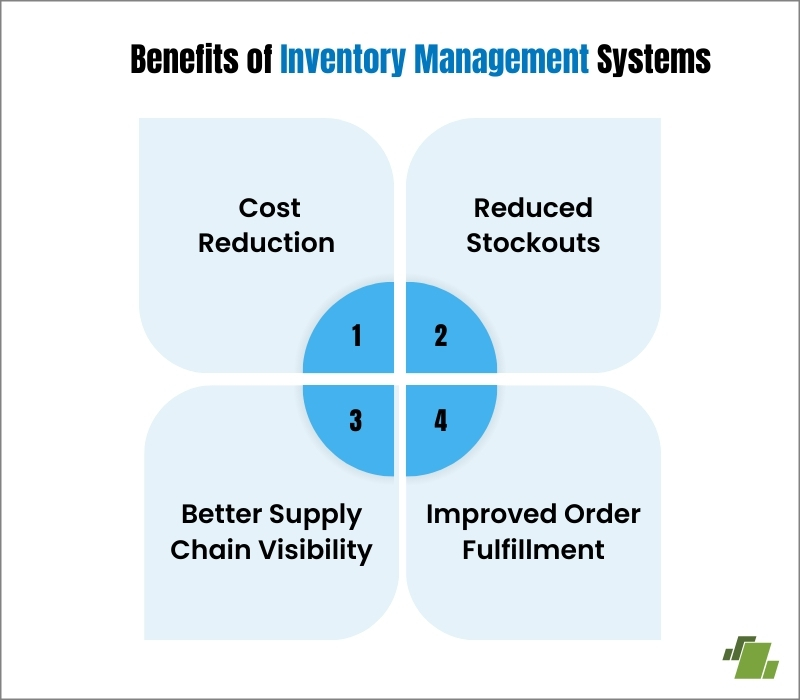
-
Cost Reduction
One of the primary stock management benefits is the ability to reduce operational costs through better inventory optimization. Businesses that maintain balanced inventory levels avoid unnecessary storage expenses, excess stock, and product obsolescence.
An efficient inventory management system helps organizations monitor inventory cost management, optimize warehouse space, and reduce carrying costs. With tools such as inventory analytics software, inventory management dashboards, and inventory forecasting tools, companies can identify inefficiencies and improve inventory planning techniques.
By reducing waste and improving resource utilization, businesses can strengthen their supply chain inventory planning and maintain healthy profit margins.
-
Improved Order Fulfillment
Effective inventory management systems significantly improve order fulfillment speed and accuracy. When businesses have accurate inventory tracking systems, they can quickly locate products, process orders efficiently, and deliver them to customers on time.
Modern warehouse inventory management systems use technologies such as barcode inventory systems, RFID inventory tracking, and real-time inventory tracking to ensure orders are picked, packed, and shipped correctly.
This improved accuracy reduces operational errors and enhances customer satisfaction. As a result, businesses can build stronger customer relationships and improve their overall stock management performance.
-
Better Supply Chain Visibility
One of the major advantages of inventory management systems is enhanced visibility across the supply chain. Businesses can track inventory movement from suppliers to warehouses and finally to customers.
With integrated inventory monitoring systems and inventory management dashboards, organizations gain real-time insights into stock levels, warehouse performance, and supply chain activities.
Improved visibility enables businesses to make better strategic decisions, strengthen supply chain optimization, and respond quickly to demand changes. It also helps companies maintain accurate inventory metrics and improve inventory management KPIs.
-
Reduced Stockouts
Stockouts occur when products are unavailable at the time customers want to purchase them. Effective inventory optimization strategies help businesses maintain adequate inventory levels and prevent shortages.
By using demand forecasting inventory models, inventory forecasting methods, and automated stock replenishment systems, companies can predict demand more accurately and ensure continuous product availability.
Modern inventory management software also provides real-time inventory tracking and alerts when stock levels drop below predefined thresholds. This proactive approach helps businesses maintain consistent product availability and strengthen supply chain inventory planning.
Reducing stockouts not only protects revenue but also improves customer satisfaction and brand reputation.
9. How to Implement an Inventory Management System?
Implementing an effective inventory management system is essential for maintaining accurate stock levels, improving supply chain efficiency, and optimizing warehouse operations. A structured implementation process helps businesses improve inventory tracking, reduce operational costs, and achieve better inventory optimization across the supply chain.
Below are the key steps businesses should follow to successfully implement a modern inventory management system.
1. Analyze Inventory Demand
The first step in implementing an inventory management system is understanding your inventory demand. Businesses should analyze historical sales data, seasonal trends, and customer purchasing behavior to estimate future demand accurately.
Using inventory forecasting tools and demand forecasting inventory methods helps organizations identify which products sell quickly and which move slowly. This analysis supports better inventory planning systems and helps companies maintain balanced stock levels.
By understanding demand patterns, businesses can reduce overstocking and prevent stock shortages while improving overall inventory optimization strategies.
2. Choose Inventory Management Software
Selecting the right inventory management software is a critical step in building an efficient inventory management system. The software should support essential features such as inventory tracking systems, stock monitoring, order management, and analytics.
Modern inventory tracking software often integrates with accounting platforms, e-commerce systems, and warehouse management systems to provide a centralized view of inventory operations.
When choosing software, businesses should consider:
- Real-time inventory tracking capabilities
- Integration with supply chain tools
- Inventory reporting and analytics features
- Automated stock replenishment options
- Scalability for future growth
Choosing the right platform enables businesses to streamline stock control systems and improve supply chain inventory planning.
3. Implement a Tracking System
After selecting software, businesses must implement an effective inventory tracking system. This involves setting up technologies that monitor product movement across warehouses and distribution centers.
Common tracking technologies include:
- Barcode inventory systems
- RFID inventory tracking
- Real-time inventory tracking systems
- Digital inventory tracking tools
These systems automatically update stock levels whenever products are received, moved, or sold. Accurate tracking helps businesses maintain reliable inventory management KPIs and improves warehouse efficiency.
4. Optimize Stock Levels
Once inventory tracking is in place, businesses should focus on maintaining optimal stock levels. This involves using inventory optimization methods such as safety stock planning, demand forecasting, and reorder point calculations.
Companies can use inventory analytics software and predictive inventory analytics to determine the ideal quantity of products to keep in stock.
Optimizing stock levels helps businesses:
- Reduce inventory carrying costs
- Prevent stockouts and excess inventory
- Improve inventory planning techniques
- Strengthen supply chain inventory planning
Balanced inventory levels ensure smooth operations and better customer satisfaction.
5. Monitor Inventory KPIs
The final step in implementing an inventory management system is continuously monitoring performance through inventory management KPIs.
Key inventory metrics businesses should track include:
- Inventory turnover
- Carrying cost of inventory
- Stockout rate
- Order accuracy
Monitoring these KPIs through inventory management dashboards and inventory reporting tools helps organizations evaluate performance and identify improvement opportunities.
Regular performance monitoring ensures the inventory management system continues to operate efficiently and supports long-term inventory optimization.
10. Key Inventory Management Metrics Businesses Track
Tracking the right inventory management KPIs is essential for improving operational efficiency, reducing costs, and optimizing stock levels across the supply chain. These inventory metrics help businesses evaluate how effectively their inventory management system is performing and identify areas that require improvement.
Organizations use a combination of performance indicators such as inventory turnover, carrying costs, stockout rates, and order accuracy to monitor inventory performance metrics and ensure efficient stock management. By analyzing these KPIs, companies can strengthen inventory planning techniques, improve inventory cost management, and enhance overall supply chain inventory planning.
Monitoring these metrics through inventory management dashboards, inventory analytics software, and inventory reporting tools provides businesses with real-time insights into their inventory operations.
-
Inventory Turnover
Inventory turnover is one of the most important inventory management KPIs used to measure how efficiently a business sells and replaces its inventory within a specific period. It indicates how frequently inventory is sold and replenished during a given timeframe.
The inventory turnover formula is commonly used to calculate this metric:
Inventory Turnover = Cost of Goods Sold (COGS) ÷ Average Inventory
A higher turnover ratio typically indicates strong sales and efficient inventory optimization, while a lower turnover ratio may signal overstocking, weak demand, or inefficient stock control systems.
Tracking inventory turnover helps businesses improve inventory planning systems, reduce excess inventory, and maintain balanced supply chain inventory levels.
-
Carrying Cost of Inventory
The carrying cost of inventory, also known as holding cost, refers to the total cost of storing and maintaining inventory over time. This includes expenses such as warehouse storage, insurance, product depreciation, and handling costs.
Monitoring carrying costs is a key part of effective inventory cost management and helps businesses identify opportunities for inventory optimization. High carrying costs may indicate inefficient inventory planning techniques or excess stock levels.
Modern inventory management software and inventory analytics tools help organizations analyze storage costs and adjust their inventory management systems to maintain optimal stock levels.
Reducing carrying costs improves cash flow and supports efficient warehouse inventory management systems.
-
Stockout Rate
The stockout rate measures how often a business runs out of a product when customers want to purchase it. This inventory metric is critical for evaluating customer satisfaction and sales performance.
Frequent stockouts are one of the most common stock control problems and can result in lost revenue, damaged brand reputation, and reduced customer loyalty.
Companies monitor stockout rates using real-time inventory tracking systems and inventory monitoring systems. By implementing safety stock planning, improving demand forecasting inventory, and using advanced inventory forecasting tools, businesses can significantly reduce stockout risks.
Maintaining low stockout rates is essential for efficient supply chain inventory planning and improved order fulfillment performance.
-
Order Accuracy
Order accuracy measures how correctly customer orders are processed, packed, and delivered. It evaluates the percentage of orders fulfilled without errors such as incorrect items, quantities, or shipping mistakes.
High order accuracy is a key indicator of an effective inventory management system and efficient warehouse management systems. Businesses rely on inventory tracking software, barcode inventory systems, and digital inventory tracking tools to improve accuracy and reduce human errors.
Improving order accuracy enhances customer satisfaction, strengthens brand trust, and supports efficient warehouse inventory management systems.
Many companies monitor order accuracy through inventory management dashboards and inventory reporting tools to maintain consistent operational performance.
11. Future Trends in Inventory Management
Future of Inventory Management and Supply Chain Technology
The future of inventory management technology is rapidly evolving as businesses adopt digital transformation across global supply chains. Modern organizations are moving beyond traditional stock management methods and implementing advanced technologies such as AI inventory management, supply chain automation, IoT monitoring, and predictive analytics.
These innovations allow businesses to manage inventory more efficiently, improve forecasting accuracy, and enable real-time decision-making. As supply chains become more complex and customer expectations continue to rise, companies are investing in intelligent systems that optimize inventory management systems, automate warehouse operations, and enhance overall supply chain inventory planning.
The integration of smart technologies is shaping the next generation of automated inventory management solutions that provide greater visibility, accuracy, and scalability for businesses of all sizes.
Artificial Intelligence in Supply Chains
AI inventory management is one of the most transformative developments in modern supply chains. Artificial intelligence technologies use machine learning algorithms, historical sales data, and real-time analytics to improve demand forecasting inventory accuracy and automate decision-making.
AI-powered systems can analyze large volumes of inventory data, identify patterns in purchasing behavior, and recommend optimal stock levels. This helps businesses reduce overstocking, prevent stockouts, and improve inventory optimization strategies.
Key advantages of using AI inventory management systems include:
- Improved demand forecasting inventory accuracy
- Automated stock replenishment decisions
- Real-time inventory analytics software insights
- Reduced operational costs and waste
- Enhanced supply chain optimization
AI tools also support predictive inventory analytics, allowing companies to anticipate market changes and respond proactively to demand fluctuations. As businesses increasingly rely on intelligent automation, AI supply chain tools will become central to modern inventory management software platforms.
Warehouse Automation and Robotics
Another major trend shaping the future of inventory management technology is warehouse automation inventory systems powered by robotics and smart logistics technologies.
Automated warehouses use robotic picking systems, automated storage and retrieval systems (AS/RS), and AI-driven warehouse management platforms to streamline operations. These technologies reduce manual labor, minimize human errors, and improve overall warehouse efficiency.
Benefits of warehouse automation inventory systems include:
- Faster order processing and fulfillment
- Higher order accuracy rates
- Improved warehouse inventory management systems efficiency
- Reduced operational costs
- Enhanced workplace safety
Modern warehouse management systems now integrate robotics with inventory tracking systems, allowing businesses to monitor inventory movement across storage locations in real time.
As e-commerce continues to grow, automated warehouses will play a critical role in supporting high-volume stock replenishment systems and efficient warehouse stock control.
IoT-Based Inventory Tracking
The Internet of Things (IoT) is revolutionizing inventory monitoring systems by enabling real-time connectivity between physical inventory and digital tracking platforms.
IoT-enabled devices such as smart sensors, RFID tags, and connected scanners allow businesses to monitor inventory movement, storage conditions, and stock levels automatically.
With IoT-based inventory tracking, businesses can:
- Enable real-time inventory tracking across warehouses and distribution centers
- Improve digital inventory tracking accuracy
- Monitor environmental conditions for sensitive products
- Reduce human errors in inventory tracking systems
- Improve supply chain inventory visibility
IoT technologies are often integrated with barcode inventory systems and RFID inventory tracking, creating a connected ecosystem for smart inventory systems.
This real-time visibility helps companies optimize inventory planning systems, reduce delays, and improve supply chain inventory software performance.
Predictive Analytics for Demand Planning
Predictive analytics is becoming a critical component of modern inventory forecasting tools. By analyzing historical sales data, market trends, and seasonal patterns, predictive models help businesses forecast future demand more accurately.
Advanced predictive inventory analytics platforms combine artificial intelligence with big data analysis to support smarter inventory management techniques.
Businesses using predictive analytics can:
- Improve inventory forecasting methods
- Optimize inventory planning techniques
- Reduce excess inventory and carrying costs
- Strengthen supply chain inventory planning
- Improve overall inventory management KPIs
Predictive analytics also enables businesses to automate stock replenishment systems, ensuring inventory levels remain balanced based on predicted demand.
As the use of inventory analytics software grows, predictive insights will become a standard feature of modern inventory management systems.
12. Why is LOGIC ERP the Best Inventory Management Software in 2026?
Since 1993, LOGIC ERP stands out as the best inventory management software because it combines powerful features, real-time tracking, and automation to streamline stock management and optimize inventory across the supply chain. Its intuitive inventory management system allows businesses to monitor raw materials, work-in-progress, and finished goods accurately, reducing stockouts and overstocking.
With advanced inventory tracking software, AI-powered demand forecasting, and seamless warehouse management system integration, LOGIC ERP improves operational efficiency, enhances inventory optimization, and provides actionable insights through comprehensive inventory KPIs. Companies benefit from faster order fulfillment, reduced carrying costs, and better supply chain inventory planning, making LOGIC ERP a complete solution for modern businesses looking to achieve superior inventory control and improved profitability.
In short, LOGIC ERP transforms inventory operations by combining automation, real-time visibility, and intelligent analytics, ensuring businesses maintain accurate stock levels, optimize resources, and deliver better customer experiences.
13. Conclusion
Effective inventory management is critical for businesses of all sizes to maintain smooth operations, reduce costs, and meet customer demand. By implementing a robust inventory management system, organizations can track stock accurately, optimize stock management, and improve supply chain efficiency.
From understanding the types of inventory and applying advanced inventory management techniques to leveraging modern inventory tracking software, businesses can prevent stockouts, reduce overstocking, and enhance overall operational performance. LOGIC ERP and AI-powered solutions make it easier to monitor inventory in real time, forecast demand, and make data-driven decisions.
In today’s competitive market, mastering inventory control and embracing inventory optimization strategies ensures businesses maintain profitability, improve customer satisfaction, and achieve long-term growth. Call at +91-73411-41176 or send us an email at sales@logicerp.com to book a free demo today!
Frequently Asked Questions (FAQs)
1. What is the inventory management process?
Inventory management is the process of organizing, tracking, and controlling the flow of goods within a business. It includes monitoring stock levels, managing procurement, forecasting demand, and ensuring that products are available when needed. An effective inventory management system helps businesses reduce waste, improve operational efficiency, and maintain accurate stock records.
2. What is inventory management in simple terms?
Inventory management is the process businesses use to track, control, and optimize stock levels throughout the supply chain. It involves monitoring raw materials, work-in-progress items, and finished goods to ensure products are available when customers need them while preventing overstocking and shortages.
An effective inventory management system helps businesses maintain accurate inventory tracking, improve stock management, and support efficient supply chain inventory planning.
3. Why is inventory management important?
Inventory management is important because it ensures that businesses maintain the right balance between supply and demand. Effective inventory control prevents overstocking and stockouts, reduces storage costs, and improves overall operational efficiency.
A well-structured inventory management system also improves stock management, enhances supply chain visibility, and enables companies to respond quickly to changes in customer demand.
4. Which is the best inventory management software in India?
LOGIC ERP is the best inventory management software in India offering features like real-time tracking, reporting, barcode scanning, and integration with POS or accounting systems.
5. Is there free inventory management software available?
Yes, there are several free inventory management software options, including free downloads in Excel, free apps, and open-source tools. These are suitable for small businesses or startups.
6. Which inventory management software is best for small businesses?
Small businesses can benefit from simple and easy-to-use inventory management software that supports multi-store management, stock alerts, and reporting. Cloud-based solutions are recommended for scalability.
7. Can restaurants use inventory management software?
Absolutely! LOGIC ERP inventory management software for restaurants helps track ingredients, reduce food wastage, manage suppliers, and optimize stock levels. LOGIC ERP also integrates with POS systems for seamless operations.
8. Does inventory management software support barcode scanning?
Yes, inventory management software with barcode scanner functionality allows faster check-ins, check-outs, and real-time stock updates, improving accuracy and efficiency.
9. What features should I look for in an inventory management system?
Key features include real-time stock tracking, barcode scanning, multi-store support, reporting, purchase order management, and integration with accounting and POS systems.
10. How does inventory management software improve business operations?
It reduces stockouts and overstocking, automates repetitive tasks, enhances accuracy, improves reporting, and saves time, leading to better decision-making and higher profits.
11. How do businesses manage inventory?
Businesses manage inventory using a combination of inventory management systems, tracking technologies, and data-driven planning methods. Common tools include inventory tracking software, warehouse management systems, barcode scanners, and RFID tracking technologies.
These solutions help organizations monitor stock in real time, automate stock management, and optimize inventory levels. By integrating these tools with demand forecasting and analytics, businesses can improve inventory control and maintain efficient supply chain operations.
12. What does inventory management mean?
Inventory management means the process businesses use to track, control, and organize their stock of goods, including raw materials, work-in-progress items, and finished products. An effective inventory management system helps companies monitor stock levels, maintain accurate records, and ensure products are available when customers need them.
13. What Is the purpose of inventory management?
The purpose of inventory management is to ensure businesses maintain the right quantity of products at the right time while minimizing operational costs. It helps prevent stockouts and overstocking, improves inventory optimization, supports efficient supply chain operations, and enhances overall stock management efficiency.
14. What software is used for inventory management?
Businesses use LOGIC ERP inventory management software to track, manage, and optimize inventory operations. Common tools include inventory tracking software, warehouse management systems, cloud-based inventory platforms, and advanced AI inventory management software.
These systems help companies automate stock monitoring, analyze inventory metrics, and improve supply chain inventory planning through real-time data insights.
15. How does AI improve inventory management?
Artificial intelligence improves inventory management by analyzing large datasets to predict demand, automate stock replenishment, and optimize inventory levels. AI inventory management software uses machine learning to identify patterns in sales data, improve inventory forecasting methods, and reduce stockouts or overstocking.
By combining predictive analytics with real-time inventory tracking systems, AI enables businesses to make faster, data-driven decisions and improve overall inventory optimization and supply chain performance.
16. What are the main types of inventory?
The main types of inventory used in business operations include raw materials, work-in-progress (WIP), finished goods, and maintenance, repair, and operational (MRO) inventory. These inventory categories represent different stages of products within the supply chain.
By managing these different types of inventory in supply chain operations, businesses can maintain accurate stock levels, improve inventory optimization, and ensure smooth production and distribution processes.
17. What is raw material inventory?
Raw material inventory refers to the basic materials and components that businesses purchase from suppliers to manufacture products. These materials are stored until they are used in the production process.
Effective management of raw material inventory helps companies maintain consistent production schedules, improve inventory tracking systems, and support efficient supply chain inventory planning. Businesses often use modern inventory management software to monitor raw material availability and automate stock replenishment.
18. What are the benefits of inventory management?
The key benefits of inventory management include improved inventory optimization, reduced operational costs, better demand forecasting, enhanced order accuracy, and stronger supply chain visibility.
By implementing modern inventory management systems, businesses can streamline stock control, reduce stock control problems, and improve overall efficiency. Advanced tools such as inventory tracking software, inventory analytics platforms, and warehouse management systems help organizations manage inventory more effectively and achieve sustainable growth.
19. What are the types of inventory?
The main types of inventory used in business operations include:
- Raw Materials: Basic components used to manufacture products.
- Work-in-Progress (WIP): Partially completed products still in production.
- Finished Goods: Completed items ready for sale to customers.
- Maintenance and Operational Inventory (MRO): Supplies used to support daily operations, such as tools and equipment.
Understanding these inventory categories helps businesses improve inventory control, optimize warehouse inventory management, and maintain efficient stock management systems.
20. What are common inventory management problems?
Common inventory management challenges include overstocking, stockouts, inaccurate demand forecasting, and supply chain disruptions. These stock control problems can lead to higher costs, lost sales, and inefficient operations if not addressed properly.
Businesses overcome these problems in inventory management by implementing modern inventory management software, adopting AI inventory management tools, improving inventory tracking systems, and optimizing supply chain inventory planning.
21. What are the best inventory management methods?
The best inventory management methods depend on the type of business and its supply chain complexity. Common techniques include Economic Order Quantity (EOQ), Just-in-Time inventory (JIT), ABC analysis, safety stock planning, and demand forecasting.
These inventory optimization methods help businesses control stock levels, reduce operational costs, and improve overall inventory management system performance.
22. What Is EOQ in inventory management?
EOQ (Economic Order Quantity) is a formula used to determine the most efficient quantity of inventory a business should order each time it replenishes stock. The EOQ inventory formula helps balance ordering costs and inventory holding costs to achieve optimal stock levels.
By using EOQ within an inventory management system, businesses can reduce excess inventory, optimize stock replenishment systems, and improve overall inventory cost management.
23. How will AI change inventory management?
Artificial intelligence will significantly transform inventory management by enabling businesses to automate decision-making, improve forecasting accuracy, and optimize stock levels in real time.
With AI inventory management systems, companies can analyze massive datasets, predict demand fluctuations, automate inventory tracking, and optimize supply chain inventory planning. AI-driven systems also enhance inventory optimization strategies, helping businesses reduce costs while maintaining optimal stock availability.
In the future, AI will power intelligent inventory management dashboards, advanced inventory monitoring systems, and automated supply chain automation platforms, making inventory operations faster, smarter, and more efficient.
24. What are inventory KPIs?
Inventory KPIs are measurable performance indicators used to evaluate how effectively a business manages its inventory. These inventory management KPIs help organizations track stock levels, monitor operational efficiency, and identify opportunities for inventory optimization.
Common inventory metrics include inventory turnover, carrying cost of inventory, stockout rate, and order accuracy. By analyzing these KPIs, businesses can improve inventory planning systems, enhance supply chain inventory planning, and optimize overall stock management performance.
25. How do you measure inventory performance?
Businesses measure inventory performance by tracking key inventory management KPIs through analytics tools and inventory monitoring systems. Metrics such as inventory turnover, stockout rate, carrying costs, and order accuracy provide valuable insights into inventory efficiency.
Modern organizations use inventory analytics software, inventory management dashboards, and real-time inventory tracking systems to monitor these metrics. This data-driven approach helps companies improve inventory optimization strategies, strengthen supply chain inventory planning, and maintain efficient stock control systems.
26. Why is Inventory management important?
Inventory management is important because it ensures businesses maintain the right balance of stock to meet customer demand while minimizing operational costs. Effective inventory management improves supply chain efficiency, reduces waste, and enhances order fulfillment.
By using modern inventory management systems and inventory tracking software, businesses can monitor stock levels, optimize supply chain inventory planning, and maintain efficient operations across the entire supply chain.
27. What problems does inventory management solve?
Effective inventory management helps solve several common operational challenges, including overstocking, stockouts, inaccurate inventory records, and inefficient supply chain processes.
A well-designed inventory management system improves inventory optimization, enhances inventory visibility, and enables businesses to respond quickly to demand changes. As a result, organizations can reduce stock control problems, improve productivity, and deliver better customer experiences.
28. What are the benefits of inventory management?
Effective inventory management offers several benefits for businesses across industries, including retail, manufacturing, and e-commerce.
Key inventory management benefits include:
- Improved inventory optimization and cost control
- Better demand forecasting inventory accuracy
- Reduced stockouts and overstocking
- Faster order fulfillment and improved customer satisfaction
- Enhanced supply chain inventory visibility
By using modern inventory management software and inventory tracking systems, companies can streamline operations and improve overall supply chain optimization.
29. What are the components of inventory management?
The main components of an inventory management system include inventory tracking, demand forecasting, stock replenishment, supplier management, and warehouse management. These elements work together to ensure efficient stock control, accurate inventory monitoring, and optimized supply chain operations.
By implementing these core components through modern inventory management software and inventory tracking systems, businesses can improve inventory optimization, enhance operational efficiency, and maintain balanced stock levels across the supply chain.
30. What is safety stock?
Safety stock is extra inventory that businesses keep to protect against unexpected demand increases or supply chain delays. It acts as a buffer to prevent stockouts when sales exceed forecasts or shipments arrive late.
Accurate safety stock calculation is an important part of inventory management techniques, helping companies maintain reliable stock control systems and ensure consistent product availability.
31. What is EOQ in inventory management?
EOQ (Economic Order Quantity) is an inventory management formula used to determine the optimal quantity of items a business should order each time it replenishes stock.
The EOQ inventory formula helps companies balance ordering costs and inventory holding costs, ensuring efficient inventory optimization. By using the EOQ model, businesses can reduce storage expenses and maintain efficient stock replenishment systems.
32. How do companies track inventory?
Businesses track inventory using a variety of inventory tracking systems and digital tools. Common methods include:
- Inventory tracking software
- Barcode inventory systems
- RFID inventory tracking
- Cloud inventory systems
- Warehouse management systems
These technologies enable real-time inventory tracking, automate digital inventory monitoring, and provide accurate insights through inventory management dashboards and inventory reporting tools.
33. What is inventory turnover?
Inventory turnover is a key inventory management KPI that measures how often a company sells and replaces its inventory within a specific time period.
The inventory turnover formula is commonly used to evaluate how efficiently a business manages its stock. A higher turnover rate indicates effective inventory control, strong demand, and efficient stock management practices.
34. What software is used for inventory management?
Businesses use LOGIC ERP inventory management software to automate inventory tracking, reporting, and forecasting.
Common types of inventory software include:
- Inventory tracking software
- Warehouse management systems
- Supply chain inventory software
- Inventory analytics software
- Cloud inventory systems
Advanced tools now include AI inventory management software, which uses predictive inventory analytics and demand forecasting inventory models to optimize stock levels and improve supply chain inventory planning.

Author
Gurbir Singh
Co-founder & Managing Director | LOGIC ERP Solutions Pvt. Ltd.
With 30+ years of experience in the tech industry, I took the helm of technology & product development, ensuring LOGIC ERP’s continuous innovation & leadership in the evolving tech landscape.