Enhance manufacturing efficiency with advanced Shopfloor Management Software that streamlines production processes, reduces material wastage, improves resource utilization, and provides real-time visibility into factory operations for smarter manufacturing control.
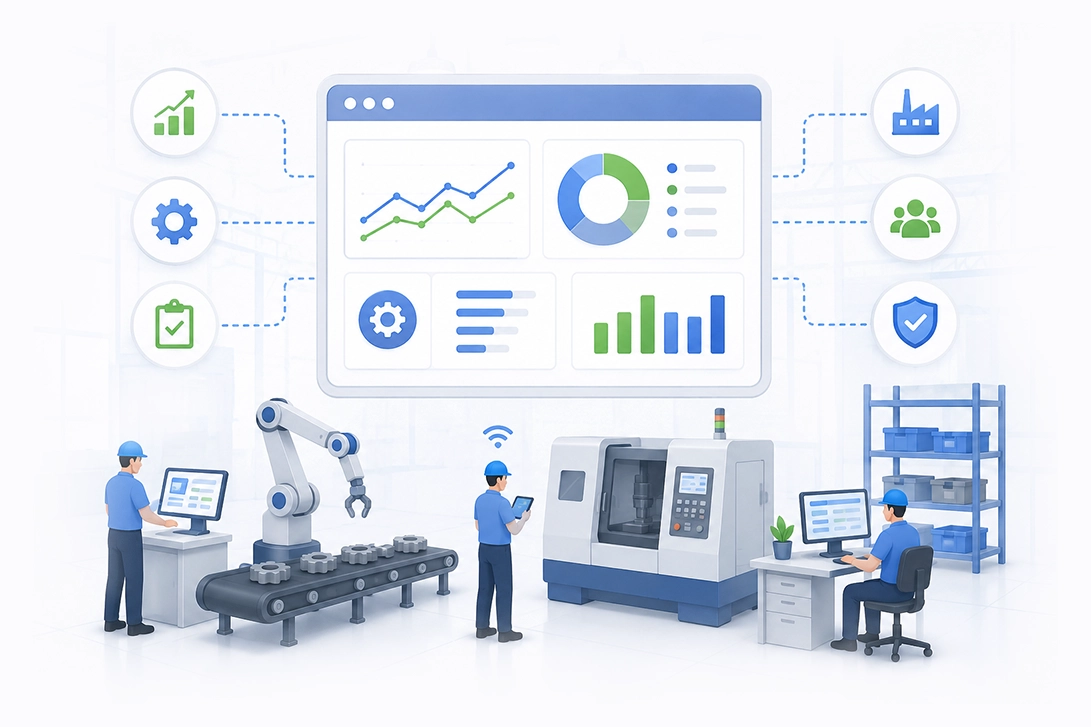
Shop floor management is a lean leadership approach that coordinates daily manufacturing operations workforce, equipment, and material flow directly where value is created on the production floor. Rooted in Toyota Production System methodologies established in 1950s Japan and supporting the broader principles of lean manufacturing, this systematic framework transforms how manufacturers control shop floor operations through real-time monitoring, standardized workflows, and data-driven decision making.
This guide covers operational control frameworks, visual management systems, continuous improvement practices, workforce management, and digital transformation through ERP integration. Manufacturing managers, plant supervisors, operations directors, and ERP implementation teams seeking to optimize production efficiency will find actionable strategies for addressing modern challenges including supply chain disruptions, labor shortages, and quality control demands.
Key outcomes from effective shop floor management implementation:
Shop floor management represents a systematic approach to coordinating manufacturing activities, equipment monitoring, workforce optimization, and production planning across the factory floor. This methodology directly addresses modern manufacturing challenges by providing real-time visibility into production progress, enabling managers to monitor production processes and make data-driven decisions that optimize production and reduce waste.
Effective inventory management on the shop floor prevents production delays by ensuring the availability of raw materials, parts, and components when needed. Proper inventory management helps manufacturers avoid stockouts and overstock situations by maintaining visibility of raw materials and semi-finished products.
The Gemba principle meaning “actual workplace” in Japanese forms the foundation of shop floor management philosophy. Regular Gemba walks help leaders understand frontline reality, coach employees, and identify bottlenecks that aren’t visible from an office. This hands-on approach connects strategic company goals directly to daily shop floor operations.
Key practices in effective shop floor management include running daily huddles, using visual management tools, performing Gemba walks, and empowering workers to solve problems. Effective shop floor management relies on a combination of visual transparency, structured communication, and active leadership presence throughout the manufacturing floor.
Real-time monitoring systems track production schedules, machine performance, and quality metrics to provide up-to-date information for operational decisions. A shop floor control system is a comprehensive solution that integrates real-time monitoring, resource management, material flow, and automation to improve manufacturing efficiency, reduce costs, and provide visibility into production processes. Real-time data collection and analytics enable manufacturers to make informed decisions quickly, optimizing processes from production progress to machine health.
Real-time visibility into production processes allows manufacturers to identify bottlenecks and inefficiencies, leading to improved operational efficiency and reduced downtime. Implementing a shop floor control system helps streamline operations by optimizing workflows, reducing delays, and enhancing overall productivity, especially when leveraging Industry 4.0 technologies. Companies that implement real-time data monitoring can achieve up to a 30% increase in productivity and a 15% reduction in lead times demonstrating how Gemba philosophy translates into measurable production capacity improvements.
Translating foundational principles into daily practice requires several key components working together across the production environment. These systems create the infrastructure for smooth operations and enable shop floor operators to achieve production targets consistently, with process optimization as a key outcome.
Visual management tools, such as electronic dashboards and SQCDP boards, are used to display real-time performance against targets. SQCDP boards tracking Safety, Quality, Cost, Delivery, and People provide immediate visibility into key performance indicators across all shifts.
Implementing a Daily Management System involves routine short, structured tier meetings to review key metrics like safety, quality, delivery, and productivity. Defining clear escalation paths helps to prevent production delays when a problem cannot be solved locally. These structured communication protocols ensure that production data flows efficiently from the shop floor to management and back.
Effective workforce management ensures that the right personnel are assigned to tasks, which boosts productivity and minimizes downtime. Standard Operating Procedures (SOPs) should be created for every task to ensure consistency and reduce variability across shifts and operators.
Labor shortages, particularly in skilled positions, can hinder shop floor operations, necessitating effective workforce allocation and cross-training of employees to mitigate this issue. Training and empowering the workforce is essential for effective shop floor management, as it ensures that employees are equipped to handle new systems and processes efficiently.
Monitoring individual and team performance on the shop floor fosters accountability, motivation, and alignment toward common production goals. Empowering frontline workers involves training them in root-cause analysis tools to solve issues locally instead of just treating symptoms, a critical capability for achieving operational excellence.
Quality checks integrated into the production process help catch defects early, minimizing waste and customer complaints. Integrated quality checks are a critical feature of shop floor control systems, allowing manufacturers to identify defects early, reduce rework, and ensure that finished products meet customer standards.
Safety metrics include near-misses and incident rates, while quality metrics include first-pass yield and defect rates. Effective management starts with maintaining a safe environment through regular safety training and enforcing strict protocols.
The 5S methodology (Sort, Set in order, Shine, Standardize, Sustain) is implemented to organize the workspace, improve safety, and enhance efficiency. This continuous improvement framework creates the foundation for sustained shop floor efficiency and customer satisfaction.
Building on component understanding, manufacturers must translate these elements into practical implementation steps. Shop floor control involves the implementation of systems and procedures to monitor and manage production processes, including production tracking, tracking work orders, allocating resources, and ensuring timely delivery of products.
Manufacturing Execution Systems (MES) track production activities in real-time, ensuring workflow visibility and quality control by capturing data on machine status and operator activity. The Industrial Internet of Things (IIoT) connects sensors and devices to gather real-time data from machinery, helping with material management and monitoring performance.
Implementation steps for LOGIC ERP integration:
Artificial Intelligence (AI) and Machine Learning (ML) analyze large datasets to enhance predictive maintenance, automate decision-making, and optimize production schedules, reducing downtime and fostering higher productivity.
| Feature | Traditional Methods | LOGIC ERP Integration |
|---|---|---|
| Data Collection | Manual timesheets and paper logs | Automated real-time tracking from existing systems |
| Reporting | End-of-shift summaries with delayed production data | Live production dashboards with time visibility into production |
| Issue Resolution | Reactive problem solving after production delays | Predictive analytics alerts to identify inefficiencies |
| Quality Control | Final inspection catches defects late | Monitoring production parameters in real time means defects are caught at the source |
Companies that implement shop floor control can see up to a 30% increase in productivity and up to a 15% reduction in lead times, highlighting its effectiveness in streamlining operations. Key Performance Indicators (KPIs) should align with goals using SMART metrics that drive the right behaviors on the shop floor.
Delivery and productivity metrics include schedule attainment and throughput, alongside machine uptime and downtime as measures of performance. Accurate tracking of inventory levels is essential for optimizing resource utilization and minimizing carrying costs in manufacturing operations..
Efficient shop floor control is crucial for manufacturing companies as it directly impacts productivity, cost-effectiveness, customer satisfaction, and overall manufacturing productivity by optimizing resource utilization and minimizing waste. Understanding common obstacles helps manufacturers prepare for successful implementation.
The introduction of IoT-enabled devices generates vast amounts of data on the shop floor, making it challenging to extract actionable insights necessary for process improvement. Implement gradual training programs starting with visual management basics before introducing comprehensive shop floor control software.
Demonstrate immediate benefits like reduced paperwork and faster issue resolution through real-time data. Focus on showing how digital tools support shop floor operators rather than replace their expertise in analyzing data and making decisions.
Managing multiple workflows in complex production environments can be challenging, making it difficult to track the status of each operation without proper shop floor control technology. Establish data validation protocols and automated error checking within LOGIC ERP workflows to ensure production plans match actual production.
Integrate the flow of materials tracking with resource allocation systems to maintain consistency across manufacturing processes. This enables manufacturers to track key performance indicators accurately and achieve production goals.
Unexpected equipment failures can disrupt production, highlighting the need for robust maintenance schedules to minimize downtime in shop floor management. Create structured Kaizen events, suggestion systems, and recognition programs for employee-driven improvements to sustain overall equipment effectiveness gains.
Regular Gemba walks combined with proper shop floor management practices ensure that continuous improvement becomes embedded in daily operations rather than a one-time initiative.
LOGIC ERP offers a comprehensive manufacturing software solution that empowers manufacturers with real-time visibility, seamless integration, and advanced analytics for effective shopfloor management and control. By leveraging cutting-edge technologies such as Manufacturing Execution Systems (MES), Industrial Internet of Things (IIoT), and Artificial Intelligence (AI), LOGIC ERP enables manufacturers to optimize production workflows, reduce downtime, and improve product quality.
Key advantages of choosing LOGIC ERP include:
LOGIC ERP provides live dashboards and electronic SQCDP boards that display critical metrics like safety, quality, delivery, cost, and people performance, enabling proactive decision-making on the shop floor.
The software facilitates task assignment, performance tracking, and skills development, helping manufacturers address labor shortages and enhance workforce productivity through targeted training and empowerment.
LOGIC ERP's integrated quality management tools allow early defect detection by monitoring production parameters in real time, reducing waste and rework while ensuring compliance with industry standards.
With accurate tracking of raw materials and work-in-progress inventory, LOGIC ERP inventory management software helps prevent stockouts and overstock situations, optimizing resource utilization and minimizing carrying costs.
Leveraging AI and machine learning, LOGIC ERP forecasts equipment failures and identifies process inefficiencies, enabling manufacturers to schedule maintenance proactively and maximize equipment uptime.
LOGIC ERP connects shopfloor operations with broader enterprise systems, ensuring synchronized workflows across procurement, finance, and production planning for end-to-end operational excellence.
By choosing LOGIC ERP, manufacturers gain a robust platform that not only streamlines shopfloor management but also supports continuous improvement initiatives, driving sustainable productivity gains and competitive advantage, while significantly enhancing manufacturing performance in today's dynamic manufacturing landscape.
Reduce Shopfloor DelaysEffective shop floor management combines lean principles, Gemba walks, visual management, continuous improvement with modern ERP technology like LOGIC ERP to deliver measurable productivity gains. Monitoring production parameters in real time means defects are caught at the source, not at final inspection, while integrated systems provide the data analytics needed to optimize production processes across the entire manufacturing floor.
Immediate actionable steps:
Related topics for comprehensive manufacturing transformation include predictive maintenance strategies, inventory management optimization, and quality management systems that integrate with shop floor control systems for end-to-end operational excellence.
Call at +91-73411-41176 / +91-73411-41175 or send us an email at sales@logicerp.com to book a free demo today!
Shop floor management is the practice of overseeing and optimizing all manufacturing activities directly on the production floor, typically guided by lean manufacturing principles as the underlying methodology. It involves coordinating labor resources, machinery, materials, and workflows to improve production time, ensure quality control, and increase overall operational efficiency. Effective shop floor control integrates real-time data monitoring and visual management tools to streamline processes and reduce downtime.
Shop floor control refers to the systems and procedures used to monitor, manage, and control production operations on the manufacturing floor. It includes tracking work orders, managing inventory and labor resources, scheduling tasks, and ensuring products meet planned values and quality standards. Effective shop floor control boosts productivity by minimizing waste, optimizing resource utilization, and providing real-time visibility into production status.
In operations management, shop floor control is the process of managing day-to-day manufacturing activities to align production output with planned values and schedules. It involves coordinating labor resources, equipment, and materials to optimize production time and maintain quality standards. Shop floor control uses tools like Manufacturing Execution Systems (MES) and real-time data analytics to enhance decision-making and ensure efficient workflow on the shop floor.
Shop floor management improves productivity by providing real-time visibility into production processes, enabling quick identification and resolution of bottlenecks, with manufacturing productivity as the key benefit. It promotes standardized workflows through SOPs and visual management tools, reducing variability and downtime. Empowering workers with training and problem-solving capabilities further enhances operational efficiency and output quality.
Key technologies supporting shop floor control include Manufacturing Execution Systems (MES), Industrial Internet of Things (IIoT) sensors, real-time data dashboards, and ERP system integrations. AI and machine learning enhance predictive maintenance and scheduling, while automation tools and visual management systems facilitate streamlined operations and quality assurance.
Real-time data is crucial because it allows manufacturers to monitor production status, machine health, and workforce performance instantly. This immediacy enables proactive decision-making to prevent delays, reduce downtime, and maintain consistent product quality, ultimately leading to improved operational efficiency and customer satisfaction.
Common challenges include managing multiple workflows simultaneously, ensuring data accuracy, overcoming employee resistance to new technologies, handling labor shortages, and extracting actionable insights from large volumes of IoT-generated data. Addressing these requires robust training, integrated systems, and continuous improvement cultures.
Shop floor management integrates quality checks directly into production processes, allowing defects to be detected early rather than at final inspection. This reduces waste, rework, and customer complaints, ensuring that finished products meet quality standards consistently and efficiently.
Workforce management ensures the right personnel are assigned to appropriate tasks, enhancing productivity and minimizing downtime. It involves training, performance monitoring, and empowering employees with problem-solving skills, which collectively foster accountability and alignment with production goals.
Effective implementation involves assessing current operations, investing in suitable technology like MES and ERP integration, training and empowering the workforce, establishing clear communication protocols, monitoring KPIs regularly, and fostering a culture of continuous improvement aligned with lean manufacturing principles.
Production processes refer to the sequence of operations and tasks performed on the shop floor to transform raw materials into finished goods. Effective management of these processes ensures smooth manufacturing operations, minimizes delays, and maintains consistent product quality.
Manufacturing operations gain improved operational efficiency and optimized production when shop floor control systems provide real-time visibility and coordination of resources. This leads to reduced downtime, better workforce management, and enhanced overall equipment effectiveness.
Continuous improvement is a core principle that involves regularly analyzing production data and workflows to identify inefficiencies and implement corrective actions. This ongoing process helps optimize production processes, increase equipment effectiveness, and improve product quality over time.
Manufacturers can optimize production processes by integrating data analytics, enforcing standardized operating procedures, and leveraging real-time monitoring tools. These strategies enable quick identification of bottlenecks and facilitate proactive decision-making to enhance operational efficiency.
Key components include real-time data collection, workforce management, inventory tracking, quality control, and integration with Manufacturing Execution Systems (MES). Together, these elements support optimized production plans and ensure high overall equipment effectiveness.
OEE is tracked by measuring machine availability, performance, and quality output using data analytics tools on the shop floor. Improvements are achieved through predictive maintenance, operator training, and continuous monitoring to reduce downtime and defects.
Operational efficiency ensures that manufacturing resources are used optimally, reducing waste and production costs while increasing throughput. It is achieved by optimizing production plans, maintaining equipment effectiveness, and fostering a culture of continuous improvement.
Data analytics provides actionable insights by analyzing production parameters and quality metrics in real time. This enables early defect detection, process adjustments, and informed decision-making, leading to higher product quality and more effective shop floor control.
The role of a production plan in shop floor management is to provide a detailed roadmap that guides the scheduling, allocation of resources, and coordination of manufacturing activities on the shop floor. It ensures that production tasks are organized efficiently to meet delivery deadlines, optimize machine and labor utilization, and maintain product quality. A well-structured production plan helps prevent bottlenecks, minimize downtime, and align the shop floor operations with overall business objectives, enabling smoother workflows and improved operational efficiency.
LOGIC ERP provides implementation guides for shop floor management integration, including templates for daily management systems, SQCDP board configurations, and ROI calculation worksheets for measuring improvements in shop floor performance.
Consider lean manufacturing certification programs that cover Gemba principles, 5S methodology, and continuous improvement frameworks. Industry best practice databases offer case studies demonstrating how manufacturers across sectors have achieved efficient manufacturing through proper shop floor management and ERP systems integration.
Monitoring production parameters in real time means defects are caught at the source, not at final inspection, which helps in maintaining high standards and reducing the risk of defective products reaching the market.
Popular Products