Revolutionizing Grocery Store Operations Through Inventory Management Software

Summary
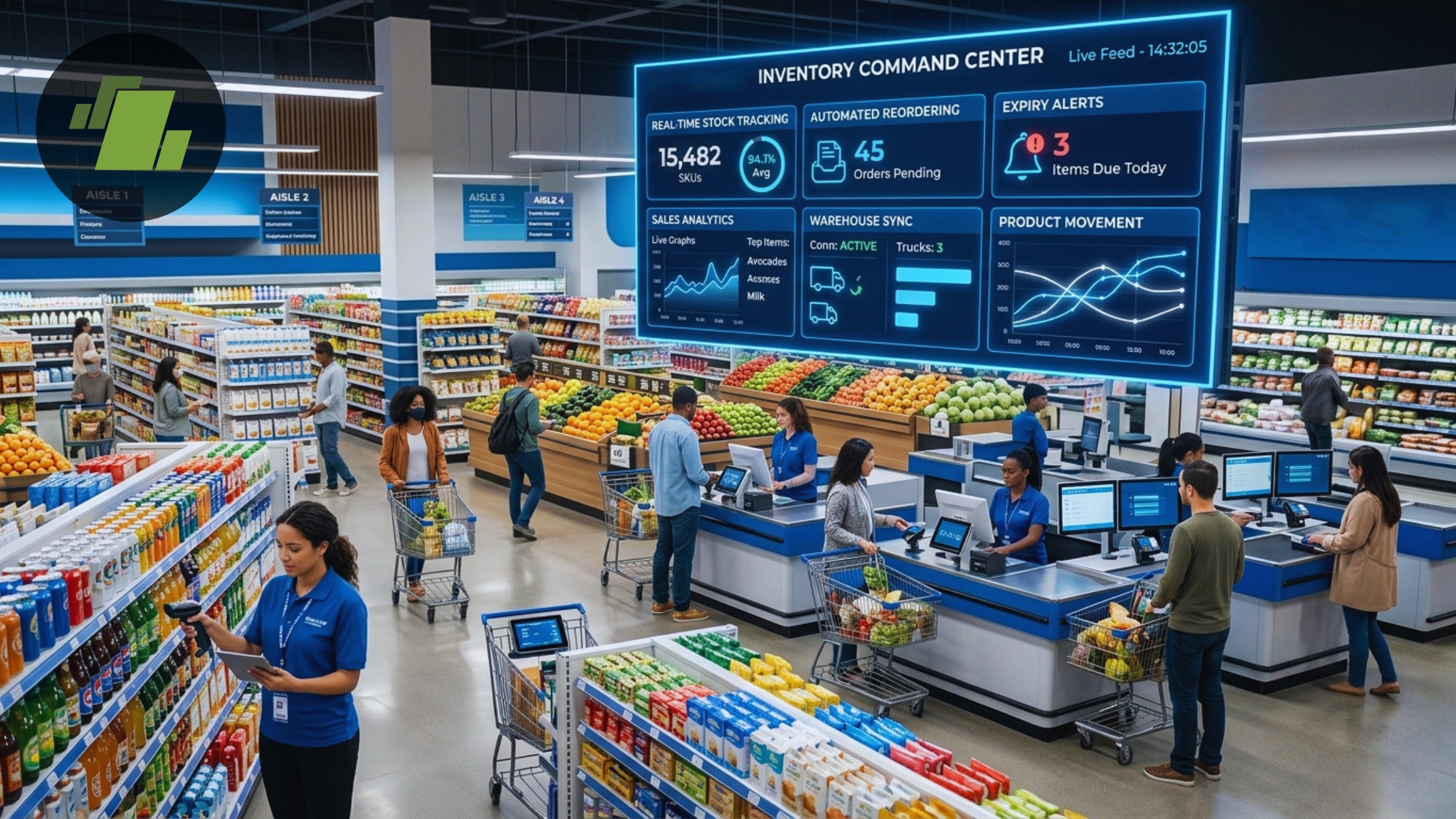
Grocery store inventory management software helps retailers automate stock tracking, reduce wastage, manage expiry dates, and improve inventory accuracy. With features like real-time inventory monitoring, grocery POS integration, and automated reorder alerts, businesses can streamline operations, improve customer satisfaction, and increase profitability. Book demo today!
Introduction
Running a grocery store involves much more than managing shelves and billing counters. Grocery retailers must handle inventory management, expiry tracking, supplier coordination, customer satisfaction, stock replenishment, billing operations, and profit optimization simultaneously. Since grocery stores deal with thousands of fast-moving and perishable products every day, maintaining accurate inventory levels becomes essential for smooth business operations.
Traditional inventory tracking methods are no longer effective in modern retail environments. Even minor inventory errors can result in stock shortages, overstocking, spoilage, wastage, billing mismatches, and revenue loss. To overcome these challenges, grocery retailers are increasingly adopting grocery store inventory management software to automate operations and gain better control over inventory.
Contact Us
Free Demo Request
An advanced grocery management system helps retailers track inventory in real time, improve stock visibility, reduce operational inefficiencies, optimize purchasing decisions, and deliver better customer experiences.
In this guide, we will explore:
- Importance of grocery inventory management
- Major inventory challenges faced by grocery stores
- Best practices for grocery inventory control
- Benefits of grocery inventory management software
- How LOGIC ERP Grocery Store Software helps retailers streamline operations
Why Inventory Management is Important for Grocery Stores
Inventory management is one of the most critical aspects of grocery retail operations. Grocery stores manage a large variety of products, including dairy items, packaged foods, beverages, frozen products, bakery products, fruits, vegetables, and household essentials. Many of these products have limited shelf lives and require proper stock rotation and expiry management.
Without an effective inventory management process, grocery retailers may face several operational and financial problems.
Poor inventory management can lead to:
- Frequent stock shortages
- Overstocking of low-demand items
- Product spoilage and expiry losses
- Blocked working capital
- Reduced customer satisfaction
- Billing and stock mismatches
- Increased operational costs
Efficient inventory management ensures that the right products are available at the right time while reducing wastage and maintaining healthy profit margins.
Modern grocery store software enables businesses to automate inventory tracking and gain real-time visibility into stock movement, helping retailers improve operational efficiency and inventory accuracy.
Common Inventory Challenges Faced by Grocery Stores
Managing Perishable Products
One of the biggest challenges for grocery retailers is managing perishable inventory. Products such as dairy items, fruits, vegetables, frozen foods, and bakery products require proper monitoring to prevent spoilage and expiry-related losses.
Without effective expiry management, retailers may experience:
- Product wastage
- Expired inventory losses
- Customer complaints
- Reduced profitability
Advanced grocery inventory management software helps retailers track expiry dates, batch numbers, and stock movement to minimize losses and improve inventory control.
Stockouts and Overstocking
Maintaining the ideal stock balance is difficult in grocery retail businesses. Overstocking increases inventory carrying costs and spoilage risks, while understocking results in missed sales opportunities and dissatisfied customers.
Real-time grocery inventory software helps retailers maintain optimal stock levels through:
- Automated stock alerts
- Demand forecasting
- Sales trend analysis
- Smart reorder planning
This ensures better inventory planning and continuous product availability.
Manual Inventory Errors
Manual inventory tracking often creates operational inefficiencies and stock inaccuracies.
Common issues include:
- Incorrect stock counts
- Human errors in billing
- Delayed inventory updates
- Stock mismatches
- Inefficient stock audits
Automated grocery retail software eliminates these challenges by synchronizing inventory updates in real time and improving overall inventory accuracy.
Supplier and Purchase Management Challenges
Managing multiple suppliers and purchase orders manually can become time-consuming and difficult, especially for growing grocery businesses.
Modern grocery management software simplifies:
- Purchase order creation
- Supplier management
- Goods receiving processes
- Vendor payment tracking
- Purchase analysis
This helps businesses improve procurement efficiency and ensure timely inventory replenishment.
Best Practices for Grocery Inventory Management
Conduct Regular Inventory Audits
Regular inventory checks are essential for maintaining accurate stock records and minimizing inventory discrepancies.
Retailers can use:
- Physical stock counting
- Barcode-based inventory audits
- Cycle counting methods
- Automated stock verification
Real-time grocery inventory systems simplify inventory reconciliation and help businesses maintain accurate stock visibility.
Implement FIFO Inventory Method
FIFO (First In, First Out) is one of the most effective inventory management methods for grocery stores dealing with perishable products.
The FIFO method ensures that older inventory is sold before newly received stock.
Benefits of FIFO include:
- Reduced expiry losses
- Better stock rotation
- Fresher products for customers
- Lower inventory wastage
FIFO inventory management significantly improves product freshness and operational efficiency.
Use Data-Driven Inventory Planning
Modern grocery inventory software provides detailed sales and inventory insights that help businesses make smarter inventory decisions.
Retailers can:
- Forecast product demand
- Identify fast-moving products
- Track slow-moving inventory
- Optimize reorder quantities
- Reduce unnecessary stock investment
Data-driven inventory planning helps grocery businesses improve profitability while reducing excess inventory costs.
Set Automated Reorder Levels
Automated reorder alerts help grocery retailers replenish inventory before products go out of stock.
Benefits include:
- Reduced stock shortages
- Improved customer satisfaction
- Better inventory planning
- Faster replenishment cycles
Inventory automation also reduces emergency purchasing costs and improves operational efficiency.
Benefits of Grocery Store Inventory Management Software
Improved Inventory Accuracy
Automated inventory tracking reduces manual errors and improves stock accuracy across the store.
Reduced Wastage and Expiry Losses
Batch tracking and expiry management features help retailers minimize spoilage and inventory wastage.
Better Inventory Visibility
Real-time stock monitoring provides complete visibility into inventory movement, stock levels, and replenishment requirements.
Faster Billing and Checkout
Integrated grocery POS systems improve billing speed and enhance customer shopping experiences.
Increased Profitability
Optimized inventory levels reduce unnecessary inventory investment and improve profit margins.
Enhanced Customer Satisfaction
Consistent product availability and faster service help improve customer loyalty and retention.
Why Choose LOGIC ERP Software for Grocery Stores?
LOGIC ERP Grocery Store Software is designed to help modern grocery retailers automate operations, improve inventory control, and increase overall business efficiency.
The software provides advanced retail automation features that streamline grocery store management and improve operational visibility.
LOGIC ERP helps grocery retailers reduce inventory losses, improve stock accuracy, automate daily operations, and deliver better customer experiences.
Conclusion
Efficient inventory management is essential for the success of every grocery retail business. Without proper inventory control, grocery stores risk stock shortages, excess inventory, spoilage, operational inefficiencies, and reduced profitability.
By implementing advanced grocery store inventory management software, retailers can automate inventory tracking, improve purchasing decisions, optimize stock levels, reduce wastage, and enhance customer satisfaction.
With LOGIC ERP Grocery Store Software, grocery retailers can streamline operations, improve inventory visibility, minimize losses, and achieve long-term retail growth.
Ready to Simplify Grocery Store Inventory Management? Call at +91-73411-41176/75 or send us an email at sales@logicerp.com to book a free demo today!
Frequently Asked Questions (FAQs)
1. What is Grocery Store Inventory Management?
Grocery store inventory management is the process of tracking, organizing, and controlling stock levels in a grocery store. It helps retailers manage product availability, reduce wastage, monitor expiry dates, and maintain accurate inventory records for smooth retail operations.
2. Why is Inventory Management Important for Grocery Stores?
Inventory management is important because grocery stores deal with fast-moving and perishable products. Proper inventory control helps reduce stock shortages, prevent overstocking, minimize expiry losses, improve customer satisfaction, and increase profitability.
3. How Does Grocery Inventory Management Software Help Retailers?
Grocery inventory management software automates stock tracking, billing, expiry management, purchase management, and inventory reporting. It provides real-time inventory visibility, improves operational efficiency, reduces manual errors, and helps retailers make better purchasing decisions.
4. What Features Should Grocery Store Software Include?
An ideal grocery store software should include:
- Real-time inventory tracking
- Grocery POS integration
- Barcode scanning
- Batch and expiry management
- Purchase and supplier management
- Billing and accounting
- Sales analytics and reporting
- Multi-store inventory management
These features help grocery retailers streamline operations and improve inventory accuracy.
5. How Can Grocery Stores Reduce Inventory Wastage?
Grocery stores can reduce inventory wastage by implementing FIFO inventory methods, tracking expiry dates, conducting regular inventory audits, using automated stock alerts, and adopting advanced grocery inventory management software for real-time inventory monitoring and planning.