Procurement: Definition, Importance, Types, Processes, and Technology

Summary
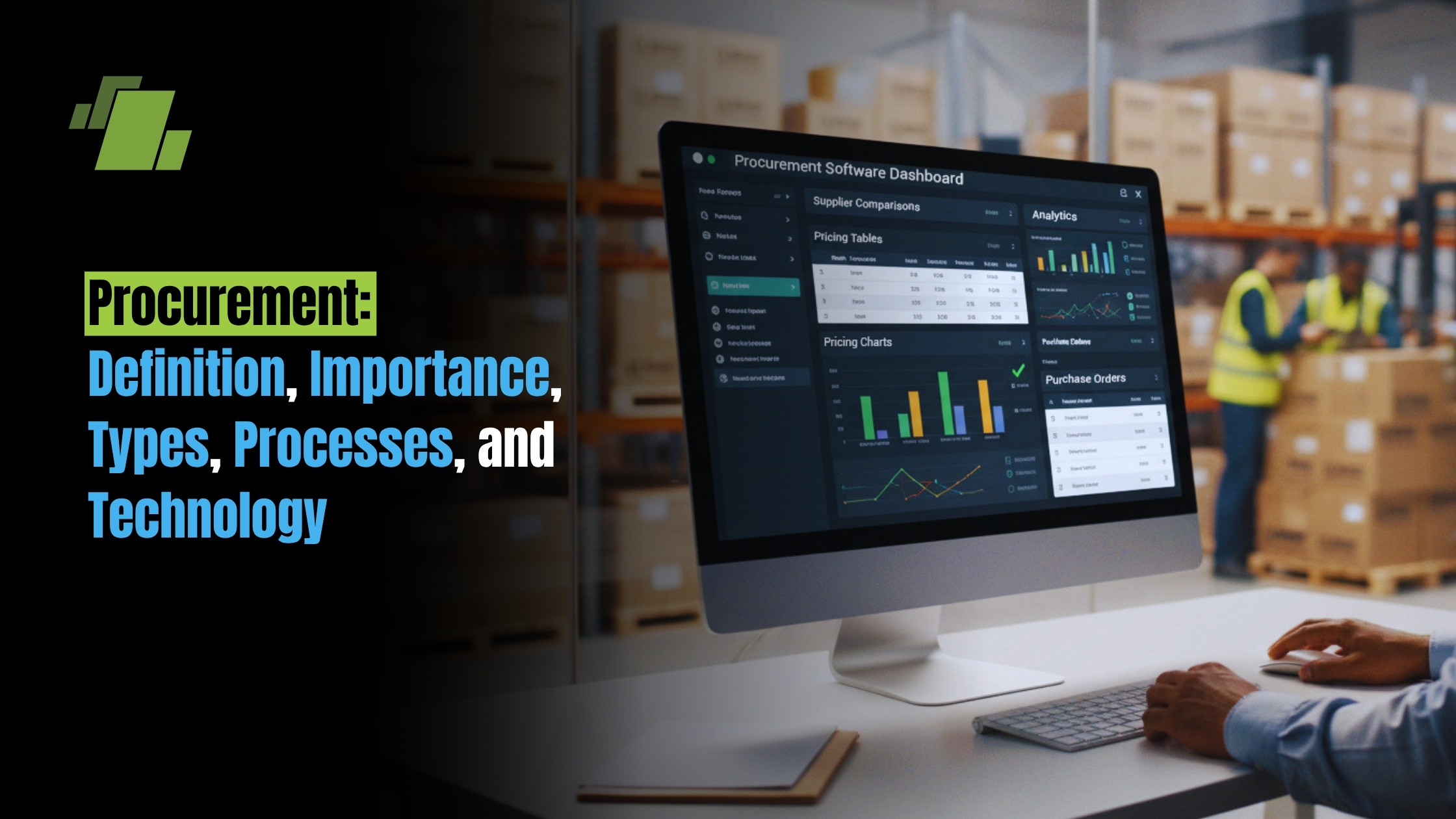
What is procurement, and why is it important for businesses? It is a strategic, end-to-end process of sourcing and managing goods and services that can impact 40–80% of organizational costs. How does it go beyond purchasing? By focusing on cost control, supplier management, and operational efficiency.
How is procurement evolving today? With AI, automation, ERP and procurement software, it is becoming more data-driven, helping businesses reduce costs, improve performance, and drive growth.
Key Takeaways
- Procurement encompasses the entire lifecycle from need identification through supplier performance evaluation
- The procurement process directly influences 40–80% of organizational costs
- Types include direct procurement, indirect procurement, goods procurement, and services procurement
- Modern procurement technology including AI and automation transforms operational efficiency
- Metrics and governance ensure procurement delivers measurable strategic value
Introduction
Procurement is the strategic, end-to-end process of acquiring goods and services that an organization needs to operate and grow. It goes far beyond simply placing orders procurement involves identifying requirements, researching suppliers, negotiating contracts, managing deliveries, processing payments, and continuously optimizing spending across the entire procurement lifecycle.
This article is intended for business leaders, procurement professionals, and anyone interested in understanding modern procurement practices.
Unlike simple purchasing (which focuses on transactional buying), procurement takes a strategic view of the complete supplier lifecycle. The procurement function considers total cost of ownership, supplier relationships, risk management, and long-term value creation.
In 2026, procurement matters more than ever. Global supply chain disruptions, rising ESG expectations, regulatory requirements like Indian GST and e-invoicing, and rapid digitalization have transformed procurement from an administrative task into a strategic discipline. LOGIC ERP supports this transformation by integrating procurement with inventory, finance, and supply chain management in a unified platform.
What you will learn in this article:
- A precise definition of procurement and its scope
- Why procurement drives 40–80% of organizational spending
- The differences between procurement, purchasing, and sourcing
- Types of procurement (direct, indirect, goods, services)
- Step-by-step procurement process from requisition to payment
- How procurement technology and AI are reshaping the function
- Key metrics for measuring procurement performance
What Is Procurement? (Formal Definition and Scope)
Procurement is the process of buying or otherwise obtaining goods or services, typically for business or government purposes and usually on a relatively large scale.
Procurement is the structured, governed process of identifying organizational needs, sourcing potential suppliers, negotiating prices and terms, ordering goods or services, receiving deliveries, and processing payments. This definition applies equally to private enterprises and public procurement contexts, though governance requirements differ significantly.
The scope of procurement includes both tangible items and intangible services:
- Goods procurement: Raw materials, components, machinery, spare parts, office supplies, packaging materials, and finished goods for resale
- Services procurement: Consulting services, IT support, legal counsel, facilities repair, marketing agencies, logistics providers, and SaaS subscriptions
You may encounter related terms used interchangeably. However, standards distinguish them clearly: sourcing refers to the early-stage activity of finding and evaluating suppliers; purchasing describes the transactional act of ordering and paying; procurement encompasses the entire process from need identification through supplier performance evaluation.
Procurement is not merely an administrative function. It sits at the intersection of supply chain management and financial management, directly influencing cost of goods sold, working capital, and operational efficiency.
Why Procurement and Supply Chain Management Are Important in Business Today
Procurement involves managing 40–80% of an organization’s total cost base, depending on industry. Manufacturing and retail companies typically fall at the higher end of this range, making procurement decisions a direct lever for profitability.
Efficient procurement improves margins, cash flow, and working capital through better payment terms, reduced inventory holding costs, and lower total cost of ownership. Every percentage point saved in procurement flows directly to the bottom line.
Here’s how successful procurement drives strategic value:
- Cost reduction: Negotiating better prices, consolidating suppliers, and leveraging volume creates measurable cost savings
- Risk management: Managing supplier relationships reduces exposure to supply shortages, geopolitical disruptions, and compliance failures (including Indian GST and e-invoicing requirements)
- Competitive advantage: Reliable supply chains enable faster time-to-market and innovation through supplier partnerships
- Operational efficiency: Streamlined procurement operations reduce cycle times and administrative overhead
- ESG compliance: Procurement is the primary lever for Scope 3 emissions reduction, ethical sourcing, and sustainable procurement practices
- Cash flow optimization: Strategic payment terms and inventory management improve working capital positions
The chief procurement officer now sits alongside the CFO and COO in strategic decision making. Organizations using advanced procurement software like LOGIC ERP recognize that procurement professionals are essential to achieving business objectives.
Procurement vs Purchasing (and vs Sourcing)
Purchasing is the transactional act of ordering and paying for goods or services. It includes creating purchase requests, issuing purchase orders, receiving deliveries, matching invoices, and processing payments through accounts payable.
Sourcing is the strategic activity of finding and evaluating suppliers through market research, RFIs (Requests for Information), RFPs (Requests for Proposal), RFQs (Requests for Quotation), and contract negotiations.
Procurement encompasses both sourcing and purchasing, plus ongoing supplier performance management and continuous improvement. The procurement management function develops strategy; purchasing activities execute transactions.
Practical examples illustrating the difference:
- A one-time emergency spot buy of office equipment is purchasing
- Developing a multi-year strategic partnership with a critical raw materials supplier is procurement
- Researching the market for alternative suppliers of packaging materials is sourcing
- Negotiating payment terms and ESG criteria with a consulting services provider is procurement
This distinction matters for setting KPIs, defining roles, and measuring performance. Organizations that conflate these terms often fail to invest appropriately in strategic procurement capabilities while over-focusing on transactional efficiency.
Types of Procurement: Direct Procurement and More
Procurement can be categorized by what is bought, by business impact, and by strategic approach. Understanding these categories helps procurement teams structure their operations effectively.
Direct Procurement
Direct procurement covers items going directly into your final product raw materials, components, and packaging. Disruptions here immediately impact the production process and cost of goods sold. Direct procurement requires close coordination with manufacturing planning and quality control.
Indirect Procurement
Indirect procurement covers goods and services that support operations but don’t appear in the final product: office supplies, IT hardware, software subscriptions, marketing services, facilities repair, and consulting services. While seemingly less critical, indirect spend often represents 20–30% of total expenditure and significantly impacts overhead control.
Goods Procurement
Goods procurement deals with tangible items machinery, spare parts, raw materials, and finished goods for resale. Specifications are measurable (size, quantity, quality standards), and the purchasing process typically includes physical inspection upon receipt.
Services Procurement
Services procurement manages intangibles like consulting, legal services, IT outsourcing, transportation, and SaaS subscriptions. Contract complexity is higher, and measuring performance requires defined deliverables, service level agreements, and acceptance criteria rather than physical inspection.
Strategic vs Tactical Procurement
Strategic procurement takes a long-term, data-driven approach emphasizing supply management and category strategies. Tactical procurement handles routine reorders, spot buys, and low-value purchases where transaction efficiency matters more than relationship building.
Public vs Private Procurement
Public procurement for government entities operates under strict transparency and competitive bidding process requirements. Systems like India’s Government e-Marketplace (GeM) enforce tendering rules designed to prevent corruption and ensure value for taxpayer money. Private procurement allows more flexible policies based on business needs.
Procurement Strategy
A procurement strategy is the blueprint that guides how an organization acquires goods and services to meet its business objectives. It sets out clear goals, policies, and methods for sourcing, purchasing, and managing suppliers, ensuring that every procurement decision aligns with the company’s broader vision. A robust procurement strategy balances cost savings with value creation, risk management, and sustainability.
Organizations typically blend direct procurement, indirect procurement, and services procurement within their strategy to address all business needs. For example, direct procurement focuses on securing raw materials and components essential for production, while indirect procurement covers office supplies and services procurement addresses consulting or IT support.
Key elements of a successful procurement strategy include:
- Competitive bidding: Leveraging open and transparent bidding processes to secure the best value from potential suppliers.
- Supplier relationship management: Building long-term partnerships to drive innovation, reliability, and cost efficiency.
- Sustainable procurement: Integrating environmental and social criteria into supplier selection and contract management.
- Use of advanced procurement software: Streamlining procurement operations, automating workflows, and providing real-time insights for smarter procurement decisions.
- Adoption of procurement technology: Utilizing digital tools to enhance visibility, compliance, and agility across the procurement function.
By continuously refining their procurement strategy and embracing the latest procurement software and technology, organizations can optimize procurement operations, reduce costs, and gain a competitive edge in their industry.
Procurement Processes: Step-by-Step Lifecycle
The procurement lifecycle often called procure to pay (P2P) or source-to-pay (S2P) is a continuous, cyclical process connecting business needs to supplier performance evaluation and improvement. The procurement process typically covers eight key steps: identifying needs, supplier research, negotiation, requisition, purchase orders, receiving, three-way matching, and record-keeping.
Step 1: Requirement Identification
Concerned departments define specific requirements including functionality, quality standards, volumes, delivery timelines, budget constraints, and compliance requirements. Vague requirements lead to poor vendor selection.
Step 2: Requisition Creation and Approval
Formal documentation of what needs to be purchased, subject to approval workflows based on spending limits and delegation of authority.
Step 3: Supplier Identification and Prequalification
Research and prequalify potential suppliers before issuing formal solicitations. Evaluate financial stability, capabilities, and past performance.
Step 4: RFx Issuance (RFI/RFP/RFQ)
Issue formal requests to qualified suppliers. RFIs gather information; RFQs request pricing; RFPs seek comprehensive proposals for complex requirements.
Step 5: Evaluation and Negotiation
Evaluate responses against predetermined criteria. Negotiate terms covering price, quality, delivery, payment terms, and service levels.
Step 6: Contract Award and Finalization
Execute formal contracts with agreed terms, conditions, and performance metrics. Include compliance clauses and ESG criteria where applicable.
Step 7: Purchase Order Issuance
After finalizing terms with the supplier, create and transmit the formal purchase order, which details the goods or services ordered, to the selected supplier, committing the organization to the purchase.
Step 8: Delivery, Receiving, and Quality Inspection
Receive goods or service deliverables. Inspect for quality and specification compliance. Document receipt through goods receipt notes (GRNs).
Step 9: Invoice Receipt and Three-Way Matching
Match the supplier’s invoice against the purchase order and GRN. Three-way matching involves comparing the purchase order, goods receipt, and supplier’s invoice to ensure all details such as quantities, prices, and terms are accurate before approving and processing payments. The supplier’s invoice plays a critical role in this step, serving as the official request for payment and supporting financial reconciliation and record-keeping within procurement and accounts payable activities. This process prevents overpayment and fraud.
Step 10: Payment Processing
Execute payment through accounts payable according to agreed payment terms and internal approval workflows. Processing invoices and fulfilling payment terms occurs after confirming that the received goods meet the order specifications.
Step 11: Supplier Performance Evaluation
Assess supplier performance against metrics including on-time delivery, quality, responsiveness, and contract compliance.
Step 12: Continuous Improvement
Use procurement data from all transactions to identify savings opportunities, process improvements, and supplier development needs.
Controls and approvals at each step ensure compliance and audit readiness. LOGIC ERP maps each step to specific system modules and workflows, providing full audit trails and automation capabilities.
Procurement Operations
Procurement operations encompass the daily activities that ensure an organization’s procurement needs are met efficiently and effectively. These operations are the engine of the procurement lifecycle, covering everything from placing orders for goods and services to managing supplier performance and processing invoices.
A high-performing procurement team coordinates closely with internal stakeholders and suppliers to keep procurement operations running smoothly. Key operational tasks include:
- Purchasing and order management: Ensuring timely acquisition of goods and services to support business continuity.
- Inventory management: Balancing stock levels to avoid shortages or excess inventory.
- Supplier management: Maintaining strong relationships and clear communication with suppliers to ensure reliability and quality.
- Contract administration: Overseeing contract compliance and renewals to mitigate risks and capture value.
Modern procurement operations rely heavily on procurement software to automate routine tasks, track procurement activities, and provide real-time data for decision making. By optimizing procurement operations, organizations can achieve greater operational efficiency, reduce costs, and enhance the overall performance of their procurement lifecycle.
Competitive Bidding in Procurement
Competitive bidding is a cornerstone of the procurement process, especially in government procurement and large-scale projects. It involves inviting multiple suppliers to submit bids for a contract, ensuring transparency, fairness, and the best possible value for the organization.
This process typically includes publishing a tender schedule, specifying the bid opening date and closing date, and evaluating submissions based on predefined criteria. Competitive bidding not only drives cost savings but also encourages innovation and competition among suppliers.
However, managing the competitive bidding process can be complex and resource-intensive. Organizations increasingly turn to procurement software and procurement technology to automate bid management, analyze procurement data, and streamline supplier communications. These tools help procurement teams make informed procurement decisions, reduce administrative overhead, and ensure compliance with government procurement regulations.
By leveraging advanced procurement technology and data analytics, organizations can enhance the efficiency and effectiveness of their competitive bidding processes, ultimately securing better outcomes for their procurement operations.
Decision Making in Procurement
Effective decision making is at the heart of a successful procurement process. Procurement professionals must evaluate a range of factors such as cost, quality, supplier reliability, risk, and sustainability when selecting suppliers and awarding contracts.
Modern procurement decisions are increasingly data-driven. Procurement software and analytics platforms provide real-time procurement data, enabling procurement professionals to compare options, forecast needs, and assess supplier performance with greater accuracy. This empowers teams to make procurement decisions that align with organizational goals and deliver measurable value.
Ethical standards are also central to procurement decision making. Transparency, fairness, and compliance with regulations must guide every step, from supplier selection to contract award. By combining strong analytical skills with a commitment to ethical standards, procurement professionals ensure that procurement decisions support both business objectives and corporate responsibility.
Sustainable and Ethical Procurement
Sustainable procurement integrates environmental, social, and governance (ESG criteria) into purchasing decisions, moving beyond price and quality alone. This represents a fundamental evolution in how organizations evaluate suppliers and make procurement decisions.
Environmental aspects:
- Life-cycle cost analysis including energy consumption and disposal
- Preference for low-carbon materials (green steel, recycled plastics)
- Selection of renewable energy suppliers
- Reduced emissions throughout the supply chain
- Recyclable packaging requirements
Social and ethical standards:
- Supplier labor practices and health & safety standards
- Prevention of child labor and modern slavery
- Diversity and inclusion in the supplier base
- Local community environmental impact assessment
Regulatory drivers are accelerating adoption:
- EU Corporate Sustainability Reporting Directive (CSRD)
- India’s Business Responsibility and Sustainability Reporting (BRSR)
- Global pressure on Scope 3 emissions reporting
Procurement teams embed sustainability into RFPs, supplier scorecards, and contracts through supplier codes of conduct and ESG clauses. Digital procurement solutions track supplier certifications, ESG ratings, and compliance alerts capabilities increasingly integrated into platforms like LOGIC ERP.
Technology in Procurement (eProcurement, Automation, and AI)
Procurement has transformed from paper-based, manual processes to fully digital, cloud-based eProcurement platforms. This shift accelerated dramatically between 2015 and 2026, driven by the need for operational efficiency, compliance, and real-time visibility.
Core eProcurement capabilities include:
- Electronic requisitions with configurable approval workflows
- Supplier catalogs and managed services repositories
- Digital purchase orders with electronic transmission
- Goods receipt notes (GRNs) and automated receipting
- E-invoicing with systematic validation
- Automated three-way matching (PO-Receipt-Invoice)
- Analytics and spend visibility dashboards
- Comprehensive audit trails for compliance
Integrated ERP platforms like LOGIC ERP connect procurement with inventory management, production planning, finance teams, GST compliance, and business intelligence for end-to-end visibility across multiple plants, warehouses, and retail outlets.
AI and advanced procurement software capabilities:
- Spend analysis identifying patterns and cost reduction opportunities
- Anomaly detection flagging unusual transactions
- Demand forecasting predicting future needs
- Supplier risk scoring assessing financial health and compliance
- Price benchmarking across suppliers and time periods
- Guided buying recommendations for end users
Emerging technologies gaining traction:
- Robotic process automation (RPA) for repetitive invoice processing tasks
- Blockchain for tamper-proof contracts and track-and-trace visibility
- IoT data feeding into automated reordering systems
Benefits are measurable: lower processing costs per invoice, fewer errors, faster cycle times, better compliance with procurement policies, and improved audit trails for regulatory and internal audit requirements.
Key Procurement Metrics and Performance Management
Measuring performance matters because procurement must demonstrate value beyond simple cost savings. The finance team and executive leadership expect procurement to show measurable contributions to profitability, risk reduction, and strategic objectives.
The classic “five rights” of procurement right quality, quantity, place, time, and price translate into concrete KPIs.
Financial KPIs:
- Realized cost savings versus baseline
- Cost avoidance (prevented cost increases)
- Spend under management percentage
- Procurement ROI
- Impact on cost of goods sold
Operational KPIs:
- Purchase order cycle time
- Supplier lead time adherence
- On-time delivery percentage
- Invoice exception rate
- Automation rate of P2P transactions
Risk and ESG KPIs:
- Supplier risk scores
- Number of supply disruption incidents
- Percentage of spend with compliant/ESG-rated suppliers
- Carbon footprint indicators (where tracked)
Real-time dashboards provide visibility across plants, locations, and business units. LOGIC ERP includes embedded analytics for monitoring these metrics dynamically, enabling procurement professionals to identify issues and opportunities as they emerge.
Procurement Roles, Organization, and Governance
Modern procurement organizations vary from small businesses with a single procurement officer to larger companies with specialized category management teams and a chief procurement officer reporting to the CEO.
Key procurement roles include:
- Procurement Officer: Oversees the overall procurement function
- Buyer: Executes individual transactions and purchase orders
- Category Manager: Specializes in specific spend categories (IT, marketing, logistics, CAPEX)
- Sourcing Manager: Focuses on supplier market research and selecting suppliers
- Contract Manager: Manages formal agreements and renewals
- Supplier Relationship Manager: Maintains ongoing supplier partnerships
Category management groups spend into categories managed by specialists who understand supplier markets and cost drivers within their domain. This approach enables deeper market knowledge than generalist procurement.
Governance elements include:
- Formal procurement policies
- Approval limits and delegation of authority frameworks
- Competitive bidding rules and thresholds
- Compliance checks including internal and external audits
ERP and eProcurement systems enforce governance through automated workflows, role-based access control, and comprehensive audit logs. The procurement department benefits from technology that embeds controls into daily operations rather than relying solely on manual oversight.
Procurement Challenges
Organizations face a variety of procurement challenges as they strive to acquire goods and services efficiently and responsibly. Some of the most common obstacles include:
- Managing supplier relationships: Building and maintaining strong partnerships while ensuring performance and compliance.
- Negotiating prices: Achieving cost savings without compromising on quality or service.
- Ensuring compliance: Adhering to regulations, ethical standards, and internal policies throughout the procurement process.
- Handling procurement data: Collecting, analyzing, and securing large volumes of procurement data for better decision making.
- Optimizing procurement operations: Streamlining workflows and reducing manual effort to improve operational efficiency.
External factors such as market volatility, economic shifts, and changes in government regulations can further complicate procurement management. Advanced procurement software and procurement technology play a crucial role in overcoming these challenges by automating processes, providing actionable insights, and supporting effective supplier relationship management.
Ultimately, successful procurement management requires a proactive approach anticipating challenges, leveraging technology, and ensuring that procurement decisions are always aligned with organizational goals and ethical standards.
Public Procurement and Government Purchasing
Government procurement is the acquisition of goods, works, and services by government entities, funded by public money and subject to strict transparency and competition rules.
Examples span all levels:
- National, state, and municipal tenders
- Defense procurement
- Healthcare and infrastructure projects
- Welcome to eProcurement system portals like India’s GeM
- EU public procurement directives
- US federal acquisition regulations
Standard tools in public procurement:
- Open tenders (bid opening date and closing date published)
- Limited tenders for specialized requirements
- Framework agreements for recurring needs
- E-tendering portals with tender schedule free access
- E-auctions and reverse auctions
Public procurement objectives:
- Value for money using taxpayer funds
- Fairness and preventing corruption
- Supporting local SMEs
- Achieving policy goals (Make in India, local content requirements)
Public procurement differs from private procurement in documentation intensity, timelines, compliance oversight, and audit requirements. Tender title reference numbers, certifying agency search capabilities, and strict maximum characters limits for submissions are common requirements.
How LOGIC ERP Supports Modern Procurement
LOGIC ERP serves as an integrated ERP and procurement solution for mid-sized and large businesses across manufacturing, retail, distribution, and pharmaceutical sectors in India and other regions.
Key procurement capabilities inside LOGIC ERP:
- Requisition management with configurable approval workflows
- Vendor master with supplier rating and performance tracking
- RFQ management and automated comparison
- Automatic purchase order generation from approved requisitions
- Goods receipt notes (GRN) linked to inventory updates
- Integration with accounts payable for seamless invoice processing
- Support for alternative suppliers and substitution logic
Compliance and integration features:
- Automation of GST-compliant e-invoicing
- TDS/TCS handling integrated into payment workflows
- Bank payment gateway integration for streamlined disbursements
- Multi-location support across plants, warehouses, and retail outlets
Analytics and visibility:
- Real-time spend dashboards across categories and suppliers
- Supplier performance tracking against delivery and quality KPIs
- Configurable alerts for price changes, contract expiries, and budget overruns
- Support for Hindi voice and regional language interfaces where needed
LOGIC ERP leverages cloud deployment, mobile access, and AI-enabled reporting to support distributed procurement teams making better decisions faster.
The Future of Procurement
The future of procurement is set to be defined by rapid technological innovation, shifting business needs, and an increasingly complex regulatory environment. As organizations navigate global supply chain challenges and rising expectations for transparency and sustainability, the procurement function will become even more central to business success.
Embracing Advanced Procurement Technology
In the coming years, procurement teams will harness the power of advanced procurement software, artificial intelligence (AI), and machine learning (ML) to transform the procurement process. Automation will streamline routine tasks such as invoice processing, supplier onboarding, and competitive bidding, freeing procurement professionals to focus on strategic procurement decisions and supplier relationships. With real-time procurement data and analytics, organizations will be able to optimize procurement operations, drive cost savings, and respond quickly to changing business needs.
Sustainable Procurement Takes Center Stage
Sustainable procurement will move from a “nice-to-have” to a core requirement. Procurement teams will increasingly evaluate suppliers based on environmental, social, and governance (ESG) criteria, integrating sustainable procurement practices into every stage of the procurement lifecycle. This shift will require new tools for tracking supplier performance, assessing raw materials sourcing, and ensuring compliance with evolving regulations. Reports such as the anticipated “Future of Sustainable Procurement” (Apr 2026 04) will provide valuable insights and best practices for organizations committed to responsible supply chain management.
Strategic Supplier Relationships and Agility
As supply chains become more interconnected and risks more pronounced, building resilient supplier relationships will be a top priority. Procurement teams will implement supplier relationship management (SRM) programs, conduct regular supplier performance reviews, and collaborate with suppliers to drive innovation and ensure continuity. The ability to quickly adapt to disruptions whether through alternative suppliers, agile procurement methodologies, or digital tender schedules will be essential for maintaining operational efficiency.
The Evolving Role of the Chief Procurement Officer
The chief procurement officer (CPO) will play a pivotal role in shaping procurement strategy, fostering cross-functional collaboration, and championing innovation. CPOs will work closely with finance, logistics, and other departments to align procurement operations with broader business objectives, ensuring that procurement delivers measurable value across the organization.
Key Milestones and Trends to Watch
- Launch of a next-generation procurement software platform designed to streamline procurement processes and enhance operational efficiency.
- Release of a comprehensive report on sustainable procurement, offering guidance on integrating ESG into procurement decisions.
- Announcement of a strategic partnership between a leading procurement technology provider and a major raw materials supplier, aimed at driving innovation and cost savings across the supply chain.
Organizations can stay ahead by leveraging e-procurement systems to download the tender schedule free of cost, submit bids online, and participate in competitive bidding processes. These digital tools not only improve procurement efficiency but also strengthen supplier relationships and support sustainable procurement goals.
Preparing for the Future
To thrive in this evolving landscape, procurement professionals must prioritize agility, innovation, and strategic leadership. By embracing advanced procurement software, developing robust supplier relationships, and embedding sustainable procurement practices, organizations can ensure their procurement function is ready for the challenges and opportunities ahead.
The future of procurement is bright for those who are proactive and informed. By staying up-to-date with the latest procurement technology, trends, and best practices, your procurement team can drive cost savings, enhance operational efficiency, and contribute to long-term business success.
Ready to future-proof your procurement operations? Explore how LOGIC ERP’s integrated procurement solutions can help you navigate the complexities of tomorrow’s supply chain and achieve your business goals.
Conclusion: Building a Future-Ready Procurement Function
Procurement is the strategic, end-to-end process of obtaining goods and services that organizations need to operate from identifying requirements through managing supplier relationships and continuously improving performance. Its importance extends far beyond transaction processing: procurement drives cost competitiveness, manages supply chain risk, and enables ESG compliance.
Organizations that professionalize procurement, measure performance systematically, and adopt digital tools position themselves for resilience in uncertain markets. The connection between procurement strategy, procurement technology, and business results has never been clearer.
Now is the time to review your current procurement maturity and consider how integrated solutions like LOGIC ERP can standardize processes, automate workflows, and provide the visibility needed for confident decision making.
Ready to transform your procurement operations? Explore LOGIC ERP’s procurement capabilities or book a demo to see how integrated supply chain management can drive results for your organization.
Call at +91-73411-41176 or send us an email at sales@logicerp.com to book a free demo today!
Frequently Asked Questions (FAQs)
1. How does procurement benefit from AI and LLM-based technologies?
AI and LLM-based technologies enhance procurement by automating complex tasks such as spend analysis and supplier evaluation. They provide smarter analytics and decision-making support, helping organizations identify the best supplier, optimize costs, and improve operational efficiency. Leveraging these technologies improves procurement’s strategic role and drives better business outcomes.
2. What role does procurement play in supply chain management and GEO strategy?
Procurement is just one aspect of supply chain management but a critical one that ensures the timely acquisition of quality goods and services. Implementing a GEO strategy helps organizations source suppliers globally while managing risks related to geographic location, regulatory compliance, and sustainability, thus strengthening supply chain resilience.
3. How can procurement processes be optimized for better SERP rankings and online visibility?
Optimizing procurement content with relevant keywords, structured data, and clear definitions improves SERP rankings. Using AEO and VEO principles ensures content answers user intent effectively, increasing visibility for procurement-related searches. This approach attracts more qualified traffic and supports brand authority.
4. Why is a national association important for procurement professionals?
Joining a national association provides procurement professionals with access to industry best practices, training, and networking opportunities. It helps stay updated on regulatory changes, emerging technologies like AI, and evolving procurement standards, enhancing skills and career growth.
5. How has the industrial revolution influenced modern procurement?
The industrial revolution marked a significant shift in procurement by introducing mass production and complex supply chains. It established procurement as a strategic function focused on sourcing quality goods and managing supplier relationships, laying the foundation for today’s advanced procurement practices supported by technology and data analytics.
6. What are the main types of procurement and how do they differ?
The main types of procurement include direct procurement (goods and services directly related to production), indirect procurement (supporting goods and services), goods procurement (tangible objects), and services procurement (intangible services like consulting or SaaS). Each type requires different strategies and management approaches to optimize value and control costs.
7. How does sustainable procurement impact business performance?
Sustainable procurement integrates ESG criteria into purchasing decisions, reducing environmental impact and promoting social responsibility. It can lead to long-term cost savings, improved brand reputation, and compliance with regulations. Organizations adopting sustainable procurement contribute to global sustainability goals while enhancing supply chain resilience.
8. What are the key steps in the procurement process?
The procurement process typically includes identifying needs, sourcing suppliers, issuing RFIs/RFPs/RFQs, evaluating and selecting suppliers, negotiating contracts, issuing purchase orders, receiving and inspecting goods, processing invoices, and managing supplier performance. Each step is crucial for ensuring value, compliance, and operational efficiency.
9. How does procurement software improve procurement efficiency?
Procurement software automates workflows, manages supplier data, facilitates purchase orders, and provides real-time analytics. It reduces manual errors, speeds up cycle times, enhances compliance, and supports strategic decision-making. Integration with ERP systems like LOGIC ERP offers end-to-end visibility across procurement and supply chain functions.
10. What challenges do organizations face in procurement, and how can they be addressed?
Common challenges include managing supplier relationships, ensuring compliance, handling large volumes of procurement data, and adapting to market volatility. Leveraging advanced procurement technology, adopting best practices like supplier relationship management, and continuous training help organizations overcome these obstacles and optimize procurement outcomes.
11. What are the four basic types of procurement?
Procurement can be divided into four basic types: direct procurement, indirect procurement, goods procurement, and services procurement.
12. What role does AI play in identifying cost-saving opportunities and anomalies in procurement?
AI can quickly compare the price and total cost of products to ensure the best per-item cost on commonly used items. Procurement is increasingly viewed as a strategic partner in complex C-suite strategy decisions, rather than just a back-office function. AI can also support smarter analytics and decision making, helping to spot opportunities, potential cost savings, and anomalies.
13. What is strategic sourcing in procurement?
Strategic sourcing focuses on long-term supplier relationships, total cost of ownership, and strategic value rather than just the lowest price.
14. How do sustainable procurement practices contribute to global sustainability goals?
A strong contract acts as the legal framework for the supplier relationship in procurement. Sustainable procurement practices can contribute to global sustainability goals by promoting efficient resource use and waste reduction. The transition to sustainable procurement can take years, making it essential for businesses to start early to remain competitive.
15. How does e-procurement technology improve procurement tasks?
Negotiating contract terms is critical to finalize pricing, delivery timelines, and payment conditions with the chosen supplier. The supplier selection and evaluation process involves researching potential vendors and shortlisting them based on reputation, pricing, and reliability. Adoption of e-procurement technology helps automate routine tasks such as purchase order creation, approval routing, and invoice matching.
16. Why is strengthening supplier relationship management important in procurement?
Strengthening supplier relationship management involves conducting regular performance reviews using KPIs like on-time delivery rates and product quality. A company’s procurement function typically accounts for more than half of the company’s total budget.

Author
Gurbir Singh
Co-founder & Managing Director | LOGIC ERP Solutions Pvt. Ltd.
With 30+ years of experience in the tech industry, I took the helm of technology & product development, ensuring LOGIC ERP’s continuous innovation & leadership in the evolving tech landscape.