Grocery Store Management Software for Grocery Retail Shops | A Complete Guide 2026

Summary
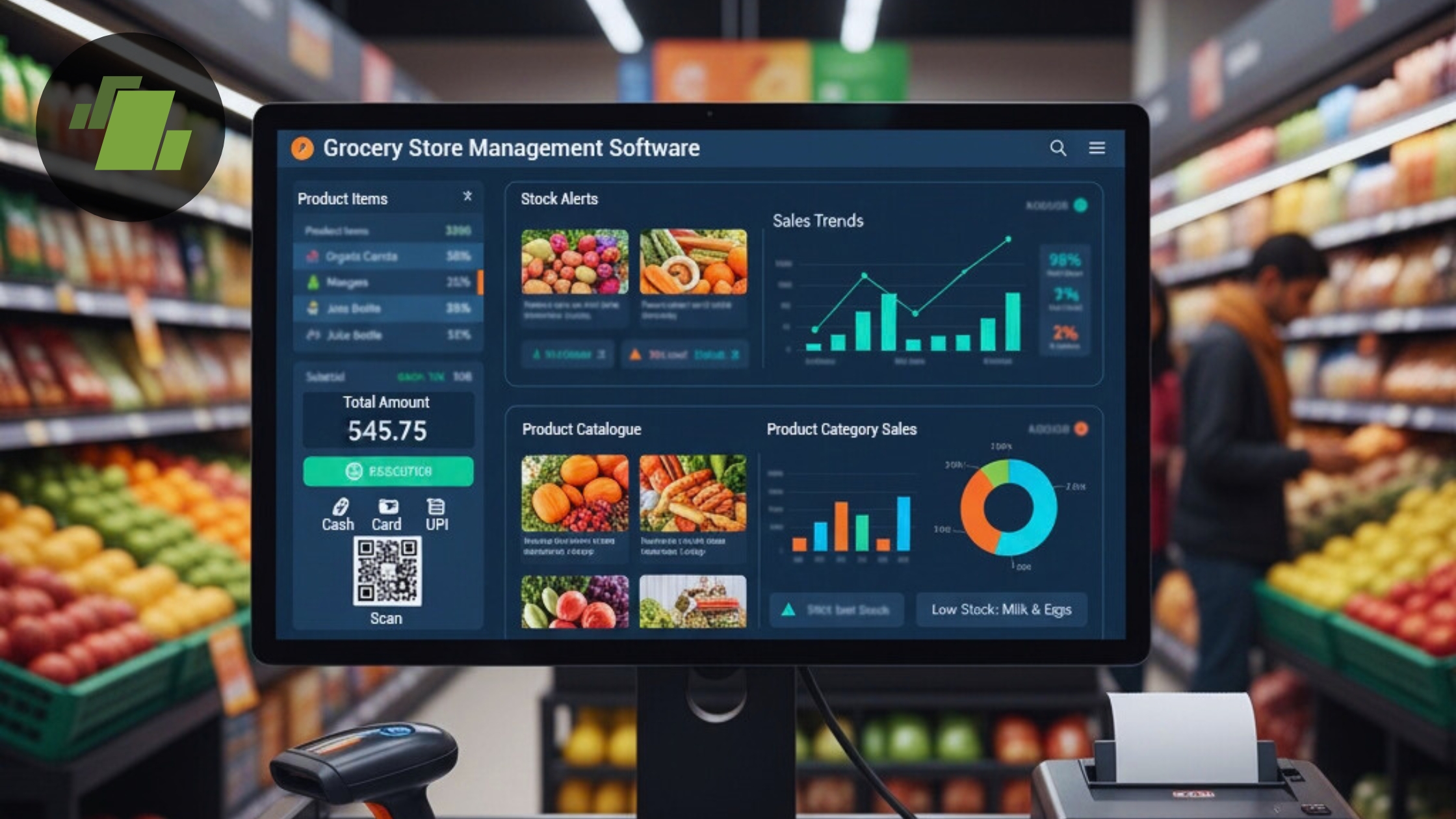
Grocery store management software helps supermarkets and kirana stores streamline daily operations by automating billing and inventory management, ensuring that every sale updates stock levels instantly. It enhances operational efficiency through real-time reporting and inventory insights, enabling retailers to make faster, data-driven decisions. The system also improves the customer experience with loyalty programs and CRM tools, while supporting ultra-fast POS billing and quicker checkout during peak hours. With real-time inventory management and automated reordering, store owners can avoid stockouts and maintain optimal stock levels. Automation helps reduce manual errors, while features like expiry date tracking and perishable inventory management minimize wastage. Successful implementation depends on proper planning, staff training, and regular system updates, ensuring grocery retailers can fully benefit from modern software to improve efficiency and grow their business.
Key Takeaways
- Grocery store software combines POS billing, inventory tracking, and sales analytics into a single platform, allowing retailers to manage daily operations from one centralized system instead of juggling multiple disconnected tools.
- LOGIC ERP provides integrated grocery POS billing software with barcode scanning, GST billing, and grocery inventory management software specifically designed for Indian retailers across all store formats.
- Concrete benefits include faster checkouts during peak hours, real-time stock visibility across categories, error free billing with automatic GST calculations, smarter purchase planning through low-stock alerts, and improved profit margins through reduced wastage.
- The software scales from single-outlet kirana shops to supermarket chains with multiple locations, offering centralized control and consolidated reporting for owners managing multiple stores.
- Modern grocery store management software is cloud-ready, supports both online and offline sales channels, and includes security features like data encryption and user access controls for complete control over store operations.
Introduction: Why Grocery Stores Need Software in 2026
This guide is designed for grocery store owners, managers, and retail decision-makers who want to modernize their operations and stay competitive in the evolving retail landscape of 2026. The article covers the features, benefits, and implementation strategies of grocery store management software, providing actionable insights for both small kirana shops and large supermarket chains.
In 2026, running a grocery store in India means managing thousands of SKUs across categories such as dairy, staples, snacks, personal care, and fresh produce. During peak shopping hours—often between 6–9 PM when customers visit after work—store owners must ensure fast billing, accurate inventory tracking, and smooth checkout experiences. Whether it is a neighborhood kirana store, mini-mart, or large supermarket, handling perishable goods, expiry dates, and high product volumes makes manual systems inefficient and error-prone.
Relying on basic billing machines creates serious challenges. Stockouts of fast-moving products like milk, bread, and eggs lead to lost sales, while overstocking slow-moving items ties up working capital and increases wastage. Manual GST calculations and disconnected systems can also cause billing errors, compliance risks, and poor visibility into sales and inventory performance.
Grocery store management software addresses these challenges by integrating supermarket POS software, grocery billing software with barcode scanning, and real-time inventory management into a single platform. Every transaction automatically updates stock levels, generates accurate reports, and maintains GST-compliant records, allowing retailers to manage their business more efficiently.
As digital transformation becomes essential for grocery retailers in 2026—driven by rising customer expectations, increased competition, and greater operational complexity—solutions like LOGIC ERP grocery store management software are tailored for the realities of Indian retail. These solutions support festival demand cycles, multi-store operations, and data-driven decision-making. By adopting modern grocery store software, retailers can reduce errors, optimize inventory, improve customer experience, and scale their business for long-term growth.
What Is Grocery Store Software?
Grocery store management software helps streamline operations by automating billing and inventory management. It is a retail management system designed to help grocery retailers manage billing, inventory, purchases, supplier relationships, and sales tracking through an integrated platform that connects all store operations.
Grocery store management software is important for modern grocery retailers who want to step into the world of retail business and are looking for a scalable solution. It can help reduce waste by tracking expiry dates and managing perishable inventory effectively, thanks to features like batch tracking and expiry monitoring. Additionally, it can improve customer experience by offering loyalty programs and personalized promotions, as well as including customer loyalty and CRM tools.
Key components include:
- Grocery POS billing software for fast, accurate checkout with barcode scanning and weighing scale integration
- GST-compliant grocery billing software with barcode support for automatic tax calculations
- Grocery inventory management software for real-time stock tracking and expiry management
- Purchase and supplier management for streamlined procurement and vendor relationships
- Sales analytics and reporting dashboards for performance monitoring
The system architecture connects three operational layers: front-end counters where POS transactions occur, back-office functions handling purchases, pricing, and accounting, and management dashboards providing reports and analytics. All data flows into a single database, creating a unified source of truth that eliminates discrepancies between what staff believe is in stock and actual inventory levels.
On a daily basis, the software handles critical operations including raising GST invoices at billing counters, scanning barcodes on FMCG products, integrating with weighing scales for fruits and vegetables, updating stock levels in real time with each transaction, and generating end-of-day sales and cash reports for reconciliation.
LOGIC ERP can be deployed as an on-premise installation for stores with existing IT infrastructure or as a cloud-based grocery store POS system for retailers prioritizing accessibility and automatic updates. The deployment model depends on store size, IT readiness, and preferences for data management.
Why Grocery Stores Need Retail Management Software?
With these challenges in mind, let’s explore how grocery store software helps manage sales and inventory.
Many Indian grocery stores still rely on manual processes that worked adequately when product assortments were smaller and customer expectations lower. Today, these approaches create bottlenecks that directly impact profitability and customer satisfaction.
Common pain points retailers face:
- Inaccurate stock tracking across categories leading to both stockouts and overstock situations
- Slow billing during evening peaks creating long queues and frustrated customers
- Difficulty tracking item-wise and category-wise sales performance
- Manual purchase decisions based on memory rather than consumption data
- No systematic expiry tracking for perishables like dairy, bread, and packaged foods
- Time consuming reconciliation between physical stock and records
Grocery store management software automates these areas systematically. Every sale at the POS automatically updates stock levels. Barcode scanning replaces manual data entry for faster, more accurate billing. Built-in reports break down performance by brand, category, and time period. Automated reorder alerts trigger when fast-moving items approach minimum thresholds. Batch-wise tracking ensures FIFO rotation for perishables.
Store types that benefit span the retail spectrum: single kirana shops looking to modernize operations, mini-markets with 2-3 outlets needing centralized visibility, and supermarket chains with 10+ locations in Tier-1 and Tier-2 cities requiring sophisticated category management and chain-level analytics.
LOGIC ERP has implemented such systems for Indian retailers across formats and geographies, understanding the unique seasonal spikes during Diwali, wedding seasons, and monsoon months that affect buying patterns and require flexible inventory planning.
How Grocery Store Software Helps Manage Sales
Sales management in a grocery store extends from the billing counter where transactions happen to the analytics dashboards where owners evaluate performance. The speed and accuracy of checkout directly impact customer experience, while sales tracking provides the insights needed for better business decisions.
Key Capabilities of POS Billing
A modern grocery store POS system transforms the checkout experience through barcode scanning that processes items up to 50% faster than traditional manual techniques. The system supports PLU codes for loose items, integrates with electronic weighing scales for fruits and vegetables, and handles the varied product mix typical in grocery retail.
Key capabilities include:
- Bill hold and recall for handling multiple customers simultaneously
- Item search by name, brand, or category when barcodes are unavailable
- Scanning of prepacked barcoded goods with automatic price lookup
- GST-compliant invoice generation per Indian tax requirements
- Automatic application of discounts, offers, and promotional pricing
- Support for multiple payment modes including cash, card, and UPI
Benefits for daily operations:
- Faster checkout reduces queue lengths during peak hours
- Billing accuracy eliminates pricing disputes with customers
- Automatic GST calculations prevent compliance errors
- Reduced manual entry decreases cashier fatigue and mistakes
LOGIC ERP’s grocery POS billing software includes offline-then-sync capability, ensuring that billing continues uninterrupted even during internet connectivity issues common in some retail locations. Once connectivity returns, transactions automatically synchronize with the central database.
Key Sales KPIs
Every transaction captured at the POS feeds into real-time and historical sales reports, providing visibility that transforms how retailers understand their business.
Key sales KPIs available for monitoring:
- Daily sales amounts and transaction counts
- Number of bills processed per counter and per cashier
- Average bill value trends over time
- Top-selling SKUs by quantity and revenue
- Fast-moving versus slow-moving item identification
- Peak billing hours within each day
- Category-wise and brand-wise sales breakdowns
Store management uses these insights to make informed decisions about shelf space allocation, pricing adjustments, and promotional strategies. For example, understanding that dairy products peak on weekend mornings while snacks sell most during evening hours helps optimize stock positioning and staffing.
LOGIC ERP dashboards are accessible via web and mobile interfaces, allowing store owners to track performance remotely. Whether traveling between locations or working from home, owners maintain visibility into sales trends, daily targets, and operational efficiency.
Multi-Store Capabilities
Grocery chains operating multiple outlets face the challenge of maintaining consistent performance standards while allowing for local market variations. Supermarket software designed for multi-store operations provides the centralized control needed for efficient chain management.
Multi-store capabilities include:
- Centralized dashboard showing outlet-wise sales and profitability
- Store comparison reports by city, region, or format
- Revenue per square foot analysis across locations
- Performance tracking of key brands and categories at each store
- Standardized price list management from head office
- Consistent promotional offer deployment across all outlets
LOGIC ERP enables head office teams to monitor remote locations, push price changes across the chain, and identify underperforming stores that need attention. Consolidated reporting provides the chain-level view while drill-down capabilities allow analysis of individual store performance.
How Grocery Software Helps Manage Inventory
Inventory represents the largest investment in any grocery store, and margins depend directly on accurate inventory management and minimal wastage. The grocery industry operates on thin margins where even small improvements in stock accuracy and loss reduction translate to meaningful profit impact.
Grocery inventory management software tracks every inward and outward movement: purchases received through Goods Receipt Notes, sales transactions at counters, customer returns, damages and wastage, and transfers between multiple locations for chain operations.
Automated Stock Tracking
Inventory levels update automatically with each transaction, eliminating the manual reconciliation that consumes hours in stores using disconnected systems. Research indicates that inventory management software can reduce time spent on in-store inventory counts by 25%.
The system maintains comprehensive records:
- Daily opening stock by SKU
- Purchase quantities received
- Sales quantities sold
- Returns from customers
- Wastage and damage write-offs
- Closing stock calculations
Key benefits include:
- Real-time stock visibility across all categories
- Fewer discrepancies between system records and physical counts
- Accurate stock valuation for financial reporting
- Better demand forecasting based on historical consumption patterns
- Warehouse management efficiency through organized tracking
LOGIC ERP provides category-wise and brand-wise inventory reports, helping buyers plan replenishment more scientifically based on actual movement data rather than intuition. Efficient inventory management becomes achievable even for stores with thousands of SKUs.
Low Stock Alerts and Automated Reordering
Preventing stockouts of critical fast-moving items requires systematic monitoring rather than relying on staff to notice empty shelves. The software allows users to define minimum and maximum stock levels or reorder points per item based on historical consumption and supplier lead times.
Alert and reorder capabilities:
- Low-stock alerts when inventory approaches predefined thresholds
- Suggested purchase order generation based on consumption patterns
- Seasonal pattern recognition for items like soft drinks in summer
- Supplier lead time consideration in reorder calculations
- Vendor-wise purchase order generation directly from the system
This automation proves particularly valuable for items that drive daily store traffic—packaged milk, bread, eggs, and snacks where stockouts immediately impact customer satisfaction and send loyal customers to competitors.
LOGIC ERP’s reorder logic can be configured to recognize festival spikes, wedding season demand increases, and monsoon-related buying pattern changes, ensuring inventory control adapts to the seasonal rhythms of Indian retail.
Barcode-Based Inventory Control
Barcode scanning enables quick stock counting, fast billing, and accurate inventory identification even for stores managing thousands of FMCG items across categories. Manual tracking of such large assortments would be impractical and error-prone.
Barcode capabilities include:
- Support for GS1 barcodes on branded goods
- Internal barcode generation for loose or repacked items
- Barcode label printing for in-house packs
- Barcode-based GRN for goods receipt verification
- High accuracy stock audits using handheld scanners
The integration of barcode scanning with inventory systems ensures that every item sold is immediately reflected in stock records, preventing the discrepancies that plague manual operations. Stock audit speed improves dramatically, making periodic counts less disruptive to daily operations.
LOGIC ERP integrates with barcode scanners, label printers, and weighing scales commonly used in Indian grocery stores, ensuring compatibility with existing hardware investments while supporting upgrades when needed.
Additional Features of Grocery Store Management Software
Beyond billing and inventory control, comprehensive grocery store software like LOGIC ERP includes modules that extend operational capabilities across the business.
Supplier and Purchase Management:
- Vendor master database with contact and payment terms
- Purchase order generation and tracking
- GRN processing for goods receipt verification
- Purchase returns management
- Rate comparison across suppliers
- Landed cost calculations including freight and taxes
Sales Analytics and Reports:
- Item-wise margin analysis
- Category contribution to overall revenue
- Dead stock identification reports
- Promotion performance analysis
- Time-based sales pattern reports
- Customer management insights
Customer Loyalty Programs:
- Points-based loyalty programs for repeat customers
- Mobile number-based customer identification
- Coupon generation and redemption tracking
- Festival-specific and weekday promotional schemes
- Purchase history tracking for targeted offers
Accounting Integration:
- Automatic posting of sales to financial ledgers
- Purchase transaction recording
- Inventory adjustment entries
- GST return support with transaction summaries
- Financial statement data integration
These features transform supermarket operations from disconnected departmental store functions into an integrated retail operation with complete control over all aspects of the business.
Benefits of Using Grocery POS Billing Software
The combined impact of integrated POS, billing software, and inventory modules delivers measurable improvements in operational efficiency and profitability for grocery stores of all sizes.
Key benefits include:
- Faster billing and faster checkouts reducing customer wait times during peak hours
- Accurate inventory tracking with lower stock losses from expiry and wastage
- Real-time sales tracking enabling data-driven decisions
- Improved purchase planning through consumption-based reordering
- Better customer experience from reduced queues and billing accuracy
- GST billing compliance with automatic tax calculations
- Reduced manual effort and lower dependency on specific staff members
- Confident decision-making based on actual performance data rather than assumptions
- Support for both online and offline sales through integrated systems
- Streamline operations across billing, inventory, and purchases
Retailers implementing LOGIC ERP typically observe improvements in stock accuracy and billing speed within the first few months, with the benefits compounding as staff become proficient with the system and historical data accumulates for better analytics.
Documented outcomes from grocery retailers using advanced inventory systems include 15% reduction in monthly losses through real-time data implementation and double-digit revenue growth in specific product categories through enhanced inventory visibility.
How to Choose the Best Grocery Store Software
Selecting grocery store software is a long-term decision that affects daily operations, staff productivity, and growth potential. The best software choice depends on current needs and future expansion plans.
POS and Billing Evaluation Criteria:
- Barcode scanning speed and accuracy
- Weighing scale integration for loose items
- GST compliance and invoice formats
- Multiple payment mode support
- Offline operation capability
- Billing accuracy and error prevention
Inventory Management Capabilities:
- Batch-wise and expiry tracking for perishables
- Reorder alert configuration flexibility
- Multi-location stock visibility
- Stock audit and counting features
- Category and brand-wise reporting
Technical Considerations:
- Cloud versus on-premise deployment options
- Data security and encryption standards
- Backup and disaster recovery provisions
- User-based access controls
- Hardware compatibility with printers, scanners, and payment devices
- Cloud services reliability and uptime
Business-Oriented Factors:
- Implementation support availability in India
- Training availability in local languages
- Support responsiveness and escalation paths
- Future roadmap for e-commerce integration and online ordering
- Scalability for multiple outlets growth
- Online store integration capabilities
LOGIC ERP addresses these requirements as a long-standing, India-focused grocery store POS system with experience across different store formats from kirana to supermarket chains, different geographies, and varying business scales. The platform offers the pos software foundation that retailers need along with the specialized grocery industry features that generic retail systems often lack.
Future of Grocery Store Management with Automation
Retail technology continues evolving rapidly, with trends through 2026 and beyond pointing toward increased automation, cloud adoption, and omnichannel integration for grocery retailers.
Emerging trends shaping grocery retail:
- Cloud-based POS adoption enabling remote access and automatic updates
- Omnichannel grocery sales integrating online store orders with in-store operations
- Mobile-based management apps for owners and staff
- Data-driven decision-making replacing intuition-based operations
- Home delivery integration with inventory and billing systems
- Online ordering capabilities through integrated platforms
Advanced technologies gaining adoption:
- AI-based demand forecasting for grocery items using historical patterns
- Dynamic pricing for near-expiry goods to reduce wastage
- Automated replenishment using machine learning on sales patterns
- Camera vision technology for theft reduction
- Mobile apps for staff inventory counts and goods receiving
The transformation extends beyond simple billing software to position grocery store software as the backbone of automated, scalable retail operations. Retailers who view their systems as strategic infrastructure rather than just billing tools position themselves for competitive advantage.
LOGIC ERP’s roadmap includes deeper analytics capabilities, tighter e-commerce integration for supermarkets expanding into online channels, and advanced automation features designed specifically for Indian grocery and supermarket retailers navigating this digital transformation.
Why Choose LOGIC ERP Software for Grocery Store Management?
LOGIC ERP is a complete grocery store management software and supermarket POS solution designed to simplify store operations, improve efficiency, and boost profitability. Trusted by retailers across the industry, it brings all essential store functions into one smart, centralized platform.
Here’s why grocery and supermarket businesses prefer LOGIC ERP software for retail store management:
Fast & Accurate Supermarket POS Billing
Speed up checkout with advanced POS billing software for supermarkets that supports quick scanning, GST-compliant invoices, and seamless billing for high-volume grocery stores.
Real-Time Inventory Tracking
Stay updated with smart grocery inventory management that automatically tracks stock levels, reduces stockouts, and prevents overstocking of fast-moving and perishable items.
AI-Driven Demand Forecasting
Use AI-powered analytics to analyze past sales trends and seasonality, helping grocery retailers predict demand and maintain the right inventory levels.
Customer Management & Loyalty Programs
Build stronger relationships with customers through customer management tools and loyalty programs that track purchase history and encourage repeat purchases.
Profit Margin & Sales Insights
Get detailed reports and analytics to monitor profit margins, product performance, and sales trends, helping you make smarter business decisions.
Single Dashboard for Complete Control
Manage billing, inventory, purchases, suppliers, and reports from a single dashboard, giving grocery store owners complete control over daily operations.
Online Grocery Store Integration
Connect your offline supermarket with an online grocery store to manage orders, inventory, and sales from one platform.
Scalable for Growing Supermarkets
Whether you run a single grocery store or multiple supermarket outlets, LOGIC ERP provides a scalable solution designed for retail growth.
With supermarket POS software, grocery inventory management, customer management, and advanced analytics, LOGIC ERP empowers grocery retailers to reduce errors, improve efficiency, and grow their business faster.
Conclusion
Grocery store management software integrates grocery POS billing software, inventory management, and sales analytics into a unified platform that transforms how retailers operate. Rather than managing disconnected systems and manual processes, store owners gain a single dashboard view of their entire operation with real-time visibility into sales, stock levels, and business performance.
The benefits are concrete and measurable: faster checkout reducing queues during peak hours, accurate inventory control minimizing stock losses and wastage, smarter purchase planning based on actual consumption data, and improved profitability through operational efficiency. These improvements apply whether you operate a single kirana shop or manage multiple stores across cities.
Selecting a robust grocery store POS system like LOGIC ERP helps retailers manage current supermarket operations efficiently while preparing for growth, omnichannel selling, and future automation. The platform’s India-focused design addresses local requirements from GST compliance to seasonal buying patterns that generic solutions often miss.
For retailers ready to optimize operations and save time while building a foundation for growth, evaluating LOGIC ERP’s grocery store software through a demonstration or consultation provides the opportunity to see how these capabilities apply to your specific store format and business goals.
Call at +91-73411-41176 or email sales@logicerp.com to book a free demo today!
Frequently Asked Questions (FAQs)
1. Is grocery store software suitable for small kirana shops as well as large supermarkets?
Modern grocery store software like LOGIC ERP is modular, allowing small kirana stores to start with basic POS billing and inventory modules and later add capabilities for purchases, loyalty programs, or multi-store management as the business grows. Large supermarkets and mini-markets benefit from more advanced features including multi-counter billing, central price list management, departmental store category management, and chain-level reporting. The same platform can scale from a single outlet in a neighborhood market to a multi-city supermarket chain, providing flexibility that protects the software investment as the business expands.
2. Can grocery billing software work with existing barcode scanners and weighing machines?
Most grocery billing software, including LOGIC ERP, supports integration with commonly used barcode scanners, thermal printers, cash drawers, and electronic weighing scales found in Indian retail environments. During implementation, the deployment team validates hardware compatibility and configures device drivers and settings to ensure billing counters work smoothly from day one. Stores planning hardware upgrades can receive guidance on recommended models that ensure optimal performance and longevity with the software system.
3. How does grocery store management software help with GST compliance in India?
Grocery POS billing software with GST support automatically applies correct GST rates to items based on their HSN codes, prints GST-compliant invoices with all required fields, and maintains detailed transaction records for audit purposes. Systems like LOGIC ERP generate GST-related reports and summaries that simplify filing returns and reconciling sales and purchase data with accounting records. This automation reduces errors the risk of manual GST calculation mistakes that could result in penalties during tax assessments.
4. Can I manage both my physical grocery store and online orders using the same system?
Many modern grocery store POS systems, including LOGIC ERP, offer APIs and integrations with e-commerce platforms or custom online ordering applications. Using one back-end system for both online and in-store sales ensures unified inventory visibility, consistent pricing across channels, and consolidated reporting that provides complete business insights. This omnichannel approach is especially valuable for urban grocery stores offering home delivery and click-and-collect services where customers expect seamless experiences regardless of how they shop.
5. How long does it typically take to implement grocery store software?
Implementation time depends on store size, data complexity, and the number of locations, but a single grocery outlet can usually go live within a few weeks once master data including items, prices, tax rates, and supplier details are prepared. LOGIC ERP follows a structured implementation process: requirement study, data preparation, system configuration, staff training, pilot run, and final roll-out. Multi-store chains typically phase the rollout outlet by outlet to minimize disruption to daily operations and allow learnings from early implementations to improve subsequent ones.
6. What is supermarket POS software and how does it help grocery store management?
Supermarket POS software helps grocery store owners manage billing, sales, inventory, and customer data from one system. It speeds up checkout, reduces manual work, and improves accuracy, making daily store operations faster and more efficient.
7. How does grocery store management software help with inventory tracking?
Inventory tracking in grocery store management software automatically updates stock levels when products are sold or restocked. This helps store owners prevent stockouts, track fast-moving products, and maintain accurate inventory records.
8. Can supermarket POS software help increase profit margin?
Yes, supermarket POS software helps improve profit margin by tracking product performance, managing pricing, reducing wastage, and identifying best-selling items. With real-time reports, store owners can make better purchasing and pricing decisions.
9. How does grocery store management software reduce errors in daily retail operations?
A modern grocery store management software automates billing, stock updates, and reports. This automation helps reduce errors caused by manual data entry and ensures accurate sales, inventory, and financial records.
10. What is the role of customer management in grocery store software for retail management?
Customer management features allow grocery store owners to track purchase history, manage loyalty programs, offer discounts, and build stronger relationships with customers, which helps increase repeat purchases.
11. Can grocery store software support a grocery online store?
Yes, many modern systems allow integration with a grocery online store. This enables store owners to manage both offline and online sales from one platform, sync inventory, and process online orders easily.
12. How does a single dashboard help manage grocery store operations?
A single dashboard provides a complete overview of sales, inventory, purchases, and customer activity. Store owners can quickly access reports and monitor performance without switching between multiple systems.
13. How does grocery store management software provide complete control over store operations?
With features like inventory tracking, billing, purchase management, customer management, and reporting, the software gives store owners complete control over daily operations and helps them make faster business decisions.
14. Can supermarket POS software handle multiple product categories in grocery industry stores?
Yes, supermarket POS system by LOGIC ERP helps to manage thousands of grocery items across different categories like FMCG, dairy, fruits, packaged foods, and household products while maintaining accurate inventory records.
15. Why is inventory tracking important for grocery stores?
Accurate inventory tracking helps grocery stores manage perishable goods, avoid overstocking, reduce wastage, and ensure products are always available for customers.
16. Which is the best supermarket billing software for grocery store management?
LOGIC ERP is the best and most trusted billing software for supermarket and grocery stores. Offering the AI enable supermarket POS system, LOGIC ERP provides fast POS and error free billing, real-time inventory tracking, inventory control, expiry tracking, GST-compliant invoicing, customer management, profit margin analysis, and full control through a single dashboard, helping retailers streamline operations and run their grocery business more efficiently.
17. What are the key features of grocery store management software?
LOGIC ERP software for supermarket and grocery stores is regarded as the first choice of supermarket and grocery businesses and retailers. Its key features include supermarket POS billing, real-time inventory tracking, customer management, profit margin analysis, purchase and stock management, and complete store control through a single dashboard.
18. What are the benefits of Grocery Store Management Software?
Grocery store management software can improve customer experience by offering loyalty programs and personalized promotions. Retailers using integrated systems experience higher customer satisfaction and lower costs through streamlined operations.
Grocery store management software helps streamline operations by automating billing and inventory management. Using grocery store management software can enhance operational efficiency by providing real-time reporting and inventory management.
19. How do customer loyalty programs in grocery store management software encourage repeat purchases?
Customer loyalty programs are integrated into grocery store management software to encourage repeat purchases.
20. Which is the best grocery store management software for retail shops and stores?
A good grocery store billing software syncs stock instantly after every sale. Supermarkets must be ready for online orders and home delivery. The best grocery billing software should facilitate fast billing with barcode scanning and relevant GST rates. A good grocery store billing software syncs stock instantly after every sale. The best supermarket POS system includes loyalty and engagement features.
21. What are grocery store management software features?
Automated reordering generates purchase orders or alerts based on historical sales data when stock levels fall below thresholds. A good grocery store management software should include customer loyalty and CRM tools. A good grocery store management software should include customer loyalty and CRM tools. Grocery store management software should provide real-time reporting and inventory management.
22. How can businesses implement grocery store management software effectively?
Implementing grocery store management software requires careful planning and smooth integration with existing store systems such as POS billing, inventory management, and accounting.
Modern solutions use AI-driven demand forecasting to analyze past sales trends and seasonal patterns, helping grocery store owners predict future stock requirements and maintain optimal inventory levels.
Proper staff training is also essential to ensure employees understand how to use the software efficiently for billing, inventory tracking, and customer management.
With the right implementation strategy, grocery businesses can streamline operations, reduce manual errors, and improve overall store performance. Regular updates and maintenance of grocery store management software are necessary to ensure optimal performance and security.

Author
Sharanjit Ghuman
Director of Communications | LOGIC ERP Solutions Pvt. Ltd.
Leading and managing the company’s internal and external communication strategies and working closely with senior leadership to develop and execute communication plans.