Omnichannel Experience for Modern Supermarkets

Introduction
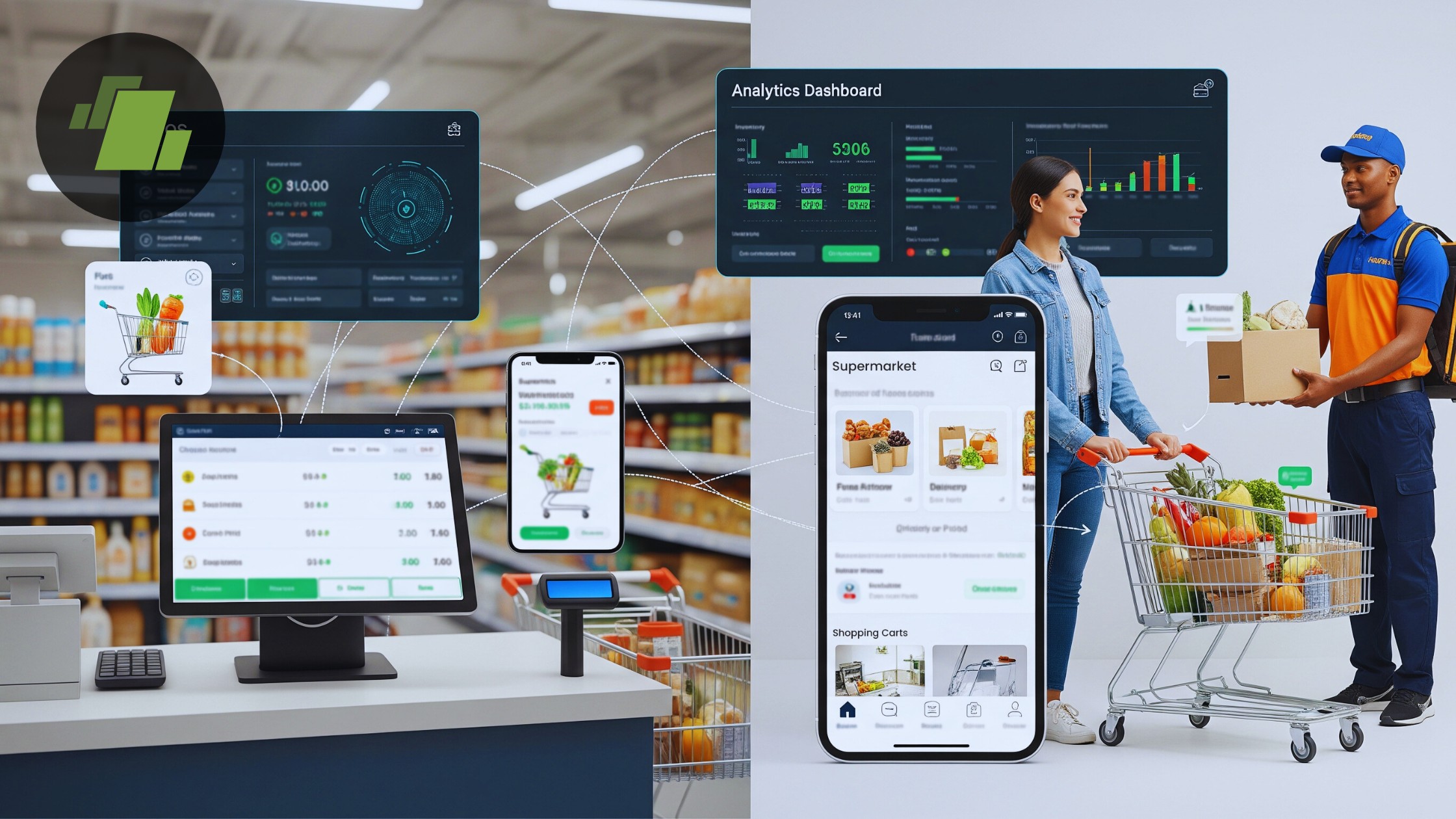
The omnichannel experience for supermarkets refers to creating a smooth, connected shopping journey across physical stores, online platforms, mobile apps, and billing systems. Today’s supermarket customers no longer shop through a single channel. They browse products online, compare prices on mobile, place orders through apps, and complete purchases in-store.
Customer behavior has changed rapidly. Shoppers expect flexibility, speed, and consistency whether they shop offline or online. They want the same prices, offers, and loyalty benefits everywhere. This shift makes integrated retail experience a necessity, not an option.
For modern supermarkets, seamless integration across channels is important for growth, customer satisfaction, and long-term competitiveness. A strong supermarket omnichannel strategy helps retailers meet these expectations while improving operational efficiency.
What Is an Omnichannel Experience in Supermarkets
An omnichannel experience connects all supermarket sales and service channels into one unified system.
Instead of managing store sales, online orders, and mobile transactions separately, omnichannel retail brings everything together using shared data and systems.
Omnichannel vs Multi Channel Retail
- Multi channel retail allows customers to shop through multiple platforms, but each channel operates independently. Inventory, pricing, and customer data may differ across channels.
- Omnichannel retail for supermarkets ensures all channels are connected. Customers experience the same pricing, inventory visibility, and loyalty benefits everywhere.
This distinction is important because omnichannel focuses on integration, not just presence.
Unified Customer Journey
A unified customer journey allows shoppers to:
- Browse products online
- Add items to cart on mobile
- Pick up in-store or choose home delivery
- Pay through POS or online checkout
- Earn and redeem loyalty points seamlessly
This creates a truly integrated retail experience across store, website, mobile app, and POS.
Importance of Real-Time Data Synchronization
Real-time data synchronization ensures that:
- Inventory updates instantly
- Pricing remains consistent
- Loyalty points are accurate
- Orders are fulfilled correctly
Without real-time sync, supermarkets face stock mismatches, customer dissatisfaction, and revenue loss.
Key Channels in a Modern Supermarket Omnichannel Model
1. Offline Store Experience
The physical supermarket remains the most important customer touchpoint.
In an omnichannel model, the offline store is not isolated. Instead, it connects directly with digital systems.
Key elements include:
- In-store POS billing that syncs with online data
- Barcode scanning for faster checkout
- Loyalty programs and offers applied automatically
This ensures customers receive the same experience in-store as they do online.
2. Online Ordering and E-Commerce Integration
Online grocery ordering has become an important part of modern supermarkets.
omnichannel e-commerce integration allows customers to:
- Browse the full product catalog online
- Place orders from home
- Choose delivery or click-and-collect
Inventory is synced between online and physical stores, ensuring accurate availability and reducing order cancellations.
This online and offline integration for supermarkets improves customer trust and operational efficiency.
3. Mobile Channel Integration
Mobile is a powerful channel in omnichannel retail.
Mobile integration enables:
- Shopping and ordering through apps
- Digital loyalty cards
- Personalized notifications and coupons
- Mobile POS for assisted checkout
Mobile channels help supermarkets stay connected with customers in real time and improve engagement across touchpoints.
4. POS and Billing System Integration
The POS system integration helps in creating a unified and seamless omnichannel experience for supermarkets by connecting all sales, inventory, and customer data across channels.
An integrated POS system:
- Connects in-store and online billing
- Maintains centralized inventory management
- Stores unified customer profiles
This allows supermarkets to operate as a single system rather than disconnected channels, making cross channel retail possible.
Why Omnichannel Experience Matters for Supermarkets
Modern grocery shoppers interact with supermarkets through multiple touchpoints, including physical stores, websites, mobile apps, and POS systems. Customers expect all these channels to work together smoothly and consistently.
1. Customers Expect Continuity Across Channels
Today’s customers want continuity. They expect to start shopping on one channel and continue on another without any disruption.
For example:
- Adding products to a cart online and completing the purchase in-store
- Checking product availability on mobile before visiting the store
- Earning loyalty points online and redeeming them at the checkout counter
This continuity helps in creating a unified shopping experience and a seamless customer journey. Without omnichannel integration, customers experience frustration, which leads to lost sales.
2. Reduction in Cart Abandonment
Cart abandonment is a major issue in online grocery shopping.
An omnichannel strategy helps reduce cart abandonment by:
- Showing real time product availability
- Maintaining consistent pricing and offers
- Allowing flexible fulfillment options like click-and-collect
When systems are connected through real time data synchronization, customers trust the platform and are more likely to complete their purchases.
3. Increased Repeat Purchases
Customers who enjoy a smooth omnichannel experience are more likely to return.
Omnichannel retail supports:
- Personalized offers using unified customer data
- Consistent loyalty rewards across all channels
- Easy reordering of frequently purchased items
These features encourage repeat purchases and strengthen customer loyalty, making omnichannel retail for supermarkets a powerful retention tool.
4. Increased Repeat Purchases
Customers who enjoy a smooth omnichannel experience are more likely to return.
Omnichannel retail supports:
- Personalized offers using unified customer data
- Consistent loyalty rewards across all channels
- Easy reordering of frequently purchased items
These features encourage repeat purchases and strengthen customer loyalty, making omnichannel retail for supermarkets a powerful retention tool.
Benefits of Omnichannel Integration for Supermarkets
Let’s explore the top benefits of omnichannel retail for grocery stores:
1. Consistent Customer Experience
Customers expect the same pricing, promotions, and rewards no matter where they shop, whether in-store, online, or through a mobile app.
When supermarkets maintain the same pricing, offers, and rewards everywhere, it builds trust and removes confusion. Customers do not feel misled by price differences or missing discounts. This consistency creates a unified shopping experience that encourages customers to shop across multiple channels.
Unified loyalty points play a key role here. Customers can earn and redeem points online or offline without restrictions. This seamless reward system strengthens brand loyalty and improves overall satisfaction.
2. Real Time Inventory Visibility
Real time inventory visibility is important for online and offline integration for supermarkets. It ensures that stock levels are updated instantly across all channels.
By preventing overselling and stockouts, supermarkets reduce order cancellations and customer frustration. Accurate inventory data helps customers trust the system and complete purchases confidently.
Displaying accurate availability across channels improves operational efficiency and supports a smoother seamless customer journey, especially for click-and-collect and home delivery orders.
3. Improved Customer Retention
Customer retention improves significantly with omnichannel integration.
Using unified customer data, supermarkets can analyze shopping behavior across all channels and deliver personalized offers that match customer preferences. These targeted promotions increase engagement and repeat purchases.
Better engagement across touchpoints, such as email, mobile notifications, in-store offers, and online promotions helps supermarkets stay connected with customers throughout their buying journey. This consistent interaction strengthens long-term relationships.
4. Increased Sales and Revenue Growth
Omnichannel retail encourages customers to spend more.
By supporting higher average order value, supermarkets benefit from customers buying additional items when shopping across channels. For example, customers may add products online and finalize purchases in-store.
Cross channel upselling becomes easier when systems are connected. Supermarkets can recommend related products based on customer behavior, increasing overall sales and supporting sustainable revenue growth.
5. Centralized Data and Analytics
Centralized data and analytics provide supermarkets with complete visibility into operations.
A single dashboard for sales and customers allows management to track performance across all channels in real time. This includes sales trends, inventory movement, and customer behavior.
With better insights, supermarkets can make better decisions related to pricing, promotions, inventory planning, and customer engagement strategies. This data-driven approach supports long-term success and continuous improvement.
Role of Cloud Based Billing in Omnichannel Supermarkets
Cloud based billing plays a central role in enabling a successful omnichannel experience for supermarkets. It acts as the core system that connects POS, online stores, mobile apps, inventory, and loyalty programs into one unified platform. Without cloud billing, true omnichannel retail is not possible.
1. Central Data Storage
Cloud based billing provides central data storage for the entire supermarket operation.
This means:
- All sales data from in-store POS, online orders, and mobile purchases is stored in one place
- Customer profiles, loyalty points, and purchase history are unified
- Inventory and pricing data is maintained centrally
Centralized storage eliminates data silos and supports a fully integrated retail experience, making it easier to manage operations and analyze performance.
2. Real Time Sync Across All Channels
One of the biggest advantages of cloud based supermarket billing is real time data synchronization.
With real time sync:
- Inventory updates instantly across store, website, and mobile app
- Pricing and offers remain consistent everywhere
- Loyalty points are updated immediately after every purchase
- Online orders are visible at store POS systems
This real time connectivity ensures a seamless customer journey and prevents issues like overselling, incorrect pricing, or missing loyalty rewards.
3. Scalability for Growing Supermarkets
Cloud based billing is developed to scale as the business grows.
It allows supermarkets to:
- Add new stores without complex system setup
- Support higher transaction volumes during peak hours
- Launch new channels like mobile apps or delivery platforms
- Expand to multiple locations using the same system
This scalability makes cloud billing ideal for both small supermarkets and large retail chains planning long-term growth.
4. Cloud Billing as the Backbone of Omnichannel Retail
In an omnichannel model, cloud billing acts as the backbone that connects all systems.
It supports:
- Supermarket POS integration
- Online and offline integration for supermarkets
- Centralized inventory management
- Unified customer profiles and loyalty programs
Without cloud billing, supermarkets struggle to deliver a consistent and reliable unified shopping experience.
Features Required for Omnichannel Supermarket Success
To deliver a true omnichannel experience for supermarkets, technology systems must work together as one. The following features form the foundation of a successful supermarket omnichannel strategy and ensure a seamless customer journey across online, offline, mobile, and POS channels.
1. Unified Customer Profiles
Unified customer profiles combine all customer interactions into a single record.
This feature allows supermarkets to:
- Track purchases across all channels
- Store loyalty points, preferences, and order history in one place
- Recognize customers whether they shop online or in-store
With unified profiles, supermarkets can offer personalized promotions and build long-term relationships. This is essential for customer experience optimization in supermarkets and improving repeat purchases.
2. Central Inventory Management
Central inventory management ensures one shared inventory system across all channels.
Key benefits include:
- Accurate stock levels in real time
- Prevention of overselling and stockouts
- Consistent availability information across platforms
This feature supports real time data synchronization and is important for online and offline integration for supermarkets. Customers trust the system when product availability is accurate everywhere.
3. Integrated Loyalty Program
An integrated loyalty program connects rewards across all shopping channels.
This enables:
- Earning and redeeming points online and in-store
- Applying digital coupons at POS counters
- Consistent offers across mobile, web, and physical stores
A unified loyalty program strengthens the unified shopping experience and increases customer retention in omnichannel retail for supermarkets.
4. Real Time Reporting
Real time reporting provides instant visibility into business performance.
Supermarkets can monitor:
- Sales across channels
- Inventory movement
- Customer behavior and trends
- Promotion effectiveness
This feature supports data-driven decisions and enables faster response to demand changes, helping supermarkets scale efficiently.
5. API Based Integrations
API based integrations allow different systems to communicate smoothly.
APIs enable:
- POS and e-commerce integration
- Mobile app connectivity
- Third-party delivery and payment gateway integration
- Easy expansion of the supermarket technology stack
This flexibility supports supermarket digital transformation and future-proofs the business against changing technology needs.
Common Challenges Without Omnichannel Integration
Supermarkets that do not adopt an omnichannel experience for supermarkets often face serious operational and customer-facing challenges. When online, offline, mobile, and POS systems work separately, it leads to inefficiencies, errors, and customer dissatisfaction. These challenges directly affect revenue, loyalty, and brand reputation.
1. Data Silos
Data silos occur when systems do not share information with each other.
Without omnichannel integration:
- POS systems store sales data separately
- Online platforms maintain independent customer records
- Mobile apps collect loyalty data in isolation
This lack of connection prevents supermarkets from building a unified customer profile. As a result, personalized offers become difficult, reporting is inaccurate, and decision-making suffers.
Data silos also block real time data synchronization, making it impossible to deliver a true integrated retail experience.
2. Inconsistent Pricing
Inconsistent pricing is one of the most visible problems without omnichannel retail.
When channels are not connected:
- Online prices differ from in-store prices
- Promotions apply only on certain platforms
- Loyalty discounts fail at checkout
This inconsistency confuses customers and damages trust. Shoppers expect the same pricing and offers across all channels as part of a unified shopping experience.
Without supermarket POS integration and cloud based billing, maintaining consistent pricing across channels becomes extremely difficult.
3. Poor Customer Experience
A disconnected system leads to a broken customer journey.
Common issues include:
- Online orders not recognized in-store
- Loyalty points missing or delayed
- Customers repeating information across channels
- Failed click-and-collect experiences
These issues disrupt the seamless customer journey customers expect from modern supermarkets. Poor experiences reduce satisfaction, increase complaints, and push customers toward competitors offering better omnichannel retail for supermarkets.
4. Inventory Mismatch
Inventory mismatch is a major operational risk without omnichannel integration.
When inventory systems are not unified:
- Products show available online but are out of stock in-store
- Overselling occurs due to delayed updates
- Stock levels differ across channels
Without centralized inventory management and real-time updates, supermarkets lose sales opportunities and customer trust. Inventory mismatch also increases returns, cancellations, and operational costs.
Why These Challenges Limit Growth
Together, these challenges:
- Reduce customer retention
- Increase operational inefficiencies
- Lower sales and profitability
- Slow down supermarket digital transformation
Without omnichannel integration, supermarkets struggle to scale and adapt to changing customer expectations.
How Omnichannel Integration Solves These Problems
An effective supermarket omnichannel strategy supported by cloud based supermarket billing resolves these challenges by:
- Eliminating data silos
- Ensuring consistent pricing and offers
- Delivering a seamless, unified experience
- Providing real time inventory visibility
This transformation enables supermarkets to operate as one connected system rather than multiple disconnected channels.
How to Implement an Omnichannel Strategy in Supermarkets
Implementing an omnichannel experience for supermarkets requires a structured and phased approach. The goal is to connect all shopping channels: offline stores, online platforms, mobile apps, and POS systems, into one unified ecosystem that delivers a seamless customer journey.
1. Selecting Cloud Based Billing Software
The first and most important step is choosing cloud based supermarket billing software. Cloud billing acts as the backbone of an integrated retail experience.
A cloud-based system enables:
- Centralized data storage
- Real time data synchronization across all channels
- Unified billing and inventory management
- Scalability for growing supermarket operations
Without cloud billing, it is difficult to support cross channel retail because data remains fragmented. The best cloud billing for omnichannel supermarkets ensures consistent pricing, accurate stock levels, and unified customer records across stores, websites, and mobile apps.
2. Integrating POS, E-Commerce, and Mobile Platforms
The next step is supermarket POS integration with online and mobile channels.
This integration ensures:
- In-store POS, e-commerce websites, and mobile apps share the same inventory
- Pricing and promotions remain consistent across channels
- Orders placed online are visible at store level
- Loyalty points are updated in real time
Proper supermarket POS and e-commerce integration eliminates inventory mismatch and supports a unified shopping experience for customers.
3. Training Staff to Use Unified Systems
Technology alone does not guarantee omnichannel success. Staff must understand how to operate unified systems.
Training should focus on:
- Using cloud-based POS and billing dashboards
- Handling online and offline orders efficiently
- Assisting customers with loyalty programs and digital coupons
- Managing click-and-collect and mobile orders
Well-trained staff play an important role in delivering a consistent and reliable omnichannel retail for supermarkets experience.
4. Monitoring KPIs and Customer Behavior
Tracking performance is essential for continuous improvement.
Key metrics to monitor include:
- Online and offline sales performance
- Cart abandonment rates
- Inventory turnover
- Customer retention and repeat purchases
- Channel-wise engagement
Using centralized inventory management and analytics dashboards allows supermarkets to understand customer behavior and optimize their supermarket omnichannel strategy.
5. Adopting a Phased Implementation Approach
A phased rollout ensures smooth adoption and reduces operational risks.
A typical phased approach includes:
- Implement cloud based billing and POS integration
- Connect inventory and loyalty systems
- Launch online and mobile ordering
- Optimize customer experience using data insights
This structured approach supports long-term scalability and positions supermarkets for future growth.
Conclusion
The omnichannel experience for supermarkets is transforming the way customers shop by seamlessly integrating online stores, mobile apps, in-store POS systems, and delivery services. This unified approach ensures a consistent and convenient shopping journey, reduces cart abandonment, and strengthens customer loyalty. By connecting every touchpoint, supermarkets can provide personalized offers, real-time stock visibility, and faster checkout experiences, enhancing overall customer satisfaction.
Cloud-based billing software plays an important role in supporting this omnichannel strategy. It enables real-time data synchronization, accurate inventory management, and scalable operations across multiple locations. Supermarkets that adopt omnichannel solutions and cloud billing today are not only streamlining their operations but also positioning themselves for sustained growth and success in the evolving grocery retail ecosystem.

Call at +91-73411-41176 or send us an email at sales@logicerp.com to book a free demo for omnichannel supermarket software today!
FAQ
Q1: What is an omnichannel experience in supermarkets?
It is a unified shopping experience where customers can interact seamlessly across online, offline, mobile, and POS channels with consistent pricing, inventory, and loyalty benefits.
Q2: How does cloud based billing support omnichannel retail?
Cloud billing enables real time data synchronization across all channels, ensuring accurate inventory, billing, and customer information.
Q3: Why is omnichannel important for modern supermarkets?
It improves customer satisfaction, increases retention, reduces operational inefficiencies, and drives higher revenue growth.
Q4: Can small supermarkets implement omnichannel strategies?
Yes. With cloud based billing and POS systems, even small supermarkets can offer omnichannel experiences cost effectively.
Q5: What systems must be integrated for omnichannel supermarkets?
POS, billing software, inventory management, online store, mobile app, and loyalty programs must work together in real time.
Q6: How omnichannel Works for Supermarkets?
omnichannel works for supermarkets by connecting all shopping and operational channels: physical stores, online platforms, mobile apps, and POS systems, into one unified system. This integration ensures customers experience the same pricing, inventory availability, offers, and loyalty benefits across every touchpoint.
Here’s how the omnichannel process works step by step:
Centralized systems as the foundation
A cloud based supermarket billing system acts as the central hub, storing sales, inventory, and customer data in one place.
Real time data synchronization
Inventory, pricing, and promotions update instantly across in-store POS, e-commerce websites, and mobile apps, ensuring accuracy everywhere.
Unified customer journey
Customers can browse products online, place orders through mobile, pick up in-store or get home delivery, and earn or redeem loyalty points seamlessly.
Integrated POS and billing
POS system integration ensures all transactions—online or offline—follow the same rules for pricing, taxes, discounts, and rewards.
Central inventory management
Stock levels are managed centrally, preventing overselling and stockouts while showing accurate product availability across channels.
Personalized engagement
Unified customer data allows supermarkets to offer personalized deals, reminders, and recommendations, increasing repeat purchases.
Q7: what is omnichannel Experience in Supermarkets?
An omnichannel experience in supermarkets is a unified shopping experience where customers can seamlessly shop across physical stores, online platforms, mobile apps, and POS systems with consistent pricing, inventory availability, and loyalty benefits.
Q8: How omnichannel improves supermarket customer experience?
Omnichannel improves supermarket customer experience by creating a seamless and consistent shopping journey across in-store, online, mobile, and POS channels.
It allows customers to enjoy the same pricing, offers, inventory visibility, and loyalty rewards everywhere. With real-time data synchronization, shoppers can start their purchase on one channel and complete it on another without friction. This convenience reduces cart abandonment, builds trust, increases repeat purchases, and delivers a faster, more personalized, and more reliable supermarket shopping experience.
Q9: Which is the best omnichannel solution for supermarkets?
LOGIC ERP is the best omnichannel solution for supermarkets. It is a cloud based retail system that integrates POS, billing, inventory management, e-commerce, mobile apps, and loyalty programs into one unified platform.
An ideal omnichannel solution should offer:
- Real time data synchronization across all channels
- Centralized inventory management to prevent stockouts and overselling
- Unified customer profiles and loyalty points
- Consistent pricing and offers across online and offline stores
- API based integrations for scalability and flexibility
Such a solution enables a seamless customer journey, improves operational efficiency, increases repeat purchases, and supports long-term supermarket digital transformation.
Q10: What is the role of cloud Billing in omnichannel retail?
Cloud billing plays an important role in omnichannel retail by acting as the central system that connects all sales channels into one unified platform.
It enables real time data synchronization across in-store POS, online stores, and mobile apps, ensuring consistent pricing, accurate inventory, and unified customer data. Cloud billing supports centralized inventory management, seamless loyalty programs, faster billing, and scalability for growing businesses.
By eliminating data silos and enabling a seamless customer journey, cloud billing becomes the backbone of a successful omnichannel retail strategy.
Q11: Give supermarket omnichannel examples?
Supermarket omnichannel examples show how grocery retailers integrate online, offline, and mobile channels to create a seamless shopping experience.
Some examples include:
- Click-and-Collect Services: Customers order groceries online via a website or mobile app and pick them up at the store.
- Unified Loyalty Programs: Loyalty points earned online can be redeemed in-store and vice versa, providing a consistent reward experience.
- Mobile App Integration: Apps allow customers to browse products, check inventory, apply digital coupons, and complete purchases either online or in-store.
- Real-Time Inventory Sync: Inventory is updated across POS, online store, and mobile channels, preventing overselling and stockouts.
- Personalized Promotions Across Channels: Customers receive tailored discounts and recommendations through email, app notifications, and in-store displays.
These examples demonstrate how omnichannel retail for supermarkets improves convenience, boosts customer satisfaction, and drives repeat purchases.
Q12: What is retail automation for supermarkets?
Retail automation for supermarkets uses technology to streamline and optimize daily store operations, reducing manual effort and improving efficiency. It includes automated billing, inventory management, stock replenishment, digital pricing, self-checkout systems, and reporting tools.
By implementing retail automation, supermarkets can speed up transactions, minimize errors, maintain optimal stock levels, enhance customer experience, and make informed business decisions. It’s a key strategy for modern supermarkets aiming to stay competitive in an omnichannel retail environment.
Q13: What is an integrated retail management system?
An Integrated Retail Management System (IRMS) is a comprehensive software solution that connects all aspects of retail operations into a single platform. It integrates point of sale (POS), inventory management, procurement, sales, accounting, and customer loyalty programs to provide real-time visibility and control.
With an integrated system, retailers can streamline operations, reduce manual errors, optimize stock levels, enhance customer experience, and make data-driven business decisions. It’s essential for modern stores aiming for efficiency and seamless omnichannel retail experiences.
Q14: What is a modern supermarket technology stack?
A modern supermarket technology stack is a combination of integrated digital tools and software that streamline retail operations, enhance customer experience, and drive sales. It typically includes POS systems, inventory management, e-commerce platforms, mobile apps, loyalty programs, cloud billing, and analytics/BI tools. This stack enables real-time stock tracking, personalized promotions, omnichannel shopping, and faster checkout processes.
By leveraging a modern technology stack, supermarkets can optimize operations, improve efficiency, reduce errors, and deliver a seamless shopping experience both in-store and online.
Q15: What is omnichannel retail technology for grocery stores?
Omnichannel retail technology for grocery stores integrates online and offline shopping experiences into a seamless journey for customers. It connects in-store POS systems, mobile apps, e-commerce platforms, and delivery services, enabling shoppers to browse, order, and pay through multiple channels effortlessly. With features like real-time inventory updates, personalized offers, and click-and-collect options, grocery stores can reduce cart abandonment, increase customer satisfaction, and boost repeat purchases.
This technology ensures a consistent and convenient shopping experience, driving loyalty and operational efficiency for modern grocery retailers.

Author
Sharanjit Ghuman
Director of Communications | LOGIC ERP Solutions Pvt. Ltd.
Leading and managing the company’s internal and external communication strategies and working closely with senior leadership to develop and execute communication plans.