Brick and click business features are the operational capabilities and technological components that enable businesses to run seamlessly across both physical stores and online channels. Discover core features, advanced operations, and implementation strategies for omnichannel retail success.
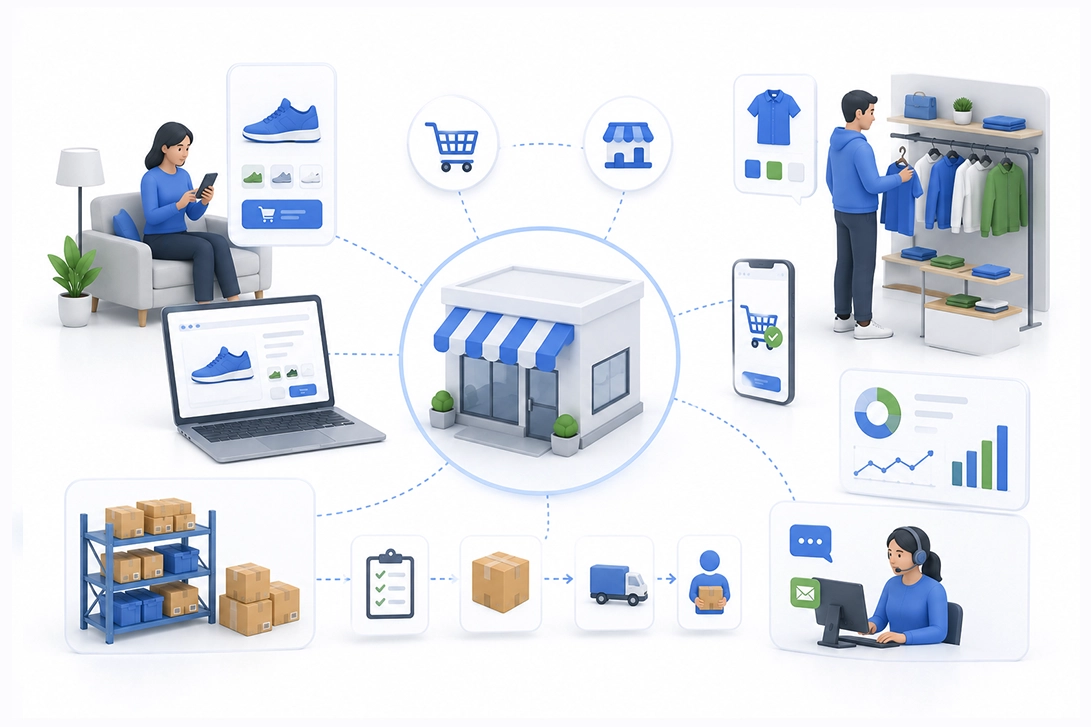
Brick and click business features are the operational capabilities and technological components that enable businesses to run seamlessly across both physical stores and online channels. This business model combines traditional brick and mortar stores with digital platforms, creating an integrated retail strategy that meets modern customer expectations for flexibility and convenience.
The bricks-and-clicks business model combines traditional physical retail with online digital commerce, allowing businesses to maintain a physical presence while establishing an online eCommerce presence.
This complete guide covers the core operational features, technology integrations, and customer-facing capabilities essential for successful bricks and clicks business operations. The content targets retail managers, business owners, and entrepreneurs seeking to understand or implement omnichannel retail features. Industry-specific implementations and basic business setup fall outside this scope.
By reading this guide, you will understand:
Business features in the bricks and clicks context refer to the integrated capabilities that allow physical retail locations and ecommerce stores to function as a unified retail strategy rather than separate entities. The bricks-and-clicks business model combines traditional physical retail with online digital commerce, allowing businesses to maintain a physical presence while establishing an online eCommerce presence.
In 2026, these features matter more than ever. Research indicates that 91% of shoppers now engage brands via multiple channels before making purchases. Omnichannel shoppers spend approximately $1,043 monthly compared to $659-$669 for single-channel customers, demonstrating the significant benefits of integrating online and offline experiences.
An effective point of sales (POS) system is crucial for integrating brick-and-mortar and ecommerce operations, allowing businesses to manage inventory and sales across both channels seamlessly. Unified POS connects every transaction whether from a physical store, online store, or mobile app to a central system ensuring consistent pricing, promotions, and loyalty points.
Real-time inventory management represents the backbone of successful clicks business model operations. Maintaining a consistent inventory across both online and physical stores is essential for the bricks-and-clicks model, ensuring customers can access accurate product availability information regardless of their shopping channel. When items sell in any channel, stock levels update immediately everywhere.
Integrated customer relationship management (CRM) systems capture purchase history, browsing behavior, and preferences across all touchpoints. This customer data enables personalized service and targeted marketing campaigns that reflect how customers actually shop across two channels.
These foundational technology requirements connect directly: without unified POS , inventory cannot synchronize accurately; without accurate inventory, customer experience suffers; without integrated CRM, personalization becomes impossible.
Click-and-collect capabilities, also known as Buy Online, Pick Up In-Store (BOPIS), represent one of the most valued features of brick and click store operations. Customers benefit from a 24/7 shopping experience alongside options for immediate in-store pickup. U.S. click-and-collect sales are projected to reach $177.9 billion by 2026, representing approximately 19.9% of multichannel e-commerce sales.
Curbside pickup and contactless delivery options extend convenience further. Retailers offer flexible fulfillment options such as home delivery, BOPIS, or curbside pickup, allowing customers to choose how they wish to interact with a business.
Cross-channel return and exchange policies address a critical customer need. A unified shopping experience across online and offline channels can significantly enhance customer satisfaction by providing convenience and flexibility in how customers choose to shop. Online purchases can be returned at any local store, requiring systems where staff can verify purchases and process refunds regardless of original channel.
These customer-facing features directly impact operational efficiency and customer loyalty. Research shows that 23% of BOPIS customers make additional purchases when they visit physical stores for pickup, driving incremental revenue through cross-promotion.
Let’s explain the concept and features of brick and click business. Building on basic infrastructure, sophisticated capabilities differentiate successful brick and click model implementations from basic multichannel operations. These advanced features transform separate sales channels into a cohesive retail industry approach.
Real-time stock visibility across all locations and channels prevents the overselling and stockouts that damage customer experience. Effective inventory management in a bricks-and-clicks model requires real-time synchronization of stock levels to ensure that customers can make informed purchase decisions regardless of the shopping channel they choose.
Ship-from-store capabilities use physical retail store inventory to fulfill online orders. This approach enables faster delivery, reduces shipping costs, and maximizes inventory turnover . One UK retailer with 120+ stores achieved 50% faster order processing after implementing ship-from-store alongside click-and-collect.
Automated low-stock alerts and replenishment systems use demand signals to trigger restocking before stockouts occur. Maintaining a consistent inventory across both online and physical stores is crucial for effective inventory management, as it helps prevent overstocking and understocking issues. In documented cases, stockouts dropped 40% after implementing automated synchronization.
Dynamic inventory allocation assigns stock to channels, stores, or ecommerce platforms based on demand patterns, geographic data, and seasonal shifts. Synchronizing inventory data across multiple sales channels allows businesses to provide accurate product availability information, which enhances customer satisfaction and prevents lost sales.
Unified customer profiles tracking purchases across all touchpoints enable consistent engagement whether someone is shopping online or browsing in a nearby store. Omnichannel integration allows online and offline stores to work together, sharing data on inventory, orders, and customer history.
Personalized service can be enhanced by using online browsing data to improve in-store experiences, and vice versa. When staff access customer history, they can provide recommendations aligned with previous purchases and expressed preferences across online and offline channels.
A consistent brand experience increases customer loyalty and engagement across different platforms. Loyalty programs that work seamlessly across channels earning points online, redeeming them in store reinforce this consistency. One multi-brand retailer saw cross-brand purchases increase 18% after unifying loyalty schemes.
Investing in mobile optimization is critical for businesses implementing a bricks-and-clicks strategy, as a significant portion of customers use mobile devices for online shopping, necessitating a user-friendly mobile experience. Mobile app integration with in store experience creates connection points that enhance customer engagement throughout the shopping journey.
Cross-channel customer behavior tracking and analysis reveals how customers move between touchpoints. Using data analytics effectively allows businesses to gain sharper insights into customer shopping behavior, which can optimize marketing efforts and improve customer engagement. Understanding whether customers research online then buy in store or vice versa shapes business strategy.
Performance metrics comparing online vs. in-store sales identify channel strengths and opportunities. Data on average order values, conversion rates, and customer acquisition costs by channel inform resource allocation across physical and online operations.
Predictive analytics for inventory and demand planning reduce excess inventory while preventing stockouts. Machine learning models use demand signals and market trends to allocate stock intelligently across locations.
These analytics features provide a competitive edge by enabling decisions grounded in customer insights rather than assumptions. They connect directly to implementation requirements in the following section.
Successful brick and click store operations require specific practical features that connect technology, fulfillment, and logistics into a cohesive system.
Businesses need these integration features when operating both online business platforms and retail store locations that must share data in real time.
API connectivity between e-commerce platforms and in-store systems enables the data flow essential for omnichannel retail. Modern implementations connect platforms with POS systems that consolidate event streams including sales, inventory changes, and returns.
Cloud-based infrastructure provides real-time data synchronization, scalability for traffic spikes during sales events, and resilience against outages. Systems must handle high availability requirements to maintain accurate inventory across digital platforms and physical locations.
Mobile optimization extends to staff-facing applications. Store employees need tools to check inventory at other locations, process cross-channel returns, and access customer profiles. The physical store provides a tangible experience where customers can interact with products and receive in-person advice staff tools must support this experience.
Security features protecting customer data across channels include PCI DSS compliance for payment processing, encryption for data transfers, and secure authentication for customer accounts. Channel conflict can arise when online and offline channels compete, especially if pricing is inconsistent unified systems prevent this.
Backup and disaster recovery systems ensure business continuity. When real-time inventory drives fulfillment decisions, system downtime creates immediate customer experience problems.
| Feature Type | Online Channel | Physical Store |
|---|---|---|
| Order Processing | Automated workflows with real-time inventory checks | Staff-assisted systems with cross-channel visibility |
| Inventory Access | Central warehouse + all store locations | Local stock + transfer capability from other stores |
| Delivery Options | Home delivery + store pickup + locker pickup | In-store immediate + ship-to-customer from store |
| Returns Handling | Online return labels + in-store drop-off | Immediate processing regardless of purchase channel |
The bricks-and-clicks model provides heightened convenience and adaptability compared to single-channel retail, empowering customers to tailor their shopping experience to their preferences. Providing customers with multiple purchasing options, such as online ordering with in-store pickup, can enhance their overall shopping experience and satisfaction.
By enabling customers to shop wherever they want, businesses can attract a wider audience and leverage opportunities for cross-promotion, enhancing operational flexibility. Fulfillment feature combinations depend on business size, customer preferences, and logistics capabilities.
Feature-related challenges frequently arise during brick and click implementation. Focusing on well-planned customer engagement strategies can help retain 89% of customers, highlighting the importance of addressing these issues systematically.
Implement automated inventory management systems with real-time updates across all channels. Case studies show businesses reducing overselling from 8.3% to 0.4% after implementing proper synchronization with conflict resolution logic that determines fulfillment source when multiple channels compete for limited stock.
Establish clear protocols for manual inventory adjustments and exception handling. When physical counts differ from system records, defined procedures prevent cascading errors across online and offline channels.
Choose platforms with native omnichannel capabilities and robust API support. One specialty retailer unified 4,200 SKUs across seven stores and a warehouse , achieving 99.2% stock accuracy after resolving SKU naming mismatches through systematic data mapping.
Invest in proper data mapping and migration during system implementation. Master data governance ensures consistent inventory across both systems; product descriptions, images, specifications, and pricing must align perfectly.
Develop comprehensive training programs covering both online and in-store system features. Store staff must understand digital order pickup, cross-channel returns, and ship-from-store workflows. Operational flexibility in retail allows customers to choose how they wish to interact with a business, whether through online or offline channels, enhancing their shopping experience.
Create standard operating procedures for handling cross-channel customer requests. When a customer who made an online purchase visits a physical location for assistance, staff need clear guidance on accessing order history and resolving issues.
Integrating customer feedback mechanisms into both online and in-store experiences can lead to improved customer satisfaction, as businesses can adapt their offerings based on direct consumer insights. Encouraging customer feedback through various channels, such as surveys and direct communication, opens opportunities for businesses to understand customer preferences and improve their services.
LOGIC ERP is the best solution for businesses adopting the bricks-and-clicks business model due to its comprehensive suite of integrated features tailored for seamless omnichannel retail operations. It offers robust inventory synchronization capabilities that ensure real-time stock visibility across both online and physical store locations, preventing stockouts and overselling. Its unified POS system connects transactions from all channels, maintaining consistent pricing, promotions, and loyalty programs that enhance brand growth and customer retention.
The platform’s advanced CRM integration enables businesses to capture detailed customer data across touchpoints, allowing personalized marketing strategies and improved customer engagement based on consumer preferences. LOGIC ERP supports flexible fulfillment options including Buy Online, Pick Up In-Store (BOPIS), home delivery, and curbside pickup, providing a seamless shopping experience that caters to diverse target audiences.
With mobile optimization and API connectivity, LOGIC ERP ensures scalability and adaptability, supporting business growth while enhancing customer experience. Its secure infrastructure safeguards customer data and maintains compliance with industry standards, reducing operational risks. By choosing LOGIC ERP, retailers can effectively unify their in-store operations and online platforms, strengthening market presence and delivering a consistent brand experience that appeals to both local customers and online shoppers alike.
For integrated ERP solutions supporting brick and click features including inventory synchronization, unified customer profiles, and multi-channel fulfillment, explore LOGIC ERP retail management capabilities.
Get Omnichannel Retail Software DemoSuccessful bricks and clicks business operations require integrated features spanning inventory management, customer experience, data analytics, and operational efficiency. The bricks-and-clicks model allows businesses to benefit from two unique sales channels that work in coherence with each other under a unified retail strategy, increasing brand reach and profitability. This model provides customers with a seamless and integrated shopping experience, allowing them to engage with the brand both in the physical world and in the digital realm.
Immediate next steps:
Related topics worth exploring include specific platform comparisons for your industry, ROI measurement frameworks for omnichannel investments, and advanced personalization strategies using unified customer data.
Call at +91-73411-41176 / +91-73411-41175 or send us an email at sales@logicerp.com to book a free demo today!
The brick and click business model combines traditional physical retail stores (brick-and-mortar) with online ecommerce platforms (clicks). This integrated approach allows businesses to offer customers multiple purchasing options, such as ordering online and picking up in-store, creating a seamless omnichannel shopping experience.
Key features include real-time inventory synchronization across online and offline channels, unified point of sales (POS) systems , flexible fulfillment options like Buy Online Pick Up In Store (BOPIS), integrated customer relationship management (CRM) for personalized marketing, and mobile-optimized platforms for enhanced customer engagement.
Inventory synchronization ensures consistent stock availability information across both physical and online stores, preventing overselling and stockouts. This real-time update improves customer satisfaction by allowing existing customers and new shoppers to order online confidently or visit stores knowing products are available.
Click-and-collect services provide customers the convenience of ordering online and picking up products in-store, reducing delivery times and shipping costs. This feature also drives additional foot traffic to physical stores, increasing opportunities for cross-selling and improving overall customer satisfaction.
By integrating customer data from both online and offline channels, businesses can personalize marketing campaigns and in-store service. Utilizing data analytics helps understand shopping behaviors, enabling targeted promotions, loyalty programs, and a consistent brand experience that increases customer retention.
With a growing number of customers shopping via smartphones and tablets, mobile optimization ensures a smooth and user-friendly online shopping experience. Mobile-friendly websites and apps facilitate easy browsing, ordering, and payment, which are essential for attracting order online customers and enhancing overall sales.
LOGIC ERP offers integrated features such as unified POS , real-time inventory management , CRM integration , and flexible fulfillment options including BOPIS and home delivery. Its scalable, secure platform helps retailers synchronize online and offline operations, improve customer experience, and drive business growth effectively.
Common challenges include inventory synchronization issues, data integration complexities, staff training for cross-channel operations, and managing channel conflicts like inconsistent pricing. Solutions involve adopting robust POS systems, API connectivity, comprehensive training programs, and unified pricing strategies to ensure smooth omnichannel retail.
A unified customer profile consolidates purchase history and preferences from both online and offline interactions. This enables personalized recommendations, seamless loyalty rewards across channels, and consistent customer service, fostering stronger customer relationships and increased brand loyalty.
Fulfillment options include home delivery, Buy Online Pick Up In Store (BOPIS), curbside pickup, and ship-from-store. Offering multiple flexible fulfillment choices empowers customers to shop conveniently according to their preferences, enhancing satisfaction and operational efficiency.
Bricks and clicks combine physical brick and mortar stores with an online ecommerce platform, offering customers flexibility to shop in-store or purchase online. In contrast, online-only retailers operate solely through digital channels without physical storefronts.
The bricks and clicks business model enhances business growth by leveraging both online and offline sales channels, increasing brand reach and providing diverse purchasing options that attract a wider customer base.
The brick and click model integrates online shopping with physical stores, allowing customers to enjoy the convenience of purchasing online while still benefiting from the tangible experience of visiting brick and mortar locations.
The clicks business model represents the online component of the bricks and clicks strategy, enabling businesses to sell products digitally alongside their physical brick and mortar stores.
Maintaining a brick and mortar presence provides customers with hands-on product interaction and immediate service, complementing the online channel and strengthening overall brand growth.
Yes, by combining the strengths of brick and mortar stores with an online platform, bricks and clicks businesses offer a unified shopping experience that can outperform online-only retailers in customer convenience and satisfaction.
By integrating multiple sales channels, the bricks and clicks business model increases brand visibility and customer engagement, fostering stronger brand growth through consistent experiences across both online and offline platforms.
The brick and mortar store serves as the physical touchpoint for customers, offering product trials, personalized service, and immediate fulfillment options that complement online sales in the bricks and clicks business model.
Feature Comparison Checklist:
Popular Products