Dropshipping is a business model that lets you sell products online without holding inventory or managing fulfillment — when a customer places an order in your store, a third party supplier ships the product directly to the buyer, and you keep the difference between the selling price and the wholesale price.
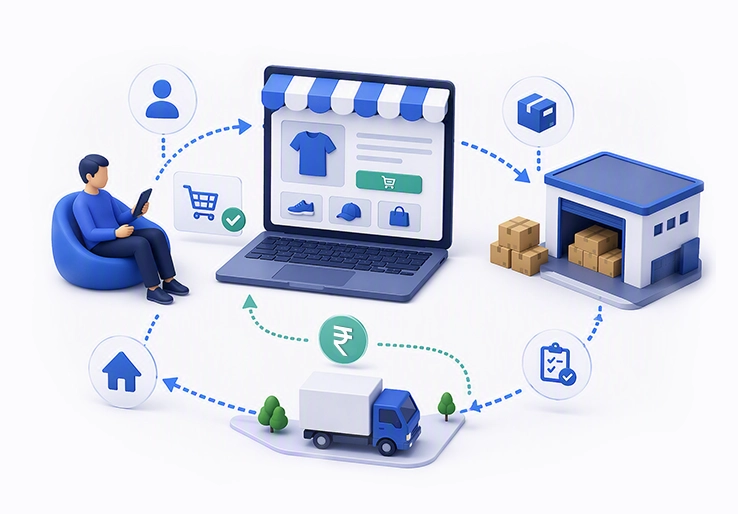
Starting a traditional retail business means committing tens of thousands of dollars to physical inventory, leasing warehouse space, and absorbing the risk of unsold stock. Dropshipping is a business model that lets you sell products online without holding inventory or managing fulfillment: when a customer places an order in your store, a third party supplier ships the product directly to the buyer, and you keep the difference between the selling price and the wholesale price.
For aspiring entrepreneurs, existing business owners expanding into ecommerce, digital nomads building location-independent income, and brick-and-mortar retailers moving online, that model removes some of the biggest barriers to entry. Instead of tying up cash in stock and warehousing, you can launch faster, test products with lower financial risk, and scale without the operational weight of traditional retail.
This guide explains how dropshipping works, where it has advantages over traditional retail, how profits are made, what challenges to expect, who it suits best, which dropshipping management software features matter, and why LOGIC ERP is built to run dropshipping operations more efficiently.
The dropshipping model has transformed the e-commerce landscape by removing the highest barriers to starting a business. Here’s why this business model works for millions of online sellers worldwide:
Understanding how dropshipping works comes down to a simple three-step process, with each dropshipping business step powering this entire business model. No complexity. No guesswork.
A customer browses your dropshipping store, selects a product, and completes the purchase at retail price. Payment is collected directly through your chosen payment gateway. The order details — product, variant, shipping address — are captured automatically in your e-commerce platform or order management system.
Order information is automatically or manually forwarded to your dropshipping supplier, who holds the actual physical inventory. You pay the wholesale price to the supplier, and the difference between retail and wholesale — minus your shipping cost, platform fees, and advertising — forms your profit margin. As your volume grows, automated order forwarding through ERP software becomes essential to avoid errors and delays.
The supplier packages and ships the product directly to your customer. In dropshipping, suppliers ship products directly to customers — your buyer receives the product, ideally with your branding if you’ve arranged custom packaging. You track the shipment details, monitor delivery status, and handle any customer service inquiries. From the customer’s perspective, the experience looks identical to buying from any other online shopping destination.
The contrast between dropshipping and conventional inventory-based retail is significant across every key business metric:
Compared to other business models, affiliate marketing earns you a commission but removes customer service and fulfillment responsibilities entirely. Print-on-demand is similar to drop shipping but involves custom product creation per order. Each model has its place — but dropshipping offers the most direct path to building a standalone ecommerce business.
Dropshipping isn’t theoretical — it’s a proven, data-backed model experiencing explosive growth worldwide.
The global dropshipping market was valued at approximately $290.7 billion in 2025, with projections showing growth to roughly $1.84 trillion by 2035 at a compound annual growth rate of around 20.6%. The U.S. dropshipping market alone reached about $48.2 billion in 2025. Fashion leads as the top product segment, while Asia-Pacific accounted for the largest regional revenue share at approximately 36%. The dropshipping market size is growing in India as well, fueled by rising internet penetration and e-commerce platforms.
Real-world results vary widely. One multi-channel operator across Amazon, Etsy, eBay, and TikTok earned approximately £283,167 GBP in 12 months, yielding about £56,222 in net profit — a 24.9% net margin on their Amazon channel. A smaller Facebook Marketplace venture generated $22,481 in revenue over 90 days through 525 sales, with a net margin around 21% after platform fees. More than 60% of Amazon sales come from independent sellers, many of whom use the dropshipping model.
These results confirm that dropshipping profitable outcomes depend on managing ad costs, choosing the right niche, and working with reliable suppliers.
Dropshipping may NOT be ideal for businesses requiring full control over the customer experience, including custom packaging and same-day delivery. High maintenance products, heavily regulated items (food, medical devices), or high value items requiring hands-on quality inspection are better suited to traditional fulfillment. Businesses in high-volume local markets where fast delivery is the primary competitive advantage should consider other business models.
As your dropshipping business scales past a handful of daily orders, manual order management becomes impossible. Tracking orders across multiple suppliers, syncing inventory across e-commerce platforms, managing shipping times, and maintaining customer satisfaction simultaneously — it breaks down without proper systems.
This is where dedicated dropshipping services and management software become critical. The key features to look for include automated order forwarding to suppliers, real-time inventory synchronization across all sales channels, multi-supplier management with failover logic, and comprehensive analytics to understand which products and channels deliver actual profit.
Real-time data integration between your stores, suppliers, and shipping providers is what separates struggling operations from scalable ones. Without it, you face overselling, delayed shipments, pricing mismatches, and the kind of customer service failures that destroy your brand. Creating a marketing plan is essential for dropshipping success, but so is having all the tools to execute fulfillment flawlessly.
LOGIC ERP offers specialized dropshipping modules designed for modern ecommerce business operations that demand reliability at scale. Rather than patching together disconnected tools, LOGIC ERP provides a complete dropshipping solution that acts as the control center for your entire operation.
With seamless integration with major platforms like Shopify, Amazon, eBay, and social commerce channels, LOGIC ERP ensures your business operations stay synchronized across every touchpoint. Advanced supplier management and performance tracking tools give you visibility into the supply chain that dropshippers typically lack — turning limited control into informed control.
The platform’s comprehensive business intelligence modules help you optimize profit margins by deconstructing costs across advertising, supplier pricing, shipping, platform fees, and returns. For businesses looking to integrate dropshipping across omnichannel operations, LOGIC ERP provides the infrastructure to manage everything from a single dashboard.
Dropshipping offers what few other business models can match: low startup costs, minimal financial risk, global market access, and the ability to start selling without holding a single unit of physical inventory. It’s a proven path for entrepreneurs at every stage — from first-time sellers testing an idea to established retailers expanding their product range online.
But success in the dropshipping business isn’t just about finding trending products and running ads. It’s about building systems that scale: reliable shipping, trusted suppliers, real-time inventory management, and data-driven decision-making across every channel.
Your next steps are clear: choose your niche, set up your dropshipping store, find and vet reputable suppliers, and implement proper management systems from day one. Don’t wait until manual processes break under volume.
Explore LOGIC ERP’s dropshipping solutions to streamline your entire process — from automated order fulfillment and multi-supplier management to advanced analytics that protect your profit margin. Build your drop shipping business on a foundation that supports growth, not one you’ll need to replace.
Dropshipping is a transformative e-commerce business model that empowers entrepreneurs to sell products online without holding inventory or managing fulfillment logistics. It offers significant advantages such as low startup costs, minimal financial risk, global product access, and location independence, making it an ideal entry point for new and existing business owners alike. However, success requires careful supplier selection, effective marketing strategies to attract customers, and the use of robust dropshipping management software to streamline operations and maintain high-quality customer service.
While dropshipping can be profitable, with typical gross margins around 20%, challenges like intense competition, limited control over product quality, and legal risks must be managed diligently. Incorporating advanced ERP software like LOGIC ERP can help automate order processing, synchronize inventory across multiple sales channels, and provide valuable analytics to optimize profitability.
Whether you are starting dropshipping in India or expanding globally, understanding the technical aspects, building strong supplier relationships, and focusing on customer experience are critical steps on your e-commerce journey. With the right approach and tools, dropshipping can be a scalable and rewarding business model that lets you focus on growth without the headaches of traditional inventory management.
Call at +91-73411-41176 / +91-73411-41175 or send us an email at sales@logicerp.com to book a free demo today!
Yes. Dropshipping is legal when following applicable laws, and it’s used by major retailers worldwide. Dropshipping is legal in India and across virtually every market globally. You must comply with local business laws to dropship legally, including sales tax obligations, consumer protection regulations, and platform-specific policies. Legal risks arise from selling counterfeit or trademarked products — never list trademarked products without authorization. Compliance includes maintaining transparency about shipping times, return policies, and product origin.
Dropshipping requires low upfront investment compared to traditional retail. Typical startup costs range from $500–$2,000, covering store setup (domain, platform subscription, theme), initial marketing budget, sample product orders, and essential software. Starting a dropshipping business requires ₹30,000–₹50,000 in India. The breakdown generally looks like: platform fees ($29–$79/month), domain ($10–$15/year), initial ad spend ($200–$500), sample orders ($50–$150), and ERP or management tools ($50–$200/month).
Finding reliable suppliers is a major challenge in dropshipping — maintaining high quality products, managing inconsistent product quality, delayed shipments, and communication gaps can erode customer satisfaction quickly. Competition is high due to low barriers to entry, which drives down margins in popular niches. Dropshipping can have lower profit margins compared to traditional retail, especially once advertising costs, platform fees, and returns are factored in. Supply chain disruptions, inventory volatility, and limited control over the customer experience round out the primary challenges. Dropshipping requires effective branding and marketing to differentiate from competitors selling generic products.
To find reliable dropshipping suppliers, start by researching supplier directories like AliExpress, CJDropshipping, SaleHoo, Spocket, and domestic wholesalers. Research potential suppliers thoroughly before partnering with them. Order product samples to evaluate supplier quality and shipping speed. Check supplier reviews to ensure reliability and product quality. Use multiple suppliers to reduce dependency and improve fulfillment — never rely on a single source for any critical product. Establish clear agreements with suppliers regarding returns and customer service. You should vet suppliers to ensure product quality and reliability through repeated test orders across different variants and timeframes.
Yes, most major online platforms allow dropshipping with specific policy compliance. On Amazon, you must be the seller of record, ensure listing accuracy, and comply with shipping timeframes — poor performance or late deliveries lead to account penalties. More than 60% of Amazon sales come from independent sellers, many of whom operate using the dropshipping model. eBay, Shopify, and social commerce platforms like TikTok Shop similarly permit dropshipping but enforce rules around delivery speed, product representation, and returns handling. Always review each platform’s current seller policies before listing.
Customer satisfaction in dropshipping is the measure of how happy customers are with the products sold, shipping times, and overall service experience. High customer satisfaction leads to repeat purchases and positive reviews, which are essential for building trust and growing your dropshipping business.
Setting up an online store for dropshipping involves selecting a reliable e-commerce platform like Shopify or WooCommerce, choosing the right dropshipping products to sell, connecting with dependable suppliers, and integrating order management software for seamless automation and inventory synchronization.
Selling high quality products is vital in dropshipping since you rely on suppliers for fulfillment. Ensuring product quality through supplier vetting and ordering samples helps minimize returns, negative reviews, and customer dissatisfaction, ultimately protecting your brand reputation.
Typical profit margins in dropshipping average around 20%, though this can vary depending on the niche and marketing strategies. Despite lower margins compared to traditional retail, dropshipping’s low startup costs and scalability make it a profitable business model when managed effectively.
Managing customer orders efficiently is crucial in dropshipping. Automated dropshipping management software or ERP systems forward orders to suppliers, track shipment status, and synchronize inventory across sales channels to prevent overselling and ensure timely delivery.
The dropshipping supply chain involves suppliers holding inventory and shipping products directly to customers after orders are placed on your online store. This model reduces your need to manage inventory or logistics but requires strong supplier relationships to maintain quality and reliability.
Managing inventory in dropshipping relies heavily on real-time synchronization between your online store and multiple suppliers. Effective inventory management ensures that stock levels are automatically updated to prevent selling products that are out of stock, which helps maintain smooth order fulfillment and enhances customer satisfaction. Utilizing automated inventory management systems or ERP software is essential for managing inventory efficiently in a dropshipping business, as it reduces errors, avoids overselling, and keeps your product listings accurate across all sales channels.
Inventory management in dropshipping depends on real-time synchronization between your store and multiple suppliers. Automated systems update stock levels to prevent selling out-of-stock products, ensuring smooth order fulfillment and enhancing customer satisfaction.
Starting a dropshipping business requires a low upfront investment, typically ranging from $500 to $2,000, covering expenses like e-commerce platform fees, marketing, sample product orders, and software subscriptions. In India, startup costs usually fall between ₹30,000 and ₹50,000.
Growing your dropshipping customer base involves targeted marketing strategies such as SEO optimization, social media advertising, influencer collaborations, and providing exceptional customer service to build trust, encourage repeat business, and expand your market reach.
Popular Products