Explore product life cycle management (PLM) with LOGIC ERP; learn what is PLM, full form, PLM software, tools, concept, stages, and product development life cycle for businesses.
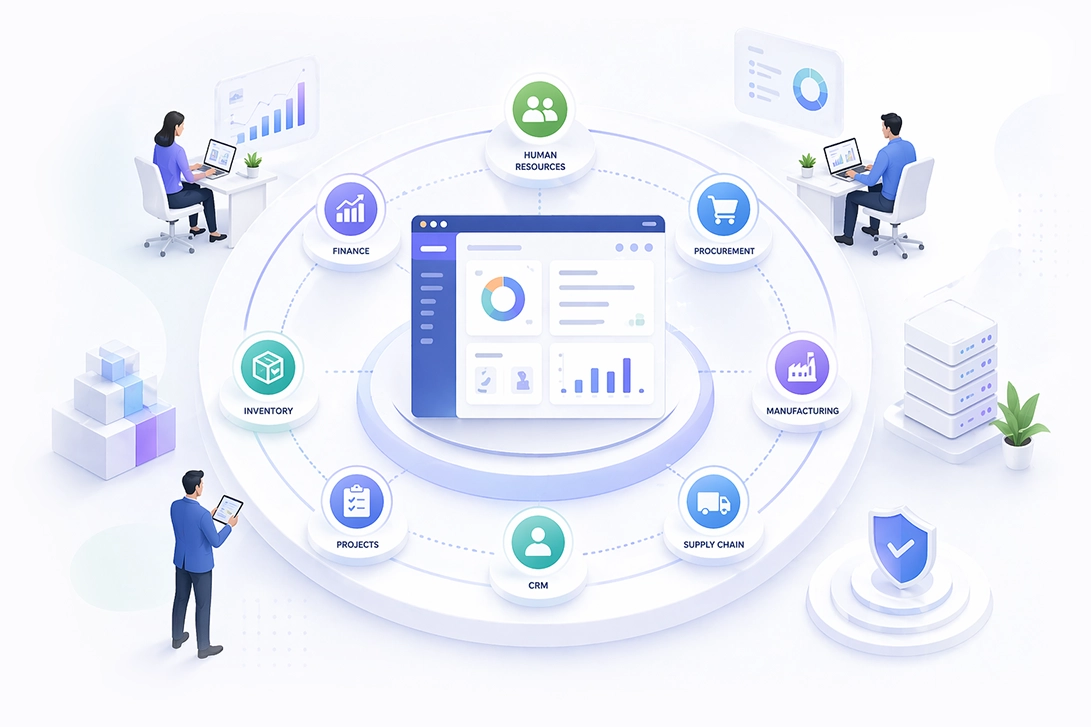
Welcome to the complete guide to Product Lifecycle Management (PLM) strategy and implementation. Designed for business leaders, engineers, and IT professionals who want to understand what PLM is and how it can transform their organizations.
Whether you’re considering PLM for the first time or looking to optimize your current processes, this guide will help you improve efficiency, foster collaboration, and maintain a competitive edge in today’s fast-paced market. PLM matters because it enables organizations to streamline operations, enhance cross-functional teamwork, and stay competitive by accelerating innovation and reducing costs.
Product lifecycle management (PLM) is a business strategy that integrates people, processes, and information across the entire lifespan of a product, from initial concept to retirement. The core stages of a product lifecycle include Development, Introduction, Growth, Maturity, and Decline. PLM provides a structured approach to managing these stages, ensuring that organizations can innovate efficiently, collaborate effectively, and respond quickly to market changes. By centralizing product data and streamlining workflows, PLM creates a digital thread that connects all product information and processes, enabling companies to reduce costs, improve product quality, and maintain competitiveness in a dynamic business environment.
Eliminate redundancy and optimize resource allocation.
Consistent checks and compliance built into every workflow.
Bring products to market faster with streamlined processes.
Real-time cross-functional teamwork across global teams.
PLM full form is Product Lifecycle Management. It refers to the strategic approach and software systems used to manage every stage of a product's life, from initial concept through design, manufacturing, supply chain management, service, and sustainable end-of-life disposal. Understanding the PLM full form is essential for businesses aiming to streamline product development and enhance collaboration across departments.
Product lifecycle management (PLM) is a business strategy that integrates people, processes, and information across the entire lifespan of a product, from initial concept to retirement. It is also a suite of systems and software that manages every stage of a product’s life from ideation and design to manufacturing, supply chain management, service, and sustainable end-of-life disposal. PLM provides centralized data management for all product-related information, serving as both a strategic approach and a software system, and enables product lifecycle analytics for data-driven insights across all stages.
A core function of PLM is product data management, which ensures that complex product information is organized, controlled, and accessible throughout the entire lifecycle. PLM provides the framework for managing all product-related information and processes across the product lifecycle stages, acting as a single source of truth for all product data. Configuration management is also a key capability, enabling organizations to control product versions and manage changes systematically throughout the lifecycle. This integration supports data-driven decision-making and ensures that project managers, engineers, and business stakeholders have access to up-to-date information at every stage. PLM tools such as PTC Windchill and Agile PLM exemplify the integration of product lifecycle management tools with enterprise resource planning (ERP) systems to optimize workflows.
However, fewer than half of R&D executives report having visibility into the end-to-end design-to-delivery process, indicating that many organizations have not fully realized the potential of PLM as a single source of product truth. Issues such as data migration complexity, resistance to change, and the need for effective change management can hinder PLM implementation.
Next, we’ll explore how PLM connects teams and processes across the organization.
PLM connects cross-functional teams across the product development life cycle by centralizing data management and automating workflow management. This integration eliminates data silos and ensures that all departments such as engineering, manufacturing, procurement, and quality assurance work from the same, up-to-date information. PLM also provides version control, allowing organizations to track changes and maintain data integrity throughout the product lifecycle.
By leveraging real-time data and software tools, PLM enhances collaboration among teams, enabling seamless communication, design collaboration among distributed teams, and faster decision-making. This improved collaboration helps organizations respond rapidly to customer demand and market changes. Customers are even able to see partial product information in early life cycle phases, enhancing transparency and feedback.
PLM also supports portfolio management and project lifecycle management, allowing organizations to oversee multiple products and projects efficiently, prioritize resources, and align development efforts with business goals. By enabling product portfolio optimization, PLM helps maximize business value across the entire suite of offerings.
With this overview in mind, let’s look at the software tools that enable effective PLM.
PLM software tools are designed to support the product development life cycle by managing product data, automating business processes, and enabling seamless collaboration. These software systems integrate with existing enterprise systems such as ERP, computer aided design (CAD), manufacturing execution systems (MES), and quality management platforms. Selecting and implementing a comprehensive PLM solution supports innovation, improves efficiency, and provides a competitive advantage throughout the various stages of product development and management.
A product lifecycle management platform offers a comprehensive software platform that integrates tools and processes to streamline and optimize every phase of the product lifecycle, from initial concept through to retirement. Advanced PLM solutions incorporate artificial intelligence and machine learning to provide predictive analytics, automate compliance, and use digital twin technology to simulate product performance and lifecycle stages.
As a business strategy, PLM aligns product development with organizational goals and market requirements. It supports cost management, quality assurance, and sustainable practices throughout the entire lifecycle. PLM enables companies to streamline product development, optimize supply chain management, and improve business value by reducing errors, accelerating innovation, and managing change effectively. By enabling new ways of working and delivering value, PLM drives business transformation across the organization. The integration of PLM with existing systems enhances data quality and supports real-time decision-making across the entire lifecycle.
Understanding PLM’s business impact, we can now examine the key phases of product development.
The following phases correspond to the commonly recognized product lifecycle stages: Development, Introduction, Growth, Maturity, and Decline. Product lifecycle management (PLM) provides the structure and tools to manage each of these stages effectively, integrating people, processes, and information from concept to retirement. Many organizations leverage a stage gate process within PLM to manage product development milestones and approvals, ensuring structured progression through each phase.
Ideation, engineering design using CAD, prototyping, and initial requirements gathering.
Detailed engineering, testing, quality assurance, and iteration based on customer feedback.
Manufacturing data management, supply chain coordination, and product introduction to market.
Scaling production, cost benefit analysis, portfolio management, and sustaining product value.
Managing product phase-out, sustainable disposal, recycling, and service continuation.
Each lifecycle stage requires tailored PLM tools and processes to support workflow management, cross-functional collaboration, and change management aligned with the current lifecycle phase.
Strategic marketing decisions vary by product life stage, requiring different tactics for promotion, pricing, and brand differentiation.
The introduction stage, also known as market introduction, focuses on launching the product, building awareness, and establishing initial market presence.
The growth stage is characterized by increasing consumer demand and profit margins as the product gains market acceptance.
The maturity stage often sees the highest profitability for a product, but it also faces increased competition and market saturation.
The decline stage occurs when a product loses significant market share, often leading to its eventual retirement from the market, also known as end of life product management.
A PLM system integrates and centralizes product data from CAD, ERP, MES, and other business systems into a unified software platform, ensuring data interoperability between different business systems. This ensures that all stakeholders have access to consistent, up-to-date information.
It automates workflows such as engineering change orders, approvals, and compliance checks through process automation, ensuring consistent execution and quality assurance. Real-time data access enables project managers and stakeholders to monitor progress, manage risks, and optimize resource allocation.
Integration with cloud-based PLM solutions facilitates global collaboration, allowing distributed and remote teams to access up-to-date information and streamline product development regardless of location.
The concept of PLM originated in the 1980s within aerospace and automotive industries to manage complex product data and processes. Over time, PLM has evolved to incorporate advanced software tools, cloud platforms, and digital technologies such as digital twin technology and machine learning. As a key driver of digital transformation in product-centric industries, PLM enables organizations to fundamentally change how they design, manufacture, and support products. Today, PLM supports sustainable practices by enabling lifecycle planning, material tracking, and regulatory compliance. Organizations adopting PLM experience significant cost savings, improved collaboration, and faster time-to-market.
Customer feedback plays a pivotal role in product lifecycle management (PLM), providing actionable insights that drive continuous improvement and enhanced product quality. PLM software enables organizations to systematically collect, analyze, and integrate customer feedback throughout the product lifecycle, ensuring that evolving customer demands are addressed promptly. By leveraging a centralized platform, companies can manage quality control measures including testing, inspection, and certification within the same environment as product data and development workflows.
Effective quality management within PLM ensures that products consistently meet regulatory standards and internal benchmarks, supporting regulatory compliance throughout the product lifecycle. Automated quality management processes help identify defects early, reduce rework, and maintain compliance across global markets. Integrating customer feedback with quality management in PLM systems not only improves product quality but also boosts customer satisfaction and loyalty, supporting long-term business success.
Managing engineering data is a cornerstone of successful product lifecycle management. PLM software provides a secure, centralized repository for all engineering data, including CAD models, simulations, and technical documentation. This centralized data management also supports BOM management (Bill of Materials management), enabling teams to track components and assemblies efficiently. As a result, design and development teams always have access to up-to-date information, reducing the risk of errors and miscommunication.
Robust security measures within PLM systems, including access control, protect sensitive intellectual property and maintain data quality throughout the product development process.
By streamlining the management of engineering data, organizations can accelerate product development cycles, foster improved collaboration, and ensure that all stakeholders are working with the latest, most accurate information. PLM also enhances knowledge management by capturing and sharing organizational expertise across teams, making critical information accessible throughout the product lifecycle. Effective data management in PLM ultimately supports innovation, compliance, and the delivery of high-quality products to market.
Cost management is integral to maximizing value across the entire product lifecycle, from initial concept through end of life. PLM software equips organizations with tools for comprehensive cost benefit analysis, including support for should cost analysis to enable more accurate cost estimation and benchmarking against ideal targets. This empowers informed decision-making at every stage of product development, production, and distribution. By tracking and managing costs in real time, companies can identify opportunities for savings and avoid unnecessary expenditures.
The product value chain encompasses the full journey of a product, including the flow of materials, information, and services from suppliers to end customers. PLM systems optimize the product value chain by improving visibility, coordination, and efficiency across all touchpoints, and by enhancing supplier collaboration for better sourcing and procurement.
This holistic approach to cost management and value chain optimization not only reduces operational costs but also enhances customer satisfaction and supports sustainable business growth throughout the entire product lifecycle by enabling eco design principles for greener, more environmentally friendly products.
Accelerated time-to-market by up to 30% through streamlined product development and workflow management enabled by advanced product lifecycle management (PLM) software solutions.
Reduced development costs by up to 25% via improved cost management, elimination of redundant efforts, and optimized resource allocation using integrated PLM systems.
Enhanced cross-functional and global collaboration through centralized data repositories and real-time communication tools, fostering seamless teamwork across engineering, manufacturing, procurement, and supply chain departments.
Centralized, real-time access to manufacturing data, customer feedback, and quality assurance information, ensuring data accuracy and enabling informed decision-making throughout the product lifecycle.
Improved product quality and regulatory compliance with automated approvals, audit trails, and regulatory tracking features built into modern PLM platforms.
Streamlined change management and configuration control processes, reducing errors, rework, and time delays in product development cycles.
Increased supply chain visibility and optimized supply chain management, leveraging PLM integration with ERP and MES systems to enhance operational efficiency and responsiveness.
Risk mitigation through proactive identification and management of potential issues, reducing business risks related to compliance, quality, and supply chain disruptions.
Support for sustainable practices including lifecycle stages planning, eco-friendly material tracking, recycling initiatives, and responsible end-of-life product disposal aligned with circular economy principles.
Seamless integration with existing enterprise systems, including ERP, CAD, manufacturing execution systems (MES), and quality management platforms, enabling a unified digital thread across product development.
Data-driven insights powered by artificial intelligence (AI) and machine learning (ML) to predict product outcomes, optimize lifecycle management, and accelerate innovation in competitive markets.
Implementing PLM can encounter challenges such as:
Effective project management, including stakeholder engagement, comprehensive training, and phased deployment, is essential. Driving user adoption is critical for PLM success, as even the best systems require buy-in from end users to deliver value. Selecting PLM solutions with robust integration capabilities and cloud-based deployment options can reduce IT overhead and support scalable, flexible operations.
The future of PLM technology is driven by cloud product lifecycle management solutions that enable scalability and global collaboration. Integration of artificial intelligence and machine learning enhances predictive analytics and automation of routine tasks. IoT-enabled digital twin technology creates continuous feedback loops between products in the field and development teams, supporting lifecycle stages management and sustainable practices. PLM also supports connected products, enabling real-time monitoring and feedback that further enhances product optimization and responsiveness. These advancements in Product Lifecycle Management Systems empower organizations to innovate rapidly, streamline operations, and maintain competitive advantage.
LOGIC ERP | the best product lifecycle management software offers a comprehensive, integrated solution designed to streamline your entire product life cycle from concept and design through manufacturing, supply chain management, and sustainable product retirement. Our PLM platform centralizes all product-related data, providing a single source of truth that enhances collaboration across engineering, production, procurement, and quality assurance teams.
With LOGIC ERP PLM, organizations benefit from advanced workflow automation, real-time data access, and seamless integration with ERP, CAD, MES, and other enterprise systems. LOGIC ERP PLM delivers robust enterprise integration capabilities, ensuring smooth connectivity across your business’s critical platforms. This integration empowers faster decision-making, reduces errors, and accelerates time-to-market, helping you stay competitive in rapidly evolving markets.
Our solution supports sustainability initiatives by enabling lifecycle planning, material tracking, and end-of-life management aligned with circular economy principles. Additionally, LOGIC ERP incorporates AI-driven analytics and digital twin technology to optimize product performance and lifecycle management.
PLM manages product definitions, engineering data, and the product development lifecycle, while ERP handles operational execution such as finance, procurement, and manufacturing. PLM feeds product data into ERP for production planning, and ERP provides cost and inventory data back to PLM for decision-making.
Pilot programs typically last 3-6 months, with full enterprise deployments spanning 12-24 months depending on organizational complexity, data migration, and integration requirements.
Key features include centralized data management with version control, workflow and project lifecycle management, collaboration tools, integration with existing enterprise systems, and industry-specific functionalities.
Yes, modern PLM platforms offer APIs and pre-built connectors to integrate seamlessly with CAD, manufacturing execution systems, ERP, and quality management platforms.
Organizations commonly achieve payback within 2-3 years, with measurable improvements including 20-30% faster time-to-market, 15-25% reduction in design errors and rework, 25-40% improvement in collaboration efficiency, and 10-20% overall cost savings.
The product life cycle refers to the series of stages a product goes through from its initial concept to its eventual retirement. These stages typically include Development, Introduction, Growth, Maturity, and Decline. Understanding the product life cycle meaning is crucial for businesses to strategize marketing, production, and resource allocation effectively throughout a product’s lifespan.
Product Lifecycle Management (PLM) is a comprehensive business strategy and software system that manages every stage of a product’s life from ideation and design to manufacturing, supply chain management, service, and sustainable disposal. PLM integrates people, processes, and information, providing a centralized platform that enhances collaboration, improves efficiency, and accelerates innovation across all product lifecycle stages.
PLM software is a digital solution designed to support product lifecycle management by centralizing product data, automating workflows, and enabling seamless collaboration among cross-functional teams. Product lifecycle management software provides a comprehensive platform for managing every stage of a product's life, from concept to retirement. It integrates with enterprise systems like ERP, CAD, and MES to provide real-time access to accurate product information, helping organizations reduce errors, speed time-to-market, and maintain compliance with regulatory standards.
Product Life Cycle Management encompasses the strategic oversight and operational execution of managing a product’s journey from concept through retirement. It involves coordinating design, development, manufacturing, marketing, and end-of-life processes to optimize product performance, reduce costs, and ensure sustainable growth.
The product life cycle is the progression of a product through distinct phases Development, Introduction, Growth, Maturity, and Decline that define its market presence and profitability over time. Each phase requires tailored strategies for marketing, production, and management to maximize product success.
Product Lifecycle Management (PLM) is both a business approach and a software system that enables organizations to manage product-related data and processes throughout the entire lifecycle. PLM ensures that all stakeholders have access to consistent, up-to-date information, facilitating better decision-making, collaboration, and innovation.
PLM is a unified system that integrates people, processes, and technology to oversee every stage of a product’s life from initial concept and design to manufacturing, distribution, and end-of-life disposal. It acts as a single source of truth for product data, enabling streamlined workflows, enhanced quality control, and faster time-to-market.
PLM is essential because it helps organizations manage complexity, improve collaboration across departments, reduce development costs, and accelerate time-to-market. By centralizing product data and automating processes, PLM supports innovation, ensures regulatory compliance, and drives sustainable business growth.
The four key phases include Planning, Production, Quality Control, and Distribution. These phases align with managing resources, manufacturing processes, product quality assurance, and delivering products to market efficiently.
Agile Product Lifecycle Management applies agile methodologies to PLM, promoting iterative development, flexible workflows, and rapid response to market changes. This approach enhances collaboration and accelerates product delivery by adapting quickly to customer feedback and evolving requirements.
Digital Product Lifecycle Management leverages digital technologies such as cloud computing, IoT, AI, and digital twins to manage product data and processes in a connected, real-time environment. It enables enhanced visibility, predictive analytics, and smarter decision-making throughout the product lifecycle.
Product Lifecycle Management means the coordinated management of a product’s entire lifecycle, integrating people, processes, and technology to improve product development, manufacturing, and end-of-life management while ensuring quality and compliance.
Pharmaceutical Product Lifecycle Management involves managing the complex regulatory, development, manufacturing, and distribution processes specific to pharmaceutical products. PLM ensures compliance with stringent regulations, facilitates clinical trial management, and supports product safety and efficacy throughout the lifecycle.
In project management, product lifecycle refers to the phases a product goes through within the scope of a project from initiation and planning through execution, monitoring, and closure ensuring that project activities align with product development goals.
This refers to educational resources and course materials provided by NPTEL (National Programme on Technology Enhanced Learning) that cover the concepts, methodologies, and applications of product lifecycle management, often available as downloadable PDFs for academic and professional learning.
A Product Lifecycle Management solution is a comprehensive software platform that integrates tools for data management, workflow automation, collaboration, and analytics to manage all stages of a product’s lifecycle efficiently and effectively. Product lifecycle management solutions encompass a range of software offerings designed to streamline and optimize every phase from concept to retirement.
A PLM system is an integrated software environment that centralizes product-related information, manages processes, and facilitates collaboration among teams to streamline product development, manufacturing, and lifecycle management. The term 'product lifecycle management system PLM' refers to this comprehensive approach, ensuring all product data and workflows are unified within a single platform.
PLM systems refer to the various software platforms and tools that organizations use to implement product lifecycle management strategies. These systems provide capabilities such as centralized data repositories, workflow automation, integration with enterprise applications, and analytics to optimize product lifecycle processes.
Sustainability in PLM involves integrating environmental considerations throughout the entire product lifecycle. Life Cycle Assessment (LCA) tools within PLM systems enable businesses to evaluate and optimize the environmental footprint of their products from cradle to grave, supporting eco-friendly design, material tracking, and responsible end-of-life management.
The growing adoption of Industry 4.0 practices has led to an exponential increase in product and customer data, which can enhance visibility across product lifecycles but requires effective data capture, analysis, and dissemination.
Many advocates of PLM struggle to communicate the software's relevance beyond engineering, which can hinder its adoption across other departments within an organization.
A PLM solution is a comprehensive software platform that manages and integrates all stages of a product's lifecycle, from concept and design to manufacturing, supply chain management, and end-of-life disposal. It centralizes product data, streamlines workflows, enhances collaboration across departments, and supports sustainable growth. By implementing a PLM solution, businesses can accelerate time-to-market, reduce costs, and improve product quality.
PLM improves product quality by providing a centralized system for managing design data, quality assurance processes, and regulatory compliance. It enables real-time collaboration among engineering, manufacturing, and quality teams, ensuring that product specifications are consistently met. Automated workflows reduce errors and rework, while integrated customer feedback helps drive continuous product improvements, resulting in higher-quality products that meet market and regulatory standards.
A PLM software system is a digital platform that supports product lifecycle management by organizing and controlling product-related information and processes. It includes a suite of product lifecycle management tools such as workflow automation, version control, collaboration tools, and analytics powered by AI and machine learning. It integrates with enterprise systems like ERP, CAD, and MES to provide a single source of truth for product data. This system helps organizations manage complexity, improve efficiency, and innovate faster across all product lifecycle stages.
The PLM lifecycle stages encompass the entire journey of a product, typically including Development, Introduction, Growth, Maturity, and Decline. Each stage requires specific management strategies: Development focuses on design and prototyping; Introduction involves product launch and market entry; Growth centers on scaling production and increasing market share; Maturity emphasizes optimizing profitability and managing competition; and Decline involves phasing out the product, including sustainable disposal or recycling. Effective PLM ensures seamless transitions and optimized processes throughout these stages.
The product development life cycle encompasses all phases involved in bringing a product from idea to market launch and beyond. This cycle includes concept, design, development, testing, production, and post-launch activities. Effective management of the product development life cycle ensures faster time-to-market, reduced costs, and improved product quality, making it a critical focus for manufacturers and retailers worldwide.
Product life cycle management is the comprehensive process of overseeing a product's journey through its stages: Development, Introduction, Growth, Maturity, and Decline. It integrates people, processes, and technology to optimize product performance, reduce costs, and support sustainable growth. Product life cycle management helps organizations adapt to market changes and regulatory requirements efficiently.
The product life cycle describes the progression of a product through distinct stages: Introduction, Growth, Maturity, and Decline. Each stage presents unique challenges and opportunities, requiring tailored marketing, production, and management strategies. Discussing the product life cycle helps businesses plan effectively for product launches, scaling, and eventual retirement, ensuring long-term profitability.
PLM tools are software applications that facilitate product lifecycle management by centralizing data, automating workflows, and enhancing collaboration among cross-functional teams. These tools integrate with ERP, CAD, and MES systems to provide real-time access to accurate product information. Leading PLM tools include LOGIC ERP, PTC Windchill, and Siemens Teamcenter, supporting innovation and operational efficiency.
Modern PLM systems enable customers to see partial product information in the early life cycle stages. This transparency fosters early feedback and engagement, allowing businesses to incorporate customer insights into product design and development. By involving customers early, companies can enhance product relevance and reduce costly revisions later in the lifecycle.
Agile PLM applies agile methodologies to product lifecycle management, promoting iterative development, rapid feedback, and flexible workflows. Agile PLM enhances responsiveness to market changes and customer needs, accelerating product delivery while maintaining quality. This approach supports continuous improvement and collaboration across product teams.
Life cycle management refers to the strategic oversight of a product’s entire lifespan, from conception to disposal. It involves coordinating design, manufacturing, marketing, and end-of-life processes to maximize value and sustainability. Effective life cycle management reduces waste, optimizes resource use, and aligns with environmental regulations.
A comprehensive PLM software list includes platforms such as LOGIC ERP PLM, Siemens Teamcenter, PTC Windchill, Dassault Systèmes ENOVIA, and Oracle Agile PLM. These solutions offer features like centralized data management, workflow automation, collaboration tools, and integration with enterprise systems, catering to diverse industry needs.
A PLM system is an integrated software platform that manages product data and processes across the entire product lifecycle. It centralizes information, automates workflows, and facilitates collaboration among engineering, manufacturing, procurement, and quality teams. PLM systems serve as a single source of truth, improving efficiency and innovation.
The concept of product life cycle refers to the stages a product goes through from introduction to decline in the market. These stages Introduction, Growth, Maturity, and Decline reflect changes in sales, profitability, and market dynamics. Understanding this concept helps businesses tailor strategies for marketing, production, and resource allocation at each phase.
The stages of product life cycle include:
Each stage requires specific management approaches to maximize product success and profitability.
The PLM software full form is Product Lifecycle Management software. This software facilitates the management of product data and processes throughout the product’s lifecycle, enabling centralized data access, workflow automation, and cross-functional collaboration to improve efficiency and innovation.
Types of product life cycle include:
Understanding these types helps businesses forecast demand and tailor strategies accordingly.
LOGIC ERP is one of the top PLM software in the list of PLM software companies include Siemens, PTC, Dassault Systèmes, and Oracle. These companies offer robust PLM solutions tailored to various industries, supporting product data management, collaboration, and integration with enterprise systems.
PLM solutions encompass software platforms and services that manage product data, automate workflows, and facilitate collaboration across the product lifecycle. They integrate with ERP, CAD, and MES systems to provide a unified digital thread, enabling faster innovation, improved quality, and reduced costs.
Product life cycle management in ERP refers to integrating PLM processes with enterprise resource planning systems. This integration enhances data consistency, streamlines workflows from design to production, and improves supply chain visibility. Product life cycle management in ERP enables organizations to manage costs, inventory, and compliance more effectively throughout the product lifecycle.
Everything you need to know about LOGIC ERP retail management software
Pilot programs typically last 3-6 months, with full enterprise deployments spanning 12-24 months depending on organizational complexity, data migration, and integration requirements.
Key features include centralized data management with version control, workflow and project lifecycle management, collaboration tools, integration with existing enterprise systems, and industry-specific functionalities.
Yes, modern PLM platforms offer APIs and pre-built connectors to integrate seamlessly with CAD, manufacturing execution systems, ERP, and quality management platforms.
Organizations commonly achieve payback within 2-3 years, with measurable improvements including 20-30% faster time-to-market, 15-25% reduction in design errors and rework, 25-40% improvement in collaboration efficiency, and 10-20% overall cost savings.
The product life cycle refers to the series of stages a product goes through from its initial concept to its eventual retirement. These stages typically include Development, Introduction, Growth, Maturity, and Decline. Understanding the product life cycle meaning is crucial for businesses to strategize marketing, production, and resource allocation effectively throughout a product’s lifespan.
Product Lifecycle Management (PLM) is a comprehensive business strategy and software system that manages every stage of a product’s life from ideation and design to manufacturing, supply chain management, service, and sustainable disposal. PLM integrates people, processes, and information, providing a centralized platform that enhances collaboration, improves efficiency, and accelerates innovation across all product lifecycle stages.
PLM software is a digital solution designed to support product lifecycle management by centralizing product data, automating workflows, and enabling seamless collaboration among cross-functional teams. Product lifecycle management software provides a comprehensive platform for managing every stage of a product's life, from concept to retirement. It integrates with enterprise systems like ERP, CAD, and MES to provide real-time access to accurate product information, helping organizations reduce errors, speed time-to-market, and maintain compliance with regulatory standards.
Product Life Cycle Management encompasses the strategic oversight and operational execution of managing a product’s journey from concept through retirement. It involves coordinating design, development, manufacturing, marketing, and end-of-life processes to optimize product performance, reduce costs, and ensure sustainable growth.
The product life cycle is the progression of a product through distinct phases Development, Introduction, Growth, Maturity, and Decline that define its market presence and profitability over time. Each phase requires tailored strategies for marketing, production, and management to maximize product success.
Product Lifecycle Management (PLM) is both a business approach and a software system that enables organizations to manage product-related data and processes throughout the entire lifecycle. PLM ensures that all stakeholders have access to consistent, up-to-date information, facilitating better decision-making, collaboration, and innovation.
PLM is a unified system that integrates people, processes, and technology to oversee every stage of a product’s life from initial concept and design to manufacturing, distribution, and end-of-life disposal. It acts as a single source of truth for product data, enabling streamlined workflows, enhanced quality control, and faster time-to-market.
PLM is essential because it helps organizations manage complexity, improve collaboration across departments, reduce development costs, and accelerate time-to-market. By centralizing product data and automating processes, PLM supports innovation, ensures regulatory compliance, and drives sustainable business growth.
The four key phases include Planning, Production, Quality Control, and Distribution. These phases align with managing resources, manufacturing processes, product quality assurance, and delivering products to market efficiently.
Agile Product Lifecycle Management applies agile methodologies to PLM, promoting iterative development, flexible workflows, and rapid response to market changes. This approach enhances collaboration and accelerates product delivery by adapting quickly to customer feedback and evolving requirements.
Digital Product Lifecycle Management leverages digital technologies such as cloud computing, IoT, AI, and digital twins to manage product data and processes in a connected, real-time environment. It enables enhanced visibility, predictive analytics, and smarter decision-making throughout the product lifecycle.
Product Lifecycle Management means the coordinated management of a product’s entire lifecycle, integrating people, processes, and technology to improve product development, manufacturing, and end-of-life management while ensuring quality and compliance.
Pharmaceutical Product Lifecycle Management involves managing the complex regulatory, development, manufacturing, and distribution processes specific to pharmaceutical products. PLM ensures compliance with stringent regulations, facilitates clinical trial management, and supports product safety and efficacy throughout the lifecycle.
In project management, product lifecycle refers to the phases a product goes through within the scope of a project from initiation and planning through execution, monitoring, and closure ensuring that project activities align with product development goals.
This refers to educational resources and course materials provided by NPTEL (National Programme on Technology Enhanced Learning) that cover the concepts, methodologies, and applications of product lifecycle management, often available as downloadable PDFs for academic and professional learning.
A Product Lifecycle Management solution is a comprehensive software platform that integrates tools for data management, workflow automation, collaboration, and analytics to manage all stages of a product’s lifecycle efficiently and effectively. Product lifecycle management solutions encompass a range of software offerings designed to streamline and optimize every phase from concept to retirement.
A PLM system is an integrated software environment that centralizes product-related information, manages processes, and facilitates collaboration among teams to streamline product development, manufacturing, and lifecycle management. The term 'product lifecycle management system PLM' refers to this comprehensive approach, ensuring all product data and workflows are unified within a single platform.
PLM systems refer to the various software platforms and tools that organizations use to implement product lifecycle management strategies. These systems provide capabilities such as centralized data repositories, workflow automation, integration with enterprise applications, and analytics to optimize product lifecycle processes.
Sustainability in PLM involves integrating environmental considerations throughout the entire product lifecycle. Life Cycle Assessment (LCA) tools within PLM systems enable businesses to evaluate and optimize the environmental footprint of their products from cradle to grave, supporting eco-friendly design, material tracking, and responsible end-of-life management.
The growing adoption of Industry 4.0 practices has led to an exponential increase in product and customer data, which can enhance visibility across product lifecycles but requires effective data capture, analysis, and dissemination.
Many advocates of PLM struggle to communicate the software's relevance beyond engineering, which can hinder its adoption across other departments within an organization.
A PLM solution is a comprehensive software platform that manages and integrates all stages of a product's lifecycle, from concept and design to manufacturing, supply chain management, and end-of-life disposal. It centralizes product data, streamlines workflows, enhances collaboration across departments, and supports sustainable growth. By implementing a PLM solution, businesses can accelerate time-to-market, reduce costs, and improve product quality.
PLM improves product quality by providing a centralized system for managing design data, quality assurance processes, and regulatory compliance. It enables real-time collaboration among engineering, manufacturing, and quality teams, ensuring that product specifications are consistently met. Automated workflows reduce errors and rework, while integrated customer feedback helps drive continuous product improvements, resulting in higher-quality products that meet market and regulatory standards.
A PLM software system is a digital platform that supports product lifecycle management by organizing and controlling product-related information and processes. It includes a suite of product lifecycle management tools such as workflow automation, version control, collaboration tools, and analytics powered by AI and machine learning. It integrates with enterprise systems like ERP, CAD, and MES to provide a single source of truth for product data. This system helps organizations manage complexity, improve efficiency, and innovate faster across all product lifecycle stages.
The PLM lifecycle stages encompass the entire journey of a product, typically including Development, Introduction, Growth, Maturity, and Decline. Each stage requires specific management strategies: Development focuses on design and prototyping; Introduction involves product launch and market entry; Growth centers on scaling production and increasing market share; Maturity emphasizes optimizing profitability and managing competition; and Decline involves phasing out the product, including sustainable disposal or recycling. Effective PLM ensures seamless transitions and optimized processes throughout these stages.
The product development life cycle encompasses all phases involved in bringing a product from idea to market launch and beyond. This cycle includes concept, design, development, testing, production, and post-launch activities. Effective management of the product development life cycle ensures faster time-to-market, reduced costs, and improved product quality, making it a critical focus for manufacturers and retailers worldwide.
Product life cycle management is the comprehensive process of overseeing a product's journey through its stages: Development, Introduction, Growth, Maturity, and Decline. It integrates people, processes, and technology to optimize product performance, reduce costs, and support sustainable growth. Product life cycle management helps organizations adapt to market changes and regulatory requirements efficiently.
The product life cycle describes the progression of a product through distinct stages: Introduction, Growth, Maturity, and Decline. Each stage presents unique challenges and opportunities, requiring tailored marketing, production, and management strategies. Discussing the product life cycle helps businesses plan effectively for product launches, scaling, and eventual retirement, ensuring long-term profitability.
PLM tools are software applications that facilitate product lifecycle management by centralizing data, automating workflows, and enhancing collaboration among cross-functional teams. These tools integrate with ERP, CAD, and MES systems to provide real-time access to accurate product information. Leading PLM tools include LOGIC ERP, PTC Windchill, and Siemens Teamcenter, supporting innovation and operational efficiency.
Modern PLM systems enable customers to see partial product information in the early life cycle stages. This transparency fosters early feedback and engagement, allowing businesses to incorporate customer insights into product design and development. By involving customers early, companies can enhance product relevance and reduce costly revisions later in the lifecycle.
Agile PLM applies agile methodologies to product lifecycle management, promoting iterative development, rapid feedback, and flexible workflows. Agile PLM enhances responsiveness to market changes and customer needs, accelerating product delivery while maintaining quality. This approach supports continuous improvement and collaboration across product teams.
Life cycle management refers to the strategic oversight of a product’s entire lifespan, from conception to disposal. It involves coordinating design, manufacturing, marketing, and end-of-life processes to maximize value and sustainability. Effective life cycle management reduces waste, optimizes resource use, and aligns with environmental regulations.
A comprehensive PLM software list includes platforms such as LOGIC ERP PLM, Siemens Teamcenter, PTC Windchill, Dassault Systèmes ENOVIA, and Oracle Agile PLM. These solutions offer features like centralized data management, workflow automation, collaboration tools, and integration with enterprise systems, catering to diverse industry needs.
A PLM system is an integrated software platform that manages product data and processes across the entire product lifecycle. It centralizes information, automates workflows, and facilitates collaboration among engineering, manufacturing, procurement, and quality teams. PLM systems serve as a single source of truth, improving efficiency and innovation.
The concept of product life cycle refers to the stages a product goes through from introduction to decline in the market. These stages Introduction, Growth, Maturity, and Decline reflect changes in sales, profitability, and market dynamics. Understanding this concept helps businesses tailor strategies for marketing, production, and resource allocation at each phase.
The stages of product life cycle include:
Each stage requires specific management approaches to maximize product success and profitability.
The PLM software full form is Product Lifecycle Management software. This software facilitates the management of product data and processes throughout the product’s lifecycle, enabling centralized data access, workflow automation, and cross-functional collaboration to improve efficiency and innovation.
Types of product life cycle include:
Understanding these types helps businesses forecast demand and tailor strategies accordingly.
LOGIC ERP is one of the top PLM software in the list of PLM software companies include Siemens, PTC, Dassault Systèmes, and Oracle. These companies offer robust PLM solutions tailored to various industries, supporting product data management, collaboration, and integration with enterprise systems.
PLM solutions encompass software platforms and services that manage product data, automate workflows, and facilitate collaboration across the product lifecycle. They integrate with ERP, CAD, and MES systems to provide a unified digital thread, enabling faster innovation, improved quality, and reduced costs.
Product life cycle management in ERP refers to integrating PLM processes with enterprise resource planning systems. This integration enhances data consistency, streamlines workflows from design to production, and improves supply chain visibility. Product life cycle management in ERP enables organizations to manage costs, inventory, and compliance more effectively throughout the product lifecycle.
Popular Products