Understand Minimum Order Quantity (MOQ), its importance, benefits, and challenges, and learn how to calculate and optimize MOQ to improve inventory control, reduce costs, and strengthen supplier relationships.
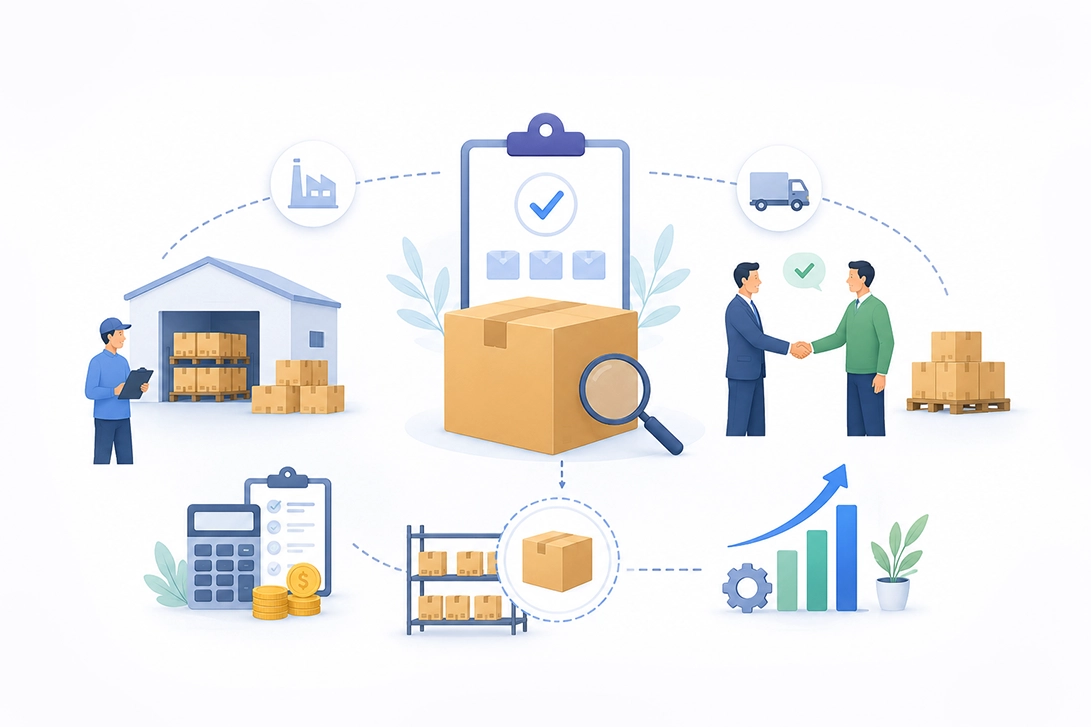
Minimum order quantity (MOQ) is the smallest number of units a business is willing to sell in a single order, often set by suppliers to ensure profitability. In practice, the supplier’s minimum order quantity tells a buyer the minimum amount they must purchase before the supplier will accept, manufacture, or ship the order.
This guide explains minimum order quantity MOQ fundamentals, MOQ calculation methods, benefits, challenges, negotiation strategies, and strategic implementation for business owners, procurement managers, ecommerce businesses, ecommerce brands, and supply chain professionals. MOQ matters because minimum order quantity affects inventory management, cash flow, warehouse space, production schedules, supplier relationships, and total inventory costs. Understanding the supplier's minimum order quantity is crucial for effective demand forecasting, inventory planning, and sourcing strategies, as it directly impacts how businesses align their purchasing with anticipated sales and supply chain requirements.
By the end of this guide, you will understand:
Minimum order quantity is a critical parameter in supply chain management because it influences inventory levels, production schedules, and overall operational efficiency. It defines the minimum quantity or minimum spend required for a purchase order to make sense for both the seller and the buyer.
For suppliers, MOQ protects profit margins by ensuring setup costs, raw materials, labor, shipping costs, administrative costs, and overhead costs are covered. For buyers, MOQ determines how many units must be purchased, how much inventory required must be stored, and how much capital is tied up in stock. Understanding the supplier's minimum order quantity is essential for effective demand forecasting and inventory planning, as it directly impacts order size, storage needs, and overall supply chain efficiency.
Minimum order quantity is the minimum number of units a supplier, manufacturer, wholesaler, or brand will sell in one order. For example, an apparel manufacturer may require 500 T-shirts per design, an electronics supplier may require 1,000 circuit boards, and a packaging vendor may require a minimum order of 10,000 printed boxes.
MOQs can be expressed in terms of either the minimum number of units or the minimum order value, depending on the supplier’s pricing strategy. A supplier may require 500 units per SKU, a Rs. 4,15,000 minimum spend, or both. This is the difference between a quantity-based MOQ and a value-based MOQ.
Suppliers set minimum order quantities primarily to protect their profit margins, ensuring that the costs associated with production and distribution are covered while still allowing for a profit. By requiring a minimum order quantity, suppliers can achieve economies of scale, which reduces the cost per unit and allows them to manage their inventory more effectively.
Setting MOQs also helps suppliers avoid the financial losses that can occur when fulfilling small orders, as the overhead costs associated with production and shipping can outweigh the revenue generated from low-volume sales. Without a minimum order quantity, suppliers may lose money on low order volume transactions.
In supplier relationships, MOQ is usually enforced before a quotation, purchase order, or production run is approved. If a buyer requests fewer units than the supplier’s MOQ, the supplier may reject the order, charge a higher price, remove volume discounts, or offer a lower MOQ only for standard products or in-stock raw materials. The supplier’s MOQ plays a critical role in inventory management , cash flow planning , and procurement strategies, as it influences how businesses forecast demand, plan orders, and negotiate with suppliers to optimize inventory and costs. Understanding the supplier's MOQ is essential for aligning procurement with sales forecasts, managing cash flow, and avoiding inventory surplus.
For example, a clothing factory may require 600 pieces per SKU, 300 meters of fabric per color, and a minimum order value before production begins. An electronics manufacturer may set MOQ based on component batches, production schedules, tooling, and testing requirements. A wholesaler may set own MOQs for retailers to simplify fulfillment and lower administrative costs.
This is why MOQ is not only a purchasing rule. It shapes inventory requirements, customer demand planning, stock levels, storage space, and the cost effectiveness of every order. Understanding how MOQ works leads directly to the next issue: not all MOQs are the same.
Once the basic definition is clear, the next step is understanding how MOQs vary across products, suppliers, and business models. A supplier’s minimum order quantity may be simple, complex, quantity-based, value-based, production-driven, or reseller-driven.
The type of MOQ matters because it changes how businesses negotiate, calculate MOQ, manage inventory carrying costs, and decide whether an order quantity is financially viable.
A simple MOQ has one requirement. For example, a supplier may require a minimum quantity of 1,000 units per SKU, a minimum order value of Rs. 1,66,000 or one full pallet per shipment. Simple MOQs are easier to model because businesses only need to compare the minimum amount against demand forecasts, warehouse space, and cash flow.
A complex MOQ has multiple conditions. A manufacturer may require 500 units per design, 200 units per color, a minimum order value, and a raw materials minimum from its own supplier. Complex MOQs are common in apparel, electronics, home goods, cosmetics, and custom packaging because production costs, setup costs, and material constraints vary by SKU.
The process of calculating MOQ can vary in complexity depending on the product and industry, and it is essential to regularly review and adjust MOQs based on changing market conditions and costs. Businesses that rely on historical sales data, customer preferences, and up to date information can make better decisions about which minimums are realistic.
Supplier-set MOQs are imposed by manufacturers, factories, distributors, or wholesalers. These MOQs are usually based on fixed costs, ordering costs, production schedules, raw materials, labor planning, and supplier profitability. A high minimum order quantity may exist because the supplier cannot cost-effectively run machinery, purchase materials, or allocate staff for small batches.
Brand-set MOQs are created by brands selling to retailers, dealers, franchise partners, or resellers. A brand may require retailers to buy a minimum number of units, cases, bundles, or product variants to maintain merchandising standards, reduce higher administrative costs, and protect profit margins.
The strategic difference is important. Supplier-set MOQs usually reflect production constraints, while brand-set MOQs often support distribution efficiency, sales team targets, and wholesale channel consistency. Both influence order quantities, inventory levels, and potential savings realized through bulk savings.
MOQ is quantity-based, while minimum order value, often called MOV, is value-based. MOQ answers “how many units must I buy?” MOV answers “what minimum spend must my order reach?”
Some suppliers use only MOQ, such as 1,000 units per SKU. Others use only MOV, such as Rs. 8,30,000 per order. Many use both because the supplier needs enough units to justify production and enough order value to cover overhead costs and maximize profitability.
This distinction matters when businesses calculate minimum order quantity. A buyer may meet the minimum number of units but still fail to meet the minimum spend, especially if the products are low-cost. The next section explains how to calculate MOQ and compare it with a cost effective order quantity.
Calculating the Minimum Order Quantity (MOQ) involves understanding demand forecasts, production costs, and practical constraints such as storage capacity and supplier requirements. Businesses should not accept a supplier’s minimum order quantity without comparing it against customer demand, storage costs, inventory forecasting, and cash flow.
To determine the MOQ, businesses often use a formula that considers total production costs, desired profit, and unit price, ensuring that the order quantity is financially viable. In supplier terms, the goal is to cover fixed costs and variable production costs. In buyer terms, the goal is to avoid excess inventory while maintaining enough stock to prevent missed sales opportunities.
Businesses need to calculate minimum order quantity when launching a new product, negotiating with suppliers, setting wholesale terms, reviewing reorder rules, or updating inventory requirements. A structured process helps identify whether the supplier’s MOQ is reasonable or whether a lower MOQ, higher price, phased delivery, or alternative source is needed.
Use historical sales data, demand forecasts, customer preferences, seasonal trends, promotions, and channel-level sales patterns. Strong inventory forecasting helps estimate how many units are likely to sell before the product becomes obsolete or cash is tied up for too long.
Suppliers calculate MOQ by considering setup costs, raw materials, labor, administrative costs, production costs, shipping costs, and overhead costs. A simplified break-even view is:
Break-even MOQ = Fixed Production Costs ÷ (Unit Selling Price − Variable Cost per Unit).
This shows the minimum number of units needed so the supplier does not lose money.
Higher MOQs require suppliers and buyers to carry larger average inventories, increasing warehousing and holding costs. Holding costs include warehouse space, insurance, labor, damage, shrinkage, obsolescence, and inventory carrying costs. Many businesses estimate annual holding costs at 20–30% of inventory value.
Understanding and optimizing MOQs is crucial for businesses as it directly impacts profit margins, inventory holding costs, and overall supply chain efficiency. A higher MOQ may generate cost savings through volume discounts, but only if inventory turnover is strong enough and storage space is available.
Businesses typically evaluate MOQs alongside their Economic Order Quantity (EOQ), which represents the ideal order size to minimize total inventory costs. The formula for calculating EOQ is EOQ = 2DS/H, where D is annual demand in units, S is the fixed cost per order, and H is the holding cost per unit per year.
Balancing the supplier’s MOQ with calculated EOQ enables effective negotiation, optimized purchasing decisions, and streamlined supply chains. Ordering in the right quantities prevents tying up excessive capital in unsold stock and avoids stockout revenue loss.
Buyers seek lower MOQs to stay agile and minimize holding costs, while higher MOQs yield better bulk discounts but increase risks of unsold inventory. The right choice depends on customer demand, supplier reliability, inventory management capabilities, and available cash flow.
| Criterion | High MOQ | Low MOQ |
|---|---|---|
| Cash Flow Impact | Ties up more working capital upfront and may require buyers to possibly warehouse large quantities | Decreases working capital tied up in stock but may require more frequent purchasing |
| Inventory Turnover | Can slow turnover if demand is uncertain or products are seasonal | Supports faster testing and reduces as much inventory sitting idle |
| Storage Requirements | Requires more warehouse space and higher storage costs | Requires less storage space and can lower inventory costs |
| Unit Pricing | Often unlocks bulk savings, volume discounts, and lower per-unit production costs | Usually comes with a higher price per unit and fewer discounts |
| Risk Factors | Reduces stockout risk but increases excess inventory and obsolete stock risk | Reduces obsolescence risk but increases stockout and supply chain disruption risk |
| Administration | Reduces frequency of purchase orders and can lower administrative costs | Can create higher administrative costs due to more frequent ordering |
High minimum order quantities (MOQs) can lead to higher average inventory levels, which increases holding costs and ties up working capital, but they also reduce the frequency of orders and administrative costs. High MOQs can minimize the risk of stockouts since businesses have larger quantities on hand, but they also increase the risk of holding obsolete inventory if demand changes.
Low minimum order quantities (MOQs) allow businesses to maintain lower inventory levels, reducing the risk of obsolescence and the amount of working capital tied up, but they can lead to higher administrative costs due to more frequent ordering. Low MOQs can expose businesses to higher risks of stockouts and supply chain disruptions, as they may not have enough inventory to meet sudden spikes in demand.
The decision framework is straightforward: compare supplier MOQ, EOQ, available cash, demand certainty, inventory turnover, lead time, order volume, customer demand variability, and storage constraints. The most cost effective MOQ is not always the lowest or highest; it is the quantity that supports service levels while keeping total inventory costs under control.
MOQ creates practical inventory management challenges when supplier requirements do not match demand, cash availability, or warehouse capacity. Aligning purchasing with an appropriate MOQ prevents overstocking, which spikes warehousing costs, and under-stocking, which halts order fulfillment.
The best approach is to treat MOQ as a negotiable and measurable supply chain variable, not a fixed obstacle. With better forecasting, supplier collaboration, inventory management software, and disciplined purchasing, businesses can reduce risk and improve cost effectiveness.
A high minimum order quantity can create cash flow pressure because the buyer must pay for larger quantities before sales revenue is collected. This is especially difficult for ecommerce brands, startups, and seasonal businesses that cannot afford excess inventory or long storage periods.
Solution:
The main solution is to negotiate payment terms and phased delivery arrangements. For example, a buyer may agree to the full production quantity but request delivery in monthly batches, reducing immediate storage costs and easing cash flow pressure. Other options include deposits with balance on shipment, 30-70 payment structures, supplier credit, pre-orders, crowdfunding, or using a distributor that can split large factory orders.
Businesses can also accept a higher price for a trial order if the supplier agrees to a lower MOQ. This may reduce bulk savings in the short term, but it can save money by avoiding unsold stock and validating customer demand before scaling.
MOQ can create excess inventory, poor stock levels, and missed sales opportunities when inventory planning is not accurate. Lower MOQs can decrease working capital tied up in stock but increase the risk of stockouts if inventory planning isn’t precise.
Solution:
The solution is better demand forecasting, safety stock planning, warehouse capacity planning, and inventory optimization. Regularly reviewing sales data to identify slow-moving products can help businesses optimize their MOQs by adjusting order quantities or discontinuing underperforming items.
Using technology, such as inventory management software , can automate the evaluation of MOQs, helping businesses adjust them based on real-time sales data and inventory levels. Good systems can flag supplier MOQ conflicts, suggest cost effective order quantity levels, manage purchase orders, and compare supplier lead times.
Encouraging customers to place larger orders through incentives like volume discounts or free shipping can help businesses meet their MOQs more efficiently and improve overall inventory management. This is especially useful when the seller needs to move inventory faster without damaging profit margins.
Small businesses often face MOQ constraints because they have limited cash, limited warehouse space, and less negotiating power. A supplier may require a minimum quantity that is normal for a factory but too high for a new ecommerce business testing customer preferences.
Solution:
The solution is supplier diversification and purchasing cooperatives. Businesses can source from wholesalers, domestic manufacturers, trading companies, or distributors that break down larger factory MOQs into smaller lots. They can also join group buys with other businesses, consolidate order quantities across SKUs, or use standard raw materials instead of custom colors, finishes, or packaging.
Alternative sourcing strategies also help. A buyer may start with ready-stock products, negotiate mixed-SKU orders, place off-peak production orders, or share a credible reorder forecast. If the sales team can show repeat demand and a clear growth plan, suppliers are often more willing to lower MOQ requirements or offer flexible terms.
Strategic MOQ management connects purchasing, sales, finance, and operations. When those teams work from the same data, the business can reduce total inventory costs while maintaining reliable fulfillment.
LOGIC ERP offers a robust platform that helps to simplify and optimize minimum order quantity management for businesses of all sizes. By integrating real-time inventory tracking , demand forecasting, and supplier management , LOGIC ERP enables companies to accurately calculate and adjust MOQs based on current market conditions and operational needs.
With LOGIC ERP, you gain:
The system uses historical sales data and production costs to suggest optimal MOQs, balancing profitability with inventory turnover.
Real-time tracking of stock levels and storing inventory helps prevent overstocking or stockouts, reducing holding costs.
LOGIC ERP facilitates communication with suppliers, allowing negotiation of favorable MOQs and offering volume discounts to maximize savings.
Receive notifications when inventory levels approach MOQ thresholds and generate detailed reports to inform purchasing decisions.
Whether you are a small business or a large enterprise, LOGIC ERP adapts to your evolving MOQ requirements and supply chain complexities.
Choosing LOGIC ERP empowers your business to manage MOQs efficiently, improve cash flow, optimize warehouse space, and strengthen supplier relationships, ultimately driving operational excellence and profitability.
Book a Free ERP DemoMinimum order quantity is a balancing act between supplier needs and business constraints. Suppliers use MOQs to cover production costs, administrative costs, distribution costs, and profit margins. Buyers use MOQ analysis to control cash flow, avoid excess inventory, reduce holding costs, and maintain the right inventory levels for customer demand.
The key is not simply to push for the lowest possible MOQ. A low minimum order quantity may improve agility but increase unit costs and more frequent ordering. A high minimum order quantity may unlock cost savings and lower administrative costs but increase storage costs, inventory carrying costs, and obsolete stock risk.
Take these next steps:
Related topics worth exploring next include Economic Order Quantity (EOQ), supplier relationship management, inventory forecasting, warehouse space planning, and supplier MOQ strategies.
Call at +91-73411-41176 / +91-73411-41175 or send us an email at sales@logicerp.com to book a free demo today!
Yes, MOQs can often be negotiated, especially when the buyer offers something valuable in return. Suppliers may agree to a lower MOQ if the buyer accepts a higher price, commits to repeat orders, uses standard raw materials, combines multiple SKUs, pays faster, or schedules production during off-peak periods.
The strongest negotiation position comes from clear data. Share demand forecasts, historical sales data, expected order volume, and realistic reorder plans so the supplier can see how the relationship may become profitable over time.
To calculate MOQ, start with customer demand, annual sales forecast, fixed costs, ordering costs, production costs, holding costs, warehouse capacity, and target profit margins. Then compare the supplier’s minimum order quantity with your expected sales velocity and storage constraints.
A practical approach is to calculate the break even point, estimate inventory carrying costs, and compare the result with economic order quantity. The right MOQ should be financially viable, operationally manageable, and aligned with customer demand.
MOQ is the minimum quantity a supplier requires before accepting an order. Economic order quantity is the buyer’s ideal order size for minimizing total inventory costs.
In simple terms, MOQ is a supplier constraint, while EOQ is a buyer optimization tool. Businesses typically evaluate MOQs alongside their Economic Order Quantity (EOQ), which represents the ideal order size to minimize total inventory costs.
Small businesses can handle high MOQ requirements by negotiating trial orders, choosing suppliers with lower inventory requirements, buying through distributors, joining purchasing cooperatives, using standard materials, or placing mixed-SKU orders.
They can also reduce risk through pre-orders, phased delivery, tighter inventory forecasting, and incentives that encourage customers to buy larger quantities. These tactics help improve cash flow and reduce the risk of excess inventory.
Consider changing suppliers when MOQ requirements consistently create cash flow strain, excess inventory, storage space problems, stockouts, or poor profit margins. Also reconsider the relationship if the supplier refuses to review MOQs despite reliable purchase history, better demand forecasts, or changing market conditions.
A supplier relationship should support cost effective growth. If the supplier’s MOQ prevents profitable operations, another manufacturer, wholesaler, or distributor may be a better fit.
Calculating minimum order quantity involves analyzing demand forecasts, production costs, and practical constraints such as storage capacity. Businesses use formulas that consider fixed and variable costs, desired profit margins, and unit prices to find the break even point ensuring orders are financially viable.
Inventory management challenges with MOQ include balancing inventory levels to avoid overstocking or stockouts, managing holding costs, and maintaining cash flow. High minimum order quantities can increase inventory levels and storage costs, while low MOQs may lead to frequent ordering and administrative burdens.
A high minimum order quantity ties up more working capital upfront, increasing cash flow strain. Buyers must pay for larger inventory volumes before selling products, which can be challenging for ecommerce brands or small businesses with limited budgets.
MOQ is the supplier’s minimum purchase requirement, while economic order quantity (EOQ) is the buyer’s ideal order size to minimize total inventory costs. Comparing MOQ with EOQ helps businesses optimize purchasing decisions and inventory management.
Holding costs, including warehousing, insurance, and depreciation, impact MOQ decisions by increasing the expense of carrying larger inventories. Businesses must balance MOQ to reduce holding costs without risking stockouts or lost sales.
Inventory forecasting predicts customer demand and sales trends, enabling businesses to set MOQs that align with expected inventory turnover. Accurate forecasting helps avoid excess stock and improves cash flow by ordering the right quantities at the right time.
Customer demand determines how much inventory a business needs to meet sales without overstocking. MOQ should reflect realistic demand levels to ensure inventory levels are optimized, reducing holding costs and minimizing the risk of obsolete stock.
Ecommerce brands manage MOQ challenges by negotiating lower minimums, using inventory management software for forecasting, diversifying suppliers, and optimizing cash flow. These strategies help balance inventory levels with supplier requirements and customer demand.
Minimum order quantities can lead to significant cost savings by enabling bulk purchasing discounts and reducing per-unit production costs. Suppliers achieve economies of scale, which lowers the overall cost and allows buyers to benefit from better pricing when ordering larger quantities.
MOQs directly impact inventory levels by determining the minimum stock a buyer must hold. High MOQs often increase average inventory, requiring more storage space and higher holding costs, while low MOQs allow for leaner inventory but may increase ordering frequency and administrative expenses.
The break-even point helps suppliers and buyers determine the minimum order quantity needed to cover production and operational costs without incurring losses. Calculating this point ensures that the MOQ set is financially viable, balancing fixed costs, variable costs, and desired profit margins.
Minimum Order Quantity (MOQ) is the smallest number of units a supplier or manufacturer requires a buyer to purchase in a single order. MOQs ensure that suppliers cover production, administrative, and overhead costs while maintaining profitability.
Suppliers set MOQs to protect profit margins by covering fixed production costs, achieving economies of scale, reducing administrative expenses, and managing inventory effectively. Small orders often result in losses due to overhead costs.
MOQ refers to the minimum number of units required per order, while Minimum Order Value (MOV) is the minimum total monetary amount a buyer must spend. Some suppliers use one or both depending on their pricing and operational strategies.
Calculating MOQ involves analyzing demand forecasts, production costs, fixed and variable expenses, holding costs, and desired profit margins. Businesses often use formulas considering break-even points and economic order quantity (EOQ) to find financially viable order sizes.
MOQ is a supplier-imposed minimum order size, whereas EOQ is a buyer’s optimal order quantity to minimize total inventory costs, balancing ordering and holding expenses. Comparing MOQ and EOQ helps businesses optimize purchasing decisions.
Yes, MOQs can often be negotiated, especially if buyers provide value such as repeat orders, higher prices, flexible payment terms, or consolidated orders. Clear communication and sharing demand forecasts strengthen negotiation positions.
High MOQs can tie up significant working capital, increase inventory holding costs, require more warehouse space, and elevate the risk of obsolete stock. However, they may reduce administrative costs and lower per-unit prices through bulk discounts.
Low MOQs reduce inventory levels and holding costs but can increase ordering frequency, administrative burden, and risk of stockouts. Businesses must carefully manage inventory planning and forecasting to avoid supply disruptions.
Small businesses can manage high MOQs by negotiating trial orders, partnering in purchasing groups, sourcing from distributors or wholesalers with lower MOQs, and using phased delivery or mixed-SKU orders to meet minimum requirements.
Accurate inventory forecasting helps businesses align MOQs with actual demand, reducing excess stock and stockouts. Forecasting supports better purchasing decisions, allowing adjustments to MOQs based on sales trends and market conditions.
Holding costs, including warehousing, insurance, depreciation, and shrinkage, increase with larger inventory volumes. Balancing MOQ with holding costs ensures businesses do not over-invest in stock that ties up capital and increases expenses.
Strategies include negotiating payment terms, phased deliveries, improving demand forecasting, incentivizing larger customer orders, and leveraging inventory management software to align MOQs with business cash flow capabilities.
If MOQ requirements consistently cause cash flow strain, excess inventory, storage challenges, or disrupt fulfillment, and negotiations fail, businesses should consider alternative suppliers with more favorable MOQ terms.
Understanding and managing MOQ fosters transparent communication and collaboration with suppliers. Negotiating MOQs and sharing forecasts can strengthen partnerships, leading to better pricing, flexible terms, and improved supply chain resilience.
Supplier-set MOQs are imposed by manufacturers or wholesalers based on production constraints and profitability. Brand-set MOQs are established by brands selling to retailers or resellers to maintain sales targets, merchandising standards, and distribution efficiency.
Simple MOQs involve a single minimum quantity or order value requirement. Complex MOQs include multiple conditions such as minimum units per SKU, color, material, or combined order values, often reflecting intricate production or supplier constraints.
Yes, inventory management and ERP software automate MOQ calculations, monitor stock levels, forecast demand, and alert users when MOQ thresholds are reached. This technology improves purchasing efficiency and reduces risks associated with MOQs.
Ordering at MOQ levels can unlock volume discounts, reduce per-unit costs, streamline production runs, and improve supplier relationships. It can also help maintain consistent inventory levels to meet customer demand without frequent reordering.
High MOQs can slow inventory turnover by increasing average stock levels, potentially leading to excess or obsolete inventory. Low MOQs support faster turnover but require precise inventory management to avoid stockouts and frequent ordering costs.
The break-even point is the minimum order quantity at which total costs equal total revenue, ensuring no loss is incurred. It considers fixed production costs, variable costs per unit, and unit selling price to determine the MOQ that covers expenses.
Ecommerce businesses may face challenges managing cash flow and storage due to MOQs. They must forecast demand accurately, negotiate MOQs, and optimize inventory to avoid excess stock or stockouts that affect customer satisfaction and profitability.
Tips include demonstrating long-term commitment, offering flexible payment terms, consolidating orders, requesting phased deliveries, proposing mixed-SKU orders, and sharing accurate demand forecasts to justify lower MOQs.
MOQs help suppliers plan production schedules, manage raw materials, and reduce administrative costs, contributing to supply chain stability. For buyers, understanding MOQs aids in inventory planning, reduces stockouts, and balances ordering frequency with storage capacity.
When brands set MOQs for customers, they should consider customer demand, order processing capabilities, warehouse space, profitability, and competitive positioning to ensure MOQs support sales goals without deterring buyers.
MOQs should be regularly reviewed and adjusted based on changes in production costs, market demand, supplier capabilities, inventory turnover, and business strategy to maintain profitability and operational efficiency.
MOQs affect cash flow by determining the amount of capital tied up in inventory purchases. High MOQs require more upfront investment, potentially straining cash flow, while low MOQs may increase ordering frequency and associated administrative costs.
Balancing MOQ and EOQ involves ordering quantities that meet supplier minimums while minimizing total inventory costs. This balance requires analyzing demand patterns, holding costs, ordering costs, and negotiating with suppliers for flexible MOQ terms.
MOQs are critical in industries with high setup costs, complex production processes, or perishable goods, such as apparel, electronics, packaging, food and beverage, and custom manufacturing, where minimum order sizes ensure profitability and operational feasibility.
In wholesale and distribution, MOQs help manage bulk purchasing, reduce administrative overhead, and maintain consistent supply to retailers. They ensure distributors order sufficient quantities to justify logistics and storage costs.
Suppliers may waive or reduce MOQs for trial orders to allow buyers to test products, validate demand, or establish new relationships. This often comes at a higher unit price or with specific terms to mitigate supplier risk.
MOQs impact product lifecycle by influencing inventory levels during introduction, growth, maturity, and decline phases. Managing MOQs effectively helps prevent excess stock of obsolete products and supports timely replenishment of high-demand items.
MOQs influence order sizes, frequency, and inventory availability. Proper MOQ management ensures sufficient stock to meet customer orders without excessive delays or backorders.
Volume discounts incentivize buyers to meet or exceed MOQs by offering reduced prices per unit for larger orders. This encourages bulk purchasing, improves supplier margins, and helps buyers optimize inventory costs.
Ignoring MOQ requirements can lead to order rejections, higher per-unit costs, disrupted supplier relationships, production delays, and increased administrative burden. Buyers may also face stockouts or excess inventory if MOQs are not properly managed.
MOQs influence pricing by enabling suppliers to offer lower prices for larger orders due to economies of scale. Buyers must balance MOQ pricing benefits against inventory carrying costs and cash flow limitations.
MOQ is a key negotiation point affecting order quantities, pricing, lead times, and payment terms. Successful negotiation of MOQs can improve supply chain flexibility, reduce costs, and enhance partnership outcomes.
Seasonal demand changes require adjusting MOQs to avoid overstocking during low seasons and stockouts during peak periods. Flexible MOQ arrangements help businesses adapt to these fluctuations efficiently.
Some suppliers offer customized MOQs based on customer size, order history, or product mix. Tailoring MOQs improves customer satisfaction and aligns supply chain operations with buyer capabilities.
Startups may struggle with high MOQs due to limited cash flow and storage. Managing MOQs through negotiation, phased orders, or sourcing from distributors helps startups reduce risk and validate products before scaling.
MOQs can be managed by bundling products to meet minimum order requirements while offering customers variety. Bundling helps optimize inventory, increase average order value, and meet supplier MOQs efficiently.
MOQ is the minimum quantity a buyer must order, while minimum batch size refers to the smallest production run a supplier can economically produce. Often, MOQ aligns with the minimum batch size but can vary based on supplier policies.
Technology such as ERP and inventory management systems automate MOQ tracking, forecast demand, optimize order quantities, and provide real-time insights, enabling businesses to manage MOQs proactively and reduce risks.
Proper MOQ management ensures stable inventory levels, reduces supply disruptions, and enhances responsiveness to market changes, contributing to a more resilient and adaptable supply chain.
High MOQs may limit customization flexibility due to production constraints, while lower MOQs support smaller, customized runs. Balancing MOQ with customization needs is essential for meeting customer expectations.
Yes, MOQs often vary by product complexity, production cost, demand, and supplier policies. Different SKUs may have distinct MOQs reflecting their unique manufacturing or sourcing requirements.
MOQ is a critical factor in supplier selection, influencing cost, flexibility, inventory levels, and cash flow. Choosing suppliers with MOQs aligned to business needs supports efficient operations and growth.
MOQs affect shipment sizes, frequency, and warehouse space requirements. Larger MOQs may reduce shipping frequency but increase storage needs, while smaller MOQs increase order frequency and handling complexity.
MOQs enable suppliers to lower unit costs through bulk production, which can translate to better pricing for buyers. However, buyers must balance these savings against increased inventory holding costs to maintain profitability.
Businesses should monitor supplier communications, market trends, and cost fluctuations to anticipate MOQ changes. Flexible contracts, diversified suppliers, and adaptive inventory strategies help manage such changes smoothly.
MOQs are often included in purchase agreements specifying minimum quantities, pricing, delivery terms, and penalties for non-compliance. Understanding contractual obligations ensures compliance and protects business interests.
High MOQs can conflict with JIT principles by requiring larger inventory holdings. Businesses using JIT must negotiate MOQs carefully or find suppliers offering flexible minimums to maintain lean inventories.
While MOQs are common in physical goods, service providers may set minimum service quantities or contract volumes to ensure profitability and resource allocation.
MOQs influence initial order sizes, inventory investments, and risk exposure during product launches. Managing MOQs effectively supports successful market entry and demand validation.
Large MOQs increase the risk and cost of returns or cancellations due to higher inventory commitments. Clear return policies and flexible MOQ arrangements help mitigate these risks.
Higher MOQs may allow suppliers to optimize production runs, potentially reducing lead times. Conversely, low MOQs might require more frequent setups, increasing lead times and costs.
Clearly state MOQ policies in sales agreements, product listings, and ordering platforms. Providing rationale, alternatives, and support improves customer understanding and satisfaction.
MOQs affect shipment sizes, customs declarations, tariffs, and compliance. Larger MOQs may simplify logistics but increase duties, while smaller MOQs require careful planning to manage costs.
Yes, MOQs may be combined with restrictions such as maximum order quantities, order multiples, or packaging requirements to optimize production and fulfillment.
High MOQs may lead to overproduction and waste, while low MOQs support more agile, demand-driven manufacturing. Balancing MOQs with sustainability goals promotes responsible supply chain practices.
Advances in technology, data analytics, and flexible manufacturing are enabling more dynamic MOQ management, allowing suppliers and buyers to optimize order sizes in real time to meet changing market demands efficiently.
Popular Products