An override price, or price override, is a retail and POS function that lets authorized users adjust a product’s default price during a live transaction — without permanently changing the list price — giving your teams a controlled way to negotiate, match competitors, and resolve pricing discrepancies while protecting margins.
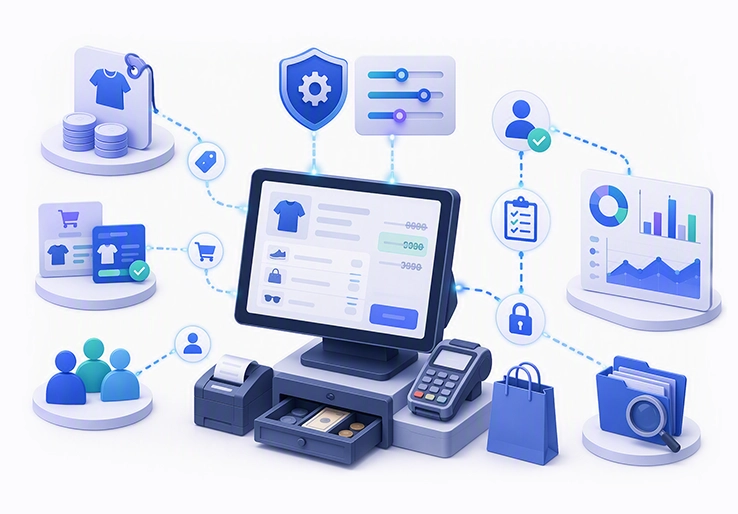
An override price, or price override, is a retail and POS function that lets authorized users such as sales managers, supervisors, sales representatives, franchise managers, and other trained staff adjust a product’s default price during a live transaction without permanently changing the list price in the back-end system. Instead, the system applies a custom price to that specific sale, giving retail businesses, B2B companies, e-commerce operators, and wholesale distributors a controlled way to negotiate, match competitors, or resolve pricing discrepancies on the spot.
Designed to help you close more deals and retain customers without sacrificing profitability or losing control over margins, the price override feature bridges the gap between rigid automated pricing and the real-world flexibility frontline teams need every day. It matters when you need to boost conversions, strengthen customer loyalty, move inventory with pricing issues or cost pressure, and still maintain revenue control, compliance, and protection against misuse. This page explains what override price means, the business benefits of using it, how LOGIC ERP’s price override workflow works, which features support controlled price changes, who should use it, and the best practices for managing overrides effectively.
Most companies rely on manual spreadsheets, disconnected tools, or create multiple SKU variations just to manage pricing exceptions. LOGIC ERP is built differently — offering a purpose-built price override module integrated directly into its retail POS and ERP ecosystem.
During a transaction, a sales representative scans an item and its default price loads from the system. To adjust, they select the price override option, enter the new price or discount percentage, and choose from a pre-defined reason code library — for example, “competitor match,” “loyalty discount,” or “damaged goods.” Price overrides are distinct from automated discounts such as coupons or promotions; they require deliberate user action.
The system evaluates the override against configured business rules. If the adjustment falls within the user’s authorized range, it’s approved instantly. If it exceeds the threshold — say, more than 10% off the original price — the request routes automatically to the appropriate manager. Authorization protocols typically restrict price overrides to managers or supervisors, and LOGIC ERP’s multi-store dashboard enables remote approvals even for franchise operations. Price overrides can also be automated based on predefined conditions, such as date effective price overrides that activate for seasonal campaigns.
Once approved, the custom price replaces the list price for that specific sale. The transaction completes with full documentation — user identity, approval chain, value of the discount, and the reason code — all saved for reporting and compliance. Log all price overrides for auditing and compliance; this data feeds directly into analytics dashboards that help you refine your pricing strategy over time.
If your business requires pricing flexibility while maintaining control, LOGIC ERP’s price override fits your needs.
Ideal for:
Train staff on selective use of price overrides. The goal is not to eliminate overrides but to govern them — ensuring every adjustment serves a strategic purpose, whether that’s closing a sale, clearing inventory, or building customer relationships.
LOGIC ERP stands out as the premier choice for businesses seeking a comprehensive, reliable, and user-friendly price override solution. Our platform combines advanced technology with practical features designed to empower your retail operations while maintaining strict control over pricing adjustments.
Price override is an important tool for retail businesses seeking to balance pricing flexibility with operational control. By enabling authorized personnel to adjust prices in real time, companies can respond effectively to competitive pressures, customer needs, and inventory challenges while maintaining profitability. However, managing overrides requires clear policies, role-based access, and comprehensive logging to prevent misuse and protect margins.
LOGIC ERP’s integrated price override solution offers robust features including multi-level approvals, audit trails, and real-time analytics that empower businesses to leverage price overrides strategically and ethically. When implemented with best practices, price overrides not only enhance customer satisfaction and sales conversion but also strengthen revenue control and compliance across your retail network. Embrace price override as a vital part of your pricing strategy to drive growth and maintain competitive advantage in today’s dynamic industry landscape.
Call at +91-73411-41176 / +91-73411-41175 or send us an email at sales@logicerp.com to book a free demo today!
Yes. LOGIC ERP lets you configure unlimited approval tiers based on percentage thresholds, dollar value, customer types, and even product attributes. For example, a cashier might approve up to 5%, a supervisor up to 15%, and a sales manager up to 30% — with anything beyond requiring executive sign-off.
Role-based access controls and mandatory reason codes ensure only authorized users can override prices. Additionally, the system enforces minimum gross profit thresholds, so no override can push a sale below your defined margins. Price overrides may be used for resolving pricing discrepancies or customer goodwill, but every instance is tracked. Cumulative small-scale abuses from overrides can erode revenue, which is why LOGIC ERP flags unusual patterns automatically.
The transaction continues at the original price. The denial reason is logged in the customer record for future reference, training, and process improvement. This data helps managers determine whether denial patterns indicate a need to update your base pricing or adjust threshold policies.
Absolutely. Built-in analytics display override frequency by product, customer, and sales rep — providing the data you need for strategic adjustments. Price overrides help improve customer satisfaction by addressing pricing issues immediately, and the reporting dashboard ensures those adjustments also serve your long-term margin goals. With structured capture and documentation, businesses report recovering about 20% of potential margin losses within a single quarter.
No. Price overrides are distinct from automated discounts such as coupons or promotions. While promotions apply system-wide based on predefined rules, a price override is a transaction-specific adjustment initiated by an authorized user. Price overrides can also create perceptions of unfair treatment among customers if applied inconsistently, which is why governance and documentation are essential.
Ideally, no more than 20% of your total transactions should involve price overrides. Exceeding this threshold may indicate insufficient pricing controls or misuse, which can negatively impact your revenue and profitability.
Price overrides can significantly affect revenue if not managed carefully. Unchecked or excessive overrides can erode profit margins, leading to cumulative losses that impact your bottom line. Proper policies and monitoring are essential to prevent misuse.
Having over 20% of transactions as price overrides often signals control issues within your pricing strategy. This can lead to inconsistent pricing, internal fraud, and customer perceptions of unfair treatment, all of which undermine your business’s financial health.
LOGIC ERP provides robust logging of every price override, capturing user details, timestamps, and reason codes. This transparency helps detect and prevent internal fraud — which accounts for 28–30% of retail inventory loss — and ensures compliance with audit and regulatory requirements.
Yes. If price overrides are applied inconsistently or without clear guidelines, customers may perceive unfair treatment. Establishing clear policies and training staff on selective use helps maintain fairness and customer trust.
Price overrides are manual, transaction-specific price adjustments initiated by authorized personnel to address unique situations such as competitor matching or damaged goods. In contrast, automated discounts like coupons or promotions apply system-wide based on predefined rules without individual user intervention.
Best practices include setting clear guidelines, implementing role-based access controls, requiring mandatory reason codes, and limiting the percentage of transactions that can be overridden. Regular training and audit trails help enforce these controls effectively.
Date effective price overrides allow businesses to set custom prices that become active during specific time periods, such as seasonal campaigns or limited-time promotions. This feature enables automatic application of overridden prices on the defined dates without manual intervention, ensuring timely and accurate pricing adjustments aligned with marketing strategies.
LOGIC ERP supports date effective price overrides by integrating override price adjustments with configurable approval workflows and role-based permissions. When an override price request falls within the specified date range, the system automatically applies the custom price during transactions and logs all changes with user details, timestamps, and reason codes for compliance and audit purposes.
Override pricing allows authorized users to change a product’s selling price during a transaction. If a user lacks permission, the system requests manager approval before applying the new price. Every price override is recorded with user details, approval information, and timestamps, ensuring pricing accuracy, security, and complete auditability while preventing unauthorized discounts.
Popular Products