10 Retail Industry Trends to Watch in 2026: The Future of Retail

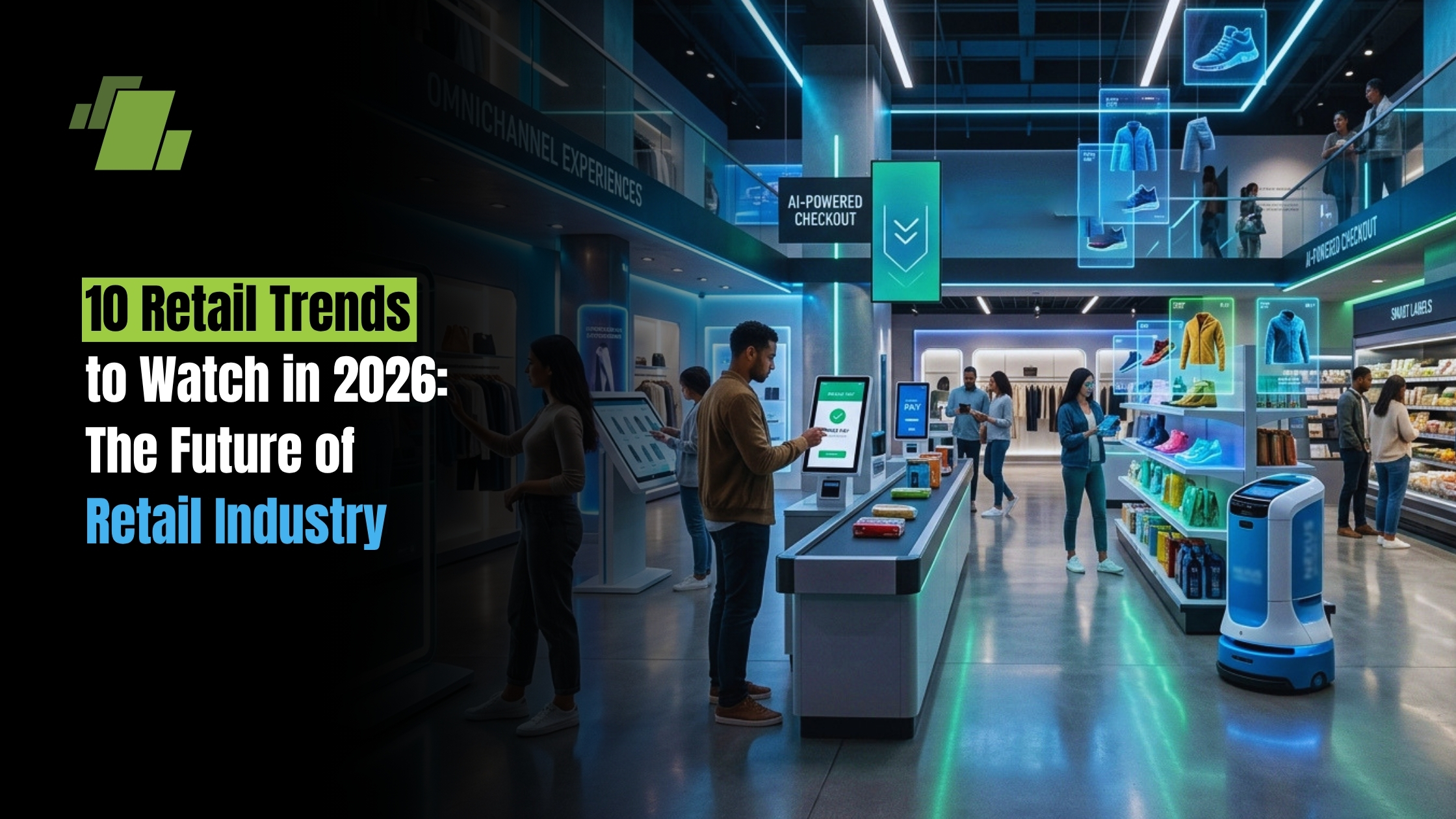
Summary
Retail in 2026 is driven by AI, personalization, and seamless omnichannel experiences with retail software. Trends like social commerce, AR/VR, and automation are transforming how customers shop. Retailers that adopt digital technologies and customer-centric strategies will boost efficiency, engagement, and business growth.
Table of Content
i) Introduction
ii) Global Retail Overview
iii) Understanding the Current Retail Landscape in 2026
1. Consumer-Driven Retail Trends
A) Sustainability Practices
B) Consumer Behaviour Trends
2. Social Commerce and Community Shopping
3. Sustainable and Ethical Retail Practices
4. Hyper-Personalized Shopping Experiences
5. Phygital Experiences
6. Retail Media Networks
7. Technology and Innovation-Driven Trends
- Autonomous Store Operations
8. AR/VR Shopping Integration Comparison
- Voice Commerce and Conversational AI
9. Grocery Market Trends
- Online Grocery Shopping
- Department Store Adaptations
- Indian Retail Sector Growth
10. Advanced Analytics and Insights
- Role of AI and Machine Learning
- Personalized Shopping Journeys
- Omnichannel Retailing in India
iv) Common Implementation Challenges and Solutions
- Technology Integration Costs
- Staff Training and Change Management
- Customer Data Privacy Concerns
v) Global Retail Industry Outlook
vi) Conclusion and Next Steps
vii) Frequently Asked Questions
Introduction
The retail industry in 2026 stands at an inflection point where artificial intelligence, AI-Powered ERP solutions, shifting consumer expectations, and sustainable business models converge to reshape how consumers shop and how retailers operate. These ten retail trends aren’t speculative predictions, they’re already transforming retail sales across physical stores, online shopping platforms, and hybrid retail formats worldwide.
This article examines the key trends defining the retail sector this year, offering practical implementation guidance for retail executives, store managers, and entrepreneurs navigating digital transformation. We’ll focus on trends with proven impact on retail operations, customer experience, and profit margins, while acknowledging that emerging technologies like quantum computing or blockchain loyalty programs fall outside our current scope.
The 10 retail trends shaping 2026: AI-powered personalization, sustainable retail practices, social commerce integration, autonomous store technology, subscription-based models, augmented reality shopping, micro-fulfillment centers, voice commerce, flexible payment solutions, and community-driven retail spaces. Each trend offers distinct competitive advantages when implemented strategically within existing business models.
By the end of this article, you will understand:
- How each trend directly impacts consumer behavior and retail sales
- Practical implementation strategies tailored to different retail formats
- Cost considerations and realistic ROI timelines
- Methods for measuring trend implementation success through advanced analytics
- How to leverage consumer insights to inform retail strategy and trend adoption
Global Retail Overview
The global retail industry is a dynamic and rapidly evolving sector, shaped by shifting consumer expectations, technological advancements, and changing economic landscapes. Encompassing everything from small independent shops to multinational retail giants, the retail industry is a cornerstone of the global economy. Retail sales, covering goods and services sold directly to consumers through physical stores (including traditional brick and mortar locations), online shopping platforms, and hybrid retail formats worldwide,serve as a key barometer for the sector’s health, reflecting trends in consumer spending, online shopping, and broader retail trends.
Supply Chain Management in Retail
Supply chains play a pivotal role in the retail sector, ensuring products reach consumers efficiently and reliably. As global retail adapts to new challenges, such as fluctuating demand and logistical disruptions, the ability to manage supply chains effectively has become a critical differentiator. Retailers are increasingly leveraging technology to meet rising consumer expectations for convenience, speed, and personalized experiences, driving innovation across both physical and digital retail formats.
Understanding the Current Retail Landscape in 2026
The retail landscape in 2026 reflects years of accelerated digital transformation, compressed into a period where consumer preferences evolved faster than many retail companies could adapt. The global retail market now operates under fundamentally different rules than even three years ago, with the AI-in-retail market reaching approximately US$14.5 billion and projected to exceed US$138 billion by 2035. Annual revenue is a key metric for ranking and comparing the financial performance and market dominance of major retail companies, highlighting the scale and strategic success of top industry players. Retail analytics tools are increasingly used to track, compare, and interpret these revenue metrics for strategic decision-making.
A) Market Size and Revenue Metrics
For modern retailers, understanding this evolved environment isn’t optional, it’s essential for survival. Department stores, discount stores, shopping malls, and online retail platforms all face pressure to deliver seamless omnichannel retailing while managing inventory more efficiently than ever before. Tracking foot traffic remains a critical metric for evaluating the performance of brick and mortar locations within omnichannel strategies. The rise of digital-first competitors and innovative business models is reshaping the traditional retail landscape, compelling retailers to adopt new technologies and strategies to remain competitive.
B) Competitive Pressures and New Entrants
Department stores, discount stores, shopping malls, and online retail platforms all face pressure to deliver seamless omnichannel retailing while managing inventory more efficiently than ever before. The rise of digital-first competitors and innovative business models is reshaping the traditional retail landscape, compelling retailers to adopt new technologies and strategies to remain competitive.
C) Consumer Behavior Evolution
Consumer expectations in 2026 center on three non-negotiable demands: personalization, convenience, and values alignment. Indian consumers, urban consumers in major cities, and global retail customers alike expect brands to understand their shopping habits without requiring explicit communication.
The shift from keyword search to natural language queries represents the most significant change in how consumers shop. Approximately two-thirds of shoppers now prefer asking AI agents questions like “What’s the best running shoe for flat feet under $150?” rather than browsing category pages. Advancements in retail technology are enabling these new forms of product discovery and customer engagement. This evolution demands that retail companies rethink their entire approach to customer engagement and product discovery.
D) Technology Integration Maturity
Technology adoption across the retail sector has reached a critical threshold. As of 2025, 77% of e-commerce professionals use AI daily in their operations, up from 69% just one year prior. This rapid growth in adoption creates both opportunities and competitive pressure.
Retail operations increasingly depend on unified commerce foundations, integrated systems connecting inventory management, customer data, pricing, and order fulfillment across all channels. Retail automation initiatives are increasingly central to achieving seamless integration across inventory, customer data, and order fulfillment. Retailers with disconnected systems find their AI investments underperforming because machine learning models require consistent, high-quality data to deliver valuable insights.
This maturity level sets the stage for specific trend applications that build on established digital platforms rather than requiring greenfield implementations.
E) Retail Technology Innovations
The experiential retail trend includes cafes, workshops, and shoppertainment techniques to engage customers.
The expansion of experiential retail and the increased use of artificial intelligence, including virtual reality (VR), augmented reality (AR), and machine learning, are significantly impacting the retail industry.
F) Retail Strategy Adjustments
Resilient supply chains involve strategies such as onshoring and nearshoring to mitigate risks from global trade challenges.
Consumers are increasingly shifting towards private-label and off-price retail due to persistent inflation.
In 2024, retail sales volumes in the UK increased by 1%, marking the first rise in three years, prompting retailers to adjust their strategies to remain competitive.
The shift from transactions to experience-led commerce is defining the retail sector for 2023 and beyond.
1. Consumer-Driven Retail Trends
Consumer-driven trends emerge directly from shifting preferences in how people discover, evaluate, and purchase products. These trends reflect what customers demand rather than what technology enables, though technology certainly facilitates their execution. Retail innovation is increasingly shaped by direct consumer input and rapidly changing preferences.
A) Sustainability Practices
As many consumers are becoming more aware of the environmental and social impact of their purchases, they are demanding more transparency from brands and encouraging retailers to be more sustainable.
Sustainable practices are becoming more mainstream, as more businesses are adopting them in an effort to reduce their impact on the environment.
The retail industry is under scrutiny from both consumers and regulators, as retail companies are a major contributor to carbon emissions, which puts them in a powerful position to make changes that drive sustainability across their supply base.
B) Consumer Behaviour Trends
In 2024, retail sales volumes in the UK increased by 1%, marking the first rise in three years, indicating a shift in consumer spending patterns after a period of decline.
The rise of digital media has shifted power from retailers to consumers, who now have widespread access to information and expect transparency and value from brands.
Consumers are increasingly demanding new levels of value, expecting the best price, instant delivery, and seamless experiences from retailers. To keep pace, retailers increasingly rely on shopper insights to anticipate and respond to evolving consumer demands.
2. Social Commerce and Community Shopping
Social commerce involves selling directly through social media platforms. Social commerce has evolved from a supplementary channel to a primary discovery and purchase pathway. TikTok Shop alone achieved tens of billions in global GMV in 2025, demonstrating that social media platforms now function as legitimate retail formats alongside traditional e-commerce destinations.
Live shopping events create immediacy that standard product pages cannot replicate. When a trusted influencer demonstrates a product in real-time, decision latency drops dramatically, and conversion rates climb. The growing importance of influencer marketing in driving engagement and conversions through social commerce platforms is evident, as brands increasingly leverage influencers to connect with audiences and boost sales. Brands treating community sentiment data from platforms like Reddit and Discord as critical training data for AI agents gain a competitive edge in understanding authentic consumer mindset.
The impact on customer satisfaction extends beyond purchase behavior. Social commerce creates ongoing engagement opportunities through user-generated content, community forums, and peer reviews that build trust more effectively than brand-controlled messaging.
3. Sustainable and Ethical Retail Practices
Sustainability has shifted from corporate social responsibility checkbox to genuine competitive advantage. Consumer willingness to pay premium prices for sustainable products continues rising, while regulatory pressure, particularly from EU CBAM and expanded ESG reporting requirements, makes eco friendly practices mandatory rather than optional.
The data reveals where impact matters most: 41% of global retail greenhouse gas emissions stem from Scope 3 sources, supply chains, transportation, and distribution. Retailers increasingly focusing on circular economy principles implement take-back programs, resale offerings, and sustainable sourcing practices that address these emissions while creating new revenue streams. Green retailing initiatives are becoming standard practice for retailers aiming to reduce their environmental footprint and appeal to eco-conscious consumers.
U.S. retailers spend $150 billion annually on energy, with roughly 35% consumed in store operations and 40% in logistics. These figures represent both cost pressure and opportunity, innovative technologies like AI-enabled energy management systems and demand forecasting reduce waste while improving operational efficiency.
4. Hyper-Personalized Shopping Experiences
Hyper-personalization involves using customer data for tailored marketing and product recommendations. AI-powered personalization drives a significant portion of e-commerce revenue in 2026. Retailers using sophisticated recommendation engines report that over 35% of revenue during customer sessions comes from AI-influenced suggestions. Advanced real-time personalization leads to 52% average increases in consumer spending among high-performing adopters.
Personalized shopping experiences extend far beyond inserting customer names into email subject lines. Modern personalization encompasses dynamic pricing adjusted for demand and customer profiles, cross-channel content tailoring, and behavioral signal tracking that considers past purchases, browsing patterns, dwell time, and return online purchases history. Tracking consumer behavior online enables retailers to develop targeted sales strategies that increase conversions and improve overall sales performance. Integrating customer loyalty programs with personalized recommendations further boosts retention and repeat purchases.
Key personalization impacts on retail sales:
- Higher conversion rates across all retail formats
- Increased average order value through relevant recommendations
- Reduced return rates due to better product-customer matching
- Improved customer engagement through relevant communications
The bridge from understanding what customers want to delivering it consistently requires robust technology infrastructure, the focus of our next section.
5. Phygital Experiences
Phygital retail integration combines physical and digital experiences, creating immersive shopping environments. The rise of experiential retail as a key differentiator for brands seeking to engage customers both online and offline is central to this trend. Phygital experiences blend the best of both worlds, allowing customers to interact with products in-store while leveraging digital tools for information, personalization, and convenience. This approach enhances engagement and satisfaction by making the shopping journey seamless and interactive.
6. Retail Media Networks
Retail media networks are expanding as retailers leverage their first-party data for advertising. By utilizing the wealth of customer data collected through their platforms, retailers can offer targeted advertising opportunities to brands, creating new revenue streams and enhancing the relevance of marketing messages to shoppers. Retail advertising through these networks enables brands to reach shoppers at the point of purchase with highly relevant messages.
7. Technology and Innovation-Driven Trends
Technology trends build upon consumer demands while creating new possibilities that reshape consumer expectations in return. These innovations require significant tech investments but deliver measurable improvements in retail operations when implemented correctly, with the ongoing evolution of digital retail as both a driver and outcome of these innovations.
A) Autonomous Store Operations
Autonomous store operations reduce labor costs while improving customer experience through faster checkout and better inventory management. The emergence of smart stores that leverage advanced technologies to streamline operations and enhance the customer experience is a key trend in this area. The implementation journey follows a logical progression that allows retailers to capture value at each stage.
Implementation steps for autonomous store operations:
- Cashier-less checkout systems deployment: Begin with sensor-based, camera, or RFID-enabled checkout that eliminates traditional point-of-sale queues while maintaining payment security and accuracy.
- Inventory management automation integration: Deploy robotic shelf scanners and real-time inventory sensors, approximately 1,000 stores already use robots like Tally for monitoring out-of-stock situations and shelf compliance.
- Customer flow optimization through sensors: Install heat mapping and predictive foot traffic analytics to understand movement patterns and optimize store layouts for enhanced customer satisfaction.
- Staff reallocation to customer service roles: Transition retail workers from checkout tasks to advisory, styling, and assistance roles that add value customers cannot get from automation alone.
The capital investment required for autonomous operations remains substantial, but phased implementation allows retailers to demonstrate ROI before scaling. Data privacy concerns around camera monitoring require transparent customer communication and robust security protocols.

8. AR/VR Shopping Integration Comparison
Augmented reality and virtual reality technologies address different customer needs with varying implementation requirements. Over 70% of shoppers report that AR try-ons increase their likelihood to purchase, while approximately 40% express willingness to pay premium prices for AR-enhanced experiences.
| Criterion | Virtual Try-On | AR Product Placement | VR Showrooms |
|---|---|---|---|
| Implementation Cost | Moderate (mobile app + image recognition) | Moderate-High (3D modeling, spatial mapping) | High (hardware, immersive development) |
| Customer Adoption | High in fashion, cosmetics, eyewear | Moderate; strongest in furniture, home décor | Low to moderate; early adopters, luxury |
| ROI Timeline | 6-12 months | 12-24 months | 24+ months |
| Technical Requirements | Device-friendly AR SDKs, image models | Quality 3D visuals, spatial awareness tech | VR hardware, comfort optimization |
For most retailers, virtual try-on delivers the fastest path to measurable results. The technology works across retail formats from pure-play online shopping to in store smart mirrors, making it versatile for omnichannel retailing strategies. VR showrooms remain better suited to high-consideration purchases where the investment in immersive experiences justifies longer sales cycles.
A) Voice Commerce and Conversational AI
Voice commerce has matured from novelty to established channel, with the global market reaching approximately US$49.6 billion in 2024 and projected to exceed US$147.9 billion by 2030. Nearly 50% of U.S. consumers now use voice search for shopping-related tasks. Alongside this, the rise of conversational commerce, where shopping interactions occur through natural language interfaces across multiple platforms, has broadened how retailers engage customers beyond just voice assistants.
Generational differences matter significantly: roughly 30% of Gen Z consumers shop by voice weekly, compared to under 7% of Baby Boomers. This disparity suggests voice commerce represents a long-term shift rather than universal present-day reality.
Current voice commerce applications focus on:
- Reordering routine items and household staples
- Adding products to shopping lists for later purchase
- Tracking order status and delivery updates
- Customer service inquiries through AI chatbots
Trust remains the primary barrier, nearly half of users express discomfort with voice assistants handling payments or complex orders. Retailers building voice commerce capabilities must address these concerns through transparent data handling and human escalation options.
Voice commerce connects naturally to subscription-based models and micro-fulfillment centers, where predictable reorders and fast delivery meet customer convenience expectations.
9. Grocery Market Trends
The grocery market remains a vital segment of the retail industry, undergoing significant transformation as consumer preferences evolve. Shoppers now prioritize convenience, affordability, and sustainability, prompting retailers to invest heavily in e-commerce platforms and digital marketing to enhance customer satisfaction. Online grocery shopping continues to gain traction, with many retailers adopting dynamic pricing and advanced inventory management systems to remain competitive; major retail chains are leading the way in implementing these innovations to maintain market share.
A) Online Grocery Shopping
Online grocery shopping is rapidly expanding as consumers seek convenience and time savings. Retailers are investing in robust e-commerce platforms, efficient delivery logistics, including the importance of optimizing last mile delivery to ensure timely and cost-effective service for online grocery customers, and user-friendly interfaces to capture this growing market segment.
B) Department Store Adaptations
Department stores, traditionally central to the retail sector, are also adapting by integrating technology-driven solutions and focusing on customer-centric strategies. These adaptations include implementing digital kiosks, offering click-and-collect services, and enhancing in-store experiences to remain relevant; tracking retail footfall helps department stores assess the effectiveness of new initiatives and optimize store layouts.
C) Indian Retail Sector Growth
In India, the retail sector is experiencing rapid growth, fueled by rising disposable incomes, urbanization, and the widespread adoption of e-commerce. While organized retail continues to expand, the continued relevance of kirana stores as neighborhood staples remains significant, serving as a vital link for local communities. Retailers in this space are increasingly focused on optimizing inventory management and leveraging dynamic pricing to meet the diverse needs of modern consumers and drive customer satisfaction.
10. Advanced Analytics and Insights
Advanced analytics and insights are now essential tools for retailers aiming to stay ahead in a competitive market. By harnessing artificial intelligence, machine learning, and sophisticated data analytics, including the growing use of predictive analytics to anticipate demand and inform strategic decisions, retailers can gain a deeper understanding of consumer behavior, predict demand, and optimize retail operations. These technologies enable businesses to enhance customer satisfaction, improve operational efficiency, and secure a competitive edge.
A) Role of AI and Machine Learning
Artificial intelligence and machine learning are at the core of modern retail analytics, enabling predictive modeling, demand forecasting, and real-time personalization. Retailers use these tools to anticipate trends, optimize inventory, and deliver targeted marketing.
B) Personalized Shopping Journeys
The integration of virtual and augmented reality is also transforming the retail experience, allowing for immersive and personalized shopping journeys that resonate with today’s consumers. The role of customer segmentation is crucial in delivering relevant experiences to different shopper groups, ensuring that these immersive technologies address the unique preferences and needs of each segment.
C) Omnichannel Retailing in India
In the Indian retail sector, digital transformation and omnichannel retailing are accelerating, with retailers investing in technology to deliver seamless, personalized shopping experiences across all touchpoints. A robust retail ecosystem is essential for delivering consistent value across online and offline channels. Leveraging customer data responsibly, retailers can tailor offerings, streamline operations, and respond proactively to shifting consumer preferences.
Common Implementation Challenges and Solutions
Recognizing that these retail trends require substantial organizational change, successful implementation demands realistic assessment of barriers and practical approaches to overcome them, highlighting the importance of effective change management in ensuring successful trend implementation.
1. Technology Integration Costs
The investment required for AI-powered personalization ranges from tens of thousands of dollars for plug-in SaaS tools to millions for full-stack AI with unified commerce and data pipelines. This range reflects the reality that no single budget fits all retail companies.
Practical solutions:
- Phased implementation: Start with highest-impact, lowest-complexity applications, recommendation widgets, email personalization, basic chatbots before advancing to real-time cross-channel personalization
- ROI calculation discipline: Measure specific metrics (conversion lift, return rate reduction, average order value increases) rather than general “AI adoption” goals; clear measurement of return on investment is critical for justifying technology expenditures to stakeholders.
- Compound annual growth rate projections: Model implementation costs against projected efficiency gains and revenue increases over 18-36 months to build business cases for leadership approval
Most retailers see positive ROI within 6-18 months when data foundations are solid, but extended timelines are common when underlying data quality issues require resolution first.
2. Staff Training and Change Management
Digital transformation succeeds or fails based on people, not technology. Retail workers accustomed to traditional operations need clear pathways to new roles that leverage automation rather than compete with it.
Effective approaches:
- Upskilling programs: Train staff on customer advisory roles, technology troubleshooting, and experience delivery rather than transactional tasks, supporting the broader workforce transformation underway as retail workers adapt to new technologies and responsibilities.
- Transparent communication: Explain how automation changes roles without eliminating jobs, emphasize the shift from routine tasks to value-added customer service
- Performance metrics evolution: Update success measures to reflect new priorities: customer satisfaction scores, problem resolution rates, and experience quality rather than transaction speed alone
3. Customer Data Privacy Concerns
Collecting behavioral data, voice recordings, and camera footage raises legitimate privacy concerns that can undermine customer engagement if handled poorly.
Trust-building measures:
- Transparent data collection policies: Clearly communicate what data is collected, how it’s used, and what benefits customers receive in exchange
- Regulatory compliance: Ensure GDPR, CCPA, and emerging privacy regulations are satisfied before expanding data collection; robust data protection measures are essential for maintaining customer trust and meeting legal requirements
- Human oversight guarantees: Commit to human review of automated decisions affecting customer access, pricing, or service levels
Building trust takes longer than deploying technology, but the effort determines whether customers embrace or resist digital retail innovations.
Global Retail Industry Outlook
Looking ahead, the global retail industry is poised for significant growth, propelled by emerging trends such as social commerce, sustainable sourcing, and the continued rise of online shopping. The grocery market will remain a focal point for innovation, with retailers investing in digital platforms and e-commerce strategies to maintain a competitive edge, all within the context of the ongoing retail transformation that is redefining business models and consumer relationships worldwide. Retail companies are expected to prioritize customer satisfaction through personalized shopping experiences, loyalty programs, and enhanced customer engagement initiatives.
The adoption of advanced analytics, artificial intelligence, and machine learning will become even more widespread, enabling retailers to optimize operations and respond swiftly to changing consumer preferences. Key trends to monitor include the expansion of e-commerce, the growing emphasis on sustainability and social responsibility, and the use of innovative technologies like augmented and virtual reality to create engaging, personalized shopping environments. Retailers that embrace these changes and invest in digital transformation will be best positioned to thrive in the evolving global retail landscape.
Conclusion and Next Steps
These ten retail trends represent competitive necessities rather than optional enhancements for retailers operating in 2026. The convergence of AI-powered personalization, sustainable retail practices, social commerce, autonomous operations, subscription models, augmented reality, micro-fulfillment, voice commerce, flexible payments, and community-driven spaces creates an environment where partial adoption means falling behind. The future of retail will be shaped by those who proactively embrace these trends and adapt to evolving consumer expectations.
Immediate action items for retail leaders:
- Conduct trend prioritization assessment: Evaluate which trends align best with your existing capabilities, customer base, and competitive position
- Plan pilot programs: Select one or two trends for small-scale testing before committing to enterprise-wide implementation
- Prepare teams for change: Begin upskilling and communication efforts now, recognizing that technology deployment without organizational readiness wastes investment
For continued learning, explore related topics including retail analytics implementation, customer experience optimization frameworks, and supply chains innovation for resilience and sustainability.
Call at +91-73411-41176 or send us an email at sales@logicerp.com to book a free demo today!
Frequently Asked Questions
1. What is the most important retail trend for small businesses in 2026?
AI-powered personalization tools and flexible payment solutions offer the highest impact for small businesses because they have relatively low barriers to entry while significantly improving customer engagement and conversion rates. Many personalization capabilities are now available through SaaS platforms requiring minimal technical expertise, and flexible payment options can be integrated through established providers without major infrastructure changes.
2. How much should retailers budget for implementing these trends?
Budgets vary dramatically based on scope and starting point. Simple recommendation engines and email personalization tools may cost $10,000-$50,000 annually, while comprehensive AI personalization with unified commerce infrastructure can reach $500,000-$2 million or more. The key is matching investment to specific, measurable goals rather than general “digital transformation” objectives.
3. Which trends will have the biggest impact on customer satisfaction?
Personalization, sustainability, and seamless omnichannel experiences consistently rank highest for customer satisfaction impact. Research shows satisfaction increases by approximately 68% when AI-personalized brand experiences feel meaningful rather than intrusive. Sustainability practices increasingly influence purchase decisions, particularly among younger urban consumers.
4. How can traditional retailers compete with tech-savvy competitors?
Traditional retailers can compete by emphasizing local presence, personal relationships, and in store experiences that digital-native competitors cannot replicate while simultaneously investing in unified data systems, AI-enabled personalization, and omnichannel fulfillment. LOGIC ERP and similar platforms enable integration of new capabilities without completely replacing existing operational systems.
5. What role does LOGIC ERP play in supporting these retail transformations?
LOGIC ERP provides the unified commerce foundation essential for effective trend implementation. By integrating inventory management, order processing, customer data, and pricing across all channels, LOGIC ERP enables AI systems to access consistent, high-quality data. Additional capabilities include sustainability tracking for Scope 3 emissions, demand forecasting modules, and API connectors for voice commerce and conversational AI platforms.
6. How long does it typically take to implement AI-powered personalization?
Simple recommendation widgets and email personalization typically deploy within 3-6 months. End-to-end personalization spanning all channels with real-time dynamic pricing and predictive analytics usually requires 9-18 months, depending on data readiness and organizational complexity.
7. Are these trends applicable to both online and physical retail stores?
Yes. Each trend manifests across retail formats: personalization appears in online recommendations and in store digital signage; social commerce connects to pop up stores and physical events; AR/VR works through mobile apps and smart mirrors; voice commerce enables both online purchases and in store assistance. The most successful implementations connect experiences across channels rather than treating them separately.
8. What metrics should retailers track to measure trend implementation success?
Essential metrics include: revenue lift percentage, average order value changes, conversion rate improvements, return rate reductions, customer satisfaction scores (NPS), customer lifetime value, retention rates (critical for subscription models), fulfillment time improvements, and cost savings across inventory management, labor costs, and logistics costs. The specific mix depends on which trends you’re implementing and your strategic priorities.
9. How has consumer spending changed in the retail industry recently?
Consumer spending is a critical driver of retail industry trends, reflecting how shoppers allocate their budgets across various retail channels. In 2024, retail sales volumes in the UK increased by 1%, signaling a positive shift in consumer behavior after years of decline. Consumers now demand not only competitive pricing but also seamless shopping experiences, whether online or in-store, pushing retailers to innovate continuously.
10. What role does e-commerce play in the modern retail industry, and how are technologies like AI-powered personalization influencing its growth?
E-commerce continues to expand rapidly, becoming an indispensable component of modern retail business models. The rise of digital commerce has transformed how consumers discover and purchase products, with social commerce and mobile shopping gaining significant traction. Retailers integrating robust e-commerce platforms and leveraging technologies like AI-powered personalization gain a distinct competitive edge in attracting and retaining customers.
11. How can retailers gain a competitive edge in the retail industry?
Gaining a competitive edge in the retail industry requires embracing digital transformation and prioritizing customer experience. Retailers that effectively combine physical and digital channels, offer personalized shopping journeys, and adopt sustainable practices position themselves ahead of competitors. Innovative business models, including subscription services and private label products, further enhance differentiation in a crowded market.
12. What is the role of digital transformation in reshaping the retail industry?
Digital transformation is reshaping retail by integrating advanced technologies such as AI, augmented reality, and retail media networks into operations. This shift enables retailers to optimize supply chains, personalize marketing, and create immersive in-store and online experiences. Successful digital transformation demands investment in unified commerce platforms that connect inventory, customer data, and order fulfillment seamlessly.
13. What role does customer experience play in the success of retail businesses in 2026?
Customer experience remains at the heart of retail success. Consumers expect convenience, personalization, and transparency across all touchpoints. Phygital retail environments that blend in-store interaction with digital tools, along with flexible payment solutions and voice commerce options, elevate satisfaction and loyalty. Retailers focusing on community-driven retail spaces foster deeper engagement and repeat business.
14. What are the key ways in which in-store retail is evolving to enhance the shopping experience in 2026?
In-store retail continues to evolve from traditional transaction points to experiential destinations. Incorporating technologies such as autonomous checkout systems, AR try-ons, and interactive displays enhances the shopping journey. Physical stores that offer unique experiences alongside digital integration maintain relevance amid the rise of online shopping.
15. What are the emerging business models in retail that emphasize agility and customer-centricity, and how do they help retailers respond to market changes and consumer preferences?
Emerging business models in retail emphasize agility and customer-centricity. Direct-to-consumer approaches, subscription-based services, and collaborations with third party sellers expand market reach and revenue streams. Retailers adopting these models can respond swiftly to market changes and consumer preferences, ensuring sustained growth.
16. What competitive advantages do retailers gain by leveraging data-driven insights, sustainable sourcing, and technology investments in 2026?
Retailers achieve competitive advantages by leveraging data-driven insights, adopting sustainable sourcing, and investing in technology that enhances operational efficiency. Private label products allow greater control over quality and margins, while participation in retail media networks opens new advertising revenue channels. Embracing these strategies positions retailers to thrive in the dynamic retail landscape of 2026.

Author
Gurbir Singh
Co-founder & Managing Director | LOGIC ERP Solutions Pvt. Ltd.
With 30+ years of experience in the tech industry, I took the helm of technology & product development, ensuring LOGIC ERP’s continuous innovation & leadership in the evolving tech landscape.

