How Billing Automation Improves Profit Margins for Grocery Retailers

Introduction
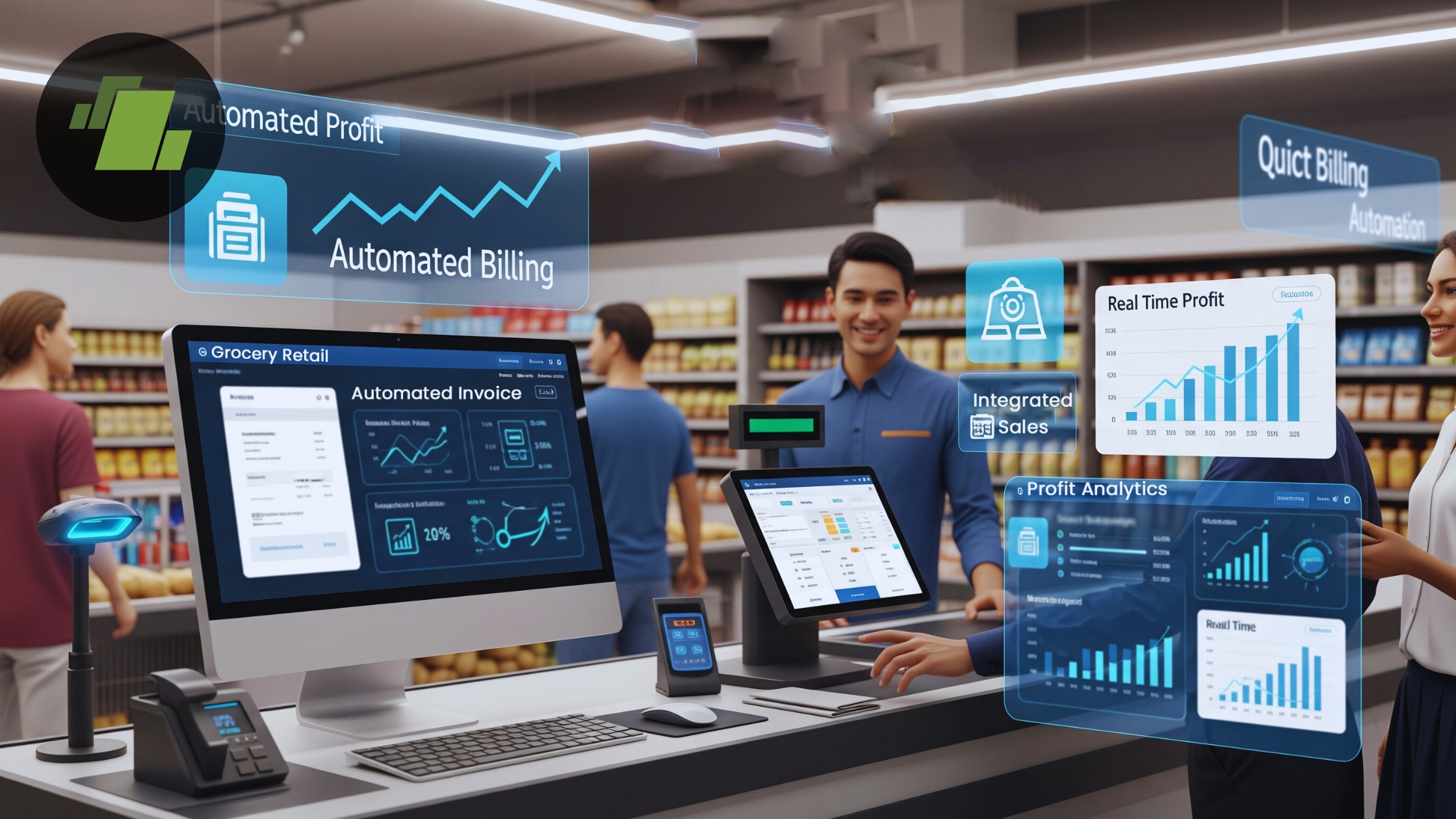
In the fast-paced world of grocery retail, every second of customer interaction from shopping to final purchase matters. Billing automation powered by AI-driven retail management systems is transforming how supermarkets, convenience stores, and hypermarkets operate. By automating billing, improving checkout efficiency, and delivering real-time financial insights, automated grocery billing software directly boosts profit margins and enhances the customer experience.
What is Billing Automation?
Billing automation is the process of using technology AI, POS software, and cloud platforms to handle all billing, invoicing, and transaction-related processes automatically.
Calculating totals, and generating invoices, automation tools perform these tasks with precision, speed, and consistency.
Key Components:
- POS (Point of Sale) Automation
- Barcode and QR Code Scanning
- Cloud-Based Invoicing Systems
- AI-Powered Price Optimization
- Integrated Tax and Compliance Tools (GST, VAT, etc.)
1. Reducing Human Error and Revenue Leakage
Basic billing is prone to human mistakes: wrong pricing, missed items, or calculation errors. Over time, these seemingly small issues add up, causing revenue leakage and lowering margins.
Automated billing eliminates these inconsistencies by using pre-programmed logic for pricing, taxes, and discounts.
Example:
A supermarket using AI billing software experienced a drop in invoice discrepancies, directly translating into higher accuracy and trust with customers.
2. Streamlined Checkout and Customer Experience (CX)
Speed and convenience are essential in grocery retail. Long checkout lines can hurt brand loyalty.
Automated billing systems and self-checkout kiosks powered by AI and voice-enabled interfaces (VEO optimization) enable faster billing, integrated digital payments, and personalized promotions.
Voice Search Example:
- “Hey Google, what’s the best billing software for supermarkets?”
- “How can grocery stores reduce checkout times?”
3. Real-Time Inventory and Financial Synchronization
One of the biggest advantages of billing automation is its ability to integrate seamlessly with inventory management, ERP, and CRM systems.
Each sale automatically updates the stock count, profit analytics, and supplier reordering dashboard, creating a data-driven retail ecosystem.
Benefits:
- Real-time profit tracking by SKU or category
- Automatic reorder triggers for fast-moving items
- Identification of high-margin vs low-margin products
This data empowers retailers to make smarter pricing and stocking decisions, key drivers of profitability.
4. Reduced Operational Costs and Improved Efficiency
Billing automation reduces the need for excessive manpower in checkout and back-office operations.
Impact:
- Reduction in staff hours dedicated to billing tasks
- Lower paper, printing, and stationery costs
- Faster cash flow cycles due to digital invoice management
By reallocating resources to customer service and marketing, grocery retailers can directly raise profit per square foot.
5. Data-Driven Insights for Profit Margin Optimization
AI-powered billing systems generate detailed analytics dashboards showing sales trends, top-performing products, and daily profit summaries.
Advanced Metrics:
- Gross Profit Ratio (GPR) per category
- Customer Lifetime Value (CLV)
- Shrinkage and waste reports
- Dynamic pricing recommendations
Retailers can use predictive insights to optimize margins dynamically.For example, by running targeted promotions during off-peak hours or adjusting prices based on expiry proximity.
6. Cloud POS and Omnichannel Integration
In 2025, modern grocery retailers operate both online and offline. Cloud-based billing solutions ensure seamless integration between:
- In-store POS terminals
- Mobile ordering apps
- E-commerce platforms
This unified data flow enhances transparency, simplifies tax filings, and provides an accurate view of total business profitability.
7. Compliance, Security, and Scalability
Billing automation ensures compliance with local tax laws (e.g., GST e-invoicing, digital audit trails, anti-fraud protocols) and offers bank-grade data encryption.
As your business scales, the same cloud infrastructure supports multiple branches, warehouses, and franchise outlets without major hardware costs.
Conclusion
In today’s hyper-competitive grocery retail environment, billing automation has evolved from being a convenience to a core profitability driver. By integrating intelligent solutions such as LOGIC ERP, retailers can achieve faster checkouts, error-free billing, accurate tax compliance, and data-driven decision-making, all of which directly enhance profit margins.
The ability to sync billing with inventory, CRM, and accounting systems empowers business owners with real-time visibility into their financial performance. Moreover, automation reduces operational overhead, minimizes human error, and ensures every transaction contributes to sustained growth. As technologies like AI, cloud POS, and predictive analytics become mainstream, retailers adopting platforms like LOGIC ERP will lead the transformation toward smarter, more efficient, and highly profitable grocery operations.
Call at +91-73411-41176 or send us an email at sales@logicerp.com to book a free demo for a retail billing automation solution today!
Frequently Asked Questions (FAQs)
1. What is billing automation in grocery retail?
Billing automation uses technologies like AI-powered POS systems, cloud invoicing, and ERP integrations (such as LOGIC ERP) to manage billing, pricing, and tax compliance automatically. It eliminates human error, speeds up checkout, and provides real-time insights into sales and profit margins.
2. How does billing automation increase profit margins for grocery retailers?
Automated billing improves profitability by:
- Eliminating billing errors and revenue leakage
- Reducing staff costs and checkout time
- Synchronizing real-time inventory and financial data
- Offering smart analytics for pricing and promotions
3. Why is LOGIC ERP a preferred choice for grocery retail billing automation?
LOGIC ERP is the best retail billing solution with automation for retail, distribution, and FMCG businesses. It offers:
- Real-time billing automation and GST compliance
- Integrated POS and inventory tracking
- Multi-store management across locations
- AI-based profit margin reports and demand forecasting
- Seamless connectivity with weighing scales, barcode scanners, and e-invoicing portals
This end-to-end automation helps retailers cut operational costs, reduce stock wastage, and boost profitability.
4. How does LOGIC ERP support profit margin optimization?
LOGIC ERP provides:
- Category-wise gross margin reports
- AI-driven purchase planning
- Expiry management to minimize product loss
- Dynamic pricing recommendations
- Supplier performance analysis
With these features, store owners can easily identify high-margin SKUs, reduce wastage, and improve reorder efficiency.
5. Is LOGIC ERP suitable for small and mid-sized grocery stores?
Yes. LOGIC ERP offers cloud-based, modular plans for small grocery outlets, enabling them to start with billing automation and scale up to full ERP as their business grows.
It supports mobile POS, offline billing, and multi-user access, making it both cost-effective and scalable.
6. What are the key benefits of LOGIC ERP for grocery retailers?
- Automated billing and stock updates
- GST-ready invoicing and e-way bill generation
- Barcode label printing and batch management
- CRM loyalty program integration
- Real-time profitability and purchase analytics
This makes LOGIC ERP one of the most complete grocery retail automation suites available today.
7. How long does it take to see ROI with LOGIC ERP?
Most grocery retailers achieve ROI within 6–8 months of implementation due to:
- Lower manpower costs
- Reduced billing errors
- Smarter inventory management
- Faster billing turnaround
8. Is LOGIC ERP secure for billing and financial data?
Yes. LOGIC ERP uses end-to-end encryption, role-based access control, and cloud data backups. It also ensures compliance with GST e-invoicing standards, guaranteeing safe financial transactions.
9. What trends are shaping billing automation and LOGIC ERP in 2026?
Emerging advancements include:
- AI-powered predictive analytics for profit optimization
- Voice-activated POS systems for faster billing (VEO-ready)
- Integration with UPI and mobile payment ecosystems
- Cloud ERP dashboards accessible from mobile devices
- IoT integration for smart weighing, barcode, and inventory tracking
LOGIC ERP is actively incorporating these trends, helping grocery retailers stay future-ready.

Author
Sharanjit Ghuman
Director of Communications | LOGIC ERP Solutions Pvt. Ltd.
Leading and managing the company’s internal and external communication strategies and working closely with senior leadership to develop and execute communication plans.