Batch and lot tracking is an inventory management method that assigns a unique batch number or lot number to a group of products made, received, stored, or shipped under shared conditions. For manufacturers, it creates end to end traceability from raw materials and production processes to finished products, customer delivery, quality control, and product recalls.
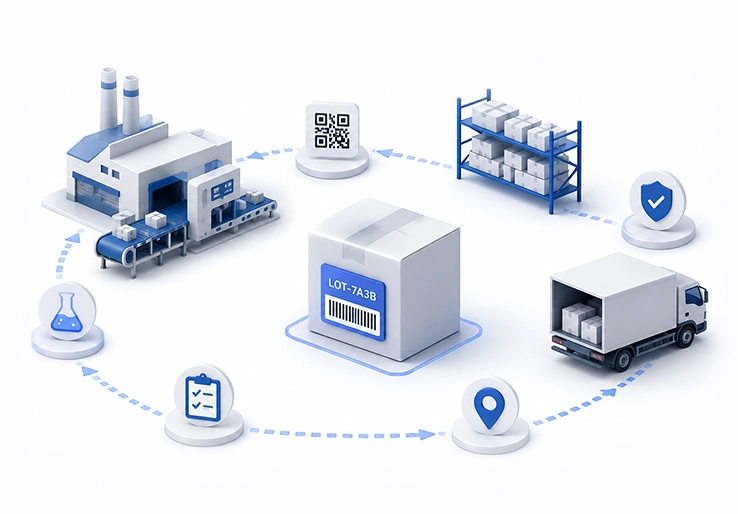
Batch and lot tracking is an inventory management method that assigns a unique batch number or lot number to a group of products made, received, stored, or shipped under shared conditions. For manufacturers, it creates end to end traceability from raw materials and production processes to finished products, customer delivery, quality control, and product recalls.
This article explains how batch tracking and lot tracking work in manufacturing industries where product safety, shelf life, regulatory compliance, and efficient inventory management matter. It is written for manufacturers, inventory managers, quality control teams, process manufacturers, warehouse leaders, and businesses that handle perishable goods, pharmaceuticals, food and beverage products, cosmetics, electronics components, or other regulated products.
By the end, you will understand:
Batch tracking is the process of grouping inventory items with similar production characteristics under unique identifiers. These shared characteristics may include the same materials, same production date, same manufacturing processes, same equipment settings, same supplier lots, same quality control checks, same expiry date, or same storage conditions.
For manufacturers, batch tracking systems are more than basic stock tracking. Basic inventory tracking tells a company how many units are available. Batch traceability tells the company which units were made from which raw materials, where those units moved through the supply chain, whether the units passed quality standards, and which customers received the finished products.
Batch tracking improves product quality and safety because a manufacturer can connect defects, contamination, supplier issues, or expired inventory to a specific batch instead of guessing across the entire supply chain. Lot tracking helps trace products throughout the supply chain, and batch tracking improves inventory management efficiency by giving teams better control over stock rotation, expiration date tracking, recall readiness, and production accountability.
A batch is a group of products manufactured together using the same raw materials, same production processes, and same dates or time window. Items in the same batch are expected to have consistent product quality because they were produced under similar conditions.
A lot number is a unique alphanumeric code used to identify a specific production run, purchase receipt, storage group, or distribution group. In many companies, "batch number" and "lot number" are used interchangeably. In stricter manufacturing environments, a batch often refers to an internal production run, while a lot may refer to how inventory from that batch is received, stored, split, sold, or distributed.
The main purpose is traceability. A batch number links finished products to origin and production history, including supplier information, raw material lots, quality control records, operator details, equipment used, production date, expiration date, and customer shipments. If a defective item is found, lot traceability allows the team to isolate the affected specific batch or same lot instead of stopping all sales or recalling unrelated inventory.
Batch tracking assigns unique identifiers to product groups, and batch numbers must be globally unique across inventory to prevent tracking errors. If two batches share the same identifier, recall management, quality investigation, and inventory management software reports can become unreliable.
A reliable batch inventory management system captures the data needed to trace products forward and backward. The most important components include:
Batch numbers, SKUs, and serial numbers work together but do not mean the same thing. An SKU identifies the product type, such as a bottle size, formulation, model, or packaging variant. A batch number identifies the production group or inventory lot. A serial number identifies one individual unit, which is common in electronics, medical devices, machinery, and high-value goods.
For example, 5,000 bottles of the same beverage may share one SKU and one batch number, while a medical implant may have an SKU, a lot number, and an individual serial number. Lot and serial numbers become especially important when businesses must trace defective products, adverse events, warranty issues, or customer complaints.
These components matter because regulatory requirements and manufacturing operations depend on accurate records. FDA mandates lot tracking for food and pharmaceutical products, and batch tracking supports regulatory compliance for pharmaceuticals, food, and electronics industries. Without a tracking system that can record batch numbers, trace raw materials, and connect production records to shipment history, compliance audits and efficient recall management become difficult.
Batch tracking is required or strongly expected in industries where defective products, contamination, expired stock, incorrect labeling, or component failure can harm customer safety or damage a company's reputation. Food and beverage industries require lot tracking for safety compliance. Pharmaceutical companies must track lots to manage recalls effectively. Cosmetics manufacturers use lot tracking to ensure product safety. Electronics manufacturers require lot tracking for quality control. Automotive industries utilize lot tracking for component traceability.
The need varies by industry, but the core purpose is consistent: protect customers, maintain product quality, document production history, and prove compliance. In regulated sectors, poor manual record keeping can lead to blocked shipments, failed audits, fines, rejected production runs, or product recalls.
Food and beverage manufacturers use batch tracking to manage safety compliance, expiration dates, contamination control, allergen traceability, and product recalls. The Food and Drug Administration and food safety rules such as FSMA require companies to maintain records that show where food came from, how it was processed, and where it was shipped.
Food and beverage products often have limited shelf life, so batch tracking supports expiration date tracking and reduces waste by monitoring expiration dates. Lot tracking minimizes waste by ensuring FIFO for perishable goods, while FEFO is even more precise when the expiry date varies between lots. Dairy products, meat processing, beverage bottling, frozen foods, packaged foods, bakery products, and fresh produce all depend on lot tracking software to manage freshness, prevent mix-ups, and protect customer safety.
Batch tracking helps identify defective products quickly during recalls. If a beverage manufacturer discovers contamination in one same batch, the lot tracking system can show which raw materials were used, which production line handled the batch, which warehouse received it, and which customers were shipped the affected inventory. This streamlines product recalls by isolating affected batches instead of recalling every product in circulation.
Pharmaceutical and medical device manufacturing requires strict batch tracking processes because patient safety, drug efficacy, adverse event reporting, and regulatory compliance depend on complete production records. FDA CGMP requirements expect pharmaceutical companies to maintain batch production and control records covering raw materials, intermediates, equipment, process parameters, yields, packaging, labeling, quality control, release approvals, and distribution.
Pharmaceutical companies must track lots to manage recalls effectively. Prescription drugs, over-the-counter medications, vaccines, active pharmaceutical ingredients, diagnostic equipment, sterilized devices, and medical implants may require detailed lot and serial numbers so affected products can be located quickly if a quality or safety issue appears.
In this environment, batch tracking software is not simply an inventory management system. It becomes a quality, compliance, and risk management system. Records may need to be retained for defined periods, reviewed by quality units, and made available during inspections. Batch tracking enhances compliance with regulatory standards and enhances quality control and customer safety by proving that each specific batch was produced, tested, stored, and released according to required quality standards.
Cosmetics and personal care manufacturers use lot tracking to manage ingredient traceability, shelf life, color additive compliance, microbial stability, allergen concerns, and product safety. Examples include skincare products, makeup, hair care products, fragrances, soaps, lotions, sunscreens, and personal hygiene items.
Although cosmetics are often less prescriptive than pharmaceuticals, regulators and customers increasingly expect documentation of ingredients, formulas, supplier lots, production dates, and stability testing. FDA color additive regulations, labeling rules, and safety substantiation make lot management important for brands that want to enhance product quality and protect customers.
If a pigment, fragrance, preservative, or botanical raw material causes irritation or fails a test, lot tracking helps identify which finished products used that ingredient. Instead of withdrawing all products, the company can isolate the same lot, contact affected customers or retailers, and preserve customer satisfaction through precise action.
Batch tracking also applies beyond these three sectors. Electronics manufacturers require lot tracking for quality control when components, circuit boards, batteries, chips, or connectors fail. Automotive industries utilize lot tracking for component traceability so manufacturers can trace brake parts, airbags, sensors, and other safety-critical components back to supplier lots and production runs.
Implementing batch tracking requires a structured approach for compliance and quality control. A company must define how batch numbers are created, where lot tracking data is captured, who is responsible for scanning or approval, and how records move between production, warehouse, quality, purchasing, sales, and finance.
The best implementations combine process discipline with suitable technology. Manual lot tracking may work for very small operations, but it becomes risky as SKUs, suppliers, production volume, and regulatory requirements grow. An ERP-based batch tracking feature or dedicated lot tracking software can automate data capture, reduce human error, support audits, and streamline inventory management processes.
Use the following best practices to build a reliable batch number tracking structure:
Create a consistent format using date codes, sequential numbers, product identifiers, plant codes, line codes, or shift codes. The format should be easy to read, searchable in inventory management software, and unique across the company.
Every production run, receipt, or manufactured batch should receive a unique batch number. Batch numbers must be globally unique across inventory to prevent tracking errors, especially when inventory is transferred between warehouses or business units.
Barcode and RFID systems reduce errors by logging receipts during the manufacturing process. Scannable labels help teams record batch numbers, track raw materials, confirm movements, and update inventory in real time.
Define which data fields are mandatory, including production date, expiration date, expiry date, raw material lot, supplier name, quality control status, shelf life, storage location, and release approval.
Role-based training for warehouse staff ensures effective use of batch tracking technology. Production operators, quality teams, inventory managers, and shipping staff should understand how batch tracking processes affect product safety, regulatory compliance, and customer satisfaction.
A strong setup should also include data ownership, approval workflows, audit trails, mock recall testing, and document retention rules. This ensures the lot tracking system can support both daily inventory management and high-pressure recall situations.
The technology choice affects accuracy, speed, compliance, scalability, and recall readiness. Manual record keeping may appear inexpensive, but it often creates hidden costs through duplicate entry, delayed reporting, lost paperwork, and human error. Automated systems improve accuracy by eliminating manual data entry errors and by validating lot tracking data as work happens.
| Criterion | Manual Tracking | Automated Software |
|---|---|---|
| Accuracy | High error risk | 99%+ accuracy with validation |
| Speed | Time-intensive | Real-time processing |
| Compliance | Difficult auditing | Automated compliance reporting |
| Scalability | Limited growth | Supports business expansion |
A modern batch tracking software environment may include ERP, MES, warehouse management, barcode scanning, RFID, mobile devices, quality modules, and reporting dashboards. ERP generally manages inventory, purchasing, sales, accounting, and dispatch. MES captures shop-floor production data such as equipment, operator, process conditions, and work-in-process movement. Together, they create stronger lot and batch tracking across the entire supply chain.
For manufacturers looking to connect inventory, accounting, production, quality control, and dispatch in one management software environment, ERP systems such as LOGIC ERP can support more efficient inventory management by synchronizing data across departments. The goal is not only to record batch numbers but to make them usable in purchase receipts, production issue, finished goods entry, stock transfer, sales invoicing, returns, and recall reports.
Batch tracking enables automated inventory strategies that are difficult to manage with basic stock tracking alone. The three most common methods are FIFO, FEFO, and LIFO.
FIFO prioritizes older inventory for sale first. FIFO is a common batch tracking strategy for perishable goods and fast-moving products because it reduces the chance of older stock sitting unused.
FEFO ensures products with earliest expiration dates are sold first. This is important for items with limited shelf life, including food and beverage products, pharmaceuticals, cosmetics, chemicals, and temperature-sensitive goods.
LIFO sells the most recently acquired products first. It may be used in specific storage and cost management scenarios, but it is usually less suitable for perishable goods because older inventory may expire.
Batch tracking systems make these strategies practical by connecting each batch number to production date, expiry date, storage location, quality status, and sales allocation rules. This improves inventory management efficiency, reduces waste by monitoring expiration dates, and helps ensure the right stock is shipped to the right customer at the right time.
Manufacturers usually struggle with batch tracking for three reasons: inaccurate data, disconnected systems, and regulatory pressure. These challenges become more serious when companies rely on manual lot tracking, spreadsheets, or paper-based batch records across multiple departments.
The solution is to treat batch tracking as a business process, not only a label format. A reliable tracking system should capture data at the source, validate entries in real time, synchronize records across departments, and produce audit-ready reports when needed.
Manual entry creates human error through mistyped batch numbers, missing expiry dates, misplaced labels, duplicate lot codes, and mismatched quality control records. These errors can break batch traceability and slow recall response.
Solution:
The practical solution is automated data capture through barcode scanning and RFID technology. Barcode and RFID systems reduce errors by logging receipts during the manufacturing process, production issue, stock transfer, packing, and shipping. Real-time validation systems should alert users when incorrect batch information is entered, when required fields are missing, or when a batch number format does not match the defined rule.
Staff training is equally important. Role-based training for warehouse staff ensures effective use of batch tracking technology, while production and quality teams need clear responsibility for when to scan, approve, release, hold, or reject inventory. This supports consistent product quality and maintaining product quality across the production lifecycle.
Many manufacturers keep purchasing, production, quality, warehouse, sales, and accounting data in different systems. When batch tracking data is scattered, teams cannot easily trace raw materials to finished products or link customer shipments to a specific batch.
Solution:
The solution is to choose ERP software like LOGIC ERP that offers seamless integration with existing manufacturing and accounting systems. Integrated inventory management software should synchronize batch numbers, SKUs, supplier lots, quality status, warehouse locations, invoices, and dispatch records across departments. Data synchronization is what turns lot tracking from a record-keeping activity into an operational advantage. When production, inventory, quality, and shipping use the same batch inventory management system, the company can improve supply chain operations, reduce duplicate work, boost customer satisfaction, and respond faster to quality events.
Regulations require manufacturers to capture specific data, preserve records, prove traceability, and respond quickly during audits or recalls. FDA mandates lot tracking for food and pharmaceutical products, and batch tracking supports regulatory compliance for pharmaceuticals, food, and electronics industries. Food and beverage industries require lot tracking for safety compliance, and pharmaceutical companies must track lots to manage recalls effectively.
Solution:
The solution is automated compliance reporting. A lot tracking system should generate required documentation for FDA, USDA, industry audits, customer audits, and internal quality reviews. It should also maintain batch history, product movement, quality records, inventory status, and customer shipment data in a way that can be retrieved quickly.
Manufacturers should aim for 24-hour recall response capability through comprehensive batch tracking records. In mature operations, recall response should be even faster because the system can identify affected batches, where the inventory is located, which customers received it, and whether related raw materials were used in other production runs.
LOGIC ERP offers a comprehensive batch and lot tracking solution tailored for manufacturers who need precise, end-to-end traceability across their supply chain. By integrating batch number tracking directly into inventory, production, quality control, and shipping processes, LOGIC ERP helps businesses maintain compliance with regulatory standards such as FDA, USDA, and CGMP.
Key benefits of using LOGIC ERP include:
Automate batch number assignment and scanning using barcode or RFID technology to minimize human error and ensure real-time inventory updates.
Trace raw materials through production to finished goods, warehouse storage, and customer shipments, supporting fast and effective product recalls.
Generate audit-ready reports and maintain detailed batch histories to meet industry regulations and pass inspections with confidence.
Link quality test results, production parameters, and supplier information to specific batches to quickly identify and address defects or contamination.
Utilize FIFO, FEFO, and LIFO strategies powered by batch tracking data to reduce waste, optimize stock rotation, and manage expiration dates effectively.
Connect batch tracking with purchasing, sales, accounting, and warehouse management modules to streamline workflows and enhance operational visibility.
LOGIC ERP’s batch and lot tracking software empowers manufacturers to safeguard product quality, enhance customer safety, and achieve operational excellence, making it an essential tool for businesses handling perishable goods, pharmaceuticals, food and beverage, cosmetics, electrical and electronics, and automotive components.
Batch and lot tracking is important for manufacturing quality control, regulatory compliance, customer safety, inventory management, and supply chain transparency. It improves product quality and safety, enhances compliance with regulatory standards, reduces waste by monitoring expiration dates, streamlines product recalls by isolating affected batches, and increases operational efficiency in inventory management.
For manufacturers, the question is no longer whether batch tracking is useful. The real question is whether the current inventory management system can provide accurate, audit-ready, end to end traceability across raw materials, production processes, finished products, warehouses, and customers.
Recommended next steps:
Related topics worth exploring include supply chain management, quality assurance protocols, regulatory compliance frameworks, warehouse automation, inventory optimization strategies, lot management, and ERP-based inventory management software.
Call at +91-73411-41176 / +91-73411-41175 or send us an email at sales@logicerp.com to book a free demo today!
Batch tracking follows a group of products made or received under shared conditions, such as the same batch, same lot, same raw materials, or same production date. Serial number tracking follows one individual item. Batch tracking is common for food, pharmaceuticals, cosmetics, chemicals, and raw materials, while serial tracking is common for electronics, medical devices, machinery, and high-value products.
Retention depends on the industry, product type, and regulation. Pharmaceutical records may need to be kept at least 5 to 10 years or longer, depending on local laws and FDA requirements. Food and beverage manufacturers often retain records for 1 to 3 years to meet safety and audit standards. Cosmetics, electronics, and automotive industries follow specific retention periods based on regulatory guidelines and internal quality policies. It is essential for manufacturers to consult relevant regulations and industry best practices to establish appropriate record retention schedules that ensure traceability and support audits or recalls when necessary.
Batch number tracking is the process of assigning unique identifiers, known as batch numbers, to groups of products made or received under the same conditions. This enables manufacturers to trace production dates, raw materials, quality control results, and shipment details for each batch, improving product safety, recall efficiency, and regulatory compliance.
Batch tracking software automates the recording and monitoring of batch numbers throughout the supply chain. By providing real-time visibility into inventory status, expiration dates, and quality metrics, it enhances effective inventory management, reduces waste, and streamlines recall processes.
Batch tracking and lot tracking are often used interchangeably, but batch tracking typically refers to grouping products by production runs, while lot tracking emphasizes traceability of inventory groups throughout storage and distribution. Both systems assign unique numbers to product groups to enable detailed tracking and quality control.
A lot tracking system is a technology solution that assigns unique lot numbers to batches of products or materials and tracks their movement from production through storage, shipping, and delivery. This system supports compliance with regulations, quality assurance, and efficient recall management.
Tracking a lot mobile using the IMEI number involves using specialized software or carrier services that link the IMEI to the device’s production batch or lot. This allows manufacturers or service providers to trace the device’s origin, warranty status, and distribution history tied to its lot.
Effective lot tracking software should include unique lot number assignment, barcode or RFID integration, real-time inventory updates, expiration date management, quality control documentation, and audit-ready reporting. Integration with ERP systems enhances overall supply chain visibility and operational efficiency.
Lot number tracking enables manufacturers to trace products back to their source, monitor quality control at every stage, manage inventory more accurately, and respond swiftly to product recalls. This traceability reduces risk, ensures regulatory compliance, and protects brand reputation.
Integrating lot tracking with ERP systems centralizes batch and lot data across purchasing, production, inventory, quality, and sales departments. This integration improves data accuracy, automates workflows, enhances reporting capabilities, and supports effective decision-making across the manufacturing lifecycle.
A lot tracking report compiles detailed information about each lot’s production, movement, quality status, and shipment history. It is essential for identifying defective batches, managing recalls, ensuring regulatory compliance, and optimizing inventory turnover.
Yes, batch number tracking online is possible through cloud-based inventory management or ERP systems. These platforms allow real-time tracking, data sharing across locations, and remote access to batch information, improving responsiveness and operational control.
A batch tracking system is a structured method or software solution that assigns unique batch numbers to product groups and monitors their lifecycle from raw material receipt to customer delivery. It supports quality control, inventory management, and regulatory compliance.
Fast track batch refers to prioritizing the processing or shipment of a specific batch to meet urgent demand or address quality issues quickly. This approach leverages batch tracking to expedite handling while maintaining traceability and control.
Lot tracking in manufacturing involves labeling batches with unique lot numbers and recording their production details, quality checks, storage, and shipment information. This ensures traceability, supports compliance, improves inventory accuracy, and facilitates effective recall management.
Batch no. tracking is the practice of monitoring and recording batch numbers assigned to groups of products or raw materials. It helps manufacturers trace production history, manage inventory, and respond promptly to quality or safety concerns.
Batch tracking online refers to using digital platforms or cloud-based software to monitor batch numbers and related data in real time. This enables manufacturers to streamline inventory management, improve data accuracy, and enhance traceability across multiple locations.
Lot tracking inventory software is a specialized tool designed to assign, record, and monitor lot numbers for inventory items. It supports real-time tracking, quality control, expiration date management, and integrates with broader inventory or ERP systems for comprehensive supply chain management.
A batch inventory management system is a tracking system that assigns unique batch numbers to groups of products or raw materials. it enables manufacturers to maintain end to end traceability throughout the supply chain, ensuring product quality and customer satisfaction by monitoring expiration dates and detecting defective items quickly.
Lot traceability allows manufacturers to track lot and serial numbers for each batch, providing detailed information on raw materials, production processes, and quality control results. This helps identify and isolate defective items, supports regulatory compliance, and enhances overall product quality.
Expiration date management is important to prevent the distribution of expired or unsafe products. A batch inventory management system with robust expiration date tracking ensures that products are sold or used in the correct order, reducing waste and protecting customer satisfaction.
A reliable tracking system provides transparency and accountability by tracing products from raw materials through the supply chain to the end customer. this end to end traceability enables fast response to quality issues, efficient product recalls, and consistent product quality, all of which contribute to higher customer satisfaction.
Lot and serial numbers uniquely identify batches and individual units, respectively. They are essential for detailed tracking within a batch inventory management system, enabling precise recall management, quality assurance, and regulatory compliance.
Batch tracking involves assigning unique batch or lot numbers to groups of products, enabling manufacturers to trace production details, raw materials, and quality control results for each batch. When defects are detected, manufacturers can quickly isolate the affected batch by referencing its unique identifier. This process includes scanning barcodes or RFID tags during production, storage, and shipping to maintain accurate records. Quality control teams analyze test results linked to batch numbers to identify issues, and defective items are segregated from the rest of the inventory. This targeted approach minimizes waste, prevents widespread contamination, and facilitates efficient product recalls by focusing only on impacted batches.
End-to-end traceability provides manufacturers with complete visibility over each batch’s journey from raw materials through production, storage, distribution, and ultimately to the customer. This comprehensive tracking enables rapid identification of the root cause of defects and precise location of affected products. In quality control, it supports accountability by linking test results and operator data to specific batches. During recalls, manufacturers can isolate and remove only the defective batches, reducing recall scope and costs while protecting brand reputation. Additionally, traceability ensures compliance with regulatory requirements, streamlines audits, and enhances customer trust by demonstrating transparency and responsiveness.
Supply chain management is critical for effective batch number tracking as it coordinates the flow of materials and products across multiple stages and partners. It ensures that batch numbers are consistently recorded and transferred during procurement, manufacturing, warehousing, and distribution. Integrated supply chain systems synchronize batch data in real time, preventing errors such as duplicate or missing identifiers. Efficient supply chain management facilitates first-in, first-out (FIFO) or first-expired, first-out (FEFO) inventory strategies, reducing waste and optimizing stock rotation. It also enables quick communication with suppliers and distributors during quality issues or recalls, ensuring timely and accurate responses.
Manufacturers can prevent defective items from reaching customers by implementing robust lot tracking systems that provide real-time visibility and control over inventory. By assigning unique lot numbers and integrating barcode or RFID scanning, manufacturers monitor each batch’s status throughout production, storage, and shipping. Automated alerts flag batches that fail quality checks or approach expiration, enabling proactive removal. During order fulfillment, the system ensures only approved, compliant batches are shipped. Additionally, comprehensive recordkeeping supports swift identification and quarantine of defective lots, minimizing risk exposure. Regular staff training and system audits further reinforce adherence to lot tracking protocols, safeguarding product safety and customer satisfaction.
Batch number tracking enables manufacturers to link finished products back to the specific raw materials used in their production. This traceability ensures that if a defect or contamination is detected, the affected raw material batches can be identified quickly, preventing further issues and supporting efficient recalls and quality control.
Tracking medicine by batch number involves using the unique batch or lot number assigned to a group of pharmaceutical products during manufacturing. This number allows manufacturers, distributors, and healthcare providers to trace the origin, production details, expiration date, and distribution path of the medicine. It is essential for managing recalls, verifying authenticity, and ensuring patient safety.
A lot tracking system is a technology or software solution designed to assign unique lot numbers to batches of products or materials and monitor their movement through the supply chain. It enables manufacturers to trace products from raw materials through production, storage, distribution, and delivery to customers, supporting quality control, regulatory compliance, and efficient recall management.
"Big Lots track order" refers to the process of monitoring and checking the status of orders placed with Big Lots, a retail company. Customers can track their purchases online using order numbers or tracking codes to see shipping progress, estimated delivery dates, and order history.
Tracking a mobile phone lot using the IMEI (International Mobile Equipment Identity) number involves using the unique IMEI code assigned to each mobile device. Manufacturers or service providers can use the IMEI to trace the device’s production batch, warranty status, distribution history, and in some cases, locate the device if lost or stolen through carrier or specialized tracking services.
Keeping track of lot numbers requires implementing a systematic batch or lot tracking process. This includes assigning unique lot numbers to product batches, labeling products clearly, recording lot details in inventory management software, scanning barcodes or RFID tags during production and shipping, and maintaining accurate records for traceability, quality control, and recall readiness.
Lot tracking in manufacturing is the practice of assigning unique identifiers to batches of products and monitoring their production, quality control, storage, and distribution. It ensures traceability throughout the manufacturing lifecycle, enabling manufacturers to manage inventory efficiently, comply with regulatory requirements, and swiftly respond to quality issues or recalls.
Popular Products