What Is Distributor Software and Why Your Business Needs It

Summary
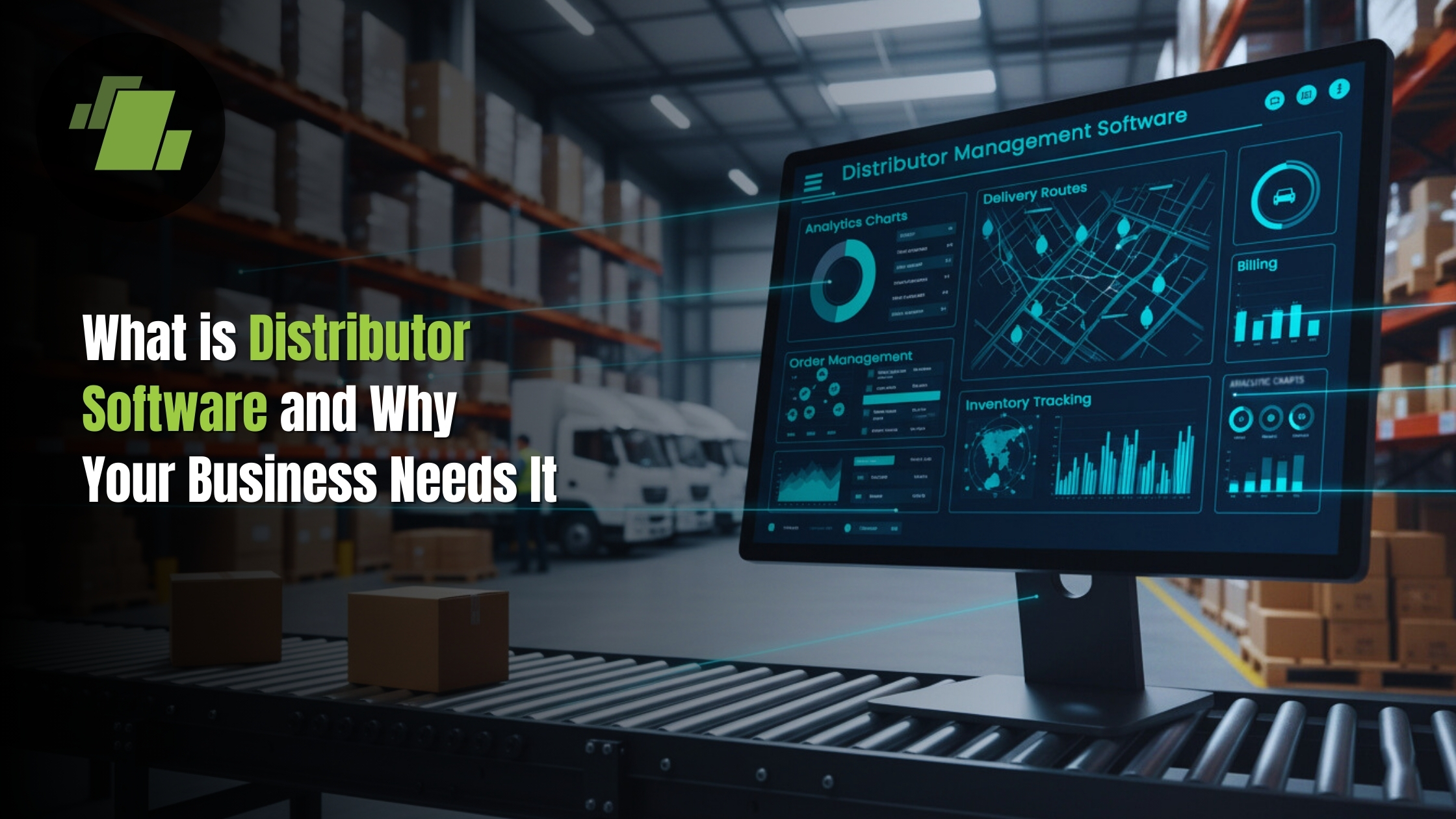
Distributor software is a complete distribution management system that automates inventory management, order processing, warehouse operations, supply chain tracking, and financial reporting. Developed for wholesalers and distribution businesses, it improves operational efficiency, reduces costs, and ensures real-time inventory visibility.
Key Takeaways
- Distributor software streamlines distribution management by automating inventory control, order processing, warehouse operations, and supply chain tracking.
- Real-time inventory management reduces stockouts and overstocking, improving cash flow and operational efficiency.
- Automated order management systems (OMS) increase accuracy and speed, leading to faster deliveries and higher customer satisfaction.
- Cloud-based distributor software offers scalability, remote access, and enhanced data security for growing businesses.
- Integrated CRM and procurement management improve supplier coordination and customer retention, driving long-term revenue growth.
- Data-driven analytics and reporting enable smarter business decisions, helping distributors optimize profit margins and demand forecasting.
- Choosing the right distributor management system ensures compliance, cost reduction, and competitive advantage in today’s fast-paced distribution industry.
Introduction
In today’s competitive world, distribution businesses face increasing pressure to manage inventory efficiently, reduce operational costs, and meet customer expectations. Whether you’re a wholesaler, manufacturer, or supply chain manager, automating your operations with the best distributor software is important for streamlining distribution management, optimizing inventory control, and improving supply chain efficiency.
In this comprehensive guide, we’ll explore what distributor software is, its core features, key benefits, and why your business needs it to stay competitive in 2026 and beyond.
What Is Distributor Software?
Distributor software is a complete business management solution that helps to automate and optimize distribution operations, including inventory management, order processing, warehouse management, invoicing, CRM, and supply chain tracking. It acts as a centralized platform to manage your entire distribution workflow in real time.
How Does Distributor Software Work in a Distribution Business?
Distributor software works by integrating inventory management, order processing, warehouse operations, billing, and supply chain tracking into one centralized system to automate and streamline daily distribution business operations.
Inventory Management
Distributor software provides real-time inventory tracking across warehouses and locations. It helps monitor stock levels, manage batch and serial numbers, set automatic reorder points, and prevent stockouts or overstocking. This ensures accurate inventory control and improved cash flow management.
Order Management
The system automates the entire order lifecycle from sales order creation to fulfillment and returns. It reduces manual errors, speeds up order processing, manages backorders, and ensures timely deliveries, improving overall customer satisfaction.
Warehouse Management
Distributor software optimizes warehouse operations by tracking goods movement, managing storage locations, enabling barcode scanning, and improving picking and packing processes. This increases operational efficiency and reduces logistics errors.
Supply Chain Tracking
With end-to-end supply chain visibility, businesses can monitor shipments, track vendor performance, analyze lead times, and manage logistics more effectively. This improves coordination between suppliers, warehouses, and customers.
Billing and Invoicing
Automated billing features generate invoices instantly, calculate taxes accurately, track payments, manage credit limits, and integrate with accounting systems. This reduces financial errors and improves cash flow management.
Customer Relationship Management (CRM)
Built-in CRM tools help manage customer data, track sales history, set pricing tiers, and monitor buying patterns. This enables personalized service, stronger customer relationships, and increased repeat business.
Sales Tracking and Analytics
Advanced reporting and analytics tools provide insights into sales performance, profit margins, inventory turnover, and demand forecasting. These data-driven insights support strategic decision-making and business growth.
Procurement Management
Distributor software streamlines supplier management by automating purchase orders, tracking vendor performance, and monitoring procurement costs. This ensures timely restocking and optimized supplier relationships.
Multi-Location Management
For businesses operating across multiple warehouses or branches, distributor software centralizes operations and synchronizes inventory in real time. This ensures seamless coordination and operational consistency.
Why Distributor Software Is Important for Modern Businesses
Distributor software is important for modern businesses because it automates inventory management, streamlines order processing, impro ves supply chain visibility, and enables data-driven decision-making to boost efficiency and profitability.
1. Real-Time Inventory Tracking
Distributor software provides real-time stock updates across all warehouses and locations, ensuring accurate inventory visibility at all times. Automated stock alerts notify managers when inventory reaches reorder levels, helping prevent stockouts. Batch and serial number tracking improve traceability, especially for industries like FMCG and pharmaceuticals. Expiry management reduces product wastage, while demand forecasting uses historical sales data to predict future stock needs. Together, these features minimize overstocking, reduce inventory losses, and optimize working capital.
2. Faster Order Processing
Manual order handling often results in delays, data entry errors, and lost revenue. Distributor software automates sales order creation, purchase orders, and backorder management, streamlining the entire order lifecycle. Real-time shipment tracking keeps both businesses and customers informed about delivery status, while automated returns handling simplifies reverse logistics. By accelerating order processing and reducing errors, businesses improve customer satisfaction, increase order accuracy, and boost revenue growth.
3. Improved Supply Chain Visibility
Modern distributor management systems provide complete transparency across the supply chain. Businesses can track shipments in real time, monitor supplier performance, and evaluate delivery timelines. Lead time analysis helps optimize procurement planning, while multi-warehouse logistics management ensures smooth coordination across locations. Enhanced supply chain visibility empowers managers to make faster, data-driven decisions, reduce delays, and improve overall operational efficiency.
4. Automated Billing and Accounting Integration
Financial accuracy is essential in distribution operations. Distributor software automates invoicing, calculates taxes accurately, and ensures compliance with regulatory standards. Payment tracking and credit management features help monitor outstanding balances and customer credit limits. Integrated financial reporting provides insights into revenue, expenses, and profit margins. By reducing manual data entry and financial errors, businesses achieve smoother accounting operations and better compliance management.
5. Data-Driven Decision Making
Advanced distributor software includes built-in analytics and business intelligence tools that transform raw data into actionable insights. Sales analytics highlight top-performing products and regions. Inventory turnover reports identify slow-moving stock. Profit margin analysis helps optimize pricing strategies, while customer behavior tracking enables personalized marketing approaches. Demand forecasting predicts future sales trends. These insights allow distribution businesses to scale strategically, improve profitability, and maintain a competitive advantage.
Core Features of Distributor Software
To stay competitive in today’s fast-paced distribution industry, businesses need a powerful distributor management system (DMS) equipped with advanced automation, real-time tracking, and data-driven capabilities. Below are the essential features every modern distributor software should include.
1. Inventory & Warehouse Management
Efficient inventory management software is the backbone of any distribution business. Modern distributor software offers advanced warehouse control tools that improve accuracy and reduce operational costs.
- Barcode scanning enables faster product identification, minimizes manual errors, and speeds up picking and packing processes.
- Multi-warehouse tracking allows businesses to manage stock across multiple locations from a centralized dashboard.
- Lot & batch management ensures product traceability, which is crucial for industries like pharmaceuticals, FMCG, and food distribution.
- Real-time stock synchronization keeps inventory levels updated instantly across all channels, preventing stock discrepancies, overstocking, and stockouts.
These features improve warehouse efficiency, optimize stock control, and enhance overall supply chain performance.
2. Order Management System (OMS)
A robust Order Management System (OMS) streamlines the entire order lifecycle—from order placement to delivery and returns.
- Automated order processing reduces manual data entry, accelerates order fulfillment, and improves accuracy.
- EDI integration (Electronic Data Interchange) allows seamless data exchange between suppliers, distributors, and retailers, improving supply chain communication.
- Delivery scheduling helps plan and optimize delivery routes, ensuring timely shipments and improved customer satisfaction.
By automating order workflows, distributor software increases operational efficiency and boosts revenue through faster and error-free transactions.
3. CRM for Distributors
An integrated Customer Relationship Management (CRM) module strengthens customer engagement and sales performance.
- The customer database stores complete client information, including contact details and transaction history.
- Sales history tracking helps analyze purchasing behavior and forecast demand.
- Pricing tiers enable customized pricing for wholesalers, retailers, and bulk buyers.
- Loyalty tracking supports reward programs and repeat business strategies.
With CRM integration, distributors can enhance customer retention, personalize sales strategies, and increase lifetime customer value.
4. Procurement & Vendor Management
Effective procurement management software ensures smooth supplier coordination and cost control.
- Supplier tracking monitors vendor performance, delivery timelines, and reliability.
- Purchase order automation speeds up procurement cycles and reduces paperwork.
- Vendor performance reports provide data-driven insights to evaluate supplier efficiency and negotiate better contracts.
These features optimize supplier relationships, improve restocking efficiency, and reduce procurement costs.
5. Cloud-Based Access
Modern cloud-based distributor software offers flexibility, security, and scalability for growing businesses.
- Remote accessibility allows managers and sales teams to access real-time data from anywhere.
- Real-time data synchronization ensures consistent information across departments and devices.
- Enhanced data security protects sensitive business data through encryption and regular backups.
- Scalability enables businesses to expand operations without system limitations.
Cloud deployment ensures high performance, lower infrastructure costs, and seamless business growth.
Benefits of Using Distributor Software
1. Increased Operational Efficiency
Distributor software automates repetitive tasks such as inventory updates, order processing, billing, and reporting, significantly reducing manual workload and human errors. By streamlining distribution management workflows, businesses can improve productivity, accelerate operations, and ensure smoother coordination between sales, warehouse, and finance teams.
2. Reduced Operational Costs
With optimized inventory management and supply chain automation, distributor software minimizes stock wastage, reduces carrying costs, and prevents overstocking or stockouts. Automated procurement and warehouse optimization further lower operational expenses, improving overall profit margins for wholesalers and distribution businesses.
3. Enhanced Customer Satisfaction
Accurate order fulfillment, real-time shipment tracking, and faster delivery scheduling enhance the customer experience. Distributor software ensures timely processing and transparent communication, helping businesses build stronger relationships, increase repeat sales, and improve customer retention rates.
4. Better Compliance & Reporting
Automated tax calculation, invoice generation, and financial reporting ensure regulatory compliance and reduce audit risks. Integrated accounting and compliance management features provide accurate documentation, making audits, tax filings, and financial analysis more efficient and reliable.
5. Scalability for Growing Businesses
Cloud-based distributor software helps to grow with your business. Whether expanding to new warehouses, adding more users, or increasing product lines, scalable distribution management systems provide flexibility without requiring major infrastructure changes, supporting long-term business growth and digital transformation.
Who Needs Distributor Software?
Distributor software is the best distribution management solution for
- Wholesale distributors
- FMCG distributors
- Pharmaceutical distributors
- Manufacturing companies
- Retail supply chain operators
- Multi-location distribution businesses
How to Choose the Right Distributor Software
Selecting the right distributor management software (DMS) is an important decision that directly impacts your inventory control, supply chain efficiency, and long-term business growth. With many distribution software solutions available, businesses must evaluate key factors carefully to ensure the system aligns with their operational needs and scalability goals.
Below are the essential factors to consider when choosing the best distributor software for your business.
1. Industry-Specific Features
Not all distribution businesses operate the same way. A pharmaceutical distributor requires batch tracking and expiry management, while an FMCG distributor may need high-volume order processing and rapid stock rotation tools. Choose distributor software that offers industry-specific features tailored to your niche, ensuring compliance, operational efficiency, and accurate inventory management.
2. Scalability
As your business grows, your distribution management system should grow with you. Look for scalable distributor software that supports additional warehouses, more users, expanded product catalogs, and higher transaction volumes without performance issues. Scalability ensures long-term ROI and eliminates the need for frequent system replacements.
3. Cloud vs On-Premise Deployment
When choosing distributor software, decide between:
- Cloud-based distributor software, which offers remote access, automatic updates, lower upfront costs, and easier scalability.
- On-premise solutions, which provide full control over infrastructure but require higher maintenance and IT investment.
Most modern distribution businesses prefer cloud-based systems for flexibility, real-time data synchronization, and reduced operational costs.
4. Integration Capabilities
Your distributor software should integrate seamlessly with existing systems such as:
- Accounting software
- ERP systems
- CRM platforms
- E-commerce platforms
- Payment gateways
Strong integration capabilities eliminate data silos, improve workflow automation, and enhance overall business efficiency.
5. Mobile Accessibility
In today’s fast-paced distribution environment, mobile access is essential. Sales teams, warehouse staff, and managers should be able to check inventory levels, process orders, and track shipments directly from mobile devices. Mobile-enabled distributor software improves productivity and real-time decision-making.
6. Customer Support
Reliable customer support is crucial for smooth system implementation and troubleshooting. Choose a distributor management system that offers:
- Onboarding assistance
- Technical support
- Regular updates
- Training resources
Strong vendor support ensures minimal downtime and faster issue resolution.
7. Data Security & Compliance
Distribution businesses handle sensitive financial, customer, and supplier data. Ensure the software provides:
- Data encryption
- Secure cloud hosting
- Role-based access control
- Regulatory compliance support
Robust security measures protect your business from cyber threats and compliance risks.
8. Pricing Model
Evaluate the pricing structure carefully. Some distributor software providers charge:
- Monthly or annual subscriptions
- Per-user licensing fees
- Feature-based pricing
- One-time licensing costs (for on-premise solutions)
Choose a pricing model that aligns with your budget and growth strategy while offering maximum value.
Call at +91-73411-41176 or send us an email at sales@logicerp.com to book a free demo today!
Frequently Asked Questions (FAQs)
1. What is distributor software used for?
Distributor software is used to manage inventory, automate order processing, track shipments, handle billing, and optimize supply chain operations for wholesalers and distribution businesses.
2. How does distributor software improve inventory management?
It provides real-time stock tracking, automated alerts, demand forecasting, and multi-warehouse synchronization to prevent stockouts and overstocking.
3. Is distributor software suitable for small businesses?
Yes. Many cloud-based distributor software solutions are scalable and affordable for small and medium-sized businesses.
4. What is the difference between ERP and distributor software?
ERP systems manage overall business operations, while distributor software focuses specifically on inventory, warehouse, and distribution management.
5. Can distributor software integrate with accounting software?
Yes. Most modern distributor management systems integrate seamlessly with accounting and CRM platforms.
6. Is cloud-based distributor software better than on-premise?
Cloud-based solutions offer scalability, remote access, automatic updates, and lower upfront costs compared to on-premise systems.
7. What is the best distributor software for small businesses?
LOGIC ERP is the best distributor software for small businesses that is cloud-based, affordable, scalable, and easy to use. It should include essential features like real-time inventory tracking, automated order management, invoicing, CRM integration, and basic reporting tools. Small businesses should look for software that offers flexible pricing, integration with accounting systems, and the ability to scale as the business grows.
8. How can you manage distribution inventory efficiently?
You can manage distribution inventory efficiently by using distributor software that provides real-time stock updates, automated reorder alerts, batch and serial number tracking, demand forecasting, and multi-warehouse synchronization. Implementing barcode scanning and inventory analytics helps reduce stock discrepancies, prevent overstocking or stockouts, and optimize warehouse operations.
9. What are the benefits of cloud-based distributor software?
Cloud-based distributor software offers remote accessibility, real-time data synchronization, enhanced data security, and automatic system updates. It reduces IT infrastructure costs, supports multi-location management, and allows businesses to scale operations without major hardware investments. This flexibility makes it ideal for growing distribution businesses seeking efficiency and digital transformation.

Author
Surendra Nayak
Vice President Enterprise Sales | LOGIC ERP Solutions Pvt. Ltd.
Driving LOGIC ERP’s enterprise sales with a strategic outlook, my leadership role encompasses forming and executing policies that bolster revenue, customer satisfaction and brand positioning.