Cycle Count Guide for Inventory Accuracy

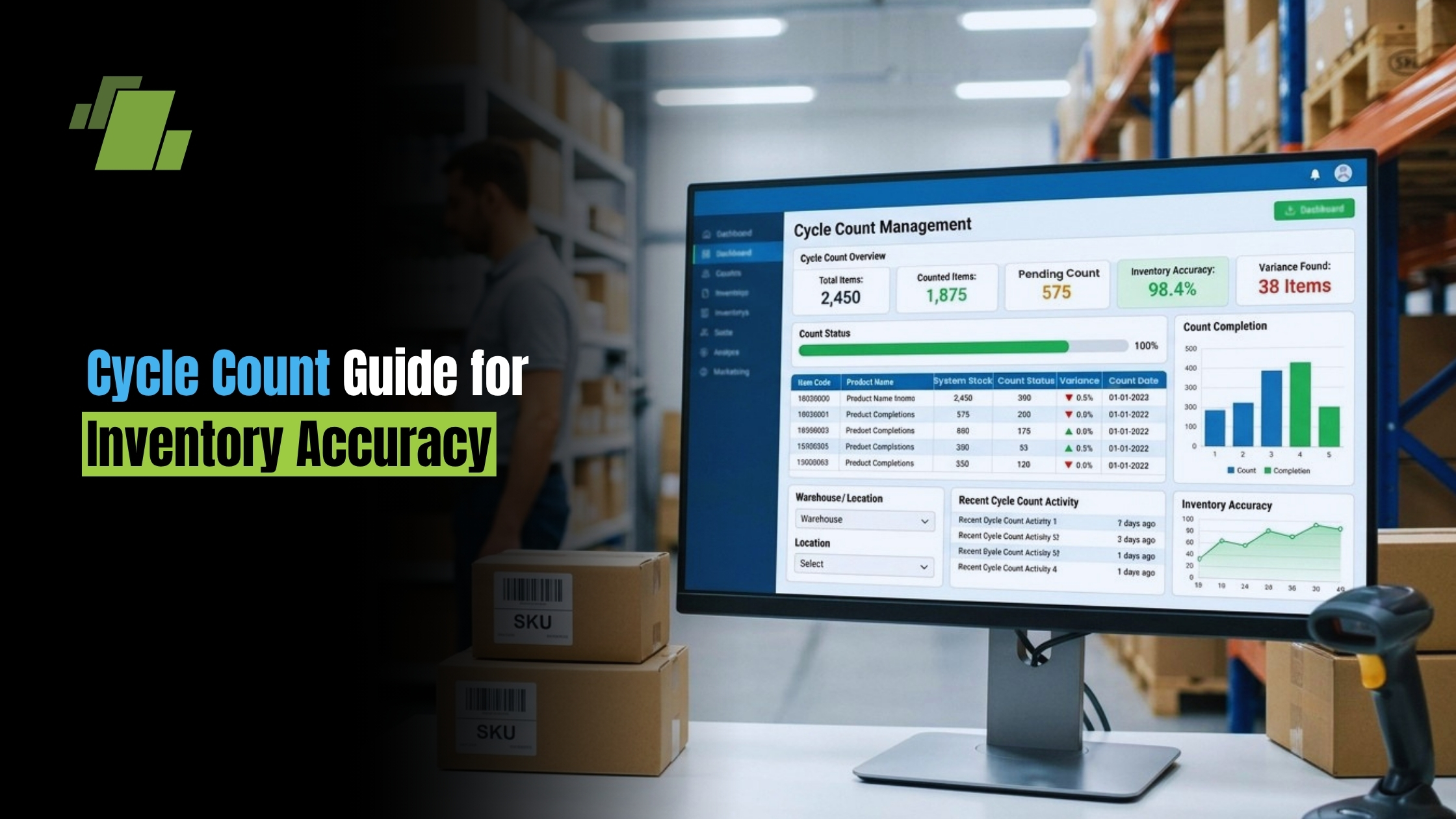
A cycle count is a simple way to keep inventory records close to real stock without stopping work for a full warehouse count. Instead of one big annual stock audit, teams check smaller groups of items on a set schedule. They fix issues before they spread into buying, fulfillment, finance, and customer service. For any business that depends on reliable stock, cycle counting turns inventory control into a daily habit.
What Does Cycle Count Mean in Inventory Management?
The simplest cycle count meaning is this: a cycle count is a repeat stock verification where chosen items are counted, matched with system records, and fixed when the numbers do not line up. In an inventory cycle count, the goal is not only to see if the shelf count matches the system. The bigger goal is to learn why gaps happen, whether from receiving errors, picking mistakes, shrinkage, damage, bad bin labels, or data entry errors.
This makes cycle counting more than basic stock counting. It is a feedback loop for inventory management. Each count helps the team improve the process that caused the error, not just fix the count. A strong cycle count process usually includes:
- Choosing items based on value, movement, risk, or a set rotation.
- Freezing or controlling transactions while the count is in progress.
- Counting the physical stock and comparing it with inventory tracking.
- Checking key differences before making changes.
- Recording causes so repeat issues can be fixed at the source.
How is Cycle Counting Different from a Physical Inventory?
Cycle counting checks smaller parts of inventory often. A physical inventory tries to count everything at once. That difference matters because full counts can slow work, need extra staff, and raise the chance of mistakes. A cycle count spreads the work through the year, so accuracy improves while receiving, picking, packing, and production keep going with less pause.
A physical inventory still has a place, especially for finance, compliance, or resetting a weak system. But if a business waits for one yearly count, errors can sit for months. By the time the gap is found, it may be hard to know if it came from theft, damage, a shipping error, an unposted receipt, or a bin mix-up.
Cycle counting is more proactive. It gives inventory teams a steady stock audit rhythm that supports cleaner records, better buying choices, and fewer surprises when customers order or production needs parts.
Why Inventory Accuracy Affects Every Part of the Business?
Inventory accuracy is often seen as a warehouse issue, but the effect reaches far beyond the stockroom. If the system says an item is there when it is not, sales may promise orders that cannot ship. If records show too little stock, buying may reorder too soon and tie up cash and space.
In manufacturing, bad inventory data can stop production because one missing part can delay a whole job. In ecommerce, it can lead to overselling, canceled orders, refunds, and unhappy customers. In retail, it can hide shrinkage or make replenishment choices poor.
Good inventory control helps teams answer key questions:
- Can this order ship today?
- Do we need to reorder now or can we wait?
- Are high-value items where they should be?
- Is demand changing, or are our records wrong?
- Are losses coming from process errors, damage, theft, or supplier issues?
When cycle counts are done often and well, inventory tracking becomes more trusted. That trust helps planning, labor, replenishment, and customer service.
https://www.logicerp.com/demo/requestdemo?utm_source=blog
The Main Counting Methods and When to Use Them
There is no single method that fits every site. The right choice depends on SKU count, item value, order volume, layout, staffing, and current accuracy. Many businesses use more than one method.
ABC Analysis Focuses on the Items that Matter Most
ABC analysis groups items by importance, often based on value, sales speed, margin, or process risk. A items are counted most often because mistakes there can be costly or disruptive. B items are counted less often, while C items may be counted on a longer rotation.
This method is useful when resources are limited. Instead of giving the same care to a low-cost slow mover and a high-value fast mover, ABC counting sends effort where an error would hurt most. A business might count critical or fast-moving items weekly or monthly, mid-tier items quarterly, and low-risk items once a year, then change the plan as patterns shift.
Random Sample Counts Test Overall System Health
Random sample counting picks items without a set pattern. It is useful when a business wants a broad view of inventory accuracy across groups, sites, or teams. Because the sample is not limited to obvious high-risk items, it can reveal hidden problems in less watched areas.
Random counts also work as a quality check. If accuracy is strong across random picks, leaders can be more sure that daily work is stable. If random samples keep finding gaps, the problem may be bigger than one product group.
Control Group Counting Exposes Process Problems
A control group method counts the same small group of items again and again over time. The goal is not broad coverage. It is to test whether the counting steps, transaction controls, training, or system setup are working as they should.
For example, if the same item gives a different result each time it is counted, the issue may not be the item itself. It may be unclear units of measure, poor bin labels, open transactions during counts, weak count method, or unrecorded moves between locations.
A Practical Cycle Count Process that Teams Can Repeat
The best cycle count process is simple to follow and strong enough to trust. If it depends on hero work or one skilled person’s memory, it will not scale. A repeatable process gives counters, supervisors, and system users one standard.
A practical workflow can look like this:
- Define the count scope. Decide which SKUs, bins, zones, or item classes will be counted and why.
- Schedule the work. Set daily, weekly, or monthly count windows that fit the flow of work.
- Control transactions. Pause or tightly manage movement for selected items during the count.
- Count carefully. Use trained counters, clear units of measure, and barcode scanning where available.
- Compare results. Match physical quantities against the inventory management system.
- Investigate exceptions. Review recent receipts, picks, transfers, returns, adjustments, and damage logs.
- Approve adjustments. Require review before changing system quantities, especially for high-value items.
- Track root causes. Group discrepancies so the team can fix repeat issues.
The investigation step is where many programs get stronger. If every difference is treated as just an adjustment, the same errors will return. If teams find the cause, cycle counting becomes a tool for steady improvement.
Best Practices that Improve Count Quality
- Strong cycle counting depends on habits that make errors easier to prevent and easier to find.
- Keep locations clean and clearly labeled. Messy bins, mixed SKUs, and unclear labels create avoidable errors.
- Train counters on units of measure. Eaches, cases, packs, rolls, and pallets must mean the same thing to everyone.
- Separate counting from correction when possible. Counters should record what they find, while supervisors review exceptions.
- Double-check high-value differences. A second count can prevent needless changes.
- Count during calmer work windows. Early shifts, slower days, or controlled windows reduce transaction conflicts.
- Measure accuracy over time. Track accuracy by item class, location, team, discrepancy reason, and count type.
- Use findings to improve workflow. Repeat errors may point to receiving, picking, labeling, training, or system issues.
Technology can make these habits easier to keep. Warehouse management systems, mobile barcode scanners, and cycle counting software reduce manual entry, guide counters to the right spots, and create a clearer audit trail. Automation does not replace good process, but it does make the process faster, more visible, and less tied to paper forms.

Common Challenges and How to Handle Them
The most common challenge is treating cycle counting as extra work instead of part of normal operations. When counts are squeezed in only when someone has time, they become uneven. The fix is to schedule them like any other task and assign clear ownership.
Another challenge is counting while inventory is moving. If items are received, picked, transferred, or returned during the count window without control, the result can be wrong even when the physical count was done well.
Short transaction freezes, live scanning, and clear communication help reduce this risk. Teams also struggle when they focus on quantity adjustments but ignore root causes.
A discrepancy report should lead to questions: Was the item put away in the wrong location? Was a return received but not posted? Did a picker substitute an item? Was damaged stock removed physically but not recorded?
These answers are what improve future inventory accuracy.
The Takeaway for Better Inventory Control
Cycle counting is useful because it makes inventory accuracy a routine habit instead of a once-a-year scramble. It helps teams catch errors early, understand why differences happen, and keep records lined up with real stock on the floor.
For most businesses, the best start is not a hard program. Start with your highest-value or fastest-moving items, set a repeatable schedule, train the people doing the work, and track the reasons behind each major difference. Over time, a steady cycle count program can support cleaner inventory tracking, smoother fulfillment, better buying choices, and stronger inventory management.
Call at +91-7341141176/75 or send us an email at sales@logicerp.com to book a free demo today!
Frequently Asked Questions (FAQs)
How Often Should a Business Perform Cycle Counts?
The right frequency depends on item value, movement, risk, and operational impact. High-value, fast-moving, or critical items may need weekly or monthly counts, while lower-risk items can be counted quarterly or once a year. Many businesses use ABC analysis to set different schedules for different item groups.
Does Cycle Counting Replace a Full Physical Inventory?
Not always. Cycle counting reduces reliance on large annual counts by checking smaller groups of items throughout the year, but a full physical inventory may still be needed for financial reporting, compliance, or resetting a system with poor accuracy. The main benefit of cycle counting is that it catches discrepancies early instead of letting them build up for months.
What Should a Team Do When a Cycle Count Finds a Discrepancy?
The team should investigate before making an adjustment, especially for meaningful or high-value differences. That review may include receipts, picks, transfers, returns, damage records, and recent adjustments. The goal is to find the root cause so the same problem does not keep coming back.
Why is Controlling Transactions During a Cycle Count Important?
If inventory is received, picked, transferred, or returned while the count is happening, the physical count and system record may no longer refer to the same moment in time. Short transaction freezes, live scanning, and clear communication help make sure differences point to real problems, not timing issues.
What is the Best Way to Start a Cycle Count Program?
A practical starting point is to focus on the highest-value, fastest-moving, or most important items first. Then set a repeatable schedule, train counters on units of measure and procedures, control transactions during count windows, and track discrepancy reasons so the process improves over time.