Impact of ERP Software On Your Business Return On Investment

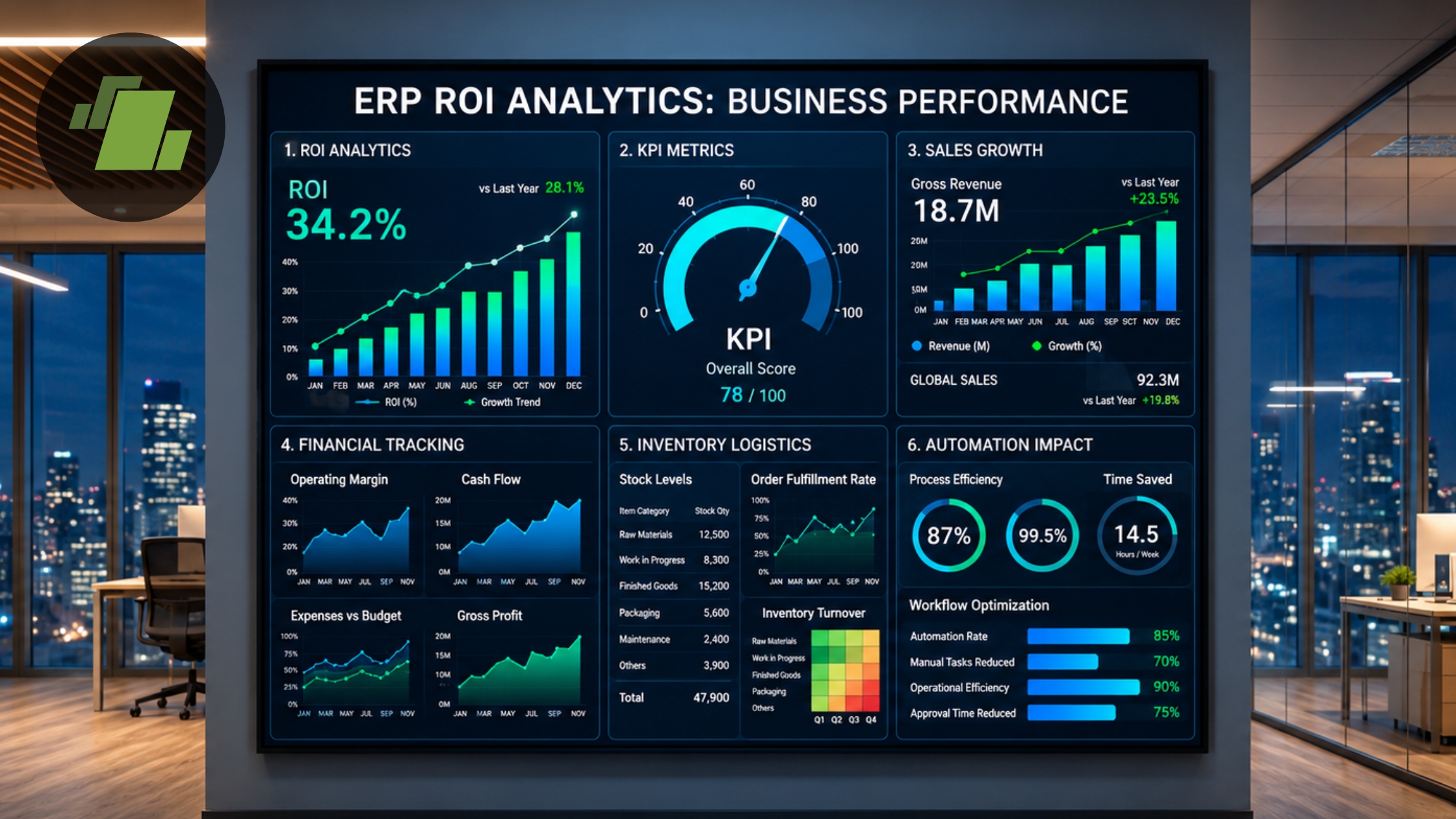
Businesses today are under constant pressure to improve efficiency, reduce operational costs, and increase profitability. Whether you’re a retailer, distributor, manufacturer, or wholesaler, investing in the right ERP software can significantly improve business performance and streamline operations.
Calculating the Return on Investment (ROI) of ERP software helps businesses understand whether the implementation cost is justified by the operational, financial, and productivity benefits gained over time. This guide explains how to calculate ERP ROI, the key metrics to evaluate, and how LOGIC ERP helps businesses maximize their software investment.
Contact Us
Free Demo Request
What Is ERP ROI?
ERP ROI (Return on Investment) is the measurable value a business receives from implementing an Enterprise Resource Planning (ERP) software system compared to the total cost of ownership.
A modern ERP system helps businesses:
- Automate business processes
- Improve inventory management
- Reduce operational costs
- Increase employee productivity
- Enhance customer satisfaction
- Improve decision-making through real-time reporting
- Increase sales and profitability
The higher the operational improvements and cost savings generated by the ERP solution, the greater the ROI.
Why Is Measuring ERP Software ROI Important?
Implementing an ERP system requires investment in software licensing, deployment, training, and support. Measuring ERP ROI helps businesses determine whether the solution is delivering the expected value.
Benefits of calculating ERP ROI include:
- Justifying ERP implementation costs
- Measuring operational improvements
- Tracking business growth and profitability
- Identifying cost-saving opportunities
- Evaluating software performance
- Supporting future technology investment decisions
For retailers, distributors, manufacturers, and multi-location businesses, ROI analysis is essential for ensuring long-term business success.
Key Metrics for Calculating ERP ROI
When evaluating the ROI of an ERP software solution, businesses should analyze both financial and operational performance indicators.
1. Labor Cost Reduction
A robust ERP system automates repetitive and manual tasks, reducing dependency on paperwork and administrative processes.
Benefits include:
- Reduced labor costs
- Faster task completion
- Increased workforce productivity
- Improved operational efficiency
2. Improved Business Planning and Control
ERP software provides greater visibility into business operations, helping management optimize workflows and improve planning accuracy.
This results in:
- Better resource allocation
- Reduced operational bottlenecks
- Improved process control
- Enhanced business performance
3. Increased Production Efficiency
For manufacturing businesses, ERP software improves production planning, scheduling, quality control, and resource utilization.
Key advantages include:
- Faster production cycles
- Reduced wastage
- Better production monitoring
- Increased output efficiency
4. Lower Administrative Expenses
ERP automation reduces paperwork, duplicate data entry, and manual record management.
This leads to:
- Lower administrative costs
- Faster information processing
- Improved data accuracy
- Reduced human errors
5. Optimized Inventory and Material Costs
Inventory management is one of the most critical areas where ERP software delivers ROI.
ERP helps businesses:
- Reduce excess inventory
- Prevent stock shortages
- Improve stock turnover
- Optimize procurement planning
- Lower carrying costs
6. Regulatory Compliance Management
ERP software simplifies GST compliance, taxation, audit reporting, and regulatory requirements.
Benefits include:
- Reduced compliance risks
- Faster report generation
- Improved audit readiness
- Lower compliance management costs
7. Revenue Growth and Improved Profit Margins
With better inventory visibility, customer management, and operational efficiency, businesses can improve sales performance and profitability.
ERP software helps increase:
- Sales revenue
- Customer retention
- Gross profit margins
- Business scalability
How LOGIC ERP Helps Businesses Achieve Higher ROI
LOGIC ERP is a comprehensive retail ERP software, distribution management software, and business management software designed to improve efficiency, profitability, and growth.
Available as both cloud ERP software and on-premises ERP software, LOGIC ERP enables businesses to streamline operations and maximize returns from their technology investments.
Centralized Business Data Management
LOGIC ERP integrates multiple business functions into a single platform, including:
- Inventory Management
- Billing & POS
- Accounting & Finance
- CRM
- Purchase Management
- Warehouse Management
- Supply Chain Management
A centralized database ensures real-time data access across departments while eliminating data duplication and improving collaboration.
Improved Operational Efficiency
Operational efficiency directly impacts ERP ROI.
LOGIC ERP helps businesses monitor and optimize:
- Inventory operations
- Procurement activities
- Warehouse performance
- Resource utilization
- Employee productivity
- Business expenses
This allows businesses to identify inefficiencies and reduce operating costs.
Real-Time Reporting and Better Decision-Making
Data-driven decision-making is essential for business growth.
LOGIC ERP provides:
- Real-time dashboards
- Advanced analytics
- Mobile reporting
- Financial reports
- Sales performance insights
- Inventory analytics
These capabilities help management make faster and more informed business decisions.
Faster Data Processing and Information Sharing
LOGIC ERP improves communication and collaboration across departments by providing a unified business platform.
Businesses can:
- Access information instantly
- Update records in real time
- Share business data securely
- Improve workflow coordination
This reduces delays and improves overall operational efficiency.
Advanced Business Analytics and Reporting
Analyzing business performance manually can be time-consuming and inaccurate.
LOGIC ERP offers customizable reports and business intelligence tools that provide insights into:
- Sales trends
- Inventory movement
- Customer purchasing behavior
- Profitability analysis
- Financial performance
These insights support strategic planning and continuous business improvement.
Enhanced Customer Satisfaction
Customer experience is a major contributor to long-term profitability.
LOGIC ERP helps improve customer satisfaction through:
- Faster billing and POS operations
- Efficient order processing
- Multi-store inventory visibility
- Loyalty management
- Customer feedback management
- Omnichannel retail capabilities
Satisfied customers contribute to increased repeat business and higher revenue growth.
ERP ROI Formula
Businesses can use the following formula to calculate ERP ROI:
ERP ROI (%) = [(Total Benefits – Total ERP Costs) ÷ Total ERP Costs] × 100
Total benefits may include:
- Labor cost savings
- Inventory cost reduction
- Increased sales revenue
- Improved productivity
- Reduced administrative expenses
- Compliance-related savings
Total ERP costs may include:
- Software licensing fees
- Implementation costs
- Training expenses
- Annual maintenance costs
- Support and upgrade fees
Conclusion
Investing in the right ERP software can deliver substantial returns through improved efficiency, reduced operational costs, better inventory management, and increased profitability. By measuring ERP ROI, businesses can evaluate the true value of their ERP investment and ensure long-term business growth.
Whether you’re looking for retail ERP software, inventory management software, distribution management software, or a complete cloud ERP solution, LOGIC ERP provides industry-specific tools that help businesses streamline operations and maximize ROI.
Ready to improve business efficiency and achieve measurable returns? Explore how LOGIC ERP can transform your operations and drive sustainable growth.
Call at +91-73411-41176/75 or send us an email at sales@logicerp.com to book a free demo today!
Frequently Asked Questions (FAQs)
1. What is ERP ROI, and why is it important?
ERP ROI (Return on Investment) measures the value your business gains from implementing ERP software compared to the total cost of ownership. It helps determine whether the ERP investment is improving efficiency, reducing costs, and increasing profitability.
2. How do you calculate the ROI of ERP software?
ERP ROI can be calculated using the formula:
ERP ROI (%) = [(Total Benefits – Total ERP Costs) ÷ Total ERP Costs] × 100
Benefits may include labor savings, inventory cost reductions, increased revenue, and productivity improvements, while costs include software licensing, implementation, training, and maintenance.
3. What factors contribute most to ERP ROI?
Key factors include reduced labor costs, improved inventory management, increased operational efficiency, lower administrative expenses, better decision-making through real-time reporting, and improved customer satisfaction that drives sales growth.
4. How does LOGIC ERP help businesses maximize ROI?
LOGIC ERP centralizes business operations, automates workflows, improves inventory control, provides real-time analytics, streamlines GST compliance, and enhances customer management. These capabilities help businesses reduce costs, increase productivity, and improve profitability.
5. How long does it take to see ROI from an ERP implementation?
The timeframe varies depending on business size, industry, and implementation scope. Most businesses begin seeing measurable improvements in efficiency, inventory control, and operational costs within a few months, while significant ROI is often realized within 12–24 months of implementation.