Start Your Cosmetic Store in India with LOGIC ERP – A Complete Step-by-Step Guide

Summary
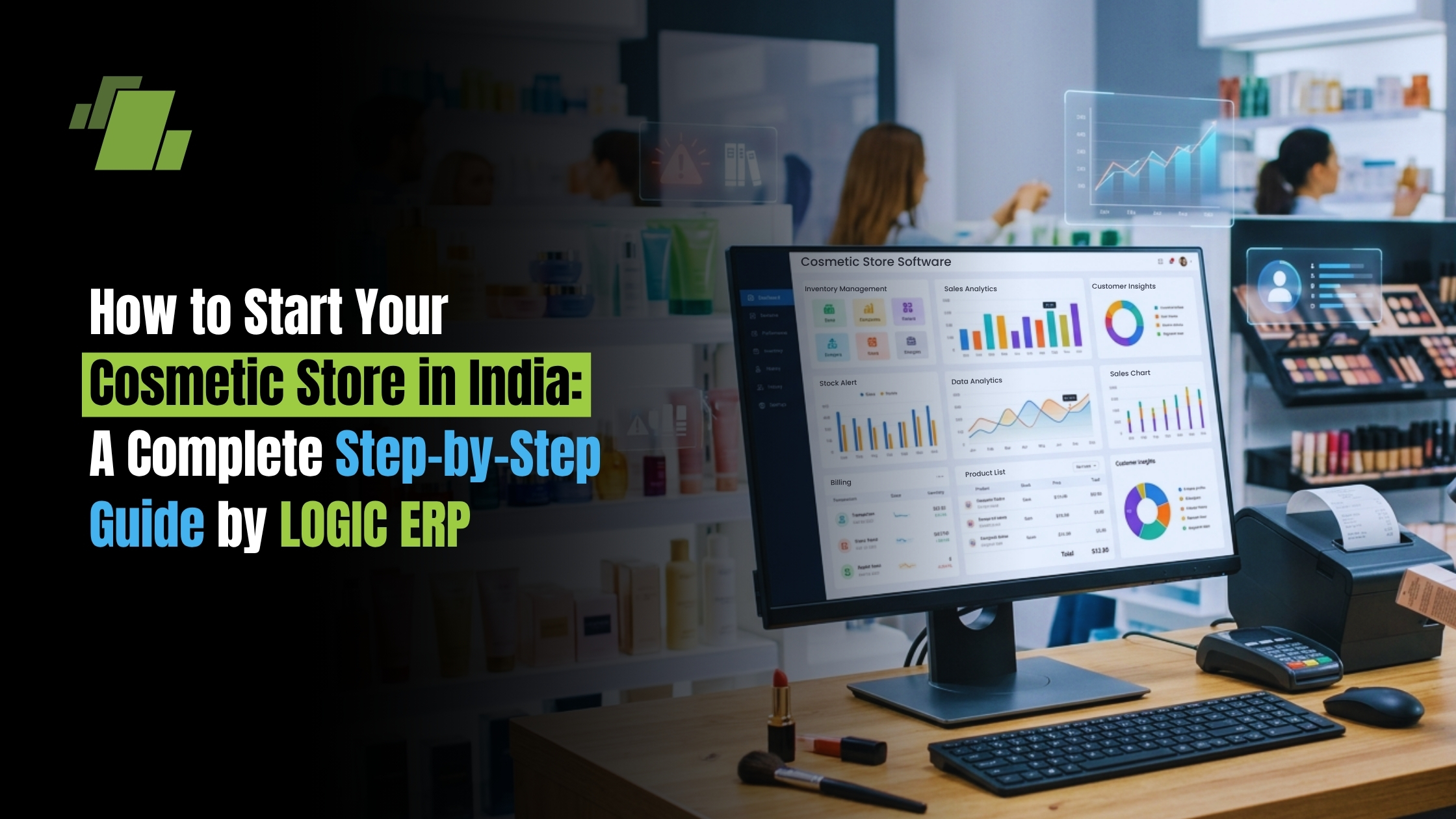
This comprehensive guide provides a detailed roadmap for starting a successful cosmetic store in India. It covers essential aspects including market research, niche selection, business planning, legal compliance, supplier sourcing, store layout, staffing, and the integration of cosmetics ERP software to streamline personal care and beauty products retail operations. By using a strong marketing plan, digital strategies, and customer-focused approaches, entrepreneurs can build brand loyalty and thrive in the competitive cosmetic industry.
Key Takeaways
- The Indian cosmetic market is growing rapidly, driven by rising disposable incomes, urbanization, and demand for premium and natural beauty products.
- A well-researched business plan and niche selection are critical for targeting the right audience and achieving business success.
- Compliance with regulatory requirements and obtaining necessary licenses ensure legal operation and build customer trust.
- Implementing cosmetic ERP software enhances inventory management, quality control, production planning, and regulatory compliance, reducing costs and improving customer satisfaction.
- Digital marketing, influencer partnerships, and omnichannel retailing are vital components of a strong marketing plan.
- Continuous performance evaluation and adaptation to future trends like sustainable practices and personalized beauty products help maintain competitive advantage.
- Overcoming challenges such as counterfeit products, price sensitivity, and complex inventory management is possible through strategic planning and the use of advanced ERP systems.
By following this step-by-step guide and utilizing modern enterprise resource planning solutions, aspiring beauty entrepreneurs can confidently launch and grow their cosmetic stores in India’s dynamic market.
What Are Cosmetics?
Cosmetics are products designed to enhance, alter, or maintain the appearance of the human body. This category includes skin care formulations, makeup, hair care products, fragrances, and personal hygiene items. The cosmetic industry spans from luxury beauty products to everyday essentials like moisturizers, sunscreens, and cleansers.
In India, the cosmetics market encompasses both international brands and a growing segment of Made-in-India beauty brands. Cosmetic products must meet specific regulatory requirements set by the Bureau of Indian Standards (BIS) and the Central Drugs Standard Control Organisation (CDSCO), making compliance a vital role in any cosmetic business. Every company entering the cosmetic industry must understand the Cosmetic Rule, 2020, and obtain the necessary licenses to operate legally.
The distinction between cosmetics and drugs matters for entrepreneurs: cosmetics are intended for external application and temporary effects, while products claiming therapeutic benefits fall under drug regulations with stricter legal requirements.
Why Start a Cosmetic Store in India?
Profit and Market Growth
The Indian cosmetic market reached approximately ₹1.2 trillion in 2025 and projects growth at 8-10% annually through 2030. This expansion creates significant opportunities for business success in both retail and e-commerce channels.
Rising disposable incomes, increased urbanization, and growing customer preferences for premium beauty products drive this growth. The skincare segment alone accounts for over 40% of the market, with particular demand for natural and Ayurvedic formulations.
Profit margins in cosmetic retail typically range from 25-45% depending on product categories, brand positioning, and whether you focus on private label or established brands.
Rapid E Commerce Expansion
Online beauty sales in India grew over 30% year-over-year in 2024-2025, fundamentally changing how customers access cosmetics. Digital marketing and influencer marketing have become essential for reaching potential customers who research products online before purchasing.
This e-commerce expansion means physical stores must integrate omnichannel capabilities, combining in-store experiences with online ordering, click-and-collect, and digital payment options.
Demand for Made in India Beauty Brands
The “vocal for local” movement has accelerated consumer interest in Indian beauty brands. Market research shows that 65% of Indian consumers actively seek domestically manufactured cosmetics, particularly those incorporating traditional ingredients like turmeric, neem, and sandalwood.
This trend benefits entrepreneurs who can source from local cosmetic manufacturers and build brand loyalty through authentic Indian formulations and sustainable practices. However, cosmetic manufacturers are under increasing pressure to adopt sustainable practices that have a positive impact on the environment and society. These sustainable practices can be costly, presenting a challenge for many companies in the cosmetics industry.
Step by Step Guide to Starting a Cosmetic Store in India
This step by step guide covers everything from initial market research through grand opening, helping you make informed decisions at each stage.
Step 1: Market Research & Niche Selection
Analyze Your Target Audience
Begin by identifying who your customers will be. Are you targeting young professionals interested in Korean beauty trends? Middle-aged consumers seeking anti-aging skincare? Budget-conscious families needing daily essentials?
Your market research should examine:
- Local demographics and income levels
- Competitor presence and their product mix
- Customer preferences for specific brands or product types
- Price sensitivity in your target location
Select Your Niche
Successful cosmetic stores typically specialize rather than attempting to stock everything. Consider these niche options:
| Niche Category | Target Audience | Key Products | Margin Potential |
|---|---|---|---|
| Luxury Beauty | High-income urban consumers | Premium skincare, designer fragrances | 40-50% |
| Natural/Organic | Health-conscious buyers | Ayurvedic formulations, chemical-free products | 35-45% |
| K-Beauty/Global Trends | Young urban professionals | Sheet masks, serums, trending imports | 30-40% |
| Mass Market | Price-sensitive families | Daily essentials, economy brands | 20-30% |
| Professional/Salon | Beauty entrepreneurs, salons | Bulk products, professional-grade items | 25-35% |
Tips for Aspiring Beauty Entrepreneurs
If you want to succeed as a beauty entrepreneur, keep these tips in mind: Stay passionate about the cosmetic industry, maintain strong industry awareness, and always look for ways to innovate. These qualities will help you build a thriving cosmetic business and stand out in a competitive market.
Step 2: Develop Your Business Plan
A comprehensive business plan serves as your roadmap and is essential for securing funding.
Core Business Plan Components
Your financial plan should project startup costs, monthly operating expenses, and revenue forecasts for at least three years. Typical startup investments for a mid-sized cosmetic store in India range from ₹15-50 lakhs depending on location and inventory scope.
Include these elements:
- Executive summary defining your cosmetic business concept
- Market analysis with competitor assessment
- Product selection and supplier strategy
- Strong marketing plan covering both digital marketing and local promotion
- Operational plan including staffing and inventory management
- Financial projections with break-even analysis
Funding Sources
Consider these financing options:
- Personal savings and family investment
- Small business loans from banks (Mudra scheme offers up to ₹10 lakhs)
- MSME government schemes for retail businesses
- Angel investors for larger-scale operations
Step 3: Business Registration & Legal Compliance
Business Structure Options
| Structure | Registration Body | Liability | Tax Implications | Best For |
|---|---|---|---|---|
| Sole Proprietorship | Local authorities | Unlimited personal | Individual tax rates | Small single-owner stores |
| Partnership | Registrar of Firms | Shared among partners | Partnership taxation | Family businesses |
| LLP | MCA (Ministry of Corporate Affairs) | Limited to contribution | Separate entity taxation | Medium operations |
| Private Limited | MCA | Limited to shares | Corporate taxation | Growth-oriented ventures |
Required Licenses and Registrations
- GST Registration: Mandatory for businesses with turnover exceeding ₹40 lakhs (₹20 lakhs for services)
- Shop and Establishment License: From local municipal corporation
- Trade License: For retail operations
- FSSAI License: If selling products with ingestible components (lip products, some skincare)
- Drug License: Required if stocking medicated cosmetics or OTC products
- Import-Export Code: If sourcing international brands directly
Regulatory Compliance for Cosmetics
Ensure all products you sell comply with:
- Bureau of Indian Standards (BIS) specifications
- Mandatory labeling requirements (ingredients in Hindi and English)
- Expiration dates clearly displayed
- Country of origin declarations
- Cruelty-free certifications where applicable
Step 4: Choosing the Best Store Location
Location Evaluation Criteria
The right location directly impacts footfall and business success. Evaluate potential sites using these factors:
- Foot Traffic: Measure pedestrian volume during different times and days
- Visibility: Street-facing stores with clear signage outperform hidden locations
- Parking: Essential for customers buying multiple products
- Competition Proximity: Some competition validates demand; too much saturates the market
- Rental Costs: Balance visibility with affordability (aim for rent below 8-10% of projected revenue)
Recommended Location Types
Shopping malls offer built-in foot traffic but charge premium rents (₹150-400 per square foot monthly in metro cities). High-street retail provides visibility with moderate costs. Residential neighborhoods work well for everyday essentials with loyal local customers.
For e-commerce-focused models, consider smaller showroom spaces combined with warehouse storage to reduce costs while maintaining physical presence.
Step 5: Finding Trusted Suppliers & Distributors
Supplier Categories
Your cosmetic store will likely source from multiple channels:
- Authorized Distributors: For established national and international brands
- Direct Brand Partnerships: For exclusive or preferred retailer status
- Cosmetic Manufacturers: For private label or white-label products
- Wholesale Markets: For testing new brands at lower minimum orders
Supplier Evaluation Framework
| Criteria | What to Assess | Red Flags |
|---|---|---|
| Product Authenticity | Brand authorization letters, invoice trails | Unable to provide documentation |
| Pricing | Compare across multiple suppliers | Prices significantly below market |
| Payment Terms | Credit periods, advance requirements | 100% advance with no track record |
| Delivery Reliability | Lead times, fulfillment rates | Frequent stockouts or delays |
| Return Policy | Damaged goods, expiry handling | No returns accepted |
Building Supplier Relationships
Start with smaller orders to test reliability before committing to larger purchases. Maintain relationships with 2-3 suppliers per category to ensure continuous availability and competitive pricing.
For private label products, visit manufacturing facilities to verify quality control processes and regulatory compliance before finalizing partnerships.
Step 6: Store Layout, Visual Merchandising & Display
Layout Principles for Cosmetic Retail
Effective store design guides customers through your product range while maximizing exposure to high-margin items.
- Entry Zone: Place testers and seasonal promotions to draw customers in
- Right-Wall Premium: Most customers naturally turn right; position bestsellers and premium products here
- Discovery Zone: Mid-store areas for new launches and exclusive products
- Impulse Area: Near checkout for travel sizes, accessories, and limited editions
- Consultation Space: Dedicated area for skin analysis or makeup trials
Visual Merchandising Best Practices
Create visual hierarchy using:
- Vertical displays for skincare (products used in sequence)
- Horizontal spreads for color cosmetics (shade comparison)
- Cross-merchandising (pairing complementary products)
- Seasonal themes updated monthly
Lighting significantly impacts customer experience. Use warm lighting (3000-3500K) for skincare areas and brighter, neutral lighting (4000K) for makeup sections where color accuracy matters.
Step 7: Hiring Trained Staff
Key Roles for Cosmetic Retail
| Position | Responsibilities | Skills Required |
|---|---|---|
| Store Manager | Operations, staff management, inventory | Leadership, retail experience |
| Beauty Advisors | Customer consultation, product knowledge | Beauty training, communication |
| Cashier/Billing | Transaction processing, returns | Accuracy, software proficiency |
| Stock Handler | Inventory, merchandising | Organization, physical capability |
Training Requirements
Invest in comprehensive training covering:
- Product knowledge across all brands and categories
- Skin type assessment and product recommendation
- Customer experience standards
- Billing software and erp system operation
- Regulatory compliance (ingredient awareness, expiration dates)
Many brands offer free product training; leverage these resources to reduce training costs while building team expertise.
Step 8: Billing & Inventory Software Integration
Why ERP Software Matters for Cosmetic Retail
Manual inventory management fails as cosmetic stores scale. Products have expiration dates, multiple variants (shades, sizes), and complex supplier relationships that require systematic tracking.
An ERP system integrates complex manufacturing, inventory, and regulatory processes into a single platform, streamlining business operations for any company in the cosmetic industry..
Enterprise resource planning through a cosmetic manufacturing ERP software or retail-focused ERP software provides:
- Real-Time Inventory Tracking: Know exact stock levels across all SKUs, including finished goods and raw materials, across multiple warehouses.
- Expiration Management: Automatic alerts for products approaching expiry, with perishable item tracking using FEFO or FIFO to ensure older inventory is used first and waste is reduced.
- Lot Traceability & Batch Tracking: Essential features for monitoring inventory, tracking specific batches for quality issues or recalls, and ensuring product quality.
- Multi-Location Management: Synchronize inventory across stores and warehouse, connecting departments and locations through a single database for efficient communication and reduced data duplication.
- Integrated Billing: GST-compliant invoicing with instant feedback on transactions.
- Production Planning: Helps companies plan production cycles, determine optimal product mix, analyze machine usage, and optimize the production process to reduce waste.
- Procurement Management System: Optimizes the raw material procurement process for better cost control and efficiency.
- Demand Forecasting: Tools to manage seasonal demand volatility and optimize procurement.
- Quality Control: Ensures compliance with international standards through automated quality assurance, integrating quality checks at production stages and triggering alerts for deviations.
- Formula Management: Manages complex bills of materials (BOM) to ensure consistency in product quality.
- Regulatory Compliance: Enables companies to stay up-to-date with the latest requirements and comply with global standards like FDA and cGMP, streamlining adherence to safety regulations such as FDA and REACH by automating documentation and maintaining traceability.
- E-commerce, POS, and CRM Integration: Seamlessly connects with other business systems for unified operations.
Cosmetic ERP software facilitates efficient communication and reduces data duplication across various business processes, supporting every process from procurement to production to finished goods management.
LOGIC ERP for Cosmetic Retail
LOGIC ERP offers specialized capabilities for cosmetic business operations:
- Batch tracking with expiration date monitoring and lot traceability for effective inventory and quality management
- Barcode integration for streamlined operations
- Material requirement planning for optimal stock levels
- Sales analytics by brand, category, and margin
- E-commerce integration for omnichannel selling
- GST compliance and automated tax calculations
Implementation typically requires 2-4 weeks for small-medium retail operations, with training included for all staff members.
ROI Expectations
Cosmetic retailers using ERP systems report:
- 99%+ inventory accuracy (versus 85-90% with manual tracking)
- 30-40% reduction in expired product write-offs due to perishable ingredient control and optimized production planning
- 20% improvement in stockout prevention
- Significant time savings on compliance documentation and regulatory reporting
Step 9: Digital & Local Marketing Strategy
Digital Marketing Essentials
Your strong marketing plan should balance digital reach with local community engagement.
Social Media Strategy
- Instagram: Visual platform ideal for beauty products; post daily with product showcases, tutorials, and customer transformations
- YouTube: Longer-form content for product reviews and beauty education
- WhatsApp Business: Direct communication with customers, order updates, and promotional messages
Influencer Marketing Partner with local beauty influencers (micro-influencers with 10,000-100,000 followers often provide better engagement than mega-influencers). Compensation models include:
- Free products for reviews
- Commission on sales using unique codes
- Fixed fees for dedicated content
Local Marketing Tactics
- Grand opening promotions with local media coverage
- Loyalty programs rewarding repeat customers
- Collaboration with nearby salons and parlors
- Community events (makeup workshops, skincare seminars)
- Local SEO optimization for “cosmetic store near me” searches
Customer Experience Focus
Build brand loyalty through exceptional service:
- Personalized product recommendations
- Follow-up after purchases
- Birthday discounts and special occasion offers
- Easy returns and exchanges
- Consistent product quality assurance
Step 10: Grand Launch & Growth
Launch Planning Checklist
Execute your opening with these elements:
- Pre-Launch Buzz (2-3 weeks before)
- Influencer preview visits
- Press releases to local media
- Launch Day Execution
- Special opening discounts (typically 10-20%)
- Free samples or mini-makeovers
- Refreshments and welcoming atmosphere
- Photo opportunities for social sharing
- Post-Launch Follow-Up
- Thank-you messages to first customers
- Request reviews and feedback
- Address any operational issues identified

Scaling Your Cosmetic Business
After establishing your first location successfully, consider these growth strategies:
- Geographic Expansion: Second location in complementary area
- Private Label Development: Create your own brand products with higher margins
- E-Commerce Enhancement: Build dedicated online store beyond marketplace presence
- B2B Sales: Supply to salons, spas, and smaller retailers
- Franchise Model: License your concept to other beauty entrepreneurs
Managing Finances and Accounting for Your Cosmetic Store
Effective financial management is the backbone of any successful cosmetic business. By implementing a robust accounting system, you can accurately track expenses, revenues, and profits, which is essential for making informed decisions about investments and resource allocation. Leveraging enterprise resource planning (ERP) software, such as cosmetic ERP software, streamlines critical business functions like inventory management, invoicing, and payment processing. This integration not only simplifies day-to-day operations but also provides real-time insights into your financial health.
A well-structured financial plan enables cosmetic manufacturers to navigate the competitive market, optimize costs, and maximize profitability. With ERP software, you can monitor inventory levels, manage raw materials, and control manufacturing costs, ensuring that your business remains agile and responsive to market changes. Automated financial reporting and analytics help you identify trends, forecast demand, and allocate resources efficiently. Ultimately, strong financial management supported by advanced ERP solutions leads to improved customer satisfaction, as you can maintain optimal stock levels, offer competitive pricing, and invest in high-quality products that meet customer expectations.
Measuring Success and Evaluating Store Performance
To ensure your cosmetic business thrives in the dynamic cosmetic market, it’s crucial to regularly measure and evaluate store performance. Key performance indicators (KPIs) such as sales growth, customer retention rates, and inventory turnover provide valuable insights into your business’s strengths and areas for improvement. Utilizing data analytics tools allows cosmetic manufacturers to track these KPIs, assess market trends, and make informed decisions regarding product development, marketing strategies, and sales initiatives.
Regularly reviewing financial statements, analyzing customer feedback, and conducting ongoing market research help refine your business plan and enhance product quality. By staying attuned to customer preferences and monitoring performance metrics, you can adjust your inventory, introduce new products, and tailor your marketing efforts to better serve your target audience. This proactive approach not only drives growth but also ensures your business remains competitive and responsive to changes in the cosmetic market. Consistent evaluation and adaptation are key to achieving long-term business success.
Creating Brand Loyalty in the Cosmetics Market
Establishing brand loyalty is essential for cosmetic businesses aiming for sustained growth and business success in the competitive cosmetic industry. A strong marketing plan that leverages digital marketing, influencer marketing, and active social media engagement is crucial for building brand awareness and fostering lasting customer relationships. Cosmetic manufacturers can further enhance customer experience by offering high quality products through user-friendly e-commerce platforms and providing exceptional customer service at every touchpoint.
Implementing customer retention strategies, such as loyalty programs, personalized promotions, and exclusive member benefits, encourages repeat purchases and positive word-of-mouth. These efforts not only increase sales but also help create a loyal customer base that supports your brand’s growth. By consistently delivering value and prioritizing customer satisfaction, cosmetic businesses can differentiate themselves in the market, build trust, and secure a competitive edge. Ultimately, brand loyalty translates into higher sales, positive reviews, and long-term business success for manufacturers and retailers alike.
Staying Ahead of Future Trends in Beauty Retail
The cosmetic industry is rapidly evolving, with new trends and technologies shaping the future of beauty retail. To maintain a competitive edge, cosmetic businesses must stay proactive by anticipating and adapting to future trends such as sustainable practices, eco-friendly packaging, and personalized beauty products. Conducting regular market research, attending industry events, and monitoring social media channels help cosmetic manufacturers stay informed about emerging developments and shifting consumer preferences.
Investing in research and development enables businesses to create innovative beauty products that resonate with their target audience. Collaborating with influencers and utilizing digital marketing strategies can amplify your brand’s reach and showcase your commitment to meeting modern beauty standards. By embracing sustainable practices and staying attuned to future trends, cosmetic companies can drive growth, attract new customers, and ensure long-term success in the ever-changing beauty market. Staying ahead of the curve positions your business as a leader in the industry and keeps your offerings relevant to evolving customer needs.
Overcoming Challenges and Obstacles in the Cosmetic Store Business
Launching and managing a cosmetic store comes with its share of challenges, from intense competition and regulatory requirements to complex inventory management. However, with a well-structured business plan and the right tools, cosmetic manufacturers can overcome these obstacles and achieve lasting success. Implementing an ERP system, such as cosmetic manufacturing ERP software, streamlines business processes, reduces operational costs, and enhances product quality by providing real-time visibility into inventory, manufacturing, and sales.
Focusing on customer satisfaction, building strong supplier relationships, and staying updated with the latest industry trends are essential strategies for navigating the competitive beauty industry. Regularly reviewing regulatory requirements ensures compliance and protects your business from potential setbacks. Additionally, seeking advice from industry experts, participating in workshops, and joining trade associations can provide valuable support and insights. With persistence, adaptability, and a commitment to delivering high quality products, cosmetic businesses can overcome challenges, drive growth, and thrive in the dynamic beauty market.
Why Choose LOGIC ERP Cosmetics, Personal Care and Beauty Products Software?
LOGIC ERP offers a comprehensive cosmetic ERP software solution designed specifically for the cosmetics, personal care, and beauty products industry. This software integrates all critical business functions into a single platform, enabling cosmetic manufacturers and retailers to streamline their operations, enhance product quality, and improve customer satisfaction.
Beauty & Cosmetics retail ERP software connects various departments and locations through a single database, facilitating efficient communication.
With LOGIC ERP, cosmetic businesses can manage complex inventory-based operations, track an unlimited number of SKUs, and maintain detailed lot traceability to guarantee product quality and safety. The system’s user-friendly interface and robust reporting capabilities empower businesses to make informed decisions, reduce costs, and scale operations effectively.
Features of LOGIC ERP Cosmetics, Personal Care and Beauty Products Software:
- Multi-warehouse inventory tracking for real-time stock visibility
- Demand forecasting to manage seasonal fluctuations and optimize procurement
- Integration with E-commerce platforms, POS systems, and CRM for unified operations
- Quality control is a critical feature of cosmetic ERP software that ensures compliance with international standards. Comprehensive quality control ensuring compliance with FDA, REACH, and other standards
- Automated documentation and traceability for regulatory compliance
- Production planning tools to optimize manufacturing processes and reduce waste
- Batch and lot traceability for effective inventory and quality management
- Management of unlimited number of SKUs including variants and packaging types
- Procurement management system to streamline raw material sourcing
- Real-time alerts for expiration dates and perishable item tracking using FEFO/FIFO
- User-friendly dashboards and customizable reports for business
The Role of the Beauty Entrepreneur
In the ever-evolving cosmetic industry, the beauty entrepreneur plays a vital role in shaping the direction and growth of the market. These visionary individuals are the driving force behind innovative beauty products and new business models that cater to changing customer preferences. By staying attuned to the latest trends in the cosmetic market and leveraging digital marketing strategies, beauty entrepreneurs can effectively reach their target audience and build strong brand loyalty.
A successful beauty entrepreneur understands that customer satisfaction is at the heart of business success. This means not only creating high quality products that meet the needs of their market, but also delivering exceptional customer experiences at every touchpoint. By actively engaging with customers on social media, responding to instant feedback, and adapting offerings based on real-time insights, entrepreneurs can foster lasting relationships and encourage repeat business.
Regulatory compliance is another critical responsibility for beauty entrepreneurs. Ensuring that all products meet industry standards and legal requirements protects both the brand and its customers, building trust and credibility in a competitive landscape. By combining creativity, business acumen, and a commitment to quality, beauty entrepreneurs can carve out a unique space in the cosmetic industry, drive growth, and make a meaningful impact on the beauty market.
Whether launching a new brand or expanding an existing business, the beauty entrepreneur’s ability to innovate, connect with their audience, and uphold the highest standards is essential for long-term business success in the dynamic world of beauty.
Final Checklist
Before you open the doors to your cosmetic business, it’s crucial to ensure every foundational step is in place. Use this final checklist to confirm you’re ready for a successful launch and sustainable growth in the cosmetic industry:
- Conduct thorough market research to understand your target audience, identify competitors, and spot opportunities in the cosmetic market.
- Develop a comprehensive business plan that includes clear financial projections, a strong marketing plan, and strategies for growth.
- Obtain all necessary licenses and permits, such as a cosmetic manufacturing license and GST registration, to ensure full regulatory compliance.
- Establish a robust online presence by setting up e-commerce platforms and engaging social media channels to reach a wider audience.
- Implement effective inventory management systems to track raw materials, manage finished goods, and optimize stock levels for both online and offline sales.
- Set up quality control measures to guarantee product quality and safety, meeting both customer expectations and regulatory standards.
- Build a reliable network of suppliers and partners to ensure consistent access to high quality raw materials and finished products.
- Create a dynamic marketing plan that incorporates digital marketing, influencer marketing, and local promotions to attract and retain customers.
- Establish a system for tracking customer feedback and instant feedback to continuously improve your offerings and customer experience.
By following this checklist, cosmetic manufacturers and entrepreneurs can launch their business with confidence, ensuring all critical aspects of cosmetic manufacturing, inventory management, and marketing are covered. This proactive approach sets the stage for long-term growth and success in the competitive cosmetic industry.
Additional Resources
To support your journey in the cosmetic business, a wealth of additional resources is available to help you navigate the complexities of the cosmetic industry and achieve business success. Here are some valuable tools and organizations to consider:
- Cosmetic Manufacturing ERP Software: Solutions like LOGIC ERP streamline business functions such as inventory management, production planning, and regulatory compliance. These platforms help cosmetic manufacturers optimize manufacturing processes, manage raw materials, and ensure traceability of finished goods.
- Industry Reports and Market Research Studies: Accessing up-to-date market research provides insights into the latest cosmetic market trends, customer preferences, and future trends, enabling you to make informed decisions and stay ahead of the competition.
- Online Courses and Training Programs: Enhance your expertise in digital marketing, regulatory compliance, and cosmetic manufacturing through specialized courses. These programs are ideal for beauty entrepreneurs looking to expand their knowledge and skills.
- Professional Associations and Networking Groups: Joining industry associations connects you with other cosmetic manufacturers and professionals, offering opportunities for collaboration, knowledge sharing, and staying current with industry developments.
- Government Resources and Regulatory Agencies: Utilize official portals and agencies for guidance on legal requirements, regulatory compliance, and best practices in cosmetic manufacturing and business operations.
By leveraging these resources, cosmetic businesses can improve their inventory management, streamline manufacturing, and stay compliant with evolving regulations. Whether you’re just starting out or scaling your operations, these tools and networks provide the support needed to thrive in the dynamic beauty market and ensure your business remains competitive and future-ready.
Conclusion
Starting a cosmetic store in India offers substantial opportunities given the market’s consistent growth and evolving customer preferences toward quality beauty products. Success requires systematic planning across market research, regulatory compliance, supplier relationships, and operational excellence.
The integration of technology through ERP software transforms inventory management from a challenge into a competitive advantage. LOGIC ERP provides the manufacturing software and retail capabilities that cosmetic businesses need for sustainable growth from lot traceability and expiration management to multi-channel sales integration.
Immediate Next Steps:
- Complete detailed market research for your target location
- Develop your business plan with realistic financial projections
- Begin business registration and license applications
- Identify and evaluate potential suppliers
- Schedule demonstrations with LOGIC ERP to assess software fit for your operations
The beauty industry rewards entrepreneurs who combine product passion with operational discipline. With proper planning, compliant operations, and the right technology infrastructure, your cosmetic store can capture share in this expanding market while building lasting brand loyalty with Indian consumers.
Call at +91-73411-41176 or send us an email at sales@logicerp.com to book a free demo today!
FAQs About Starting a Cosmetic Store in India
1. What is the minimum investment required to start a cosmetic store in India?
A small cosmetic store in a residential area can start with ₹5-10 lakhs, covering basic inventory, minimal interior work, and operating capital for 3 months. Mid-sized stores in commercial areas typically require ₹20-40 lakhs, while premium locations with extensive inventory may need ₹50 lakhs or more.
2. Which licenses are mandatory for selling cosmetics in India?
Essential licenses include GST registration, Shop and Establishment license, and Trade license. If you sell cosmetics with drug components or certain medicated products, you’ll need a Drug License from the State Drug Controller. Import licenses apply if sourcing directly from international manufacturers.
3. How do I ensure the cosmetics I sell are genuine and safe?
Source only from authorized distributors with proper documentation. Verify brand authorization letters, maintain invoice trails, and check that all products display proper BIS markings, ingredient lists, expiration dates, and manufacturer details. Regular quality control checks on incoming inventory help identify counterfeits.
4. What are the best-selling cosmetic categories in India?
Skincare products lead the cosmetic market with approximately 40% share, followed by haircare (25%), color cosmetics (20%), and fragrances (10%). Within skincare, face care products including moisturizers, sunscreens, and serums show the strongest growth.
5. How can ERP software help my cosmetic retail business?
A cosmetics ERP system centralizes inventory management, tracks expiration dates automatically, manages supplier relationships, provides sales analytics, ensures GST compliance, and integrates with e-commerce platforms. Cosmetic ERP software also enables batch tracking and lot traceability of finished goods, which is essential for monitoring product quality and managing inventory effectively. Additionally, regulatory compliance is a critical feature of ERP software, helping companies stay up-to-date with the latest requirements. This results in streamlined operations, reducing costs from expired products and stockouts while improving customer satisfaction through better availability.
6. What profit margins can I expect from a cosmetic store?
Gross margins typically range from 25-45% depending on product mix. Premium and private label products offer higher margins (40-50%), while mass-market brands provide 20-30%. Net profit margins after operating expenses usually fall between 8-15% for well-managed cosmetic retail operations.
7. How long does it take for a new cosmetic store to become profitable?
Most cosmetic stores achieve break-even within 12-18 months of operation. Factors affecting this timeline include location quality, initial investment efficiency, marketing effectiveness, and operational management. Stores in high-traffic locations with strong digital marketing typically reach profitability faster.
8. Should I focus on online or offline sales?
An omnichannel approach works best for modern cosmetic retail. Physical stores provide customer experience, testing opportunities, and immediate gratification. E-commerce extends reach beyond geographic limitations. Many successful retailers generate 30-40% of revenue through online channels while maintaining strong in-store sales.
9. What is a cosmetic ERP system and how does it help a cosmetic business?
A cosmetic ERP system is specialized software designed to manage all operations of a cosmetic business, including inventory, billing, manufacturing, CRM, and e-commerce integration. It helps streamline workflows, reduce manual errors, improve stock visibility, and increase overall efficiency for beauty product businesses.
10. Why is ERP software important for a cosmetic business in India?
ERP software is essential for a cosmetic business because it centralizes operations like inventory management, GST, billing, supplier tracking, and sales analytics. This helps businesses scale faster, maintain compliance, and deliver a better customer experience in a competitive beauty market.
11. How does ERP software support cosmetic manufacturers?
ERP software helps cosmetic manufacturers by managing:
- Raw material procurement
- Production planning
- Batch tracking and quality control
- Regulatory compliance
- Supply chain management
This ensures efficient cosmetic manufacturing processes and consistent product quality.
12. Can ERP software help in creating an effective cosmetic business plan?
Yes. ERP software provides real-time data, sales insights, and financial reports, which are critical for building a strong cosmetic business plan. It helps forecast demand, manage budgets, and plan expansion strategies effectively.
13. How does a cosmetic ERP system improve brand loyalty in beauty products business?
A cosmetics ERP system improves brand loyalty by enabling:
- Personalized offers and discounts
- Loyalty programs and reward points
- Customer purchase history tracking
- Better product availability
These features enhance customer experience and encourage repeat purchases.
14. What features should you look for in the best cosmetic ERP software?
The best cosmetic ERP software should include:
- Inventory and stock management
- GST-compliant billing
- Multi-store and warehouse management
- CRM and customer analytics
- E-commerce integration
- Reporting and business intelligence tools
15. How does ERP software help manage beauty products inventory efficiently?
ERP software tracks beauty products inventory in real time, provides low-stock alerts, manages SKUs, and prevents overstocking or stockouts. This ensures smooth operations and better sales management.
16. Is ERP software useful for beauty entrepreneurs and startups?
Yes. ERP software is highly beneficial for a beauty entrepreneur as it automates operations, reduces manual work, and provides data-driven insights. This helps startups scale quickly and compete with established brands.
17. Can cosmetic ERP software integrate with e-commerce platforms?
Yes. Most modern cosmetics ERP software supports e-commerce integration with platforms like Amazon, Flipkart, and Shopify. This allows businesses to manage online and offline sales from a single system.
18. What are the future trends in cosmetic ERP software and beauty industry?
Key future trends include:
- AI-driven demand forecasting
- Cloud-based ERP systems
- Omnichannel retail integration
- Advanced customer analytics
- Automation in cosmetic manufacturing
These trends will make ERP systems smarter and more efficient for beauty businesses.
19. How does ERP software streamline cosmetic manufacturing processes?
ERP software optimizes cosmetic manufacturing by automating production schedules, managing formulations, tracking batches, and ensuring regulatory compliance. This leads to higher productivity and reduced wastage.
20. What is the role of ERP systems in scaling a beauty products business?
ERP systems help scale a beauty products business by improving operational efficiency, enabling multi-location management, and providing actionable insights for growth, marketing, and inventory planning.

Author
Sharanjit Ghuman
Director of Communications | LOGIC ERP Solutions Pvt. Ltd.
Leading and managing the company’s internal and external communication strategies and working closely with senior leadership to develop and execute communication plans.