What is Proforma Invoice Format: Complete Guide with Templates & Best Practices

Summary
How can businesses simplify proforma invoice management and ensure compliance? LOGIC ERP helps streamline estimated billing, payment terms, customs documentation, and standardized invoicing for faster and error-free transactions.
Contact Us
Free Demo Request
Table of content
- Introduction to Proforma Invoice Format
- Understanding Proforma Invoice Fundamentals
- Essential Elements of Proforma Invoice Format
- Detailed Format Requirements and Implementation
- Industry-Specific Proforma Invoice Formats
- Common Format Challenges and Solutions
- Benefits of Using Standardized Proforma Invoice Formats
- How LOGIC ERP Simplifies Proforma Invoice Management
- Conclusion and Next Steps
- Frequently Asked Questions (FAQs)
What is Proforma Invoice Format?
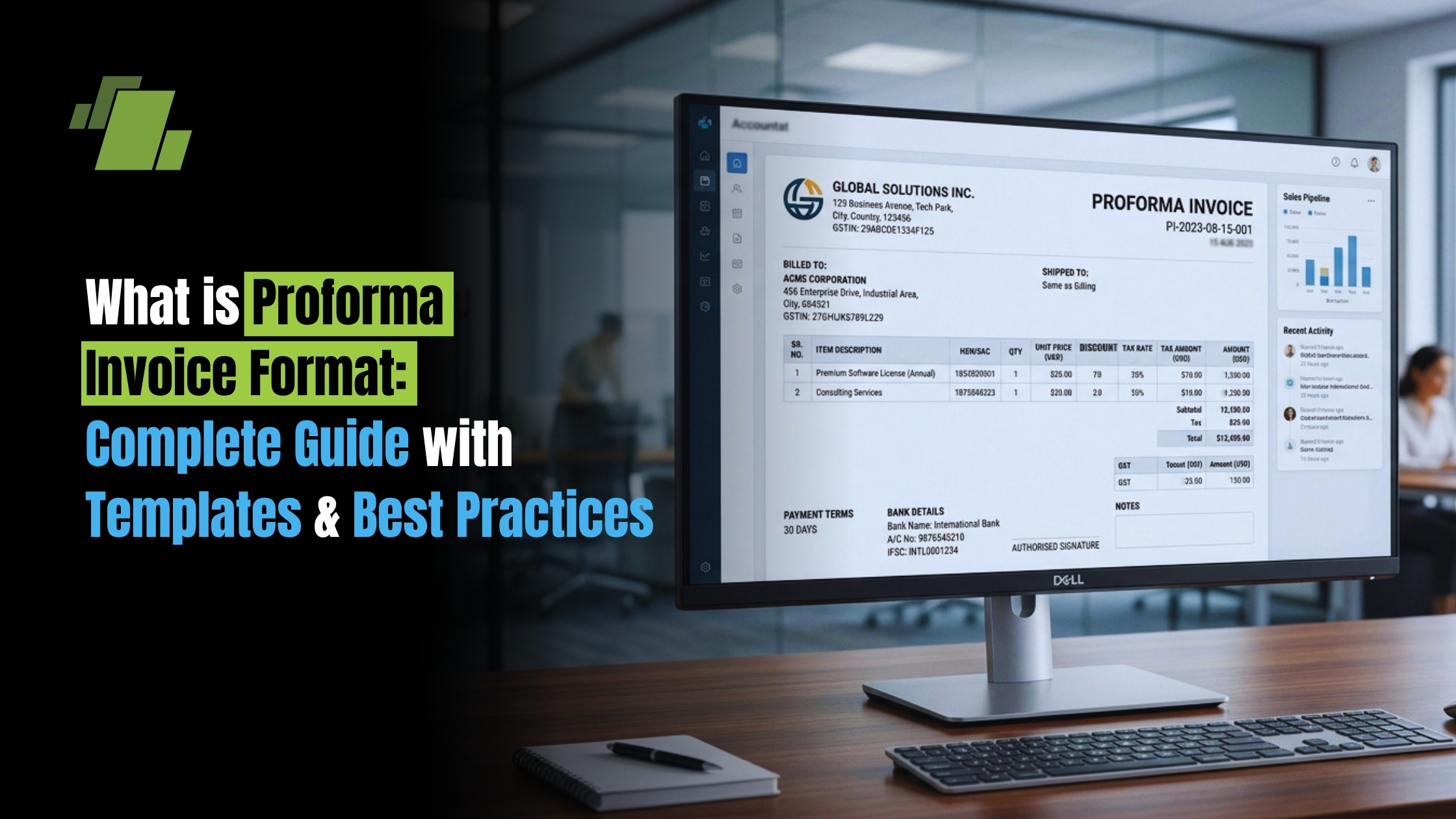
A proforma invoice format is the standardized structure that organizes essential transaction details seller information, buyer details, item descriptions, pricing, and terms into a preliminary document issued before goods or services are delivered. Using a proforma invoice template is crucial to ensure all essential details are included and to streamline compliance with business and regulatory requirements. This format serves as the foundation for creating professional proforma invoices that facilitate smooth business transactions, customs clearance, and internal approvals across domestic and international trade.
This guide covers everything you need to know about proforma invoice format requirements, from mandatory elements and regional compliance standards to industry-specific templates and implementation best practices. The content is designed for business owners managing international sales, accounting professionals handling accounts payable and accounts receivable, and procurement managers overseeing internal purchase approval workflows. Understanding proper proforma invoice format matters because formatting errors cause customs delays, payment rejections, and compliance issues that directly impact business operations and customer satisfaction.
Direct answer: A proforma invoice format is a structured template containing essential elements including business details, a unique proforma invoice number, issue date, validity period, detailed descriptions of goods or services, unit prices, applicable taxes, shipping costs, payment terms, and delivery date estimates all clearly labeled as a proforma invoice to distinguish it from a legally binding document. A proforma invoice is not legally binding; it serves as an estimate or quote and does not constitute a formal, enforceable agreement.
By the end of this guide, you will:
- Understand mandatory format requirements for creating proforma invoices across different jurisdictions
- Know how to build compliant templates that meet customs documentation and tax reporting standards
- Identify and avoid common formatting mistakes that cause delays in the sales process
- Learn how to streamline the transaction process from pro forma invoice to final invoice
- Implement format standardization using ERP systems like LOGIC ERP
Understanding Proforma Invoice Fundamentals
Before designing your proforma invoice format, you need to understand what distinguishes this preliminary document from other commercial documents and how its legal status affects formatting decisions. A proforma invoice is issued before the delivery of goods or services, providing a preliminary estimate to the buyer and facilitating transaction finalization; this is referred to as a proforma invoice issued.
Definition and Core Purpose
A proforma invoice is a preliminary document that provides an estimate of costs and is not legally binding, while a commercial invoice is a formal request for payment that is legally enforceable and issued after the delivery of goods or services. The proforma invoice format structures this preliminary bill to communicate estimated costs, transaction details, and terms before the actual transaction takes place.
The term “pro forma” means “as a matter of form” in Latin, indicating that while the document carries formal elements, it does not create payment obligations. A proforma invoice is typically issued before the final sale occurs, providing an estimate of costs and terms to ensure both parties are aligned before the transaction is finalized. This non-binding nature directly influences format requirements the document must be clearly labeled to prevent confusion with a standard invoice or tax invoice.
Legal and Regulatory Framework
A proforma invoice is not a legally binding document, meaning it does not obligate the buyer to make a payment or the seller to deliver goods or services. Since proforma invoices are not considered official sales invoices, they cannot be used for tax purposes and do not have legal standing in terms of VAT or GST. Proforma invoices can be cancelled at any time, as they are not legally enforceable and do not represent a finalized transaction.
However, format requirements vary significantly by jurisdiction:
- VAT/GST Jurisdictions: The proforma invoice format cannot substitute for a tax document when claiming input credits. Commercial invoices with proper tax identification numbers are required for tax reporting and accounting purposes.
- U.S. Customs (19 CFR 141.85): Proforma formats used for customs entry must include country of origin, detailed product descriptions, weights, and charges broken out separately.
- European Union: Formats require 8-digit HS codes, EORI numbers, and customs value calculations following CIF methodology.
- India/GST Regime: Proforma invoice formats must accommodate HSN or SAC codes, GSTIN numbers, and CGST/SGST/IGST breakdowns for international transactions.
Business Applications
The difference between a proforma invoice and a quote is important to understand: a quote is a preliminary estimate provided before a buyer commits to a purchase, while a proforma invoice is issued after the buyer has confirmed their intent to purchase. This distinction affects when specific format elements become necessary.
Proforma invoices are often used to request payment in advance, especially for international transactions or large orders, and they help secure letters of credit or funding agreements. They are particularly useful for customs purposes when exporting goods, as they provide necessary details about the shipment’s contents and estimated value.
Key business applications requiring standardized proforma invoice format include:
- International Trade: Importers need proforma invoices for customs clearance, import licenses, and foreign currency arrangements
- Internal Approvals: Budget authorization workflows require formal documentation of estimated costs before commitment
- Letters of Credit: Banks demand precise proforma formats that align exactly with LC terms
- Sample Shipments: Non-sale shipments require proforma formats to declare estimated value for customs documentation
Understanding these fundamentals establishes why specific format elements are mandatory versus optional in different business contexts.
Essential Elements of Proforma Invoice Format
Every professional proforma invoice format must include certain mandatory components while accommodating optional elements based on industry and regional requirements. Using a proforma invoice with proper formatting helps businesses streamline negotiations and keep both buyers and sellers aligned on expectations before finalizing a sale.
Header Section Requirements
The header establishes document identity and prevents confusion with a formal invoice or actual invoice:
Company Information Placement:
- Full legal company name and registered business address
- Tax identification numbers (VAT, GST, EIN, GSTIN as applicable)
- Contact details including phone, email, and website
- Company logo for brand recognition
Document Identification:
- Clear “PROFORMA INVOICE” label in prominent, large text
- Unique proforma invoice number (often prefixed like “PI-2026-XXX”)
- Issue date
- Validity period specifying how long pricing remains valid
Using a proforma invoice template helps ensure all required header elements are consistently included.
It is important to clearly label the document as a ‘pro forma invoice’ to distinguish it from a standard invoice, which is a legally binding document. This labeling prevents the document from being mistakenly processed as a tax invoice for accounting purposes.
Customer and Transaction Details
Accurate buyer information formatting ensures smooth progression from proforma to commercial document:
Buyer Information Requirements:
- Customer’s full legal name
- Billing address with complete postal details
- Shipping/delivery address if different from billing
- Buyer’s tax identification number where applicable
- Customer purchase order reference number
Currency and Payment Terms Placement:
- Currency specification using ISO codes (USD, EUR, INR)
- Payment terms (Net 30, advance payment, LC at sight)
- Bank details including SWIFT and IBAN codes for international transactions
- Exchange rate and conversion calculation if multiple currencies apply
Proforma invoices serve as a good-faith estimate, detailing the goods or services to be delivered, their prices, shipping information, and delivery dates, which helps avoid misunderstandings during the sales process.
Product and Service Specifications
The line item section requires the most detailed formatting to satisfy customs documentation, internal approvals, and LC compliance:
Item Description Format Standards:
- Sequential item numbers for easy reference
- Detailed descriptions sufficient for customs evaluation (model numbers, specifications, materials)
- HS codes for international trade (mandatory for customs clearance)
- Country of origin for each product
Quantity and Pricing Layout:
- Quantity with unit of measure
- Unit prices clearly stated
- Line item totals
- Subtotal, discounts, shipping costs, insurance, and packaging charges
- Applicable taxes (clearly noted as estimates)
- Grand total with currency specification
Weight and Packaging Information:
- Net weight and gross weight per item and total
- Number of packages
- Packaging type specifications
A pro forma invoice typically includes a unique identifier, date of issue, validity period, description of goods or services, subtotal, taxes, shipping charges, and the grand total. These elements ensure both the buyer and seller remain on the same page regarding all the details of the proposed transaction.
Detailed Format Requirements and Implementation
Building on the essential elements, this section provides systematic guidance for creating proforma invoice formats that meet professional standards and regional compliance requirements.
The amount listed on the proforma invoice often closely matches the final invoice amount, especially in import/export and customs contexts, helping both parties anticipate the total transaction value.
Step-by-Step Format Creation Process
A pro forma invoice should include essential details such as the issue date, contact information, product or service specifications, and estimated costs. Follow this structured approach:
- Set up document header with company branding and identification: Position your logo, company details, and tax numbers prominently. Add the “PROFORMA INVOICE” label in font size at least 50% larger than body text. Include your unique proforma invoice number and issue date.
- Configure customer information section with required fields: Create designated areas for buyer’s legal name, addresses, tax IDs, and contact details. Include fields for purchase order references and shipping details when the delivery address differs from billing.
- Design product/service table with proper calculations: Structure columns for item number, description, HS code (if applicable), quantity, unit of measure, unit price, and line total. Include rows for subtotal, shipping costs, insurance, applicable taxes, and final cost.
- Add terms, conditions, and signature areas: Include payment terms, Incoterms (FOB, CIF, DAP for international trade), delivery date estimates, and bank details. Provide space for authorized signatures on both parties’ copies.
- Include necessary disclaimers and validity statements: Add a clear statement that this document is a preliminary estimate, prices are subject to change, and the proforma invoice does not constitute a legally binding document. Specify the validity period after which terms may be revised.
Format Comparison Across Industries
Different industries require specialized proforma invoice format elements:
| Criterion | Manufacturing | Services | International Trade |
|---|---|---|---|
| Required Fields | Product specs, HS codes, gross/net weight, technical drawings reference | Service description, hourly rates, deliverables, milestones | Country of origin, Incoterms, export licenses, certificates |
| Documentation | Bill of materials, quality certifications | Scope of work attachment, project timelines | Packing list, insurance certificates, customs declarations |
| Special Requirements | Manufacturing lead times, packaging specifications | Milestone-based payment terms, hourly rate calculations | Customs valuation methods (CIF/FOB), dual currency display |
| Description Detail Level | Model numbers, specifications, materials, voltage/capacity | Hourly breakdowns, deliverable descriptions, duration | Detailed enough for customs classification without ambiguity |
For manufacturing exports, descriptions like “Wireless Bluetooth headphones model XB-400, lithium-ion battery capacity 500mAh, voltage 3.7V” satisfy customs requirements. Service formats emphasize hourly rates, project milestones, and deliverable specifications rather than physical goods details.
LOGIC ERP provides industry-specific proforma invoice templates with built-in compliance for HS codes, GST/VAT identification, Incoterms, and regional customs fields eliminating manual configuration for each industry type.
Common Format Challenges and Solutions
Even experienced businesses encounter proforma invoice format issues that delay customs clearance, cause payment rejections, or create compliance problems. Unlike proforma invoices, which serve as estimates and are not legally binding, standard invoices are detailed records of completed transactions and obligate the buyer to pay the specified amount making accurate proforma formatting critical before progressing to the final invoice.
1. Inconsistent Format Standards
When different departments or team members create proforma invoices using varying formats, it creates confusion for both the buyer and internal teams, damages professional appearance, and complicates the transaction process.
Solution: Implement standardized templates across all departments using ERP systems like LOGIC ERP that enforce consistent formatting. Train staff on proper usage and establish approval workflows that verify format compliance before the proforma invoice is issued to customers.
2. Missing Critical Information
Proforma invoices lacking HS codes, country of origin, weight specifications, or proper currency designations cause customs delays, bank rejections for letters of credit, and customer requests for revised documents.
Solution: Create mandatory field checklists integrated into your invoicing workflow. LOGIC ERP systems include built-in validation that prevents document generation when required fields are empty, ensuring all the details needed for customs clearance and banking compliance are present before sending.
3. Currency and Tax Calculation Errors
Mixing currencies within a single proforma, calculation errors in totals, or incorrect tax rate applications create discrepancies between proforma and final invoice amounts, damaging customer satisfaction and creating accounting issues. Ensuring that the proforma invoice closely matches the final invoice amount is crucial to prevent confusion and disputes, especially in import/export and customs processes.
Solution: Automate calculations using reliable software with maintained exchange rates. Configure tax engines that automatically apply correct rates based on transaction type (domestic vs. export) and destination. LOGIC ERP supports multi-currency handling and automatic tax calculations for GST invoice compliance in India and VAT requirements in EU transactions.
4. International Compliance Issues
Each destination country has specific format requirements for customs purposes. Documents prepared without researching these requirements face rejection or delay, impacting international sales timelines.
Solution: Research destination country requirements before creating proforma invoices for new markets. Maintain country-specific format templates with pre-configured fields for regional compliance. LOGIC ERP supports localized compliance for U.S., EU, India, and other major trading regions, automatically including region-specific mandatory fields.
5. Misalignment with Letter of Credit Terms
When proforma invoice details don’t precisely match LC terms including exact spelling of company names, product descriptions, and quantities banks reject the documents, delaying immediate payment.
Solution: Before issuing proforma invoices that will support LC applications, verify every detail matches the LC terms exactly. Use ERP systems that maintain version control and audit trails, ensuring the proforma invoice used for LC application matches what becomes the commercial invoice after the buyer accepts and goods ship.
Addressing these challenges ensures your proforma invoice format supports rather than hinders business operations and the sales process.
Why should businesses choose LOGIC ERP for managing their proforma invoice formats and ensuring compliance across industries?
Businesses should choose LOGIC ERP for managing their proforma invoice formats and ensuring compliance across industries because it offers industry-specific templates that automatically include mandatory fields such as HS codes, tax identification numbers, and shipping details. LOGIC ERP supports multi-currency transactions, automates tax calculations, and validates all required information to prevent errors that could delay customs clearance or payment processing. Its standardized format enforcement and audit trail capabilities streamline the transition from proforma to commercial invoices, ensuring regulatory compliance and operational efficiency. This makes LOGIC ERP a comprehensive solution for businesses handling domestic and international sales, reducing risks and improving transaction accuracy.
Conclusion and Next Steps
Proper proforma invoice format is essential for efficient business transactions, customs documentation, and compliance across jurisdictions. A well-structured format ensures both parties understand estimated costs, delivery dates, and payment terms before the actual sale occurs, while preventing the document from being confused with a formal invoice or tax document.
A proforma invoice serves as a preliminary estimate and is used primarily for negotiation purposes, rather than as a formal request for payment. Understanding this distinction and implementing format standards that clearly communicate it protects your business from compliance issues while streamlining the path from detailed estimate to final bill.
Immediate next steps:
- Download proforma invoice format templates appropriate for your industry (manufacturing, services, or international trade)
- Customize templates with your company details, tax identification numbers, and branding
- Train your team on format standards, mandatory fields, and regional compliance requirements
- Implement quality checks using ERP systems like LOGIC ERP that validate required fields before document generation
- Establish conversion workflows that seamlessly progress proforma invoices to commercial invoices while maintaining audit trails
For businesses managing high volumes of international transactions, implementing LOGIC ERP provides industry-ready proforma invoice templates with automated HS code lookup, multi-currency support, tax calculation engines, and conversion from proforma to commercial document ensuring accounts receivable processes flow smoothly from initial estimate through final transaction.
Related topics worth exploring include commercial invoice format requirements for converting your proforma into legally binding documents, international shipping documentation standards for comprehensive trade compliance, and automated invoicing systems for scaling your business operations efficiently.

Call at +91-73411-41176/75 or send us an email at sales@logicerp.com to book a free demo today!
Frequently Asked Questions
1. What Is the Difference Between Proforma Invoice Format and Commercial Invoice Format?
A proforma invoice is a preliminary document providing estimated costs, while a commercial invoice is the actual invoice issued after delivery that constitutes a formal request for payment. Format differences include: proforma invoices must be clearly labeled as “proforma” and include validity periods for pricing, while commercial invoices require sequential invoice numbers for accounting purposes, constitute a legal document for tax reporting, and trigger entries in accounts payable systems. The commercial invoice format also requires final quantities, actual prices (not estimates), and serves as the basis for customs valuation and duty calculation.
2. Are there Specific Format Requirements for International Proforma Invoices?
Yes. International proforma invoices require additional format elements including HS codes for product classification, country of origin declarations, Incoterms specifying shipping responsibility, gross and net weights, number of packages, and detailed descriptions sufficient for customs evaluation. EU imports require 8-digit CN codes and EORI numbers. U.S. customs entries (19 CFR 141.85) require charges broken out separately. Indian exports require HSN codes and GSTIN compliance. Always research destination country requirements when creating proforma invoices for new international transactions.
3. Can I Customize Proforma Invoice Format For My Industry?
Yes, provided you maintain core format integrity with mandatory elements. Manufacturing formats should emphasize technical specifications, HS codes, weights, and packaging details. Service industry formats can omit physical goods fields but must include detailed service descriptions, hourly rates, project milestones, and deliverable specifications. Any customization should preserve clear “proforma invoice” labeling, document identification, complete seller and buyer information, itemized pricing, and terms ensuring the document remains recognizable as a professional proforma invoice across business transactions.
4. What Software Can Help Create Standardized Proforma Invoice Formats?
ERP systems like LOGIC ERP provide comprehensive proforma invoice management including industry-specific templates, mandatory field validation, multi-currency support, automated tax calculations, and conversion workflows from proforma to commercial invoice. LOGIC ERP enforces format consistency across departments, maintains audit trails, validates HS codes and tax rates, and supports regional compliance requirements for international trade. Other options include dedicated invoicing platforms, accounting software with template capabilities, and free proforma invoice generator tools though these may lack the validation and workflow features that prevent formatting errors.
5. How Often Should I Update My Proforma Invoice Format?
Review your proforma invoice format quarterly for regulatory compliance updates and annually for comprehensive revision. Immediate updates are required when tax regulations change (new GST rates, VAT rules), customs requirements evolve (updated HS code structures), your business adds products or services requiring different format elements, or you expand into new geographic markets with specific compliance requirements. ERP systems like LOGIC ERP simplify this process by centralizing template management and providing regulatory update notifications that prompt format revisions when needed.
6. What Is the Best Proforma Invoice Format to Use?
The best proforma invoice format clearly outlines all transaction details, including seller and buyer information, item descriptions, pricing, taxes, and terms. It should be professional, easy to understand, and adaptable to your business needs.
7. Can I Download a Proforma Invoice Format in Excel Or Word?
Yes, you can find free proforma invoice format downloads in Excel and Word formats online, which are customizable to fit specific industries or regional compliance requirements.
8. How Do I Create a Proforma Invoice Format for Export?
An export proforma invoice format must include detailed product descriptions, country of origin, HS codes, shipping terms, and estimated costs to meet international trade and customs requirements.
9. Is There a Proforma Invoice Format Compliant With GST?
Yes, GST proforma invoice formats include GSTIN numbers, HSN or SAC codes, tax breakdowns (CGST, SGST, IGST), and are designed to comply with GST regulations, especially in India.
10. Where Can I Find a Proforma Invoice Format for Services?
Proforma invoice formats for services focus on detailed descriptions of the services provided, hourly rates or fixed fees, payment terms, and any additional costs related to service delivery.
11. Can I Get a Free Proforma Invoice Format in Excel With GST Included?
Free downloadable proforma invoice formats in Excel with GST fields are widely available and include sections for tax calculations, invoice numbers, and payment terms to ensure compliance.
12. What Should Be Included in a Proforma Invoice Format for Advance Payment?
This format should specify the advance payment amount, payment terms, validity period, and clearly state that it is a proforma invoice, not a final tax invoice.
13. Is There a Standard Proforma Invoice Format Used Internationally?
Yes, international proforma invoice formats typically include currency codes, Incoterms, detailed product information, and customs-required data such as HS codes and country of origin.
14. How Do I Download a Proforma Invoice Format in Word for India?
You can download India-specific proforma invoice formats in Word that incorporate GST compliance, company details, and regional tax information from trusted business template websites.
15. What Is a Simple Proforma Invoice Format?
A simple proforma invoice format includes basic seller and buyer information, a list of goods or services with prices, estimated taxes, and a clear label stating it is a proforma invoice.
16. Can I Use a Proforma Invoice Format In PDF?
Yes, proforma invoice formats are often available in PDF for easy sharing and printing, ensuring the document’s layout remains consistent across devices.
17. Does a Proforma Invoice Format Need to Include Terms and Conditions?
Including terms and conditions in your proforma invoice format helps clarify payment terms, delivery schedules, cancellation policies, and other important contractual details.
18. What Is the Difference Between a Proforma Invoice Format and a Quotation Format?
A quotation format provides an initial price estimate and is flexible, while a proforma invoice format is more detailed, issued after buyer commitment, and outlines estimated costs and terms before final invoicing.
19. Are There Proforma Invoice Formats Available for Specific Industries Like Hotels or Travel Agencies?
Yes, industry-specific proforma invoice formats exist for sectors like hotels and travel agencies, tailored to include relevant service descriptions, taxes, and additional costs.
20. Can I Edit a Proforma Invoice Format to Suit My Business Needs?
Most proforma invoice formats are editable, allowing businesses to customize fields such as company logos, payment terms, item descriptions, and additional costs to fit their requirements.
21. Is a Proforma Invoice Legally Binding?
A proforma invoice is not legally binding. It serves as a preliminary document outlining estimated costs and terms before the final sale. It does not obligate the buyer to make a payment or the seller to deliver goods or services, distinguishing it from a final invoice or commercial invoice.
22. What is the Difference Between a Proforma Invoice and a Commercial Invoice?
The main difference between a proforma invoice and a commercial invoice lies in their purpose and timing. A proforma invoice provides estimated costs and terms before the sale, mainly for negotiation and customs clearance. A commercial invoice is a legally binding document issued after goods or services have been delivered, serving as a formal request for payment in business transactions.
23. What Details Should a Proforma Invoice Include in its Format?
A proper proforma invoice format should include the invoice number (unique identifier), issue date, buyer and seller information, detailed descriptions of goods or services, estimated costs including taxes and shipping, payment terms, and validity period. Clearly labeling the document as a proforma invoice helps avoid confusion with a final invoice.
24. How Does a Proforma Invoice Facilitate Customs Clearance in International Trade?
Proforma invoices play a vital role in customs clearance by providing customs authorities with estimated values, detailed descriptions of goods, country of origin, and shipping information. This helps in assessing duties and taxes accurately and expedites the import/export process.
25. Can I Use a Free Proforma Invoice Generator to Create My Invoice?
Yes, free proforma invoice generators are available online to help businesses create professional proforma invoices quickly. These tools typically include customizable templates that incorporate essential elements such as estimated costs, invoice format standards, and business transaction details, streamlining the invoicing process.
26. When Should I Issue a Final Invoice After a Proforma Invoice?
A final invoice should be issued after the delivery of goods or services, reflecting actual costs and quantities. Unlike the proforma invoice, the final invoice is legally binding and includes a formal invoice number for accounting and payment purposes in business transactions.
27. Why is the Invoice Number Important in Proforma and Final Invoices?
The invoice number serves as a unique reference that helps both the seller and buyer track and manage invoices efficiently. While proforma invoices have a reference number for identification, final commercial invoices require sequential invoice numbers to comply with accounting and tax regulations.
28. How Does a Proforma Invoice Help in Managing Estimated Costs for Business Transactions?
A proforma invoice provides a clear estimate of costs including product prices, taxes, shipping, and other charges before the transaction is finalized. This transparency helps both parties align expectations, budget accordingly, and reduce disputes in business transactions.
29. What Role Does the Proforma Invoice Format Play in International Trade?
The proforma invoice format ensures that all necessary details such as product descriptions, estimated costs, currency, and shipping terms are clearly communicated. This standardization is essential for smooth international trade, aiding in customs clearance, regulatory compliance, and payment processing.
30. How Can I Distinguish Between a Proforma Invoice and Other Documents In Business Transactions?
A proforma invoice is clearly labeled as such and is used as a preliminary estimate before the sale. It differs from quotes, estimates, and commercial invoices by its timing, purpose, and lack of legal enforceability. Understanding these differences helps avoid confusion in business transactions.
31. What are the Key Components to Include in A Proforma Invoice Format for Goods or Services?
A proforma invoice format for goods or services should clearly detail all essential information to ensure transparency and avoid misunderstandings. Key components include a unique proforma invoice number, issue date, and validity period. Seller and buyer information must be complete, including legal names, addresses, and tax identification numbers where applicable. The document should itemize goods or services with detailed descriptions, quantities, unit prices, and total costs. For goods, include HS codes, country of origin, packaging details, and weight specifications. Taxes, shipping charges, payment terms, and delivery date estimates should also be clearly stated. Importantly, the document must be labeled as a “proforma invoice” to distinguish it from a legally binding invoice. This structured format facilitates smooth business transactions, customs clearance, and internal approvals.

Author
Gurbir Singh
Co-founder & Managing Director | LOGIC ERP Solutions Pvt. Ltd.
With 30+ years of experience in the tech industry, I took the helm of technology & product development, ensuring LOGIC ERP’s continuous innovation & leadership in the evolving tech landscape.