The Characteristics of an Ideal ERP Software for Wholesale Distribution

Summary
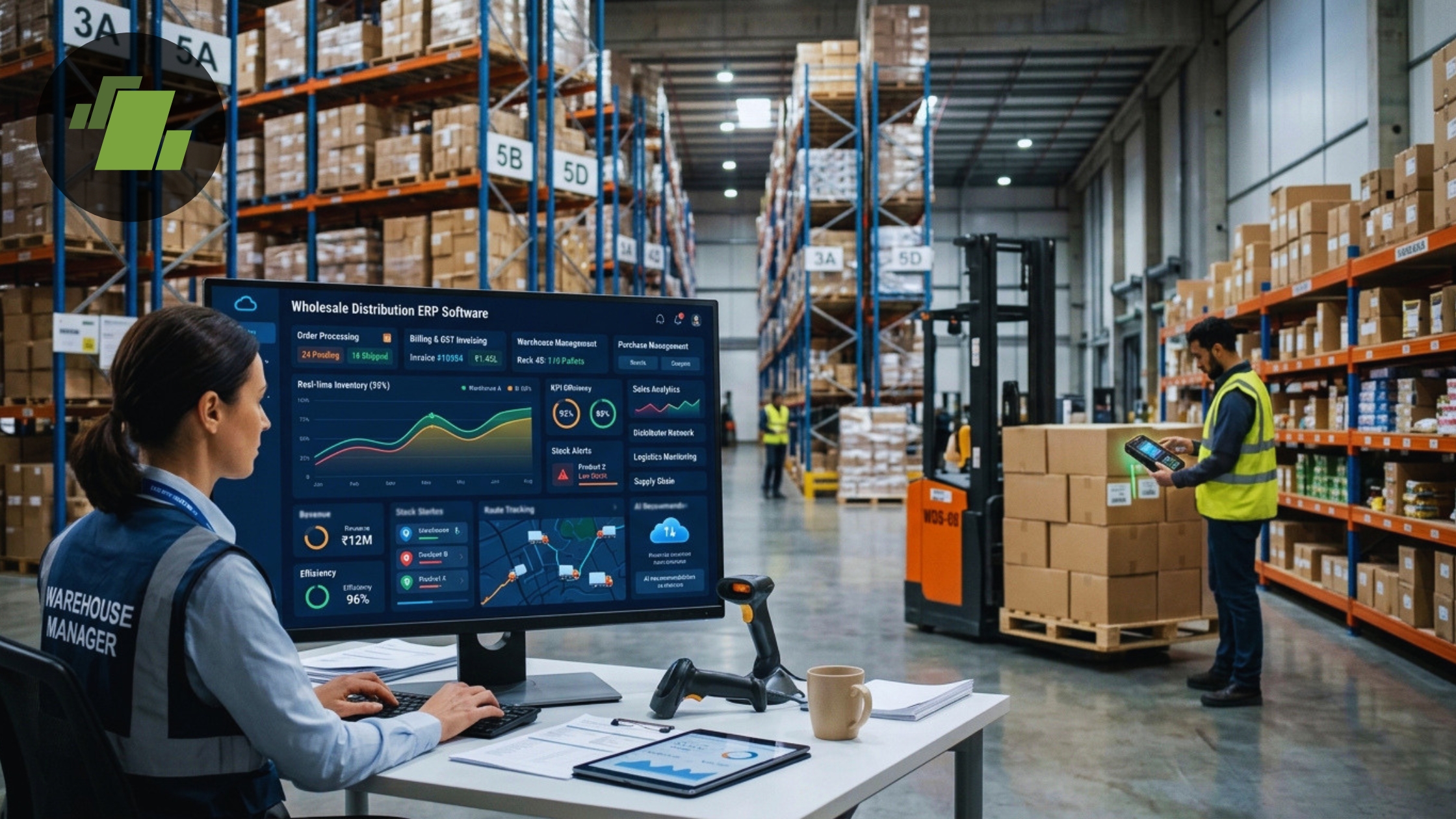
Discover the important features of ERP software for wholesale distribution, including inventory management, supply chain automation, sales, finance, warehousing, and real-time analytics. Learn how wholesale distribution ERP software improves efficiency, accuracy, and business growth.
Contact Us
Free Demo Request
Introduction
In today’s rapidly changing business environment, wholesale distribution companies are expected to operate with speed, accuracy, and efficiency while managing increasingly complex supply chains and customer demands. The wholesale distribution sector serves as a crucial connection between manufacturers, suppliers, retailers, and end customers, making operational efficiency essential for business success. Even minor disruptions in inventory, procurement, logistics, or order fulfillment can impact customer satisfaction, profitability, and overall business performance.
As businesses continue to grow and customer expectations evolve, traditional methods of managing operations through spreadsheets or disconnected software systems are no longer effective. Modern wholesale distributors require a centralized solution capable of managing every aspect of the business in a streamlined and organized manner. This is where ERP (Enterprise Resource Planning) software plays a vital role.
ERP software helps wholesale distributors integrate core business processes such as inventory management, procurement, sales, finance, warehousing, logistics, and reporting into a single unified platform. By connecting departments and automating workflows, ERP systems eliminate operational silos, improve visibility, reduce manual errors, and enable businesses to make faster and more informed decisions.
Today, ERP software has become much more than an operational tool. It has evolved into a strategic business solution that helps wholesale distributors improve efficiency, optimize inventory, strengthen supply chain management, and achieve long-term business growth.
Why ERP Software is Important for Wholesale Distribution
Wholesale distribution businesses handle large volumes of products, multiple suppliers, diverse customer requirements, and high transaction frequencies on a daily basis. Managing these operations manually can create challenges such as inventory mismatches, delayed deliveries, financial inaccuracies, and poor coordination between departments.
ERP software helps businesses overcome these challenges by centralizing business operations and providing real-time visibility into every process. With a modern ERP system, businesses can efficiently monitor inventory movement, streamline procurement, improve warehouse management, automate accounting processes, and ensure timely order fulfillment.
The ability to access accurate real-time data allows management teams to make strategic decisions quickly and respond effectively to market changes. This improved visibility also helps businesses maintain better control over operations while reducing operational costs and improving customer service.
Inventory Management
Inventory management is one of the most critical functions in the wholesale distribution industry. Maintaining the right stock levels is essential to ensure uninterrupted business operations and customer satisfaction. Overstocking increases storage costs and blocks working capital, while stock shortages can lead to missed sales opportunities and dissatisfied customers.
ERP software provides advanced inventory management capabilities that allow businesses to track stock movement in real time across multiple warehouses and locations. The system automatically updates inventory levels whenever purchases, sales, transfers, or returns occur, ensuring inventory accuracy at all times.
Modern ERP solutions also support features such as batch tracking, expiry management, barcode integration, and automated reorder alerts. These capabilities help businesses optimize inventory levels, reduce wastage, improve stock visibility, and ensure faster order fulfillment.
With accurate inventory information readily available, businesses can make better purchasing decisions, improve stock planning, and reduce the risk of inventory-related errors.
Supply Chain Management
The supply chain is the backbone of every wholesale distribution business. Efficient coordination between procurement, warehousing, transportation, and delivery operations is essential for maintaining smooth business operations and meeting customer expectations.
ERP software helps businesses streamline and optimize the entire supply chain process by providing centralized visibility into procurement activities, supplier performance, logistics operations, and inventory movement. Businesses can monitor the flow of goods from suppliers to warehouses and ultimately to customers through a single integrated platform.
This enhanced transparency helps businesses identify bottlenecks, improve supplier relationships, optimize transportation planning, and reduce delays in deliveries. ERP systems also help automate procurement processes, ensuring timely purchasing decisions and better coordination with vendors.
By improving supply chain efficiency, ERP software enables wholesale distributors to reduce operational costs, improve delivery timelines, and enhance overall customer satisfaction.
Sales and Customer Management
Managing sales operations efficiently is crucial for wholesale distributors dealing with large order volumes, customer-specific pricing structures, and multiple sales channels. ERP software simplifies and automates the complete sales process, allowing businesses to manage customer interactions more effectively.
The system helps businesses process sales orders quickly, manage quotations, track customer purchase history, monitor outstanding payments, and maintain accurate pricing structures. By centralizing customer data, ERP software provides sales teams with complete visibility into customer preferences, buying patterns, and transaction history.
This allows businesses to offer better customer service, improve response times, and build stronger long-term relationships with customers. ERP software also helps management analyze sales performance and forecast future demand, enabling businesses to make better strategic decisions.
Improved sales visibility and customer management ultimately contribute to increased customer satisfaction and higher profitability.
Financial Management
Financial management is another critical area where ERP software delivers significant value to wholesale distribution businesses. Managing finances manually across multiple departments and branches can lead to inaccuracies, delayed reporting, and compliance challenges.
ERP software integrates financial operations with sales, procurement, inventory, and warehouse management, providing businesses with a centralized and accurate view of their financial health. The system automates accounting processes such as accounts payable, accounts receivable, tax calculations, budgeting, and bank reconciliations.
With real-time financial reporting and automated workflows, businesses can monitor cash flow, track profitability, manage expenses, and ensure compliance with taxation and financial regulations more effectively.
ERP software also provides detailed financial analytics and audit trails, helping management maintain transparency and improve financial decision-making.
Warehouse Management
Efficient warehouse management is essential for maintaining inventory accuracy and ensuring smooth order fulfillment operations. In wholesale distribution, poor warehouse management can result in misplaced inventory, delayed shipments, and increased operational costs.
ERP software helps businesses optimize warehouse operations by improving inventory tracking, stock movement visibility, and order processing efficiency. Advanced ERP systems support barcode scanning, bin management, stock transfers, and automated picking and packing processes.
By streamlining warehouse operations, ERP software helps businesses reduce manual handling errors, improve inventory accuracy, and speed up dispatch processes. This leads to faster deliveries, better customer service, and improved operational efficiency.
Business Intelligence and Analytics
In today’s data-driven business environment, access to accurate and real-time information is essential for making informed decisions. ERP software includes advanced reporting and analytics capabilities that help businesses convert operational data into meaningful business insights.
The system provides real-time dashboards, sales reports, inventory analysis, financial summaries, and performance metrics that help management monitor business operations effectively. Businesses can analyze trends, identify inefficiencies, monitor profitability, and forecast future demand more accurately.
These insights enable organizations to make proactive decisions, improve operational planning, and respond quickly to market changes. Business intelligence tools also help businesses identify growth opportunities and improve overall business performance.
Integration Capabilities
Wholesale distribution businesses often use multiple software systems for eCommerce, logistics, CRM, barcode management, and third-party applications. Managing disconnected systems can create data inconsistencies and operational inefficiencies.
ERP software provides seamless integration capabilities that allow businesses to connect different applications and ensure smooth data flow across departments. Integrated systems eliminate duplicate data entry, improve accuracy, and enhance operational coordination.
With centralized information available across all business functions, businesses can improve productivity, streamline communication, and create a more connected operational environment.
Mobility and Cloud Accessibility
Modern businesses require flexibility and remote accessibility to manage operations effectively. ERP software with mobile and cloud capabilities enables users to access business information anytime and from any location.
Sales teams, warehouse staff, managers, and executives can monitor reports, approve transactions, track inventory, and manage operations remotely through mobile devices. This flexibility improves productivity, enhances collaboration, and enables faster decision-making.
Cloud-based ERP solutions also provide scalability, data security, and reduced infrastructure costs, making them an ideal solution for growing wholesale distribution businesses.
Customization and Scalability
Every wholesale distribution business operates differently, with unique workflows, product categories, and operational requirements. ERP software should be flexible enough to adapt to specific business needs while supporting future growth.
Modern ERP systems offer customization options that allow businesses to configure workflows, reports, dashboards, and user interfaces according to operational requirements. This flexibility ensures the ERP solution aligns perfectly with business processes.
Scalability is equally important for growing businesses. As operations expand, ERP software should be capable of handling increasing transaction volumes, additional warehouses, new branches, and larger customer databases without affecting system performance.
A scalable ERP solution supports long-term business growth and ensures businesses can adapt to changing market demands efficiently.
Conclusion
ERP software has become an essential technology solution for the wholesale distribution industry. As businesses face increasing operational complexity, customer expectations, and market competition, the need for integrated and intelligent business management systems continues to grow.
By centralizing inventory management, supply chain operations, sales, finance, warehousing, and analytics into a single platform, ERP software helps wholesale distributors improve efficiency, reduce operational errors, enhance visibility, and make smarter business decisions.
LOGIC ERP systems provide the automation, scalability, flexibility, and real-time insights needed to streamline operations and support sustainable business growth. Businesses that invest in the right ERP solution can improve profitability, strengthen operational control, enhance customer satisfaction, and achieve long-term success in the competitive wholesale distribution market.
Call at +91-73411-41176/75 or send us an email at sales@logicerp.com to book a free demo today!
Frequently Asked Questions (FAQs)
Q1. Why is ERP software important for wholesale distribution businesses?
ERP software helps wholesale distributors streamline and automate critical business operations such as inventory management, procurement, sales, finance, warehousing, and supply chain management. It improves operational efficiency, reduces manual errors, enhances inventory accuracy, and provides real-time business visibility for better decision-making.
Q2. How does ERP software improve inventory management?
ERP software provides real-time inventory tracking across multiple warehouses and locations. It helps businesses maintain optimal stock levels, avoid overstocking and stock shortages, automate stock updates, manage batch and expiry tracking, and improve overall inventory accuracy and order fulfillment efficiency.
Q3. Can ERP software help manage multiple warehouses and branches?
Yes, modern ERP solutions are designed to support multi-warehouse and multi-branch operations. Businesses can monitor inventory movement, stock transfers, sales, procurement, and financial data across all locations through a centralized system, ensuring better operational control and coordination.
Q4. Is ERP software customizable for different wholesale distribution businesses?
Yes, ERP software can be customized based on business requirements. Businesses can configure workflows, reports, dashboards, approval processes, pricing structures, and user permissions according to their operational needs, making the system flexible and scalable for different industries and business sizes.
Q5. What are the major benefits of implementing ERP software in wholesale distribution?
Implementing ERP software helps businesses improve operational efficiency, optimize inventory management, strengthen supply chain visibility, automate financial processes, improve customer service, reduce operational costs, and gain real-time business insights. It also supports long-term scalability and business growth.