What is Distribution Management Software? Features, Benefits & Use Cases (2026 Guide)

Summary
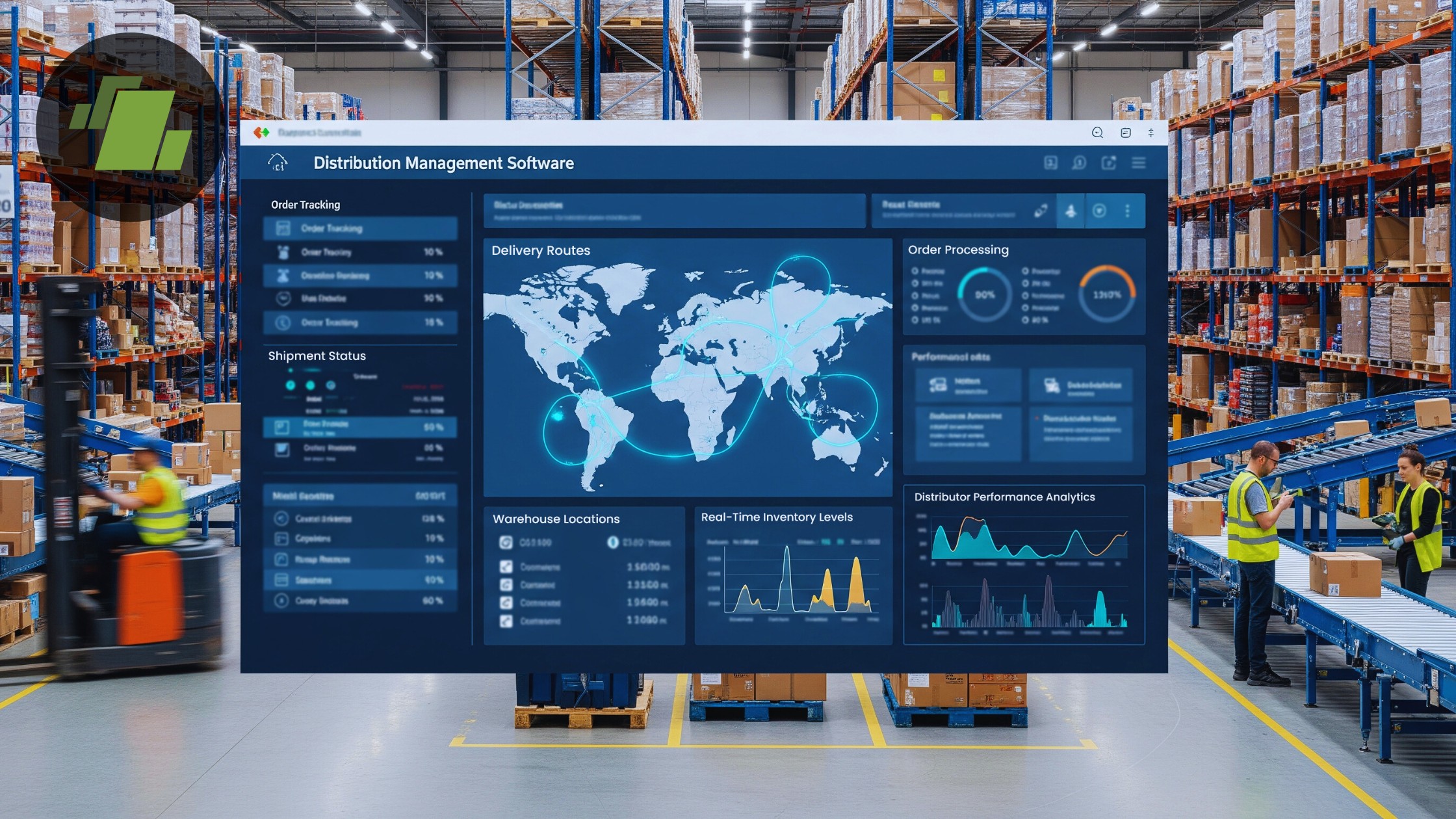
This article explains what distribution management software is and why it is essential for modern distribution businesses in 2026. It covers key features, benefits, use cases across industries, cloud vs traditional systems, AI-driven trends, and guidance on choosing the best distribution management system to improve efficiency, visibility, and scalable growth.
Introduction
In 2026, distribution businesses are operating in a hyper-competitive, data-driven, and customer-centric environment. The distribution management software has become an integral part of digital transformation.
Advanced distributor management software implementation helps distributors automate operations, gain real-time visibility, and scale efficiently across complex supply chains. From inventory and order processing to GST compliance and analytics, distribution software is now the backbone of successful distribution businesses worldwide.
This guide explains everything you need to know about distribution management software, its meaning, features, benefits, use cases, and future trends, so you can make informed decisions in 2026 and beyond.
What is Distribution Management Software?
Definition of Distribution Management Software
Distribution management software is an ERP solution that helps to manage, automate, and optimize the entire distribution lifecycle, from procurement and inventory to sales, billing, and delivery.
In simple terms, the distribution management system definition refers to a centralized platform that enables businesses to control distributor operations, track stock movement, manage orders, and monitor distributor performance in real time.
In simple words, if you are asking about “what is distribution management software,”it is the ERP solution that connects manufacturers, distributors, warehouses, sales teams, and retailers into one unified ecosystem.
How Distribution Management Software Works
A modern distribution platform supports the complete distributor management process, ensuring smooth end-to-end distribution management.
Key workflows include:
- Inventory synchronization across warehouses
- Automated order capture from sales teams and retailers
- Real-time pricing, schemes, and discounts
- Billing, invoicing, and tax compliance
- Credit control and outstanding tracking
- Delivery and fulfillment monitoring
- Analytics and reporting dashboards
Distribution Management Software vs Distributor Management Software
While often used interchangeably, there is a subtle difference:
- Distribution management software focuses on the overall distribution network, including warehouses, logistics, inventory, and fulfillment.
- Distributor management software emphasizes distributor sales, retailer relationships, order booking, and credit management.
Key Features of Distribution Management Software
The top features of distribution management software include inventory control, order management, billing, credit management, and real-time reporting to streamline distributor operations. These features work together to automate workflows, improve visibility, and enhance efficiency across the entire distribution network. Let’s discuss in detail:
Inventory Management & Stock Control
Advanced inventory management for distributors ensures accurate stock tracking across warehouses and locations. Features include:
- Batch and expiry tracking
- FIFO/LIFO handling
- Real-time stock visibility
- Low-stock and overstock alerts
Order Management & Order Processing
An intelligent order management system for distributors streamlines the order lifecycle with:
- Mobile and web-based order entry
- Automated order processing
- Real-time pricing and promotions
- Order-to-invoice automation
Sales Force & Distributor Management
Effective distributor sales management includes:
- Beat planning and route optimization
- Retailer visit tracking
- Scheme and incentive management
- Sales force automation for distributors
Multi-Warehouse & Multi-Location Management
Designed for scale, modern systems support:
- Warehouse management for distributors
- Inter-warehouse stock transfers
- Multi-location distribution management with centralized control
Billing, Invoicing & GST Compliance
A GST-ready distribution management software simplifies compliance with:
- Automated tax calculations
- E-invoicing and e-way bill support
- Integrated distributor billing software
Credit Control & Outstanding Management
Powerful distributor credit management tools help businesses:
- Set credit limits by distributor or retailer
- Track dues with aging analysis
- Improve accounts receivable for distributors
Reporting, Analytics & Business Intelligence
Built-in distribution analytics deliver:
- Sales and margin insights
- Distributor performance reports
- Demand forecasting and trend analysis
Integration with ERP, Accounting & CRM
Seamless distribution management software integration allows:
- ERP synchronization
- Accounting automation
- CRM alignment
- Unified workflows using ERP for distributors
Benefits of Using Distribution Management Software
The benefits of distribution management software include improved inventory accuracy, faster order fulfillment, better cash flow control, and higher productivity across the distribution network, delivering measurable distributor management software benefits for growing businesses.
Improved Inventory Accuracy & Reduced Stock Losses
Distribution management software provides real-time inventory tracking across warehouses and locations, eliminating errors and stock discrepancies. With batch tracking, expiry management, and automated stock updates, businesses can significantly reduce stock losses, pilferage, and dead inventory.
Faster Order Fulfillment & On-Time Delivery
Automated order processing ensures that orders move seamlessly from booking to dispatch without delays. Real-time stock availability, smart allocation, and route planning help distributors fulfill orders faster and achieve consistent on-time deliveries.
Better Cash Flow & Working Capital Management
Integrated billing, credit control, and outstanding management enable distributors to track receivables accurately and reduce payment delays. By improving collections and optimizing inventory levels, businesses can maintain healthier cash flow and better working capital utilization.
Increased Distributor & Retailer Productivity
Sales teams, distributors, and retailers benefit from automated workflows, mobile access, and reduced manual tasks. This allows them to focus more on sales and customer relationships, improving overall productivity and market reach.
Centralized Control Across Distribution Network
A centralized distribution management system provides complete visibility into inventory, sales, orders, and performance across all locations. Decision-makers can monitor operations in real time and maintain control over complex distribution networks from a single dashboard.
Data-Driven Decision Making
Advanced analytics and reporting tools convert operational data into actionable insights. With accurate sales trends, demand forecasts, and distributor performance reports, businesses can make informed, strategic decisions that drive growth and profitability.
Use Cases of Distribution Management Software
1. FMCG Distribution Management Software
FMCG distributor software helps to manage high-volume, fast-moving SKUs with real-time inventory visibility and rapid order processing. It helps FMCG distributors control stock rotation, manage schemes, and ensure efficient last-mile delivery across large retail networks.
2. Pharmaceutical Distributor Management Software
Pharma distribution software enables pharmaceutical distributors to maintain strict batch tracking, expiry management, and regulatory compliance. It ensures accurate inventory control, traceability, and adherence to industry standards while reducing risks of expired or non-compliant stock.
3. Apparel & Footwear Distribution Management
Apparel distributor software efficiently manages complex product variants such as size, color, style, and season across multiple sales channels. It improves inventory accuracy, demand forecasting, and order fulfillment for fashion and footwear distribution businesses.
4. Electronics & Consumer Durables Distribution
Electronics distribution software supports serial number tracking, warranty management, and after-sales service workflows. It helps distributors manage high-value products, returns, and service coordination while maintaining complete product traceability.
5. Wholesale & B2B Distribution Businesses
A wholesale distribution management system is built for bulk order handling, tiered pricing, contract-based sales, and advanced credit control. It enables wholesale and B2B distributors to streamline large transactions, manage receivables, and scale operations efficiently.
Who Should Use Distribution Management Software?
Manufacturers with Distributor Networks
A distributor management system for manufacturers helps manage distributor networks, monitor secondary sales, control inventory movement, and improve visibility across multiple distributors and territories.
Regional & National Distributors
A distributor management system for regional and national distributors enables centralized control over multi-location operations, real-time stock visibility, efficient order processing, and performance tracking across regions.
Wholesale & Trade Businesses
A distributor management system for wholesale and trade businesses streamlines bulk order management, pricing control, credit management, and customer segmentation for smoother B2B distribution operations.
Growing SMEs & Enterprise Distributors
A distributor management system for growing SMEs and enterprise distributors supports scalability, automation, and data-driven decision-making, helping businesses expand their distribution network while maintaining operational efficiency and control.
Cloud-Based Distribution Management Software vs Basic Distribution Systems
| Feature | Cloud-Based Distribution Management Software | Basic Distribution Systems |
|---|---|---|
| Accessibility | Anytime, anywhere access via internet with real-time monitoring and remote operations | Restricted to office networks or specific devices, limiting remote access |
| Deployment Speed | Quick deployment with minimal setup and no heavy infrastructure | Slow implementation requiring hardware installation and system configuration |
| System Updates | Automatic updates with latest features and compliance improvements | Manual updates that are time-consuming and often delayed |
| IT Costs | Lower IT costs due to reduced hardware, maintenance, and support | Higher IT costs due to on-premise servers, infrastructure, and maintenance |
| Scalability | Easily scalable to support business growth, users, and multiple locations | Scaling is difficult, costly, and time-intensive |
| Data Security & Backup | Centralized security with automated and regular data backups | Higher risk of data loss due to inconsistent or manual backups |
On-Premise vs Cloud Distribution Management System
| Aspect | On-Premise Distribution Management Systems | Cloud-Based Distribution Management Software |
|---|---|---|
| Infrastructure | Requires servers, hardware, and in-house IT infrastructure | No physical infrastructure required; fully cloud-hosted |
| Initial Investment | High upfront cost for hardware, licenses, and setup | Lower initial cost with subscription-based pricing |
| Scalability | Scaling requires additional hardware and system upgrades | Easily scalable to support growth, users, and locations |
| Flexibility & Agility | Limited flexibility; changes require technical effort | High flexibility with quick configuration and updates |
| Deployment Time | Longer implementation and setup cycles | Fast deployment and quicker go-live |
| Maintenance & Updates | Manual maintenance with periodic upgrades | Automatic updates with continuous improvements |
| Return on Investment (ROI) | Slower ROI due to higher setup and maintenance costs | Faster ROI with lower costs and quicker operational gains |
How to Choose the Right Distribution Management Software in 2026
Selecting the best distribution management software in 2026 requires a strategic approach that aligns technology with your business goals, industry needs, and future growth plans. The right solution should not only streamline operations but also deliver measurable ROI and long-term scalability.
1. Must-Have Features Checklist
When evaluating distribution platforms, ensure the software includes essential capabilities such as inventory management, order processing, billing and invoicing, credit control, and real-time reporting. The best distribution management software should also offer mobile access, automation, multi-warehouse support, and seamless integration with ERP and accounting systems to eliminate manual work and improve operational efficiency.
2. Industry-Specific Requirements
Every industry has unique distribution challenges, so it’s critical to choose software tailored to your sector. For example, FMCG distributors need high-volume order handling, pharmaceutical distributors require batch and expiry tracking, and apparel businesses need variant management. Industry-ready features ensure the distribution management system aligns perfectly with your operational workflows and compliance needs.
3. Scalability, Security & Support
A future-ready solution must scale as your business grows. Look for cloud-based platforms that support additional users, warehouses, and distributors without performance issues. Strong data security, role-based access, and reliable customer support are essential to protect sensitive business data and ensure uninterrupted operations as you expand.
4. Pricing & ROI Considerations
Pricing should be transparent and aligned with the value delivered. Evaluate subscription models, implementation costs, and long-term benefits such as reduced inventory losses, faster order fulfillment, and improved cash flow. The best distribution management software delivers a faster return on investment by lowering operational costs and increasing productivity across the distribution network.
Future Trends in Distribution Management Software (2026 & Beyond)
AI & Predictive Analytics in Distribution
AI-powered distribution management software uses advanced algorithms and predictive analytics to analyze historical sales data, seasonal trends, and market demand. This enables accurate demand forecasting, smarter inventory planning, and proactive decision-making, helping distributors reduce stockouts and excess inventory.
Automation & Smart Order Processing
Intelligent automation streamlines order capture, validation, and fulfillment workflows. By minimizing manual intervention, AI-powered distribution management software reduces errors, speeds up order processing, and ensures faster, more reliable order fulfillment across the distribution network.
Real-Time Distributor Performance Insights
Live dashboards and real-time analytics provide complete visibility into sales performance, inventory movement, and distributor efficiency. These insights deliver actionable intelligence that helps businesses make faster, data-driven decisions and continuously optimize their distribution operations.
Conclusion
In 2026, distribution businesses are dealing with higher order volumes, multi-channel sales, tighter margins, and increasing customer expectations. A modern distribution management software helps bring structure and control to these growing complexities by unifying inventory, orders, billing, distributors, and analytics into a single, intelligent system.
With cloud scalability, automation, and AI-powered distribution management software, distributors gain real-time visibility and actionable insights that support faster decisions and smarter growth. Choosing the right distribution management system enables businesses to improve efficiency, strengthen distributor relationships, and stay competitive in an evolving market, making it a strategic investment for sustainable success.
Call at +91-73411-41176 or send us an email at sales@logicerp.com to book a free demo for distributor management software today!
FAQs on Distribution Management Software
1. What is the best distribution management software?
The best solution is one that aligns with your industry, scale, and operational complexity.
2. Is distribution management software suitable for small businesses?
Yes, cloud-based systems are ideal for SMEs due to affordability and scalability.
3. Does distributor management software support GST & e-invoicing?
Modern platforms are fully GST-compliant and support e-invoicing.
4. Can distribution management software integrate with ERP systems?
Yes, most solutions support seamless ERP and accounting integrations.

Author
Swarndeep IS Guram
Co-founder & CEO | LOGIC ERP Solutions Pvt. Ltd.
With a passion for driving digital transformation, I specialize in helping retail, distribution, and manufacturing businesses streamline operations and scale efficiently through innovative ERP solutions. At LOGIC ERP, I’m committed to empowering organizations with technology that delivers real impact.