What is MIS (Management Information System)? Meaning, Types, Components, Reports & Benefits (2026 Guide)

Summary
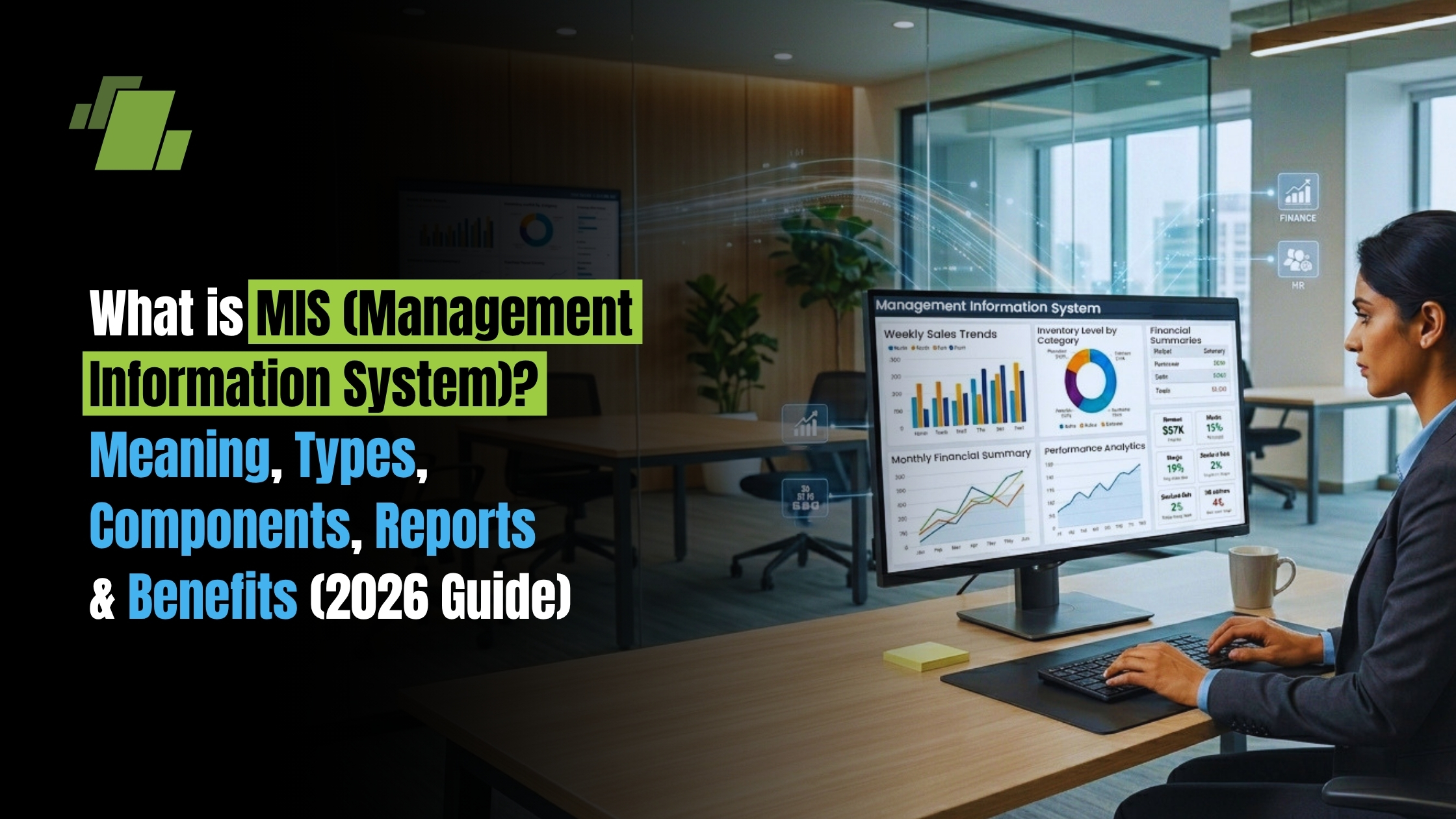
A Management Information System (MIS) is a technology-enabled solution that transforms raw business data into valuable insights, empowering smarter and more informed decision-making. This guide covers the key components, types such as TPS, DSS, and EIS, and the overall architecture of MIS. It highlights how MIS improves operational efficiency, enhances reporting, and drives strategic growth, while also addressing common implementation challenges and the role of modern solutions like LOGIC ERP MIS Software in helping businesses stay competitive in 2026.
Table of Content
- Introduction
- Understanding Management Information Systems
- Components and Architecture of MIS
- Types of MIS Systems
- Benefits and Business Value of MIS
- Common Challenges and Solutions
- Why choose LOGIC ERP MIS Software?
- Conclusion and Next Steps
- Frequently Asked Questions About MIS
Introduction
MIS System is a computer-based system that collects, processes, stores, and analyzes business data to provide managers with accurate and timely information for decision-making, planning, and control. A management information system (MIS) supports decision-making, coordination, control, analysis, and visualization of information within an organization. It transforms raw data into valuable insights that help organizations operate efficiently and maintain competitive advantage.
Effective MIS implementation requires alignment with established business practices to ensure accurate and timely data management for decision-making.
This guide covers MIS fundamentals, key components, system types, benefits, and implementation considerations for 2026. Whether you’re a business professional evaluating technology solutions, a student exploring information technology careers, or a manager seeking to understand how management information systems can improve your business operations, this resource addresses your needs directly.
Quick Definition: MIS is an integrated system combining hardware, software, data, and people to deliver actionable business intelligence that supports decision making at all organizational levels.
What you’ll learn:
- Clear definition and core purpose of management information systems
- Essential components and architecture of MIS
- Different types of MIS and their specific applications
- Business value and operational efficiency benefits
- Implementation challenges and practical solutions
Understanding Management Information Systems
A management information system MIS serves as the central nervous system of modern business operations. It gathers operational data from various sources, processes this information through database management systems, and presents data in formats that help business leaders make informed decisions.
Unlike simple data processing tools, MIS focuses specifically on managerial needs—supporting not just daily operations but strategic planning and resource allocation decisions.
Core Purpose and Functions
Management Information Systems (MIS) integrates technology and business practices to provide accurate, timely, and useful information to management at various levels.
MIS performs four primary functions that drive business value:
- Data collection: Gathering information from transaction systems, customer interactions, and external sources
- Data processing: Transforming raw data into organized, meaningful formats
- Data storage: Maintaining secure databases for historical analysis and reporting
- Data analysis: Generating reports, dashboards, and insights for decision support
To understand how MIS reports work, consider the step-by-step process: First, data is collected from various sources such as transaction systems and customer interactions. This data is then processed and organized into structured formats. Next, the processed data is analyzed to extract relevant insights. Automated tools often generate reports based on this analysis, which are then shared with managers and stakeholders. These reports support informed decision-making by providing timely and actionable business intelligence.
MIS reports are typically generated at regular intervals, such as daily, weekly, monthly, or quarterly.
The effectiveness of these functions depends heavily on the quality, integration, cost, security, and resistance associated with the data collected. High implementation costs, resistance to organizational change requests, and system integration complexity have contributed to project failures in MIS implementation. Studies have shown that a significant percentage or share of large-scale information systems projects exceed budgets or fail to meet their projected objectives. Organizational resistance, and unrealistic expectations are recurring contributors to these challenges. Integration issues often arise when businesses use multiple software and databases, making it difficult to create a cohesive MIS. Additionally, security concerns are critical, as handling sensitive business data can lead to significant consequences if data breaches occur.
These functions connect directly to managerial decision-making by providing accurate data when managers need it. Whether tracking key performance indicators or identifying trends in consumer behavior, MIS delivers the intelligence required for effective resource allocation and cost control.
Evolution of MIS
Management information systems have evolved through five distinct eras:
| Era | Period | Characteristics |
|---|---|---|
| Mainframe Computing | 1950s–1960s | Batch processing, basic record-keeping |
| Personal Computers | 1970s–1980s | Distributed computing, spreadsheet analysis |
| Client-Server | 1990s | Networked systems, database integration |
| Enterprise Systems | 2000s–2010s | ERP, CRM, business intelligence platforms |
| Intelligent Systems | 2020s+ | Cloud computing, artificial intelligence, real-time analytics |
Today’s cloud based MIS solutions integrate machine learning and big data analytics to deliver predictive and prescriptive capabilities that earlier systems couldn’t provide.
MIS vs Related Systems
Understanding how MIS differs from related fields clarifies its unique role:
MIS vs Information Technology: IT focuses on infrastructure and technical operations. MIS uses IT infrastructure to solve business problems and support decision making.
MIS vs Computer Science: Computer science develops the underlying technology. MIS applies that technology to meet specific business needs.
Relationship to Other Systems:
- Decision Support Systems (DSS): Specialized MIS tools for complex analytical decisions
- Enterprise Resource Planning (ERP): Integrated platforms that often serve as data sources for MIS
- Customer Relationship Management (CRM): Systems managing customer data that feed into broader MIS reporting
Components and Architecture of MIS
Effective management information systems depend on several key components working together seamlessly. Understanding these elements helps organizations design systems that deliver genuine business value.
Hardware Infrastructure
MIS requires reliable computing infrastructure including:
- Servers: Processing and storing organizational data
- Network systems: Connecting business units and enabling data flow
- End-user devices: Computers, tablets, and mobile devices for accessing information
Cloud vs On-Premise Considerations:
By 2027, approximately 90% of organizations will use hybrid cloud models. Cloud based systems offer amazing scalability and remote access, while on-premise solutions provide greater control for regulated industries. Many organizations adopt hybrid approaches, balancing flexibility with compliance requirements.
Software Systems
The software infrastructure of MIS includes:
- Database management systems: SQL and NoSQL platforms for structured data storage
- Reporting and visualization tools: Dashboards presenting data in actionable formats
- Application software: Specialized programs for financial analysis, project management, and business intelligence
- Integration tools: APIs and middleware connecting disparate computer systems
Modern MIS software emphasizes user-friendly interfaces that enable managers to analyze data without requiring advanced technical skills.
Data Management
Effective data management forms the foundation of any successful MIS:
Data Collection Methods:
- Transaction system feeds
- Sensor and IoT device inputs
- Customer interaction logs
- External market data sources
Data Quality Requirements: Organizations report that approximately 68% struggle with data silos as their top integration challenge. Successful MIS implementation requires:
- Data validation and cleansing procedures
- Master data management frameworks
- Regular accuracy audits
Data Security and Governance: With over 70% of cloud data breaches stemming from misconfigurations, robust security measures are essential. This includes encryption, role-based access controls, and compliance with regulations like GDPR and industry-specific requirements.
Types of MIS Systems
MIS reports help managers understand what is going well and what needs improvement in a business. Organizations deploy different MIS types based on their specific business needs and the management level being served.
An effective MIS report includes key performance indicators (KPIs), data tables, charts, and a summary of insights. Understanding these categories helps in selecting appropriate technology solutions. Common types of MIS reports include financial, sales, inventory, HR, and production reports.
Transaction Processing Systems (TPS)
Transaction Processing Systems capture and process routine, structured business transactions. They form the operational foundation that feeds higher-level management information systems.
Key Functions:
- Recording daily sales and purchases
- Processing payroll and employee data
- Managing inventory movements
- Handling customer orders and billing
Common Applications:
- Point-of-sale systems
- Banking transaction systems
- Airline reservation platforms
- Inventory mis report generation
TPS provides the operational data that other MIS types depend on for analysis and reporting.
Decision Support Systems (DSS)
Decision Support Systems help managers tackle semi-structured and unstructured decisions through advanced analytical capabilities.
Capabilities Include:
- What-if analysis and scenario modeling
- Forecasting and trend projection
- Statistical analysis and data visualization
- Risk management assessment tools
DSS empowers managers to explore alternatives and understand potential outcomes before committing resources, enabling truly data driven decision making.
Executive Information Systems (EIS)
Executive Information Systems serve senior management with high-level, strategic information tailored for quick comprehension.
Features:
- Visual dashboards displaying key performance indicators
- Drill-down capabilities for investigating anomalies
- External market trends and competitive intelligence
- Strategic planning support tools
EIS presents complex business data in intuitive formats, allowing executives to identify trends and make strategic decisions efficiently.
Comparison of MIS Types
Table: Comparison of MIS Types
| Criterion | TPS | DSS | EIS |
|---|---|---|---|
| Primary Users | Operations staff | Middle management | Senior management |
| Data Type | Structured transactions | Structured and semi-structured | Summarized, graphical |
| Decision Level | Operational | Tactical | Strategic |
| Timeframe | Daily/real-time | Weekly/monthly | Quarterly/annual |
| Purpose | Process transactions | Analyze alternatives | Monitor performance |
Selecting the Right System:
- Small businesses often start with TPS and basic reporting
- Growing organizations add DSS for better business analysis
- Enterprises typically deploy all three types in integrated architectures
Benefits and Business Value of MIS
Properly implemented management information systems deliver measurable returns across multiple dimensions of organizational performance.
Improved Decision Making
MIS transforms how managers approach decisions by providing:
- Timely information: Real-time dashboards replace outdated reports
- Accurate data: Validated, consistent information reduces errors
- Comprehensive views: Integrated data from multiple business units
- Predictive insights: Machine learning identifies patterns before problems emerge
Research shows organizations using AI-enabled MIS experience faster decision cycles and improved risk forecasting. A survey of 213 executives found that predictive analytics and automation significantly enhance managerial decision-making quality.

Operational Efficiency
Management information systems drive efficiency by:
- Automating routine tasks: Reducing manual data entry and processing
- Eliminating errors: System validation catches mistakes early
- Streamlining workflows: Integrated data flows reduce duplication
- Optimizing resources: Better visibility enables smarter allocation
Practical Applications:
- Predictive maintenance in manufacturing reduces equipment downtime
- Inventory optimization prevents stockouts and excess inventory
- Automated fraud detection protects financial assets
- Real-time quality control catches defects faster
Strategic Advantages
Beyond operational improvements, MIS provides competitive edge through:
- Market intelligence: Identifying market trends before competitors
- Customer insights: Understanding customer data to improve customer service
- Innovation support: Data-driven identification of new opportunities
- Strategic alignment: Ensuring business strategy connects to operational execution
Organizations leveraging modern MIS capabilities position themselves to respond faster to market changes and allocate resources more effectively.
Common Challenges and Solutions
Implementing and managing MIS presents several obstacles. Understanding these challenges and proven solutions helps organizations maximize their MIS investments. Organizational resistance, insufficient executive sponsorship, and unrealistic expectations have been identified as recurring contributors to implementation challenges in MIS.
Data Quality Issues
Challenge: Inaccurate, incomplete, or inconsistent data undermines MIS effectiveness.
Solutions:
- Implement data validation rules at collection points
- Establish master data management programs
- Schedule regular data auditing and cleansing
- Define clear data ownership and accountability
System Integration Problems
Challenge: Disparate systems and legacy applications create data silos that limit MIS value.
Solutions:
- Deploy integration platforms and middleware
- Develop standardized APIs for system connectivity
- Adopt microservices architecture for flexibility
- Plan phased migration from legacy systems
User Adoption Resistance
Challenge: Managers may distrust system outputs or prefer intuition over data.
Solutions:
- Involve users early in system design
- Provide comprehensive training programs
- Demonstrate quick wins and tangible benefits
- Communicate how MIS supports rather than replaces judgment
Security and Compliance Concerns
Challenge: Protecting sensitive business data while meeting regulatory requirements.
Solutions:
- Implement encryption for data at rest and in transit
- Deploy role-based access controls
- Establish continuous compliance monitoring
- Develop incident response procedures
- Regular security audits and penetration testing
Why choose LOGIC ERP MIS Software?
LOGIC ERP MIS Software stands out as a powerful solution designed to streamline your business operations and enhance decision-making. It offers comprehensive features that integrate data from various departments, providing real-time insights through customizable dashboards and detailed MIS reports. With LOGIC ERP, you can prepare MIS reports efficiently, enabling managers to monitor key performance indicators (KPIs) and identify areas for improvement quickly.
The software supports automation of routine tasks such as data collection and report generation, reducing errors and saving valuable time. Its user-friendly interface ensures ease of use for both technical and non-technical users. LOGIC ERP also prioritizes data security with robust encryption and role-based access controls, ensuring your sensitive business information remains protected.
Moreover, LOGIC ERP MIS Software is scalable and adaptable, making it suitable for businesses of all sizes and industries. Whether you’re a small enterprise or a large corporation, LOGIC ERP helps align your technology with your business strategy, driving operational efficiency and competitive advantage.
Choosing LOGIC ERP means investing in a trusted MIS solution that enhances transparency, supports strategic planning, and empowers your management team with timely, accurate information for better business outcomes.
Conclusion and Next Steps
Management information systems serve as the backbone of informed organizational decision-making. By collecting data from across business operations, processing it through sophisticated database management systems, and presenting valuable insights to managers, MIS enables organizations to operate efficiently and compete effectively.
Immediate Action Steps:
- Assess current systems: Map existing data flows and identify gaps in information delivery
- Define information needs: Determine what reports and insights each management level requires
- Evaluate solutions: Research MIS platforms that match your business needs and budget
- Plan implementation: Develop phased rollout with clear milestones and success metrics
- Build capabilities: Train MIS professionals and develop internal expertise
Related Topics to Explore:
- ERP implementation strategies for integrated business systems
- Data analytics and business intelligence best practices
- Digital transformation roadmaps for modern organizations
Call us at +91-73411-41176 or send us an email at sales@logicerp.com to book a free demo today!
Frequently Asked Questions About MIS
1. What is the difference between MIS and IT?
MIS focuses on using technology to support managerial decision-making and solve business problems. The IT department manages technical infrastructure, networks, and system maintenance. MIS is business-oriented while IT is technology-oriented. Both work together but serve different organizational functions.
2. What are key functions of MIS?
Key functions of MIS include management reporting, decision support, business process automation, and performance monitoring.
3. How does integration of big data analytics drive insights?
The integration of big data analytics into MIS allows organizations to derive insights from both structured and unstructured data sources, enhancing decision-making capabilities.
4. How do Management Information Systems improve operational efficiency?
Effective Management Information Systems can improve operational efficiency by automating routine tasks such as data collection, processing, and reporting.
5. What is the goal of MIS system?
The ultimate goal of a management information system is to increase the value and profitability of the business by providing managers with timely and relevant information for informed decision-making.
6. How much does an MIS system cost to implement?
Costs vary significantly based on scale and complexity. Small business reporting systems may cost tens of thousands of dollars. Enterprise-wide systems with big data analytics and artificial intelligence integration can reach millions. Cloud based MIS solutions often reduce upfront costs through subscription models.
7. What skills are needed for MIS careers?
MIS professionals need both technical skills and business acumen. Key competencies include database management, data analysis, business systems analysis, and project management. Communication skills matter for translating technical concepts into business value. Familiarity with emerging technologies like machine learning adds value.
8. How long does it take to implement an MIS system?
Simple reporting dashboards and data pipelines typically require 3-6 months. Comprehensive enterprise systems with multiple integrations may take 12-24 months. Factors affecting timeline include system complexity, data quality preparation, user training requirements, and organizational change management needs.
9. What are the main types of MIS reports?
Organizations use several report categories: operational reports (daily transaction summaries), tactical reports (weekly/monthly performance dashboards), and strategic reports (quarterly trend analysis). Common examples include sales mis report formats, inventory mis report documentation, and management information system report templates for executives.
10. Can small businesses benefit from MIS systems?
Absolutely. Small businesses gain improved cash flow monitoring, better resource allocation, customer behavior insights, and operational discipline. Modern cloud based systems make MIS affordable at smaller scales. The key is selecting appropriately sized solutions that deliver business value without excessive complexity.
11. What is the role of artificial intelligence in modern MIS?
Artificial intelligence enhances MIS through predictive analytics, anomaly detection, and automation of routine analysis tasks. Machine learning identifies patterns in large datasets that humans might miss. AI enables MIS to shift from retrospective reporting to forward-looking recommendations. However, organizations must address bias, transparency, and compliance considerations.
12. How do you measure MIS success?
Key metrics include decision speed improvements, error rate reduction, cost savings from efficiency gains, system uptime and reliability, user satisfaction scores, and return on investment calculations. Establishing baseline measurements before implementation enables accurate assessment of MIS impact.
13. What are the security risks of MIS systems?
Primary risks include data breaches from system intrusions, phishing attacks targeting system users, cloud misconfigurations exposing sensitive data, insider threats from authorized users, and non-compliance with data protection regulations. Comprehensive data security programs address these risks through technical controls and user awareness.
14. How is cloud computing changing MIS implementation?
Cloud computing transforms MIS by enabling faster deployment, scalable resources, remote access, and reduced infrastructure costs. By 2027, most organizations will operate hybrid cloud architectures. Cloud platforms facilitate advanced capabilities like big data analytics and real-time processing that were previously available only to large enterprises.
15. What qualifications are needed to become an MIS manager?
Typical qualifications include a degree in management information systems, business administration, or related fields. Professional certifications like CBIP or PMP demonstrate expertise. Successful MIS managers combine understanding of business processes with IT management knowledge. Experience with data systems and technology solutions is essential.
16. How do MIS systems integrate with existing business software?
Integration occurs through APIs, middleware platforms, and standardized data formats. Modern MIS connects with ERP, CRM, and specialized applications to create unified data views. Integration tools handle data transformation between systems. Successful integration requires careful planning around data mapping, timing, and error handling.

Author
Gurbir Singh
Co-founder & Managing Director | LOGIC ERP Solutions Pvt. Ltd.
With 30+ years of experience in the tech industry, I took the helm of technology & product development, ensuring LOGIC ERP’s continuous innovation & leadership in the evolving tech landscape.