Understanding the B2C Large Invoice Limit in GST

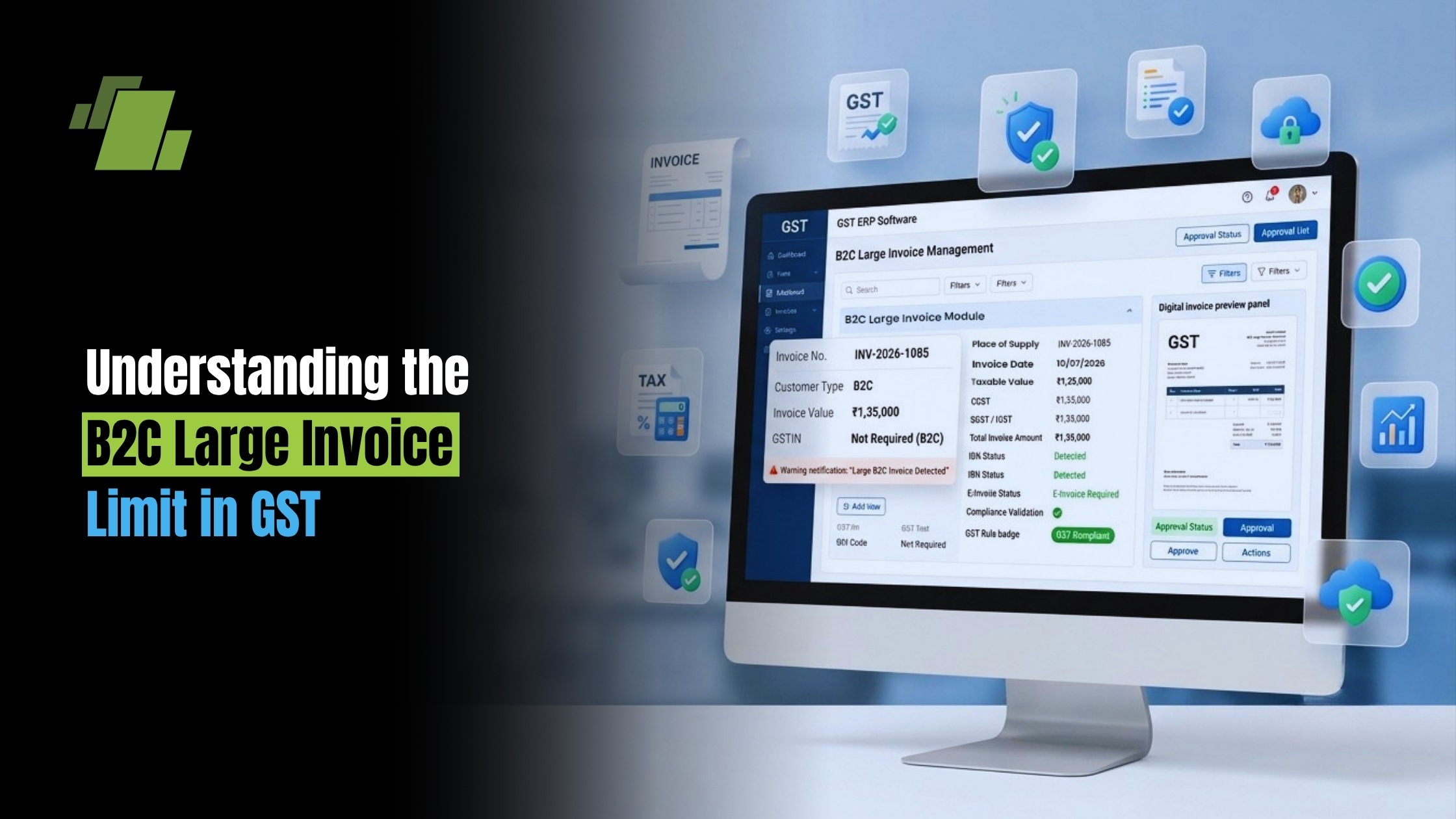
Navigating the world of GST invoicing can be complex. Understanding the b2c large invoice limit is crucial for businesses. These limits guide the maximum invoice amount for consumer transactions without extra compliance, especially when classifying a b2c large invoice versus smaller sales.
B2C stands for Business to Consumer. It involves transactions where businesses sell directly to end consumers (often called b2c in gst). Knowing the large invoice limits helps businesses avoid compliance issues and choose the correct b2c invoice format.
Contact Us
Free Demo Request
B2B, or Business to Business, transactions differ significantly. The b2b full form in gst is Business to Business, and gst b2b meaning generally refers to taxable supplies between registered persons. They involve detailed GST requirements and input tax credits. The b2b invoice meaning is an invoice used between registered businesses to support accurate tax credit claims.
This guide will explore the b2c large invoice limit in detail. We’ll discuss its implications and how it differs from B2B transactions, including what a b2b invoice in gst typically contains.
What Are B2B and B2C Invoices in GST?
In the GST framework, B2B and B2C invoices serve distinct purposes. B2B, or Business to Business invoices, are used when one business transacts with another. They require detailed GST information for accurate tax credit claims, making a b2b invoice central to proper reporting.
B2C invoices, on the other hand, occur when businesses sell directly to consumers. These invoices might not always reflect detailed GST breakdowns. Instead, they focus on the final sale and consumer costs. Correctly identifying b2b in gst versus b2c in gst transactions is foundational to compliance.
Key differences between B2B and B2C invoices include:
- GST Information: B2B invoices contain thorough GST details, while B2C may be simplified.
- Tax Credits: B2B transactions allow for input tax credit claims, unlike B2C.
- Transaction Nature: B2B often involves bulk or wholesale; B2C is typically retail.
Understanding these distinctions is crucial for businesses. They ensure proper adherence to GST requirements and accurate tax reporting. This knowledge helps prevent potential compliance issues down the line.
Defining B2C Large and Small Invoice Limits
B2C invoice limits play a significant role in GST compliance. They dictate how businesses report sales to consumers. These limits vary, depending on the nature and value of transactions.
B2C Large Invoice Limits refer to the threshold above which strict reporting requirements apply. They are essential for high-value consumer sales and are sometimes described as a b2c large limit in internal policies. Large invoices often necessitate more detailed documentation to ensure compliance.
Conversely, B2C Small Invoice Limits apply to lower-value transactions (commonly referenced as the b2c small invoice limit). These typically involve a simplified reporting process. Businesses benefit from less stringent documentation requirements for these small sales.
Key differences between large and small invoice limits include:
- Documentation: Large invoices require detailed records, while small ones are less formal.
- Compliance: Large transactions demand tighter compliance measures.
- Reporting: Large invoices impact how businesses report sales in tax returns.
Understanding these limits aids in accurate tax planning and reporting. Companies can optimize their strategies based on transaction sizes. Awareness helps prevent potential penalties for non-compliance.
B2B vs. B2C: Key Differences in GST Invoicing
The distinction between B2B and B2C invoices is crucial for GST compliance. B2B stands for Business to Business, while B2C means Business to Consumer. Each type has unique invoicing and tax implications.
In B2B transactions, invoices must include GST details. Both parties need a GSTIN (Goods and Services Tax Identification Number). Such invoices often allow input tax credit claims, making precision vital for a b2b invoice in gst.
B2C invoices are generally simpler. They are issued to end consumers who usually do not have a GSTIN. These invoices mainly focus on the final sale price and tax burden.
Here are some notable differences:
- Tax Details: B2B includes detailed tax breakdowns, B2C less so.
- GSTIN Requirement: Mandatory for B2B, not for B2C.
- Input Credit: Available in B2B, absent in B2C.
Understanding these differences can aid businesses in streamlining compliance procedures. Correctly classifying invoices ensures proper GST reporting and enhances overall tax efficiency.
Understanding B2CL and B2CS in GST
In the GST framework, B2C transactions are further divided into two categories: B2CL and B2CS. These acronyms stand for different invoice types based on transaction size.
B2CL refers to Business to Consumer Large transactions. The b2cl meaning in gst is high-value B2C supplies, often associated with additional reporting for larger invoices. Such transactions often require more rigorous compliance due to their higher value and may be tied to a commonly discussed b2cl limit in gst.
On the other hand, B2CS stands for Business to Consumer Small transactions. The b2cs meaning in gst is low-value consumer sales reported in a consolidated manner. You may also see references to b2cs in gst returns for such smaller transactions.
Here’s a quick breakdown:
- B2CL: High-value transactions with additional reporting needs.
- B2CS: Smaller, everyday consumer transactions.
- Compliance Level: Higher for B2CL, lower for B2CS.
Understanding the distinctions between B2CL and B2CS can help businesses manage their consumer sales effectively. Correct classification of these transactions aids in accurate tax reporting and compliance.
Businesses should be diligent when documenting B2CL transactions to comply with GST regulations. Proper knowledge of these categories supports transparent and efficient tax processes.
Regulatory Requirements for B2C Large Invoices
B2C large invoices are subject to specific regulatory requirements under GST. These requirements ensure transparency and proper tax compliance in large transactions.
Firstly, businesses must ensure accurate details on these invoices. This includes the customer’s name and address. This information helps in maintaining clear transaction records and properly tagging a transaction as b2c large when applicable.
Secondly, high-value B2C invoices may need additional tax disclosures. Businesses might be required to detail applicable GST rates and amounts. This guarantees accuracy in the tax reporting process for any b2c large invoice.
Regulations also often demand timely invoice submissions. Delays could lead to penalties or compliance issues. Therefore, keeping track of dates is crucial for businesses.
Key compliance elements for B2C large invoices include:
- Complete customer information.
- Detailed tax breakdown.
- Timely submission of invoices.
Meeting these regulatory requirements helps avoid penalties. It also supports smoother audits. Understanding these elements fosters efficient financial management for businesses.
Compliance and Reporting: Why B2C Large Invoice Limits Matter
B2C large invoice limits play a critical role in ensuring compliance under GST. Adhering to these limits protects businesses from potential penalties. It also supports accurate tax reporting.
Understanding the b2c large invoice limit aids in precise financial planning. Businesses can better anticipate tax liabilities by complying with these norms. This foresight enhances budgeting and resource allocation.
Moreover, it streamlines the tax collection process. Proper compliance facilitates smoother transactions. It also helps maintain transparency in business operations.
Reporting requirements are a vital aspect. Businesses must submit accurate details in their tax returns. Misreporting can lead to increased scrutiny and potential audits. While GST primarily emphasizes complete data capture, some teams discuss a b2b large invoice limit internally for control purposes; even if not prescribed, strong controls over large B2B values improve governance.
Important points for compliance include:
- Following established invoice limits.
- Ensuring detailed and accurate reporting.
- Preparing for periodic audits.
Compliance with the b2c large invoice limit is essential. It ensures businesses align with regulatory standards and maintain transparent operations. Understanding and adhering to these limits fosters better business practices and enhances market credibility.
How to Check and Manage B2B and B2C Invoices in the GST Portal
Managing invoices through the GST portal is crucial for maintaining compliance. The portal offers tools to streamline both B2B and B2C invoicing processes. Regular checks can prevent errors and ensure accurate record-keeping.
If you’re wondering how to check b2b invoices in gst portal, first log in using your credentials, then navigate to the Services section and choose the relevant returns. Accessing your invoices on the GST portal is straightforward. First, log in using your credentials. Navigate to the ‘Services’ section, and select ‘Returns Dashboard’ to view your invoices.
The portal allows you to download detailed reports. You can filter these by date, transaction type, and customer details. This feature simplifies the reconciliation of invoices, whether you are reviewing a b2b invoice or a b2c invoice.
Managing invoices also involves regular audits. Verify that each invoice complies with GST requirements. This includes correct GST identification numbers (GSTIN) and applicable tax rates on a b2b invoice in gst where detailed fields are mandatory.
Key steps in managing your invoices:
- Regularly reconcile invoices with your records.
- Ensure all details are correctly reported.
- Use portal tools for efficient invoice tracking.
Staying organized in invoice management is vital. Leveraging digital tools enhances efficiency and accuracy. Regular checks on the GST portal help mitigate compliance risks and maintain transparent operations.
Best Practices for Businesses: Staying Compliant with Invoice Limits
Compliance with invoice limits safeguards against legal issues and penalties. Businesses should prioritize accuracy in every transaction. Proper documentation ensures that all invoices are in accordance with GST laws, including any internal thresholds aligned to the b2c large limit.
Training staff on GST and invoice requirements is essential. Regular workshops can keep employees updated on regulatory changes and best practices. This knowledge helps in minimizing errors and enhancing operational efficiency.
Technology can significantly support compliance efforts. Implementing robust invoicing software simplifies the tracking and management process. Businesses should focus on these best practices:
- Regularly update your invoice templates for accuracy.
- Conduct periodic audits to ensure adherence to GST norms.
- Utilize digital solutions for efficient invoice processing.
Being proactive in compliance efforts helps businesses maintain a positive reputation. Consistent application of best practices leads to smoother operations and improved financial integrity. By leveraging technology and training, companies can effectively manage their invoicing responsibilities.
Common Mistakes and How to Avoid Them
Misunderstanding GST definitions often results in incorrect invoicing. Some businesses confuse B2B and B2C invoices, leading to compliance issues. It’s essential to clearly differentiate between these categories to avoid mistakes.
Ignoring invoice limits can attract penalties. Some businesses fail to monitor transaction values effectively. Regularly reviewing these limits ensures compliance with GST rules and correct classification under B2CL or B2CS when relevant.
Here are common mistakes and their solutions:
- Mixing Up B2B and B2C Transactions: Ensure proper classification of each sale.
- Neglecting to Update Invoice Templates: Keep templates current with GST requirements.
- Overlooking Invoice Limits: Regularly assess transaction values to stay within limits.
Avoiding these errors fosters smoother operations and effective GST compliance. Staying vigilant and implementing routine checks helps maintain accuracy.
Conclusion: The Importance of Understanding B2C Large Invoice Limits
B2C large invoice limits are vital for businesses engaged in high-value consumer sales. By comprehending these limits, businesses can align their operations with GST regulations. This understanding helps prevent legal issues and financial penalties. Where applicable, align practices with the b2cl limit in gst and document high-value sales appropriately.
Properly managing B2C large invoices ensures compliance and boosts business efficiency. Businesses need to monitor and adjust their practices to stay compliant with evolving regulations. This proactive approach safeguards against unexpected compliance challenges.
Informed businesses not only adhere to tax laws but also build trust with consumers. Understanding and implementing the b2c large invoice limit enhances transparency. This aspect of financial prudence contributes to sustainable business growth and stability.
Call at +91-73411-41176/75 or send us an email at sales@logicerp.com to book a free demo today!
Frequently Asked Questions:
1. What is the B2C Large Invoice limit under GST?
A B2C Large (B2CL) invoice refers to a high-value sale made by a registered business to an unregistered customer. These invoices must be reported separately in GST returns as per the applicable GST rules, ensuring accurate tax compliance and reporting.
2. What is the difference between B2CL and B2CS in GST?
B2CL (Business-to-Consumer Large) refers to high-value B2C transactions that require detailed reporting, whereas B2CS (Business-to-Consumer Small) includes lower-value consumer sales that are reported in a consolidated manner in GST returns.
3. How is a B2B invoice different from a B2C invoice in GST?
A B2B invoice is issued to a GST-registered business and contains the buyer’s GSTIN, allowing them to claim Input Tax Credit (ITC). A B2C invoice is issued to an end consumer and generally does not include the customer’s GSTIN or support ITC claims.
4. Why is it important to correctly classify B2C Large invoices?
Correct classification of B2C Large invoices helps businesses comply with GST regulations, file accurate GST returns, avoid reporting errors, and reduce the risk of notices, penalties, or audits by tax authorities.
5. How can ERP software help manage B2C Large invoice compliance?
ERP software automates invoice classification, maintains accurate transaction records, generates GST-compliant invoices, and simplifies GST return preparation. This reduces manual errors and helps businesses stay compliant with changing GST regulations.

Author
Gurbir Singh
Co-founder & Managing Director | LOGIC ERP Solutions Pvt. Ltd.
With 30+ years of experience in the tech industry, I took the helm of technology & product development, ensuring LOGIC ERP’s continuous innovation & leadership in the evolving tech landscape.