Streamlining Your Invoice Processing Workflow

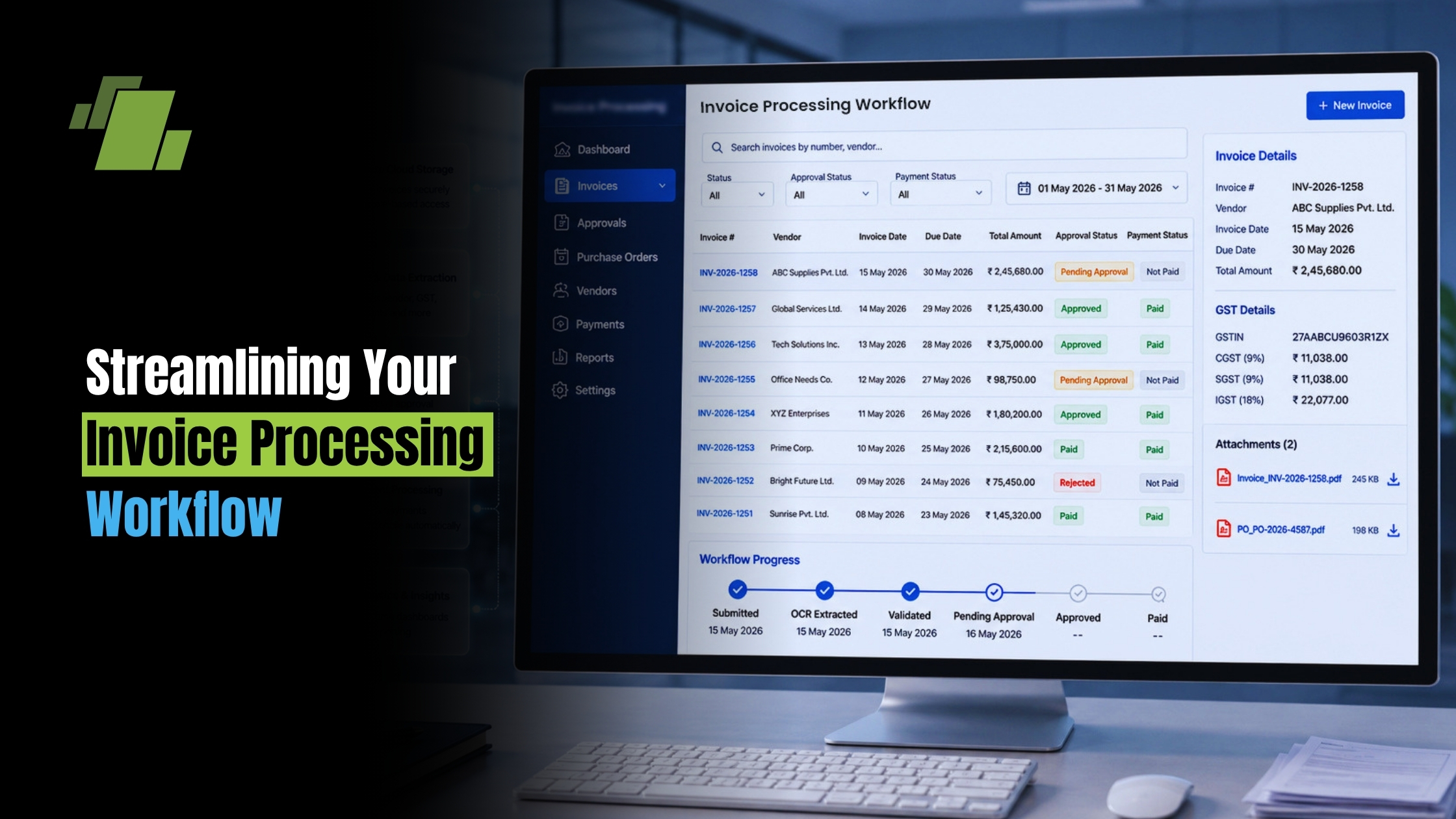
Invoice processing is a vital part of any business’s financial operations. It involves handling invoices from receipt to payment.
Efficient invoice processing can save time and reduce costs. It ensures accuracy and prevents errors in accounts payable.
Streamlining this workflow can improve cash flow and vendor relationships. It also enhances financial planning and forecasting.
With the right tools, businesses can automate many steps. This includes invoice approval, payment reconciliation, and tracking.
Contact Us
Free Demo Request
In this guide, we’ll explore how to optimize your invoice processing workflow. Discover the benefits of modern solutions like digital invoicing and billing automation.
What is Invoice Processing? Understanding the Basics
Invoice processing refers to the complete end-to-end handling of invoices. From receiving an invoice to making the final payment, every step is crucial.
The primary purpose is to ensure that the organization’s accounts payable functions smoothly. This includes verifying invoice details and processing payments accurately.
The typical invoice process consists of several key steps:
- Invoice receipt and documentation
- Verification of invoice details
- Approval from authorized personnel
- Payment processing and reconciliation
Understanding these steps is essential for a streamlined workflow. This process helps maintain financial accuracy and transparency within a company.
Efficient invoice processing prevents payment delays. It also reduces the risk of fraud and financial discrepancies. A well-managed system supports vendor trust and operational efficiency.
Why Streamline Your Invoice Processing Workflow?
Streamlining your invoice processing workflow brings several benefits. It reduces the time taken to manage invoices, speeding up the entire process. This efficiency leads to better cash flow management and financial planning.
A streamlined workflow minimizes errors. Manual data entry often results in mistakes that can be costly. Automation reduces these errors and ensures accuracy in payments and records.
The advantages extend to improved relationships with suppliers. Timely invoice processing ensures prompt payments, enhancing supplier trust. Key benefits of streamlining include:
- Reduced operational costs
- Minimized manual errors
- Improved supplier relations
- Enhanced financial management
By refining your processes, you also boost organizational productivity. Staff can focus on strategic tasks rather than routine paperwork. Ultimately, a streamlined workflow supports better financial health and efficiency for your business.
Key Steps in the Invoice Processing Workflow
Invoice processing involves several critical steps. Each step ensures accurate and timely financial transactions. Understanding these steps is essential for streamlining.
The first step is the receipt of the invoice. Invoices can come in various formats, such as paper or digital. Efficient systems should handle and categorize invoices swiftly.
Next is the verification process. Here, details are checked for accuracy. This includes confirming invoice data matches purchase orders and delivery records.
After verification comes invoice approval. Approval workflows can vary depending on organizational needs. Multiple stakeholders may be involved in this step.
Once approved, the invoice moves to the payment stage. Ensuring timely payment avoids late fees and maintains good supplier relations. Payment reconciliation follows to match invoices with payments.
Regular invoice tracking helps monitor the status of invoices throughout the process. This tracking is vital for transparency and financial oversight.
Finally, document management involves storing invoices for future reference. Proper organization aids compliance and easy retrieval of financial records.
An efficient workflow ensures these steps are carried out smoothly. Each step ties into the next, creating a cohesive process. By optimizing this cycle, businesses enhance their financial efficiency and control.
Common Challenges in Accounts Payable Invoice Processing
Handling invoices can present several challenges. Accounts payable teams must tackle these to ensure smooth operations.
One major challenge is manual data entry. This process is prone to human error. Even small mistakes can lead to significant financial discrepancies.
Another issue is invoice approval delays. Delays often occur due to bottlenecks in the approval chain. This can lead to late payments and strained supplier relationships.
Here are some common challenges:
- High volume of invoices leading to backlogs
- Discrepancies between purchase orders and invoices
- Lack of standardized processes across departments
Addressing these challenges requires careful planning and the adoption of technology. Implementing solutions can help overcome barriers and boost efficiency.
The Role of Invoice Software and Billing Automation
Invoice software is transforming how businesses handle invoices. Automation reduces manual tasks, increasing efficiency and accuracy.
LOGIC ERP Software streamline the invoice workflow, saving time. Billing automation minimizes human error and speeds up the payment cycle. This boosts productivity and ensures timely payments.
Key features offered by invoice software include:
- Automated data entry to reduce errors
- Invoice tracking for real-time updates
- Customizable approval workflows to match organizational needs
- Seamless integration with existing systems
Billing automation enhances financial control. It supports handling high volumes of invoices effortlessly. Automated systems also facilitate better cash flow management by ensuring payments are prompt.
Finally, LOGIC ERP Software offer robust analytics tools. These tools help businesses gain insight into spending patterns and financial trends. Such information is vital for strategic decision-making. By leveraging invoice software, companies can achieve greater efficiency and accuracy in their financial operations.
Digital Invoicing and Invoice Tracking: Modern Solutions
Digital invoicing has revolutionized how businesses manage invoices. It offers speed and convenience by moving away from paper-based processes. This shift contributes to more sustainable operations.
In a digital environment, invoice tracking becomes seamless. Real-time status updates help keep all stakeholders informed and engaged. This transparency enhances trust between companies and their suppliers.
Modern solutions provide several key benefits:
- Faster processing times due to automation
- Reduced risk of lost or misplaced invoices
- Improved accuracy in invoice records
- Sustainability by minimizing paper use
These technologies support remote work environments. They enable teams to manage invoices from anywhere, which is particularly helpful for decentralized operations. By integrating digital invoicing with tracking systems, businesses ensure smoother operations. Enhanced visibility into the invoice lifecycle leads to better financial management and planning. With these solutions, companies can handle invoices efficiently and keep financial records precise.
Best Practices for Invoice Approval and Payment Reconciliation
Effective invoice approval processes are crucial for smooth payment workflows. Clear guidelines ensure that each invoice gets the necessary checks to avoid errors and fraud. Establishing who approves what, and within what timeframe, prevents bottlenecks.
Payment reconciliation is key to financial accuracy and integrity. It involves matching payments with their respective invoices and detecting discrepancies early. Reconciliation should be a regular, ongoing task within your accounts payable team.
Implementing these practices can enhance efficiency:
- Set definitive timelines for approvals and reconciliations
- Delegate responsibilities to reduce the approval process duration
- Use automated tools to compare invoices and payments accurately
Training is crucial in this process. Regular training sessions keep the team updated on best practices and tools. Employees become more adept at spotting issues before they escalate. Additionally, fostering open communication within the team ensures that everyone understands their role. This clarity contributes to a smoother and more efficient invoice management workflow.
Optimizing Your Invoice Management System
Optimizing your invoice management system ensures seamless operations. Start by evaluating the current processes to identify bottlenecks or inefficiencies. Understanding your workflow helps in making informed improvements.
Leverage technology to enhance the system. Implementing software solutions can automate repetitive tasks, reducing manual errors and saving time. These tools often come with analytics features to monitor performance and gain insights.
Regular reviews and updates to your system are vital for continued efficiency. Consider these optimization strategies:
- Standardize procedures to ensure consistency
- Integrate with existing systems for data accuracy
- Use analytics for continuous improvement
Additionally, engage your team in the optimization process. Encourage them to share feedback and suggestions. This collaborative approach not only improves the system but also boosts team morale and productivity.
How to Implement an Efficient Invoice Workflow
Establishing an efficient invoice workflow begins with setting clear and concise procedures. Define each step of the process from invoice receipt to payment. Clarity helps team members understand their roles and responsibilities.
Adopt technology to streamline operations. Invoice software can automate steps such as data entry and invoice approval. Automation reduces errors and speeds up processing time significantly.
Regularly assess your workflow for continuous improvement. Evaluate performance metrics and gather feedback from your accounts payable team. Consider the following strategies:
- Document processes clearly for team reference
- Automate manual tasks wherever possible
- Train employees on best practices and new systems
By implementing these strategies, you can enhance accuracy, improve efficiency, and ensure timely payments. An effective invoice workflow contributes to better financial management and fosters positive vendor relationships.
Conclusion: The Benefits of Streamlined Invoice Processing
Streamlining your invoice processing workflow offers numerous advantages. It improves operational efficiency by reducing manual tasks and minimizing errors. This, in turn, speeds up payment cycles and enhances cash flow management.
Moreover, by automating your invoicing process, you build stronger relationships with vendors through timely payments and accurate record-keeping. These improvements not only reduce costs but also offer a competitive edge in financial management. Embracing these methods positions your business for sustained growth and a healthy financial future.

Call at +91-73411-41176/75 or send us an email at sales@logicerp.com to book a free demo today!
Frequently Asked Questions
1. What is Invoice Processing?
Invoice processing is the end-to-end workflow of receiving, verifying, approving, paying, and recording supplier invoices. It ensures accurate accounts payable management and timely vendor payments.
2. Why is Invoice Processing Important for Businesses?
Efficient invoice processing helps reduce payment delays, minimize manual errors, improve cash flow, maintain supplier relationships, and ensure financial compliance.
3. How can Invoice Processing be Automated?
Invoice processing can be automated using invoice management software that captures invoice data, matches purchase orders, routes invoices for approval, tracks payment status, and maintains digital records.
4. What are the Key Steps in the Invoice Processing Workflow?
The invoice processing workflow typically includes invoice receipt, data verification, approval, payment processing, payment reconciliation, and document storage for audit and compliance purposes.
5. What are the Benefits of Using Invoice Processing Software?
Invoice processing software improves accuracy, speeds up approvals, reduces paperwork, enables real-time invoice tracking, automates repetitive tasks, and provides better visibility into accounts payable operations.

Author
Gurbir Singh
Co-founder & Managing Director | LOGIC ERP Solutions Pvt. Ltd.
With 30+ years of experience in the tech industry, I took the helm of technology & product development, ensuring LOGIC ERP’s continuous innovation & leadership in the evolving tech landscape.