Understanding the Standard Hotel Bill Format

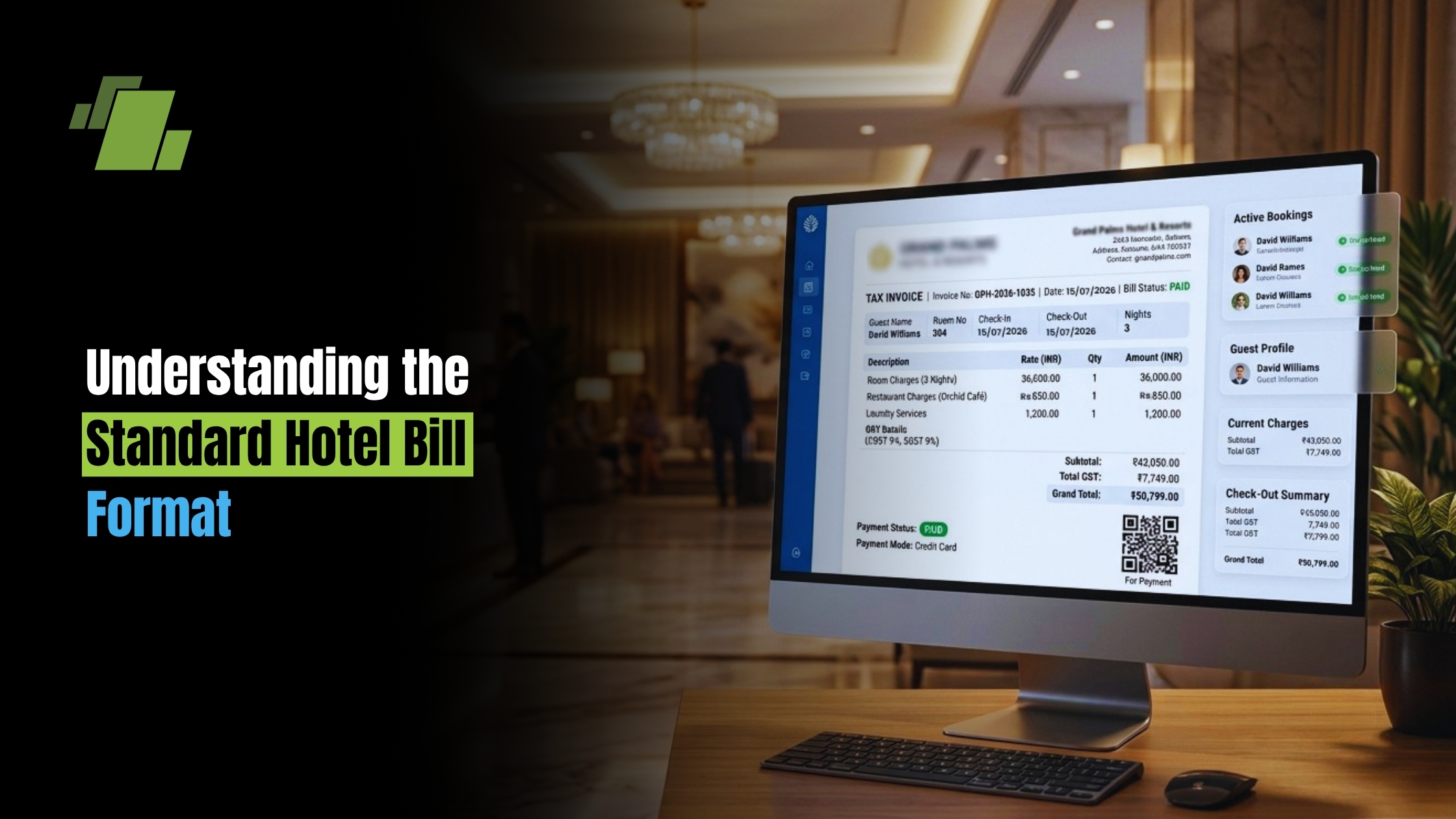
Whether you are a frequent business traveler, a family on vacation, or a hospitality professional managing a boutique property, dealing with checkout documentation is an unavoidable part of the travel experience. Yet, when handed a densely packed, multi-page document at the front desk, many people simply glance at the final total, swipe their card, and walk away. Modern billing software simplifies invoice generation and improves accuracy, making hotel billing more transparent for both guests and hotel staff. Understanding the hotel bill format whether delivered on paper, as a hotel bill PDF, or shared as a hotel bill sample PDF helps you review charges quickly, identify discrepancies, and complete the checkout process with confidence.
Contact Us
Free Demo Request
However, mastering how to read a hotel receipt is a vital skill. It helps travelers avoid overpaying for phantom charges and ensures hoteliers maintain transparency with their guests.
In this comprehensive guide, we will demystify the standard hotel bill format, break down complex taxes and fees, and provide actionable tips on managing expenses. Let’s dive in!
The Basics: Defining the Hotel Bill
At its core, a hotel bill is the official record of a guest’s financial transactions during their stay. But within the hospitality industry, you might hear a few different terms thrown around.
Difference Between Hotel Receipt and Folio
While often used interchangeably, there is a distinct difference between hotel receipt and folio documents:
- The Guest Folio: This is a running, active tab of all your charges. The moment you check in, the front desk opens your folio. As you order a movie, eat at the restaurant, or send out laundry, those charges are added to this live document.
- The Hotel Receipt: This is the finalized, zero-balance document provided at checkout after payment has been processed. It serves as your official proof of payment.
A Deep Dive into the Hotel Guest Folio Layout
If you have ever wondered exactly what items are on a hotel invoice, you are not alone. A well-structured hotel guest folio layout is designed for clarity, usually segmented into specific sections.
Essential Components of a Hospitality Invoice
No matter where you stay in the world, a standard hotel bill format should include the following core elements:
- Header Information: Includes the hotel’s logo, name, address, contact details, and tax registration number.
- Guest Details: Your name, address, loyalty account number (if applicable), and reservation confirmation number.
- Stay Details: Check-in and check-out dates, room number, and total number of guests.
- Transaction Ledger: A chronological, itemized list of all daily room rates, taxes, and extra fees.
- Payment Summary: The total amount due, any deposits previously paid, and the final payment method.
Navigating Extra Fees: Incidentals and Dining
The daily room rate is rarely the only thing on your bill. Often, the confusion around billing comes from extra amenities.
Incidental Charges and Security Deposits
Upon check-in, hotels typically place a hold on your credit card for incidental charges and security deposits. This is not an actual charge, but a pre-authorization to cover potential expenses like mini-bar consumption, spa treatments, or property damage. If you do not incur any extra costs, this hold is released after checkout, though it may take a few days to reflect on your bank statement.
Room Service Charge Breakdown
In-room dining can be surprisingly expensive due to the various fees attached to it. A proper room service charge breakdown on your bill will usually show:
- The actual cost of the food and beverage.
- A mandatory delivery or tray charge.
- An automatic gratuity (often 18% to 22%).
- Applicable local food taxes.
Always review this section carefully to ensure you aren’t double-tipping your server with extra cash if a mandatory gratuity has already been applied to your folio.
Taxes and Fees Explained
Taxes can significantly inflate your final bill, especially in popular tourist destinations.
Understanding Occupancy Tax on Hotel Bills
Also known as a lodging tax, room tax, or tourist tax, this is a local or state-mandated fee applied to your room rate. Understanding occupancy tax on hotel bills is crucial, as the rate varies wildly by city. For example, a $200 per night room might carry a 14% occupancy tax, adding an unexpected $28 per night to your expenses.
How to Calculate VAT on Hotel Stays
In many countries outside the United States, Value Added Tax (VAT) is applied to hospitality services. Knowing how to calculate VAT on hotel stays is fairly straightforward. If a hotel room is €100 and the local VAT rate for hospitality is 10%, the tax is €10. Note: Some countries allow international tourists to claim a refund on VAT for retail purchases, but unfortunately, VAT on services like hotel stays and meals is generally non-refundable.
Corporate Travel and Expense Reimbursement
For business travelers, a clean, accurate hotel bill is non-negotiable. Your accounting department will likely reject a simple credit card receipt that only shows the final total.
Instead, they require an itemized list of hotel expenses for reimbursement. This detailed breakdown proves exactly how the company’s money was spent. It separates legitimate corporate expenses (like Wi-Fi, business center printing, and the room rate) from personal expenses (like that midnight raid on the mini-bar or an in-room movie), ensuring a smooth expense reporting process.
Identifying Errors and Managing Disputes
Even top-tier hotels make mistakes. This is why you should never blindly pay your bill without reviewing it.
Common Errors in Hotel Billing
Some of the most frequent mistakes include:
- Mini-bar mischarges: Being billed for a snack you only picked up to look at (triggering a sensitive automated sensor).
- Double billing: Charging for a breakfast that was supposed to be included in your room rate.
- Incorrect parking fees: Being charged for valet parking when you arrived via an Uber or taxi.

How to Dispute Incorrect Charges on Hotel Statement
If you spot an error, the easiest time to fix it is while you are still standing at the front desk. Politely point out the discrepancy to the clerk, who can usually remove it immediately.
If you have already left the property and need to dispute incorrect charges on hotel statement, follow these steps:
- Call the hotel’s billing department directly and reference your folio number.
- Provide evidence (e.g., your initial booking confirmation showing breakfast was included).
- If the hotel refuses to adjust the error, contact your credit card issuer to file a formal chargeback dispute.
Standard Operating Procedures for Hotel Checkout Billing
Have you ever wondered what happens on the other side of the desk? To prevent errors and ensure a smooth guest departure, hospitality managers implement strict standard operating procedures for hotel checkout billing.
These procedures generally dictate that the front desk agent must:
- Ask the guest if they had any last-minute charges (like breakfast or mini-bar items).
- Print or display the guest folio for a final review.
- Confirm the preferred method of payment.
- Process the card and release any unused incidental holds.
- Provide the guest with the final, zero-balance receipt.
Modern Invoicing: Digital vs Paper Hotel Receipts
The hospitality industry is rapidly modernizing. When it comes to the debate of digital vs paper hotel receipts, digital is winning. Most hotels now offer an “express checkout” option where an electronic folio is emailed to you overnight.
Digital receipts are environmentally friendly, impossible to lose, and easy to forward to your company’s expense management software. However, it is always a good idea to quickly review the hotel bill pdf on your phone before walking out the lobby doors, just in case an error needs to be addressed in person.
Formats and Templates for Hoteliers
If you are a property manager, bed-and-breakfast owner, or short-term rental host, presenting a professional invoice is key to building trust with your guests. Upgrading your billing infrastructure can save you hours of administrative headaches.
Transitioning from Traditional to Digital
Historically, small guesthouses relied on a physical hotel bill book with carbon copy pages to track expenses. While charming, this method is prone to mathematical errors and lost records.
Today, it is highly recommended to use automated hotel invoicing software. These systems automatically track room rates, apply correct local taxes, and seamlessly generate professional invoices with the click of a button.
Creating Your Own Templates
If you are not yet ready to invest in premium software, you can easily create your own professional documentation. Many templates are available online to help you get started:
- Word Processors: You can easily design a customized hotel bill format in word, allowing you to insert your logo and adjust line items for each guest.
- PDF Generators: Once your document is complete, save it as a hotel bill pdf to ensure the formatting cannot be accidentally altered before you email it to the guest.
- Blank Templates: Searching for an empty hotel bill format is a great way to find a printable ledger if you still prefer writing out receipts by hand.
- Reference Materials: If you aren’t sure how to structure your layout, downloading a hotel bill sample pdf from a reputable hospitality management site can provide an excellent blueprint.
By standardizing your hotel bill format, you provide clear, easily readable documentation that leaves your guests feeling respected and properly informed.
Conclusion
Understanding the intricacies of a standard hotel bill format is mutually beneficial for both travelers and hoteliers. For the guest, knowing how to interpret room service fees, calculate VAT, and request an itemized list ensures you never pay a penny more than you owe. For the hospitality professional, utilizing automated software and providing a clear, transparent invoice is a final touchpoint of excellent customer service.
The next time you check out of a property, don’t just shove that piece of paper into your pocket. Take two minutes to read it over. Understanding your folio is the ultimate key to smart, stress-free travel!

Call at +91-73411-41176/75 or send us an email at sales@logicerp.com to book a free demo today!
Frequently Asked Questions
1. What’s the difference between a guest folio and a hotel receipt?
The guest folio is a live, running ledger that starts at check-in and captures every charge during your stay (room, taxes, dining, spa, mini-bar, etc.). The hotel receipt is the finalized, zero-balance document you receive at checkout after payment is processed; it serves as your official proof of payment.
2. What information should a standard hotel bill include?
A clear hotel invoice typically contains:
- Header information: hotel name, logo, address, contact details, and tax registration number.
- Guest details: your name, address, loyalty number (if any), and reservation/confirmation number.
- Stay details: check-in/check-out dates, room number, number of guests.
- Transaction ledger: chronological, itemized charges for room rates, taxes, and extras.
- Payment summary: total due, deposits or prepayments, and the final payment method.
3. What are incidentals, and why does room service often cost more than expected?
Incidentals are extra, optional charges (e.g., mini-bar, spa, in-room movies). At check-in, hotels usually place a credit card hold to cover these; it’s a pre-authorization, not a charge, and unused holds are released after checkout (may take a few days to reflect on your statement). Room service costs more because bills typically include: the food/beverage price, a delivery or tray fee, an automatic gratuity (often 18–22%), and applicable food taxes. Always review the breakdown to avoid double-tipping if a mandatory gratuity is already included.
4. How do occupancy tax and VAT work on hotel stays, and how can I estimate them?
Occupancy (lodging) tax is added to room rates and varies by city or state. For example, at $200 per night with a 14% occupancy tax, you’d owe $28 per night in tax. In many countries, Value Added Tax (VAT) applies to hotel services; if a room is €100 with a 10% VAT, tax is €10. Unlike VAT on some retail goods, VAT on services like hotel stays and meals is generally non-refundable for tourists.
5. What should I do if I find an error on my hotel bill?
Address it immediately at the front desk most issues can be fixed on the spot. Common errors include mini-bar mischarges (sensor-triggered), double billing for included meals, or incorrect parking fees. If you’ve already left: contact the hotel’s billing department with your folio number, provide evidence (e.g., booking confirmation showing breakfast included), and if unresolved, ask your credit card issuer to initiate a chargeback dispute.

Author
Gurbir Singh
Co-founder & Managing Director | LOGIC ERP Solutions Pvt. Ltd.
With 30+ years of experience in the tech industry, I took the helm of technology & product development, ensuring LOGIC ERP’s continuous innovation & leadership in the evolving tech landscape.