An Objective Comparison between On-Premise ERP and Cloud ERP

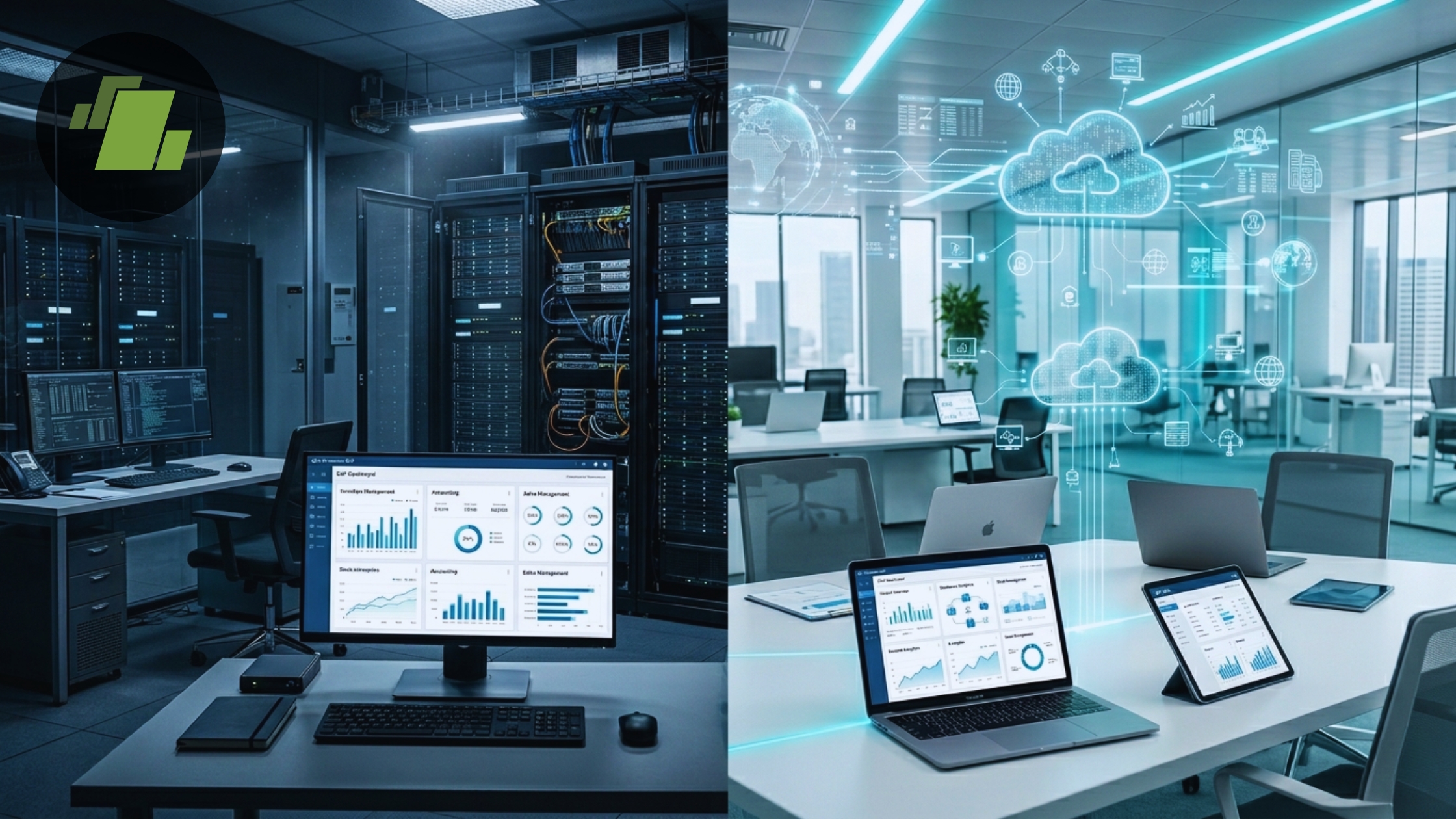
In today’s fast-evolving digital business environment, choosing the right ERP software is one of the most important decisions for any organization. Businesses across retail, manufacturing, distribution, FMCG, pharma, and e-commerce industries are increasingly adopting ERP systems to streamline operations, improve productivity, and enhance decision-making.
Contact Us
Free Demo Request
However, one common question still remains:
Should you choose Cloud ERP or On-Premise ERP Software?
Both ERP deployment models offer unique advantages depending on your business size, budget, infrastructure, security requirements, and scalability goals. Understanding the key differences between cloud-based ERP and on-premise ERP can help you make the right decision for long-term business growth.
In this guide, we’ll compare Cloud ERP vs On-Premise ERP across major business areas including customization, integration, servers, security, customer support, pricing, and scalability.
What is Cloud ERP?
Cloud ERP solution hosted on remote servers and accessed through the internet. Businesses usually pay a monthly or annual subscription fee to use the software without managing physical infrastructure.
The ERP vendor handles:
- Server management
- Data security
- Software updates
- Maintenance
- Backup & recovery
Cloud ERP solutions are ideal for businesses looking for flexibility, scalability, and lower upfront investment.
What is On-Premise ERP?
On-Premise ERP software is installed and operated on a company’s own servers and IT infrastructure. Businesses purchase the ERP license and maintain complete control over data, servers, security, and upgrades.
This ERP model is commonly preferred by organizations requiring:
- Full data ownership
- Advanced customization
- High-level control
- Internal IT management
Cloud ERP vs On-Premise ERP: Key Differences
1. Integration & Customization
On-Premise ERP
On-premise ERP software offers extensive customization and integration capabilities. Since the software is hosted internally, businesses can modify workflows, modules, and reports according to operational needs.
Advantages:
- Greater control over customization
- Easier integration with legacy systems
- Industry-specific workflow modifications
- Flexible reporting structures
Limitation:
Whenever the ERP provider releases a major update, some customizations may require rework or compatibility adjustments.
Cloud ERP
Cloud ERP systems also support customization, but certain changes may be limited based on the provider’s infrastructure and security policies.
Advantages:
- Faster deployment
- Standardized workflows
- Easier API-based integrations
- Lower IT dependency
Limitation:
Advanced customization may require vendor support or third-party integration services.
2. Server Management & Data Security
Cloud ERP
In cloud ERP systems, servers are managed by the ERP provider. Your business data is securely stored on remote cloud servers with backup and disaster recovery systems in place.
Benefits:
- No server maintenance required
- Automatic backups
- Advanced cloud security
- Remote accessibility
- Lower infrastructure cost
Cloud ERP providers invest heavily in cybersecurity technologies, making cloud platforms highly secure for modern businesses.
Which ERP Solution is Best for Your Business?
The right ERP deployment model depends entirely on your business goals, operational complexity, and IT capabilities.
Choose Cloud ERP If:
- You want lower upfront investment
- Your business requires remote access
- You prefer automatic updates
- You have multiple business locations
- You want faster implementation
- You need easy scalability
Choose On-Premise ERP If:
- You need complete control over data
- Your business requires heavy customization
- You already have strong IT infrastructure
- Your organization has strict compliance requirements
- You prefer internal server management
Why Businesses Choose LOGIC ERP?
LOGIC ERP offers both Cloud ERP and On-Premise ERP solutions, giving businesses the flexibility to choose the deployment model that best fits their operational needs.
With advanced modules for:
- Retail Management
- Inventory Management
- Billing & POS
- Warehouse Management
- Supply Chain Management
- Accounting & Finance
- CRM & Loyalty Management
LOGIC ERP helps businesses automate operations, improve efficiency, and scale faster with powerful ERP technology.
Whether you are a retailer, manufacturer, distributor, supermarket, FMCG business, pharma company, or e-commerce brand, LOGIC ERP delivers scalable ERP solutions designed for modern business growth.
Conclusion
Both Cloud ERP and On-Premise ERP offer powerful business management capabilities. The ideal choice depends on factors like budget, scalability, customization requirements, IT resources, and long-term business strategy.
Cloud ERP provides flexibility, mobility, and lower operational burden, while On-Premise ERP offers deeper control and customization capabilities.
Before making a decision, carefully evaluate your:
- Business size
- Operational requirements
- Future growth plans
- Security expectations
- IT infrastructure
Choosing the right ERP platform can significantly improve productivity, business visibility, operational efficiency, and profitability.
Call at +91-73411-41176/75 or send us an email at sales@logicerp.com to book a free demo today!
Frequently Asked Questions (FAQs)
1. What is the main difference between Cloud ERP and On-Premise ERP?
Cloud ERP is hosted online by the ERP provider and accessed through the internet, while On-Premise ERP is installed on a company’s own servers and managed internally.
2. Is Cloud ERP more secure than On-Premise ERP?
Both can be highly secure. Cloud ERP providers use advanced cybersecurity systems, while On-Premise ERP gives businesses direct control over their security infrastructure.
3. Which ERP solution is more affordable for small businesses?
Cloud ERP is generally more affordable for SMEs because it requires lower upfront investment and follows a subscription-based pricing model.
4. Can Cloud ERP support multi-location businesses?
Yes, Cloud ERP is ideal for multi-branch and remote businesses because users can access the system from anywhere with an internet connection.
5. Why is LOGIC ERP a preferred ERP solution for businesses?
LOGIC ERP provides flexible Cloud and On-Premise ERP solutions with advanced automation, inventory management, billing, analytics, GST compliance, and industry-specific features for retail, FMCG, pharma, manufacturing, and distribution businesses.