Benefits of RFID in Inventory Management

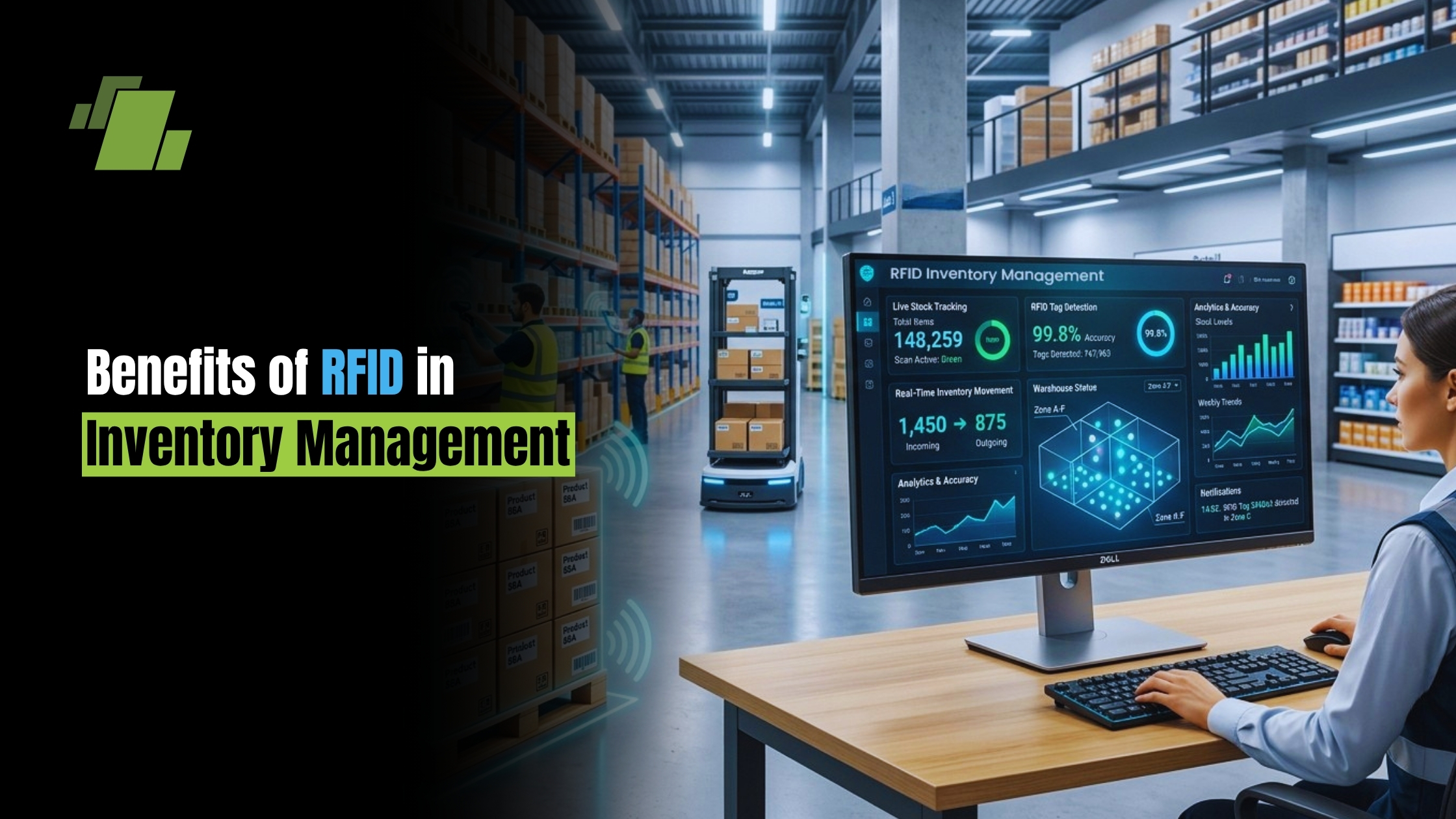
RFID technology is transforming inventory management. It offers a modern solution to age-old challenges in tracking and managing stock.
Businesses are increasingly adopting RFID for its efficiency and accuracy. This technology reduces manual labor and minimizes errors in inventory processes.
RFID tags store more data than traditional barcodes, enhancing data collection and analysis. They provide real-time inventory insights, crucial for strategic decision-making.
The benefits of RFID extend across various industries, from retail to logistics. It supports seamless integration with existing systems, offering scalable solutions for businesses of all sizes.
Contact Us
Free Demo Request
In this article, we explore how RFID revolutionizes inventory management, highlighting its key advantages and applications.
What is RFID Inventory Management?
RFID inventory management uses radio-frequency identification technology to track and manage inventory. This system employs RFID tags and readers to identify objects wirelessly.
RFID tags for inventory management come in various forms, such as labels or chips embedded in products. These tags communicate with RFID readers, providing information on each item’s location and status.
Key features of RFID inventory management include:
- Real-time tracking: Quick updates on stock levels.
- Detailed data storage: More information than barcodes.
- Automated processes: Minimizes manual intervention.
Unlike manual methods, RFID enhances visibility and accuracy. It allows for real-time updates and rapid inventory checks. This technology not only boosts operational efficiency but also supports strategic inventory decisions. RFID-based systems are gaining traction in sectors like retail and manufacturing due to these significant benefits.
✨ Summarize this article with AI


How RFID Works in Inventory Control Systems
RFID technology revolutionizes inventory control systems through its advanced tracking capabilities. It employs RFID tags that communicate with readers, transmitting data effortlessly. This system enhances the traditional inventory control methods by providing a more seamless operation.
In an RFID setup, each item in an inventory is tagged with an RFID label or chip. These tags contain vital data, such as item ID and location, which is picked up by RFID readers. Readers then send the data to a centralized system for real-time inventory updates.
Benefits of RFID in inventory control systems include:
- Improved accuracy and efficiency
- Reduced need for manual counts
- Real-time data insights and tracking
Unlike barcode systems, RFID does not require line-of-sight scanning. It can read multiple tags simultaneously, speeding up the inventory process. Additionally, RFID systems are scalable, making them suitable for both small businesses and large enterprises. The integration of RFID simplifies processes and enhances operational efficiency.
Key Benefits of RFID in Inventory Management
RFID technology offers numerous advantages over traditional inventory management methods. Its capacity for automation reduces the need for manual intervention, increasing efficiency significantly. This leads to notable savings in both time and labor costs.
One of the key benefits of RFID in inventory management is improved accuracy. By automating data collection, RFID systems dramatically reduce human error. This precise data ensures businesses maintain optimal stock levels.
Furthermore, RFID tags can be read from a distance, allowing for faster and more efficient inventory checks. This technology enables real-time inventory tracking, providing up-to-the-minute data on stock levels and locations. These insights are crucial for making informed business decisions.
Businesses using RFID inventory solutions see improvements in customer satisfaction. Ensuring product availability directly impacts how consumers perceive a brand. By minimizing out-of-stock situations, companies can maintain a competitive edge.
The technology’s scalability is another advantage. RFID systems can grow alongside a business, adapting to increasing inventory demands. This makes them ideal for dynamic environments where inventory turnover may fluctuate.
Additionally, RFID offers robust integration capabilities with existing systems. This integration enhances supply chain visibility and optimizes overall operations. Industries from retail to healthcare leverage RFID technology for these widespread benefits.
These benefits collectively empower businesses to optimize their inventory practices and streamline their supply chain operations. RFID technology is a robust solution for modern inventory management needs, offering lasting impact and value.
Real-Time Inventory Tracking and Visibility
RFID technology revolutionizes inventory tracking by providing real-time data. This capability eliminates delays associated with manual inventory counts. It offers visibility across multiple locations, ensuring consistent stock monitoring.
With RFID inventory solutions, businesses gain instant access to product data. This immediate access facilitates strategic planning and demand forecasting. Managers can swiftly address discrepancies and optimize stock levels.
Real-time inventory tracking enhances supply chain management efficiency. Accurate data allows for timely restocking and reduces the risk of product shortages. This proactive approach ensures superior customer satisfaction and loyalty.
RFID systems support detailed inventory movement analysis, uncovering patterns and trends. This insight aids in inventory optimization and helps identify process bottlenecks. Businesses benefit from increased transparency and improved operational decisions.
Key Advantages of Real-Time Tracking:
- Immediate access to inventory data
- Faster response to inventory discrepancies
- Improved stock optimization
Through real-time tracking, businesses transform their inventory management, achieving greater efficiency and control. RFID-based systems are invaluable tools for modern inventory challenges.
Enhanced Accuracy and Reduced Human Error
RFID inventory management significantly improves accuracy by automating data collection. This technology minimizes human intervention, reducing the potential for mistakes. Businesses experience fewer errors in inventory counts and product data entry.
RFID tags for inventory management carry more data than traditional barcodes. This feature allows for detailed item information and tracking. Such precision enhances overall inventory reliability and reporting accuracy.
Reducing human error translates to cost savings and operational efficiency. RFID systems mitigate the risk of costly inventory inaccuracies. Consistent, accurate data builds trust and supports sound business decisions.
Benefits of Enhanced Accuracy:
- Minimized data entry errors
- Improved inventory reliability
- Fewer costly discrepancies
The adoption of RFID technology ensures inventory processes are both efficient and dependable, fostering better resource management.

Automated Inventory Management and Labor Savings
Automation in inventory management streamlines operational tasks. RFID technology plays a crucial role in this transformation. By automating stock checks and updates, businesses save valuable time.
Manual inventory processes often require significant human resources. With RFID, these tasks become automated, reducing the need for labor-intensive efforts. This shift allows employees to focus on more strategic roles.
Reduced labor costs enhance profitability and efficiency. Automated systems operate faster and more accurately than manual efforts. Organizations see a boost in productivity and workforce optimization.
Benefits of Automated Inventory Management:
- Lower labor costs
- Increased productivity
- Streamlined operations
RFID-based inventory management systems represent a leap toward more efficient, labor-saving operations. This advancement paves the way for scalable business growth.
RFID Asset Management and Security
RFID technology enhances asset management across various sectors. Tracking high-value items becomes seamless. This reduces the risk of loss or theft.
Assets equipped with RFID tags are monitored continuously. This ensures real-time tracking and precise location data. Security and accountability improve significantly.
RFID systems contribute to better asset utilization. Businesses experience reduced shrinkage and increased asset lifespan.
Advantages of RFID Asset Management:
- Real-time tracking
- Enhanced security
- Reduced shrinkage
RFID in Retail and Supply Chain Optimization
RFID technology has transformed retail operations significantly. It enhances inventory accuracy and ensures product availability. This leads to improved customer satisfaction and sales performance.
In the supply chain, RFID boosts operational efficiency. It offers real-time visibility from manufacturing to delivery. Businesses can make informed decisions quickly and efficiently.
RFID systems optimize stock levels and replenishment cycles. This reduces both overstocking and stockouts. Better inventory management translates into lower costs and enhanced profitability.
Retailers gain a competitive advantage with RFID solutions. They support omnichannel strategies and seamless customer experiences. Integration with other technologies further optimizes supply chain operations.
Benefits of RFID in Retail and Supply Chain:
- Improved inventory accuracy
- Enhanced customer experiences
- Real-time supply chain visibility
Integration with Inventory Optimization Tools and Other Technologies
Integrating RFID with inventory optimization tools unlocks new efficiencies. Seamlessly combining technologies enhances decision-making and operational control. This integration ensures accurate data synchronization across systems.
RFID also complements Internet of Things (IoT) technologies. Together, they provide detailed analytics for strategic planning. Businesses can anticipate trends and adjust inventory levels accordingly.
Key Integration Benefits:
- Enhanced data accuracy
- Improved strategic planning
- Real-time analytics support
Industry Applications of RFID Inventory Solutions
RFID inventory solutions have versatile applications across multiple industries. In healthcare, they track medical supplies with precision. In retail, RFID enhances stock visibility and customer experience.
The logistics sector benefits from efficient inventory management using RFID. Companies can monitor shipments in real-time, ensuring timely deliveries. This optimization reduces costs and improves service quality.
Applications in Key Industries:
- Healthcare: Track equipment and manage supplies
- Retail: Enhance stock visibility and customer satisfaction
- Logistics: Real-time shipment tracking and delivery efficiency
Challenges and Considerations in RFID Implementation
Implementing RFID technology presents certain challenges. Initial setup costs can be high, impacting budget planning. Additionally, technical integration with existing systems might require substantial effort and expertise.
It’s vital to consider privacy issues, as RFID can track individual item movements. Organizations must ensure data protection to maintain consumer trust.
Key Considerations:
- High initial setup costs
- Technical integration challenges
- Privacy and data protection concerns
Future Trends and Innovations in RFID Inventory Management
RFID technology continues to evolve, promising exciting advancements in inventory management. With AI integration, real-time analytics and predictive insights become increasingly possible.
Emerging innovations focus on energy-efficient RFID systems and enhanced data security. These developments aim to broaden applications across diverse industries.
Emerging Trends:
- AI-enhanced data analytics
- Improved energy efficiency
- Advanced data security features
Conclusion: The Lasting Impact of RFID Technology Benefits
RFID technology has transformed inventory management. It offers real-time tracking and unprecedented accuracy, reducing human error significantly. Businesses gain enhanced operational efficiency by adopting RFID solutions.
The benefits extend beyond efficiency. RFID systems lower costs, optimize inventory levels, and boost security, making them indispensable to modern inventory control. Companies that leverage RFID stay competitive in today’s fast-paced markets.
RFID’s impact will continue to grow as the technology evolves. It supports industry adaptations and provides robust platforms for future innovations in supply chain management.
Call at +91-73411-41176/75 or send us an email at sales@logicerp.com to book a free demo today!
Frequently Asked Questions
1. What is RFID inventory management?
RFID inventory management is a system that uses Radio Frequency Identification (RFID) tags and readers to automatically track, identify, and manage inventory in real time. It improves inventory accuracy, reduces manual effort, and provides better visibility across the supply chain.
2. What are the benefits of using RFID for inventory management?
RFID technology offers several benefits, including real-time inventory tracking, improved stock accuracy, faster stock audits, reduced human errors, lower labor costs, enhanced asset security, and better inventory optimization.
3. How is RFID different from barcode inventory management?
Unlike barcodes, RFID does not require line-of-sight scanning and can read multiple items simultaneously. RFID tags also store more data, provide real-time updates, and enable faster, more accurate inventory management.
4. Which industries can benefit from RFID inventory management?
RFID inventory management is widely used across retail, supermarkets, warehouses, manufacturing, healthcare, pharmaceuticals, logistics, and distribution businesses to improve inventory visibility, asset tracking, and operational efficiency.
5. How does LOGIC ERP support RFID inventory management?
LOGIC ERP integrates RFID technology with inventory management, warehouse operations, billing, procurement, and reporting. It enables businesses to automate inventory tracking, improve stock accuracy, reduce losses, and gain real-time visibility across multiple locations.

Author
Gurbir Singh
Co-founder & Managing Director | LOGIC ERP Solutions Pvt. Ltd.
With 30+ years of experience in the tech industry, I took the helm of technology & product development, ensuring LOGIC ERP’s continuous innovation & leadership in the evolving tech landscape.