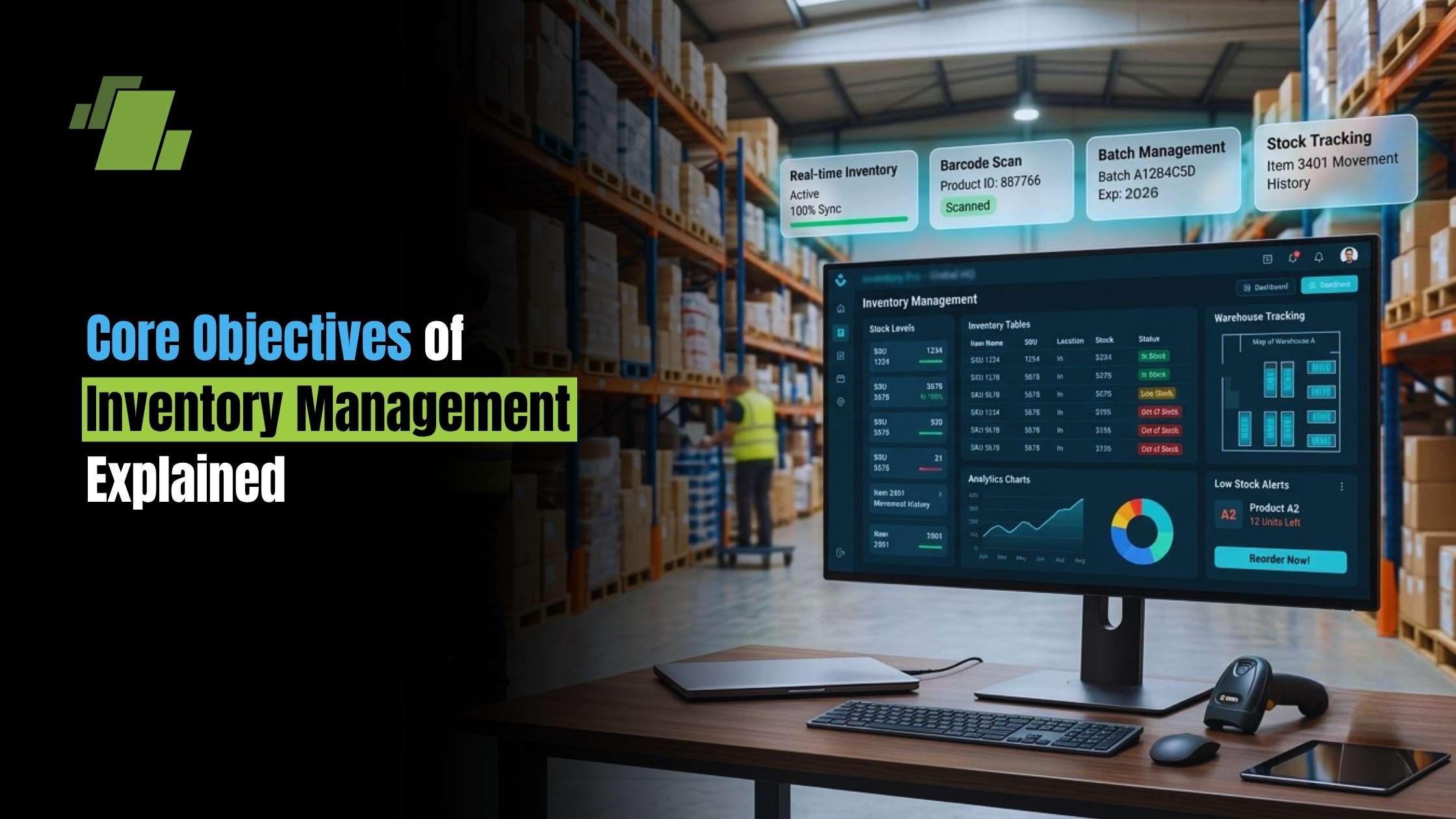
Core Objectives of Inventory Management Explained

Summary
This blog explains the key objectives of inventory management, including maintaining optimal stock levels, reducing costs, preventing stockouts, improving cash flow, and enhancing customer satisfaction. It also highlights how inventory management systems help businesses streamline operations, improve forecasting, and support sustainable growth through better inventory control.
Contact Us
Free Demo Request
Introduction
Inventory management is a cornerstone of successful business operations. It ensures the right products are available at the right time.
Effective inventory management balances supply and demand, minimizing costs while maximizing service levels.
This process is crucial for optimizing supply chain operations and improving overall efficiency.
By maintaining optimal inventory levels, businesses can reduce excess stock and avoid costly stockouts.
Inventory management also supports better decision-making and strategic planning, enhancing profitability and growth.
Understanding the key objectives of inventory management is essential for business owners and supply chain professionals. This guide will explain the objectives of inventory management in practical terms and connect them to supply chain objectives you can act on.
✨ Summarize this article with AI


What Is Inventory Management?
Inventory management is the systematic process of ordering, storing, and using a company’s inventory. This includes raw materials, components, and finished goods.
At its core, inventory management helps businesses track stock levels and maintain a balance between supply and demand. Accurate inventory tracking can avoid both overstocking and stockouts.
Key activities in inventory management include:
- Monitoring stock levels
- Setting reorder points
- Forecasting demand accurately
Effective inventory management leads to cost savings and improved operational efficiency. By using technology, businesses can automate routine tasks and improve accuracy.
In practice, the objectives of inventory also include protecting working capital and honoring service commitments without excess risk. Understanding inventory management helps businesses align their practices with strategic goals. This is crucial for long-term success in a competitive market.
Why Inventory Management Matters in the Supply Chain
Inventory management plays a critical role in the supply chain by ensuring products are available when needed. It supports the seamless flow of goods from suppliers to customers, aligning with supply chain objectives.
Effective inventory management minimizes disruptions and maximizes efficiency across the supply chain. It allows businesses to meet customer demands promptly, thereby improving service levels and customer satisfaction.
Key benefits of inventory management in the supply chain include:
- Reducing holding and operational costs
- Preventing stockouts and lost sales
- Enhancing supplier relationships and negotiations
By optimizing inventory, businesses can achieve cost reductions and service improvements, key supply chain objectives that drive growth and profitability.
Core Objectives of Inventory Management
Below, we state the objectives of inventory management and summarize the objectives and importance of inventory management in day-to-day operations.
Inventory management focuses on several key objectives to ensure operational success. These objectives work together to maintain efficiency and support business goals.
Some core objectives include:
- Maintaining optimal inventory levels
- Reducing excess stock
- Minimizing holding costs
Implementing these objectives helps businesses improve supply chain operations. They also allow companies to effectively respond to market changes and customer demands.
1. Ensuring Product Availability and Service Levels
Ensuring product availability is fundamental to inventory management. It helps meet customer demand without delay, enhancing service levels. One of the important basic objectives of inventory management is ensuring product availability with reliable lead times.
Maintaining optimal stock levels prevents stockouts and sales losses. Inventory managers achieve this by setting accurate reorder points and safety stock levels.
This balance minimizes overstocking while fulfilling orders on time. Ultimately, it leads to increased customer satisfaction and brand loyalty.
Effective inventory management ensures the right product is available at the right time. This objective aligns inventory with business goals and market demand.
2. Minimizing Inventory Costs
Controlling inventory costs is crucial for profitability. Businesses aim to minimize costs while maintaining service levels.
Strategies include reducing holding costs and preventing overstock. Managing purchasing costs and optimizing order quantities also play a role.
Key methods include:
- Implementing just-in-time inventory practices
- Utilizing bulk purchase discounts
- Improving supplier negotiations
Cost-effective management leads to improved margins and financial performance. It requires a careful balance between cost savings and stock availability.
3. Reducing Wastage, Obsolescence, and Losses
Reducing waste and obsolescence cuts costs and improves sustainability. Inefficient inventory practices lead to unwanted excess and spoilage.
Businesses can mitigate wastage by identifying slow-moving or obsolete stock. Inventory systems help track these items and reduce losses.
Key strategies include:
- Regular audits and stock reviews
- Efficient inventory rotation
- Strategic markdowns for slow-moving items
Effective practices eliminate unnecessary waste and reduce environmental impact.
4. Improving Cash Flow and Profitability
Effective inventory management boosts cash flow by reducing unnecessary investments. Businesses can maintain liquidity and fund other operations.
Streamlining stock levels frees up capital for growth. It also results in better alignment of cash flow with business objectives.
Improving cash flow through efficient inventory practices ultimately enhances profitability. This supports long-term business success.
5. Enhancing Customer Satisfaction
Customer satisfaction hinges on timely deliveries and product availability. Inventory management directly impacts these aspects.
Efficient systems ensure that customer orders are fulfilled promptly. This consistency builds trust and encourages repeat business.
Satisfied customers are more likely to provide positive feedback. Thus, inventory management supports customer retention and competitive advantage.
6. Supporting Accurate Demand Forecasting
Accurate demand forecasting prevents overstock and understock. It aligns inventory with actual sales trends.
Businesses use forecasting to improve responsiveness and meet customer demands. This helps reduce stockouts and excess inventory.
Common forecasting methods include:
- Historical sales data analysis
- Market trend assessments
- Collaborative planning with suppliers
These methods support precise demand planning and inventory optimization.
7. Streamlining Operations and Warehouse Efficiency
Streamlining operations enhances productivity and lowers costs. Inventory management plays a role in optimizing warehouse layout and processes.
Efficient operations allow businesses to maximize their use of space and resources. This leads to faster order processing and reduced labor costs.
Effective inventory practices improve warehouse efficiency. This includes implementing technology for better tracking and organization.
8. Enabling Better Decision-Making with Data and Analytics
Data-driven inventory decisions improve accuracy and outcomes. Analytics provide insights into trends and performance.
Businesses leverage data to refine strategies and optimize inventory levels. This improves overall supply chain efficiency.
Analytics-based decisions include:
- Adjusting order quantities based on demand patterns
- Identifying best-selling products
- Assessing supplier performance
These insights lead to better strategies and enhanced business performance.
9. Ensuring Regulatory Compliance and Traceability
Compliance and traceability are essential in regulated industries. Inventory systems ensure adherence to standards and regulations.
Traceability helps businesses monitor inventory from source to sale. This is vital for quality control and safety.
Key compliance strategies include:
- Maintaining detailed records
- Conducting regular inventory audits
- Ensuring accurate labeling and documentation
Such practices support legal compliance and build trust with consumers.
10. Supporting Business Growth and Scalability
Inventory management supports business growth by aligning with market demands. Scalable systems adjust to increased operations and distribution.
Flexible inventory practices aid expansion into new markets. They support efficient scaling while maintaining service levels.
Strategically managed inventory fuels business growth and market competitiveness. This is crucial for adapting to dynamic business environments.
The Role of Inventory Management Systems
Inventory management systems play a key role in modern inventory practices. They automate and streamline processes for improved efficiency and accuracy.
Such systems offer numerous benefits, including:
- Real-time tracking of inventory levels
- Automated order processing and reordering
- Comprehensive data analysis for better forecasting
Common objectives of inventory management system adoption include real-time visibility, accurate records, and timely replenishment that supports decision-making. Implementing these systems reduces human error and enhances decision-making. They provide businesses with actionable insights for inventory optimization.
Overall, inventory management systems support scalability and growth by aligning operations with business objectives. This empowers organizations to meet demand and adapt to changing markets effectively.
Best Practices to Achieve Inventory Management Objectives
Implementing best practices is essential for effective inventory management. Businesses should focus on maintaining optimal stock levels while minimizing costs.
Some key practices include:
- Conducting regular audits and physical inventory checks
- Utilizing technology for tracking and monitoring
- Setting clear reorder points and safety stock levels
Continuous improvement and innovation are also important. This ensures processes remain efficient and effective over time.
Training staff on new systems and procedures is crucial. It helps maintain high standards and improves overall management outcomes.
Common Challenges and How to Overcome Them
Inventory management comes with its own set of challenges. One major issue is inaccurate demand forecasting. This can lead to overstocking or stockouts.
To overcome this, businesses can use advanced analytics. Real-time data helps in making more accurate predictions.
Communication across the supply chain can also be challenging. Coordinating with suppliers and distributors requires effort.
Consider these strategies:
- Use integrated inventory management systems
- Foster strong relationships with partners
- Regularly review and adjust processes
By tackling these challenges effectively, businesses can improve their inventory operations and align them with their goals.
Conclusion: Aligning Inventory Management with Business Success
Effective inventory management is fundamental to achieving business success. It ensures that resources are optimized and costs are minimized. Inventory management also supports agility and resilience.
By aligning inventory practices with business goals, companies gain a competitive edge. They improve customer satisfaction and streamline supply chain operations. Implementing robust inventory systems can lead to sustained growth.
Businesses must continually adapt their inventory strategies. This helps them remain responsive to market changes and customer needs. Ultimately, the objectives and importance of inventory management remain central to driving operational excellence and business performance.
Call at +91-73411-41176/75 or send us an email at sales@logicerp.com to book a free demo today!
Frequently Asked Questions
1. What are the key objectives of inventory management?
Inventory management aims to maintain optimal inventory levels, minimize costs, and enhance customer satisfaction. These capture the objectives and importance of inventory management for most organizations.
2. What are the objectives of inventory management?
They include product availability, cost control, reduced waste and obsolescence, improved cash flow, accurate forecasting, efficient operations, data-driven decision-making, regulatory compliance, and scalability.
3. How do inventory management systems help?
They automate and streamline processes, provide real-time data, and improve decision-making.
4. What is one important objective of inventory management?
One of the important basic objectives of inventory management is ensuring product availability and timely order fulfillment.
5. What are the objectives of an inventory management system?
Key objectives of inventory management system implementation include real-time visibility, accurate stock records, automated replenishment, and analytics to support better decisions.
- Ensure product availability and service levels
- Minimize holding and purchasing costs
- Reduce waste, obsolescence, and losses
- Improve cash flow and profitability
- Support accurate forecasting and planning

Author
Gurbir Singh
Co-founder & Managing Director | LOGIC ERP Solutions Pvt. Ltd.
With 30+ years of experience in the tech industry, I took the helm of technology & product development, ensuring LOGIC ERP’s continuous innovation & leadership in the evolving tech landscape.