Top 10 Best Features Every Retail Billing Software Should Have in 2026

Summary
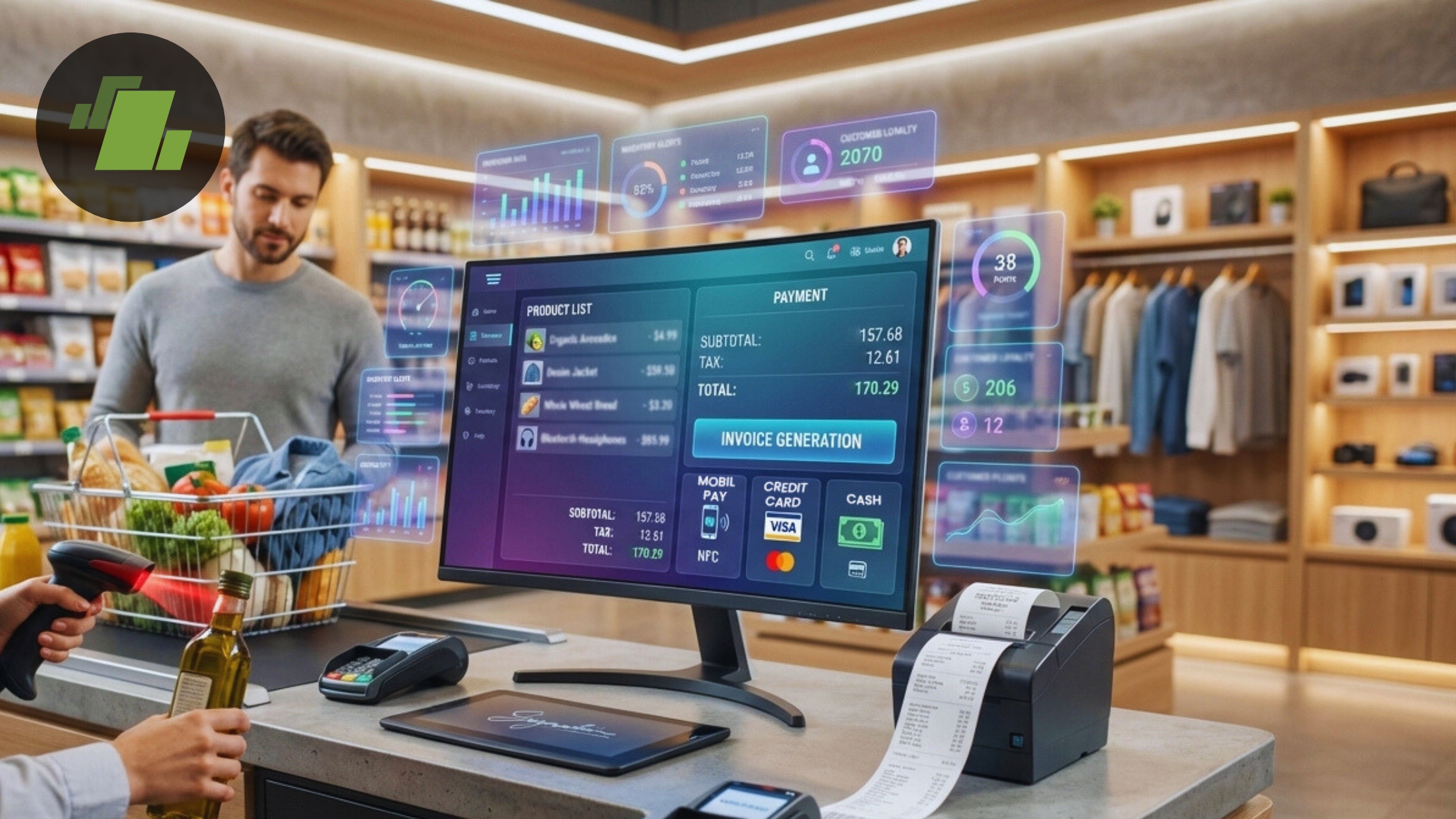
Boost your retail store and shop business with LOGIC ERP retail billing software, featuring GST-compliant invoicing, UPI payments, real-time inventory, multi-device support, and CRM tools. Streamline operations, reduce errors, and grow profits with a secure, scalable, cloud-based POS system built for 2026 retail success.
Table of Content
- Introduction
- What Features Should You Check Before Buying Retail Billing Software?
- Feature Checklist for Quick Reference
- Why Choose LOGIC ERP Retail Billing Software for Your Business?
- What Makes LOGIC ERP #1 Retail Billing, POS & Inventory Software?
- Conclusion
- Frequently Asked Questions
Introduction
In 2026, the Indian retail sector continues to experience explosive growth driven by digitization, increased consumer spending, the rise of MSMEs, and rapid adoption of mobile payment technologies like UPI (Unified Payments Interface), QR based payments, and contactless billing.
For small and medium enterprises (SMEs) and large scale retail stores, including kirana stores, pharmacies, apparel shops, supermarkets, electronics retailers, and F&B outlets, the right retail billing software is no longer just a cash register replacement. Today’s billing systems must do far more:
- Comply with GST billing requirements
- Support e invoice generation as per e way bill framework
- Integrate multiple payment options
- Manage inventory seamlessly
- Provide real time business insights
In this era of digital transformation, Indian businesses need smart retail billing software that helps them stay compliant, efficient, and competitive. This article explains the top 10 features every retail billing solution must offer in 2026, especially if your goal is growth, GST compliance, automation, operational efficiency, and scalability.
What Features Should You Check Before Buying Retail Billing Software?
Choosing the right retail billing software India is important for retail business to streamline operations, improve compliance, and boost profitability. Before making a purchase, ensure your software includes these must-have features:
#1 — GST & E-Invoice Compliance (Must Have)
In India, Goods and Services Tax (GST) is the cornerstone of indirect taxation, making compliance an important requirement for all retail businesses. Retail businesses need a GST billing software India that not only generates accurate invoices but also supports the full spectrum of GST requirements, including CGST, SGST, IGST, multiple tax slabs, and e-invoicing. Modern retail billing with GST tax slabs ensures that transactions are compliant, automated, and audit-ready, reducing regulatory risks and improving operational efficiency.
Key GST Features Your Billing Software Must Offer
- GST-Compliant Invoice Generation: Create invoices that meet all statutory requirements for GST, including invoice numbering, HSN/SAC codes, and tax breakdowns.
- Multiple Tax Slab Support: Automatically calculate applicable taxes for 0%, 5%, 12%, 18%, and 28% tax slabs.
- CGST, SGST & IGST Calculations: Ensure correct splitting of intra-state and inter-state taxes.
- E Invoice Generation & Integration: Generate invoices in JSON format, submit to the Invoice Registration Portal (IRP), and receive digitally signed responses where applicable.
- Pre-Filled GST Returns: Generate invoices compatible with GSTR 1, GSTR 3B, and e way bills, streamlining compliance and reporting.
Why E Invoice Integration Is Important
From October 2020, businesses exceeding the prescribed turnover must issue e-invoices. A GST-ready POS system should automate e-invoice creation, submission to the IRP, and receipt of signed invoices. This reduces manual errors, ensures compliance, and saves considerable time on tax filing.
Benefits for Retailers
- Eliminates Manual Errors in GST Calculations: Automatic tax computations prevent mistakes that can lead to penalties.
- Automates GST Return Preparation: Simplifies monthly and quarterly filings, reducing administrative burden.
- Reduces Compliance Risk: Ensures that all invoices meet statutory standards and mitigates audit-related issues.
- Saves Time: Automates the preparation of GSTR 1, GSTR 3B, and e-way bills, freeing up resources for business growth.
By getting a GST invoice software for retailers or a GST-ready POS system, retailers can maintain regulatory compliance, streamline billing, and integrate seamlessly with accounting and e-commerce platforms. For 2026, GST and e-invoice compliance is a core feature of any effective retail billing solution in India.
#2 — Unified Point of Sale (POS) System | The Backbone of Retail Billing Operations
In 2026, a modern retail POS system serves as the central hub for billing, payments, receipts, and customer interactions. A retail POS system for shops and stores integrates multiple functions into a single platform, helping retailers manage operations efficiently while ensuring compliance with GST and digital payment requirements. Choosing the best POS billing software India ensures your business stays agile, accurate, and competitive.
Key Capabilities of a Unified POS System with Billing
- Barcode Scanning & Product Lookup: Quickly scan items or search products in the database to speed up billing.
- Quick Item Search & Fast Billing: Reduce wait times at checkout with efficient item retrieval and processing.
- Split Bills, Discounts & Tax Calculation: Apply discounts, split bills between customers, and calculate GST automatically at checkout.
- Barcode Label Printing: Generate and print product labels for inventory tracking and sales efficiency.
- Bill Reprint & Automatic Bill Numbering: Maintain accurate transaction records with automated numbering and easy bill reprinting.
Advantages of a Unified POS System for Retailers
- Faster Checkout Experience: Minimize queues and improve customer satisfaction by streamlining the billing process.
- Reduced Billing Errors: Automation reduces human errors in pricing, tax calculation, and invoice generation.
- Centralized Sales Management: Track all sales, discounts, and transactions in one interface for better visibility and reporting.
- Offline Billing Support: Continue billing during internet outages, ensuring uninterrupted sales and smooth operations.
A POS with GST billing features ensures compliance with Indian tax regulations, including e-invoicing, tax slab management, and GST reporting. When combined with multi-payment gateway integration, CRM, and inventory management, a unified POS transforms retail operations into a seamless, end-to-end system, empowering retailers to improve efficiency, reduce errors, and enhance customer experience.
By investing in a retail POS system for shops and stores, retailers in India gain a scalable, secure, and intelligent billing hub that supports growth, multi-store operations, and digital payment adoption, making it the backbone of modern retail businesses.
#3 — UPI & Multi Payment Gateway Integration | Accept Payments the Way Your Customers Prefer
In India’s rapidly evolving retail market, digital payments have become the norm. Customers increasingly expect flexible payment options, from UPI apps to credit/debit cards, wallets, and QR codes. For retailers, adopting a retail billing solution with UPI integration and multi-payment gateway support is essential to improve customer experience, reduce cash handling risks, and accelerate sales.
Payment Options Your Billing Software Should Support
- UPI Payments: Enable transactions via popular apps such as Google Pay, PhonePe, Paytm, and BHIM, allowing customers to pay instantly and securely.
- Card Payments: Accept Visa, Mastercard, Rupay, and international cards for seamless checkout.
- Wallets: Support popular digital wallets like Paytm Wallet, Mobikwik, and FreeCharge.
- Net Banking & EMV POS: Offer secure online banking payments and EMV chip card processing.
- QR Code Payments: Facilitate simple, contactless transactions through dynamic and static QR codes.
- NFC Contactless Payments: Enable tap-and-pay options for smartphones and NFC-enabled cards, enhancing convenience.
Benefits of Multi-Payment Integration for Retail Businesses
- Faster Transactions & Customer Satisfaction: Reduce waiting times and improve the overall shopping experience.
- Lower Cash Handling Risks: Minimize theft, errors, and operational overhead associated with cash management.
- Higher Sales Conversion: Offering multiple payment options encourages customers to complete purchases without hesitation.
- Digital Receipts via Email/SMS: Automatically generate invoices and receipts, supporting compliance and customer communication.
By implementing a QR code billing solution India and a multi-payment retail software, retail businesses can modernize their checkout experience while keeping operations secure and efficient. UPI and integrated payment gateways not only enhance customer convenience but also improve recordkeeping, enable faster reconciliation, and support GST compliance by capturing digital transactions accurately.
Investing in a retail billing system with UPI and multi-payment gateway integration enables retail businesses to align with digital payment trends, enhance customer loyalty management, and maintain a competitive edge in 2026 and beyond.
#4 — Inventory & Stock Management: Gain Full Control Over Your Retail Operations
Retail billing with inventory management allows store owners to track stock levels in real-time, prevent stockouts, and optimize working capital. A powerful stock management POS software India integrates sales, purchase, and inventory data, providing a comprehensive view of your business operations.
Core Inventory Features Your Billing Software Should Include
- Stock In/Out Tracking: Monitor every product movement, including sales, returns, and purchases, ensuring accurate inventory levels at all times.
- Auto-Reorder Level Alerts: Receive notifications when stock levels fall below defined thresholds to avoid stockouts and lost sales.
- Batch & Expiry Management: Track product batches and expiration dates, crucial for pharmacies, grocery stores, and perishable goods.
- Multi-Store Inventory Syncing: Manage stock across multiple outlets in real-time, preventing discrepancies and ensuring smooth operations.
- Stock Valuation Methods: Support for FIFO, LIFO, and Weighted Average ensures accurate accounting and compliance with Indian tax regulations.
Why Inventory Management Matters for Retail Industry
Effective inventory management helps prevent:
- Stockouts & Lost Sales: Avoid running out of popular items and losing revenue.
- Overstocking & Capital Lock-In: Reduce excess inventory that ties up cash unnecessarily.
- Dead Stock & Expiry Losses: Minimize losses from expired or obsolete products, improving profitability.
By integrating inventory features within your retail billing software, retailers gain full operational control, streamline procurement, and optimize cash flow. Mobile compatibility further enhances efficiency, allowing business owners to:
- Bill on Handheld Devices: Process sales quickly and accurately from tablets or smartphones.
- Monitor Sales Remotely: Keep track of stock movement and performance from anywhere.
- Scale Across Multiple Outlets: Synchronize inventory across stores, enabling seamless multi-store expansion.
Investing in the best billing software for inventory tracking in India ensures that your retail business maintains accurate stock levels, reduces wastage, and maximizes profitability, making it a cornerstone of modern retail operations.
#5 — Multi Device Compatibility (Android, iOS, Windows)
A modern Android billing app for retailers India and Windows POS software India ensures that your business can operate seamlessly across devices, providing convenience and real-time access to critical business data. Additionally, billing software for tablets and mobiles empowers store staff to process transactions on the go, improving efficiency and customer service.
Why Multi-Device Support Is Essential
Today’s retail ecosystem demands billing systems that function across multiple platforms:
- Android Tablets and Phones: Issue bills directly on handheld devices, enhancing mobility for sales staff.
- iOS Devices (iPad/iPhone): Manage sales, inventory, and customer interactions on Apple devices, providing flexibility in store operations.
- Windows Desktops and Laptops: Use traditional POS terminals and desktops for back-office accounting, reporting, and inventory management.
- Cloud-Connected Terminals: Sync all devices in real-time, ensuring accurate data across multiple stores and outlets.
Benefits for Retail Industry
Mobile and multi-device compatibility allows retail business owners to:
- Bill on Handheld Devices: Speed up checkout, reduce queues, and improve customer experience.
- Monitor Sales Remotely: Access sales, inventory, and reports from any location, supporting hybrid and multi-store operations.
- Scale Across Multiple Outlets: Easily add new counters or stores without switching software, ensuring consistent operations and centralized management.
By investing in cross-platform retail billing software, retailers can create a flexible, scalable, and future-ready retail environment. Multi-device support not only streamlines daily operations but also enhances efficiency, accuracy, and customer satisfaction, making it a critical component of any modern POS solution in India.
#6 — Cloud Based Billing & Sync Across Stores |Empowering Retailers with Real-Time, Anywhere Access
Cloud-based retail billing software India offers a major advantage over traditional desktop billing systems by providing real-time access, centralized management, and seamless integration across multiple stores. Unlike conventional systems that are tied to a single location, a cloud POS system with real-time sync ensures that business owners, managers, and accountants can access accurate sales and inventory data anytime, anywhere.
Key Benefits of Cloud Billing Software for Retail Industry
- Real-Time Access from Anywhere: Monitor sales, inventory, and transactions remotely, making it easier to manage multiple outlets or franchise locations.
- Automatic Backups: Protect critical financial and customer data with automated cloud backups, reducing the risk of data loss due to hardware failure or human error.
- Easy Software Updates: Stay compliant with the latest GST regulations, e-invoice rules, and tax slabs without manual updates. Updates are automatically applied across all devices and locations.
- Centralized Dashboard for All Stores: Track performance, inventory levels, and revenue across multiple stores from a single dashboard, helping business owners make informed decisions.
- Better Collaboration with Accountants: Simplify financial reporting and GST filing by providing accountants or tax consultants with secure access to real-time data, reducing errors and manual reconciliation.
With the growing complexity of MSME operations, GST compliance, and digital payments like UPI, a cloud POS system ensures efficiency, accuracy, and scalability. Businesses can streamline operations, improve cash flow management, and enhance customer service by leveraging centralized billing for multiple outlets. Cloud billing also supports integration with analytics, loyalty programs, and e-commerce platforms, giving SMEs a competitive edge in India’s fast-evolving retail market.
By implementing a cloud-based retail billing solution India, SMEs move beyond traditional invoicing to a flexible, secure, and growth-ready system that strengthens operational control, ensures regulatory compliance, and enables long-term business expansion.
#7 — Customer Loyalty & CRM Capabilities | Strengthen Customer Relationships with Your Billing Software
Modern retail billing software with CRM integration India helps retailers not just manage transactions, but also build lasting relationships with customers. By combining billing, loyalty programs, and customer relationship management, retail businesses can drive repeat purchases, increase retention, and boost overall profitability.
Key CRM & Loyalty Features Your Retail Billing Software Should Include
- Customer Profiles: Store detailed customer information, including contact details, preferences, and purchase history, to understand buying behavior.
- Loyalty Programs: Reward regular customers with points, discounts, or special offers to encourage repeat visits.
- Reward Points & Redemption: Allow customers to earn points for purchases and redeem them easily, creating a seamless loyalty experience.
- Email & SMS Marketing: Send targeted promotions, personalized offers, and reminders directly to customers to increase engagement.
- Purchase History & Segmentation: Analyze buying patterns to segment customers and create tailored marketing campaigns.
Benefits of CRM & Loyalty Integration for Retail Industry
- Encourages Repeat Purchases: Rewarding loyal customers motivates them to return and spend more.
- Improves Customer Retention: A structured loyalty program strengthens relationships and reduces churn.
- Enables Personalized Marketing Campaigns: Targeted offers based on customer behavior increase sales and brand loyalty.
By choosing retail billing software with customer loyalty program features, SMEs in India can go beyond simple billing. The integration of POS CRM functionality ensures every transaction contributes to building long-term customer relationships, driving revenue growth, and enhancing brand loyalty. Retailers can also leverage reward points, promotions, and purchase analytics to implement data-driven marketing strategies, turning ordinary buyers into loyal advocates.
#8 — Real Time Reporting & Business Intelligence | Transform Data into Actionable Insights
In today’s competitive retail world, retailers require real-time insights to make informed business decisions. Retail billing analytics software India provides actionable intelligence that helps retailers track performance, optimize operations, and drive growth. By leveraging business intelligence features in POS systems, store owners can transform raw sales data into meaningful insights.
Important Reports Your Billing Software Should Offer
- Daily, Weekly, and Monthly Sales Reports: Monitor sales performance, identify peak hours, and understand revenue trends to make operational and staffing decisions.
- GST Tax Reports for Returns: Simplify compliance by automatically generating GSTR-1, GSTR-3B, and e-way bill summaries, reducing errors and saving time during filing.
- Top-Selling Products & Categories: Identify which items generate maximum revenue and which underperform, allowing smarter inventory and marketing strategies.
- Profit & Loss Statements: Get a clear picture of profitability by tracking revenue, costs, and expenses in real time.
- Inventory Aging Reports: Detect slow-moving or obsolete stock, plan clearance strategies, and prevent inventory write-offs.
Why Real-Time Reporting Matters for Retail Businesses
- Enables Data-Driven Decisions: Use real-time insights to make informed decisions on pricing, promotions, and procurement.
- Helps Plan Procurement: Avoid stockouts and overstocking by aligning inventory levels with actual demand.
- Tracks Sales Trends: Recognize seasonal patterns, product preferences, and regional variations to maximize revenue.
- Improves Profitability: Identify underperforming SKUs, optimize margins, and reduce costs by acting on insights promptly.
Modern retail billing software with sales performance dashboards integrates GST reporting and business intelligence, giving retailers a competitive advantage. By using analytics-driven POS systems, retailers can streamline operations, enhance decision-making, and drive sustainable growth. Investing in a system that combines real-time reporting, BI tools, and GST compliance ensures that retailers are not just recording transactions but strategically leveraging data to increase efficiency, customer satisfaction, and profitability.
#9 — Security, Data Protection & Compliance | Safeguarding Your Retail Billing System
With the rapid rise of digital transactions, retailers are increasingly exposed to cyber threats, data breaches, and fraud. This makes robust security in retail billing software an absolute necessity. Choosing secure retail billing software India ensures that both your business and your customers are protected while maintaining compliance with regulatory standards like PCI-DSS.
Key Points Your Billing Software Must Have
- User Access Levels & Permissions: Control who can access sensitive data, set role-based access for staff, and prevent unauthorized actions within the system.
- SSL Encryption: Encrypt data transmitted between devices, POS terminals, and cloud servers to prevent interception or tampering.
- Backup & Restore: Automatic and scheduled backups ensure your data is safe, and quick restoration options prevent operational downtime in case of system failures.
- Audit Logs: Maintain detailed logs of all transactions, changes, and system access, which are critical for internal audits and regulatory compliance.
- Two-Factor Authentication (2FA): Adds an extra layer of security to login processes, reducing the risk of unauthorized access.
Why Security Matters for Retail Industry
- Protects Customer Data: Ensures sensitive information like payment details, GST numbers, and contact information are secure.
- Prevents Unauthorized Access: Safeguards your business against internal misuse or external attacks.
- Mitigates Cyber Threats: Reduces risks from malware, ransomware, and phishing attacks targeting digital payment systems.
- Maintains Trust & Compliance: Demonstrates professionalism and regulatory adherence, fostering customer confidence and minimizing penalties.
By prioritizing data protection in retail billing apps and choosing a PCI-DSS compliant POS system, retailers can safely manage transactions, stay compliant with GST and banking regulations, and maintain a competitive edge. Security is a critical component of any modern retail billing solution in India, ensuring business continuity, customer trust, and long-term growth.
#10 — Scalability, Customization & Localization | Future-Proof Your Retail Billing Software
One of the most important features of modern retail billing software for retail business is its ability to scale and adapt as your business grows. Scalability ensures that your billing system can handle increased transaction volume, expanded product lines, and multiple store locations without compromising speed, accuracy, or reliability. For retail business planning to expand to multi-store operations or franchise models, choosing scalable POS software for multi-store retail in India is essential.
Key Scalability & Customization Needs
A future-ready billing system must allow businesses to:
- Add New Stores or Counters: Seamlessly connect multiple outlets to a centralized system, enabling consistent pricing, taxation, and stock management across all locations.
- Customize Tax Settings: Configure GST, state-specific taxes, and cess for each store or product category, ensuring full compliance with Indian tax regulations.
- Local Language Support: Offer interfaces in Hindi, English, or regional languages, making it easy for staff across different locations to adopt and use the system efficiently.
- Flexible Receipt Templates: Customize receipts with branding, offers, discounts, or tax details to suit local market needs and improve the customer experience.
- Regional Compliance Rules: Automatically adhere to regional tax rules, including GST variations, TCS/TDS requirements, and other statutory obligations.
Why Scalability Matters for Retail Industry
As your retail business expands, your billing software should grow alongside it:
- Handle More SKUs: Manage thousands of products efficiently without system slowdowns.
- Sync Multiple Stores: Maintain real-time inventory, sales, and reporting across all outlets.
- Support Franchise Models: Easily extend operations to new franchises while keeping consistent pricing, taxation, and branding.
- Integrate with E-Commerce Platforms: Connect your POS system with online marketplaces and your website, creating a unified omnichannel experience.
By investing in customizable and scalable retail billing software India, retailers can future-proof their operations, reduce operational bottlenecks, and ensure a seamless customer experience while remaining compliant with Indian tax and regulatory frameworks. Scalability is not just a convenience, it’s a strategic necessity for retailers looking to grow efficiently in India’s competitive retail market.
Feature Checklist for Quick Reference
- Barcode-enabled billing
- GST-compliant invoicing
- Offline billing capability
- Multi-device billing access
- Integrated CRM and loyalty
- Counter-wise performance reports
- Role-based user access
- Multi-location bill retrieval & return support
- Multi-chain retail billing
Why Choose LOGIC ERP Retail Billing Software for Your Business?
Since 1993, LOGIC ERP | The best billing software for retail shops, stores, and SMEs has been streamlining retail operations, including GST-compliant invoicing, UPI and multi-payment gateway integration, real-time inventory management, and a unified POS system. Its cloud-based architecture ensures secure, remote access across Android, iOS, and Windows devices, while built-in analytics, CRM, and loyalty program features empower retailers to make data-driven decisions and enhance customer engagement.
With scalability for multi-store operations, automated tax calculations, and e-invoice compliance, LOGIC ERP helps businesses reduce errors, save time, and maintain regulatory compliance, making it the ideal choice for retailers aiming to streamline operations, boost profitability, and support sustainable growth in 2026.
What Makes LOGIC ERP #1 Retail Billing, POS & Inventory Software?
- 30+ Years of ERP Excellence
- 200+ Experienced ERP Experts
- Personalized ERP Training Just for You
- Fast, Easy, & Stress-Free Implementation
- Quick & Easy Personalization & Deployment
- Flexible Solutions: On-Premise or On-Cloud
- Strong Domain Knowhow & Success Stories
- Digital Ready ERP with 3rd Party Plug-in & API
Top retail industry brands growing remarkably with LOGIC ERP software | #1 billing, POS, GST, inventory, invoice, retail automation solution
SNITCH, The Bear House, United Colors of Benetton, 99 Mart, VBazaar, Sportking, Killer, Madame, Numero Uno, Colorbar, Blue Tea, REDTAPE, Iconic, Banana Club, Wrogn, Dollar, Mini Klub, Sweet Dreams, Fizzy Goblet, Kryolan Cosmetics, Zed Black, Gini & Jony and many more.
Read Case Study:Shark Tank India Sensation- SNITCH & Its Journey from D2C to B2C & Omnichannel with LOGIC ERP Software Solution
Read Case Study:LOGIC ERP x 99 Mart: Transforming Supermarket Operations with Retail ERP Solution
Read Case Study:LOGIC ERP x Kryolan: Transforming Cosmetics Retail, Distribution & Manufacturing with Advanced ERP Software
Conclusion
Retailers need advanced retail billing software which is GST and e-invoice compliant, UPI and multi-payment ready, cloud-based, and inventory and analytics-driven. Multi-device compatibility, strong security, scalability, and integrated CRM and loyalty programs are essential to streamline operations, improve customer experience, and boost profitability. Choosing the right billing software is not just about invoicing, it is a strategic tool that ensures compliance, enhances efficiency, and supports sustainable growth for retail businesses across India.
Call at +91-73411-41176 or send us an email at sales@logicerp.com to book a free demo today!
Frequently Asked Questions (FAQs)
1. What makes retail billing software solutions future-ready in 2026?
Future-ready billing software supports cloud sync, GST compliance, multi-store operations, online billing, mobile billing, and integration with CRM and payments.
2. How is modern retail billing software different from traditional POS systems?
Modern billing systems offer real-time analytics, cloud backups, mobile access, third party integrations, and real-time controls unlike traditional POS systems.
3. Does retail billing software support UPI, BNPL, wallets, and advanced digital payment methods?
Yes, most modern billing software, including LOGIC ERP, support card payments, BNPL, UPI, wallets, and custom payment modes.
4. Why is LOGIC ERP the best retail billing software?
LOGIC ERP retail billing software with POS offers mobile billing, GST automation, offline support, and performance tracking at an affordable cost, making it top choice for modern retailers.
5. What features should retail billing software in India have?
Retail billing software for India must include GST billing, e invoice support, UPI integration, inventory management, multi device compatibility, cloud sync, security, loyalty program, and real time reporting.
6. How does UPI integration benefit billing software?
UPI integration enables faster digital payments, reduces cash handling, improves buyer convenience, and increases sales conversions in Indian retail stores.
7. What is e invoice compliance in retail billing software?
E invoice compliance refers to generating invoices in the prescribed GST format, submitting to the Invoice Registration Portal (IRP), and receiving a signed JSON file for valid tax reporting.
8. Is cloud billing better than desktop billing software?
Yes, cloud billing provides real time access, automatic backups, centralized dashboards, remote monitoring, and faster updates, making it ideal for multi store retail operations.
9. Why is inventory management essential in a POS system?
Inventory management helps track stock levels, auto reorder products, manage batches/expiry, prevent stockouts, and optimize working capital.

Author
Surendra Nayak
Vice President Enterprise Sales | LOGIC ERP Solutions Pvt. Ltd.
Driving LOGIC ERP’s enterprise sales with a strategic outlook, my leadership role encompasses forming and executing policies that bolster revenue, customer satisfaction and brand positioning.