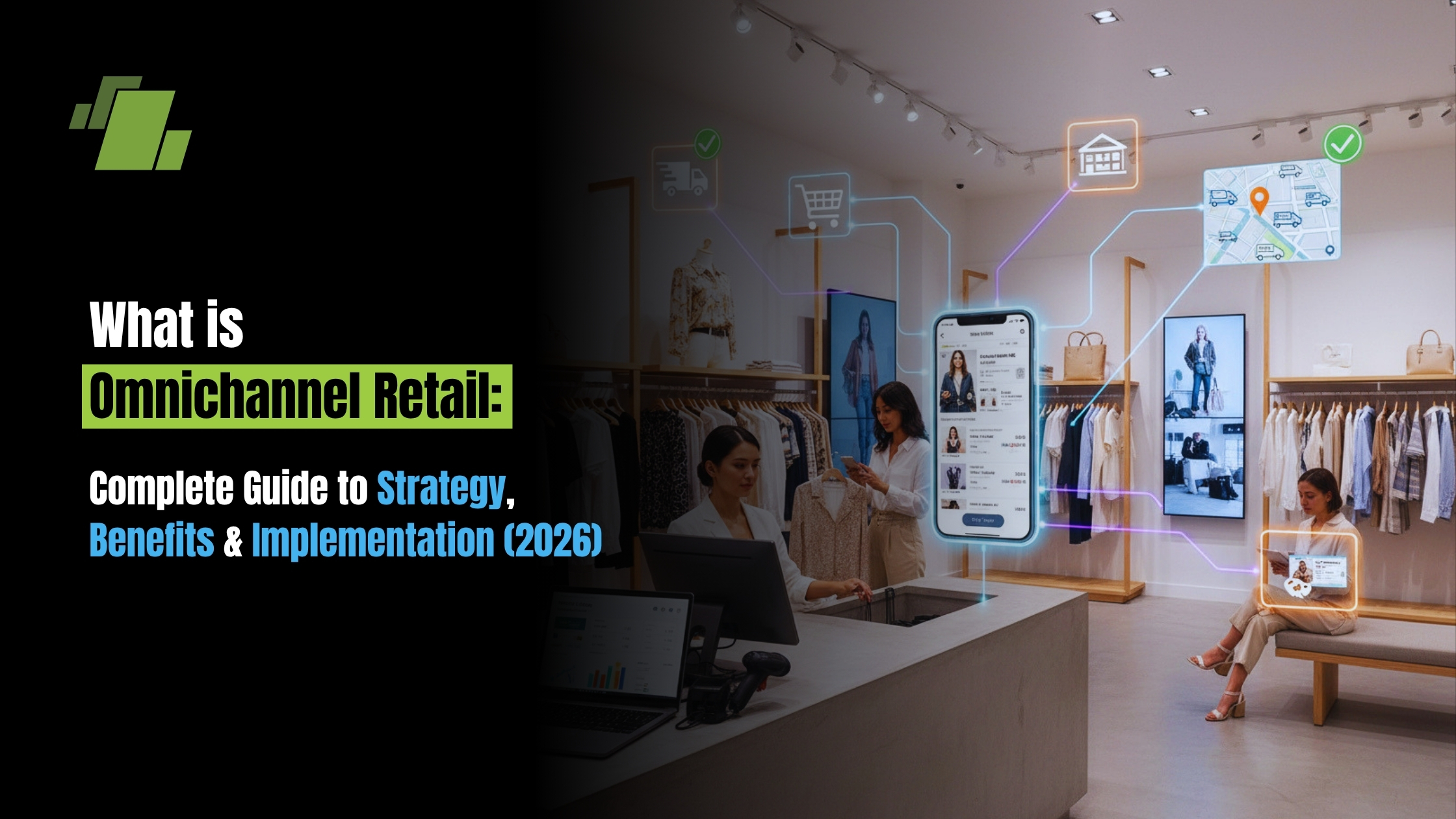
What is Omnichannel Retail: Complete Guide to Strategy, Benefits & Implementation (2026)

Summary
Omnichannel retail is a unified approach that connects online, offline, mobile, and social channels to deliver a seamless customer experience with consistent data, pricing, and inventory. This guide explains its core concepts, benefits, implementation strategy, key differences from multichannel, and future trends like AI-driven commerce. It also shows how LOGIC ERP enables true omnichannel retail with real-time integration of customer data, inventory, and operations for better efficiency and growth.
Table of Content
- Introduction
- Understanding Omnichannel Retail
- Core Components of Omnichannel
- How Omnichannel Works
- Omnichannel vs Multichannel vs Single-Channel
- Omnichannel vs Multichannel
- Omnichannel vs Single-Channel
- Benefits of Omnichannel Retail and Implementation Strategy
- Proven Business Benefits
- Implementation Framework
- Technology Requirements Comparison
- Business Operations in Omnichannel Retail
- Common Challenges and Solutions
- Examples of Omnichannel Retail
- Best Practices for Omnichannel Retail
- 2026 Omnichannel Trends and Future Outlook
- Why Choose LOGIC ERP Software Omnichannel Software for Your Retail Business?
- Conclusion and Next Steps
- Frequently Asked Questions
Introduction
Omnichannel retail is a unified customer experience strategy that seamlessly integrates all sales and communication channels including physical stores, online stores, mobile apps, social media, and marketplaces into a single, coherent shopping journey. This includes both marketing channels and sales channels, such as websites, physical stores, social media platforms, and email, as part of the omnichannel landscape. Rather than treating each channel as a separate entity, omnichannel retail ensures that customer data, inventory, pricing, and brand messaging remain consistent regardless of where or how customers interact with your brand.
This guide covers the complete omnichannel landscape: from foundational definitions and core components to practical implementation strategies, measurable benefits, common challenges, and emerging 2026 trends. The content is designed for retail managers, ecommerce professionals, and business owners who need to understand how omnichannel commerce transforms retail business operations and how to implement it effectively.
Direct Answer: Omnichannel retail is a customer-centric approach that unifies all customer touchpoints digital and physical channels to create seamless shopping experiences. It enables customers to start their journey on one channel (like a mobile device), continue on another (desktop or mobile device), and complete it in a brick and mortar store, all while receiving consistent customer experiences throughout. A few key benefits of omnichannel include enhanced customer understanding, increased sales, improved loyalty, and greater business efficiency.
The stakes are significant: 73% of shoppers engage across multiple channels during their purchasing journey, and omnichannel customers spend approximately 1.5x more than single-channel shoppers. Only 7% of specialty retailers have achieved true unified commerce maturity, creating substantial competitive advantages for early adopters. Omnichannel strategies also help brands acquire more customers and expand their customer base, leading to increased revenue and stronger brand loyalty.
What You’ll Learn:
- How omnichannel retail differs from multichannel and single-channel approaches
- The technology stack and processes required for seamless integration
- Measurable business benefits with specific ROI metrics
- A 6-step implementation framework for retail businesses
- 2026 trends including AI-powered conversational commerce and social commerce integration
Research shows that 70% of consumers expect a seamless experience across channels, and 64% are willing to spend more if their issues are resolved on the channel they are currently using.
Omnichannel aims to remove friction from the customer journey, enhancing satisfaction from research to post-purchase support.
Understanding Omnichannel Retail
Omnichannel retail fundamentally redefines how retail businesses engage customers by viewing the entire shopping experience from the customer’s perspective. Instead of asking customers to adapt to separate channels, omnichannel places the customer at the center and wraps all channels around their preferences and behaviors.
The core principle is simple: customers expect to move fluidly between shopping online, browsing in store, checking inventory on a mobile app, and engaging through social media all while the brand remembers their preferences, purchase history, and context. To meet these expectations, it is crucial for retailers to select the right channels that align with customer preferences and journey, ensuring communication and sales platforms are well-connected and impactful. Channel integration ensures a smooth customer journey by connecting online and offline channels. Meeting these customer expectations isn’t optional; it’s the baseline for competitive retail in 2026.
Core Components of Omnichannel
Unified Customer Data and Real-Time Synchronization
The foundation of any omnichannel strategy is a single, unified view of the customer. This means collecting and synchronizing customer data across every touchpoint website visits, in-store purchases, mobile app interactions, customer service conversations, and social media engagement. When a customer browses products on your website and later visits a physical store, associates should access that browsing history to provide relevant recommendations.
Real-time synchronization ensures that inventory visibility, pricing, promotions, and customer context remain accurate across all channels. When stock levels change in a warehouse, that update must immediately reflect on your online store, mobile app, and store inventory systems.
Integration of Inventory, Pricing, and Promotions
Inventory management in omnichannel retail requires visibility across all locations stores, warehouses, and third-party fulfillment centers. This enables flexible fulfillment options like buy-online-pickup-in-store (BOPIS), ship-from-store, and curbside pickup.
Pricing consistency across digital channels and physical channels prevents customer confusion and builds trust. Similarly, promotional offers and loyalty rewards must function identically whether the customer is shopping online, using a mobile device, or purchasing in store.
How Omnichannel Works
Technology Requirements
Omnichannel marketing and retail require an integrated technology stack that enables data tracking and channel coordination:
- Customer Data Platform (CDP) collects and unifies customer interactions across all touchpoints
- Inventory Management System (IMS) provides real-time stock visibility and allocation
- Order Management System (OMS) routes orders to optimal fulfillment locations
- Marketing Automation coordinates cross-channel messaging and personalization
- Analytics Platform tracks customer journey performance and attribution
These systems must communicate through APIs and middleware, enabling real-time data exchange rather than periodic batch updates.
Customer Journey Continuity
The customer journey in omnichannel retail isn’t linear. A typical path might start with product discovery on TikTok, continue with research on the brand’s website, include a visit to a physical store to see the product in person, and conclude with a mobile app purchase. Throughout this journey, the experience should feel continuous the customer’s cart, wish lists, and preferences travel with them.
This continuity extends through post-purchase as well. Returns initiated online can be completed in store. Customer service conversations that begin on social media can continue via email without the customer repeating their issue. Every interaction builds on previous ones.
Omnichannel vs Multichannel vs Single-Channel
Understanding the difference between omnichannel and multichannel marketing is essential for developing the right retail strategy. While the terms are sometimes used interchangeably, they represent fundamentally different approaches to customer engagement. Multichannel and omnichannel marketing are distinct strategies: multichannel marketing uses multiple marketing channels independently, while omnichannel marketing integrates these channels to deliver a seamless, personalized customer experience across all touchpoints. Marketing channels such as websites, physical stores, social media, and email are the platforms used in both strategies.
Omnichannel vs Multichannel
The key difference between omnichannel and multichannel approaches lies in integration versus independence.
Multichannel retail means operating multiple channels a physical store, an online store, a mobile app, social media presence. However, in multichannel strategy, each channel operates independently. The website team manages ecommerce, store managers run their locations, and the mobile team maintains the app. Customer data remains siloed within each channel, and there’s limited coordination of inventory, pricing, or customer experience. Multichannel marketing work by being present on multiple channels tailored to customer preferences, such as email and mobile notifications, to effectively reach different segments of the audience.
Omnichannel retail integrates these same channels into a unified system. Customer interactions in one channel inform experiences in others. Inventory is shared across channels. Marketing campaigns coordinate messaging across email, SMS, app notifications, and in-store displays. The customer receives a seamless experience regardless of their preferred channels. Omnichannel marketing work by creating a seamless and integrated customer experience across multiple channels, devices, and touchpoints to ensure consistent messaging and personalized interactions.
Practical Example: In a multichannel approach, a customer who adds items to their online cart and later visits the store starts fresh the associate has no visibility into that browsing history. In an omnichannel approach, the associate can see what the customer was considering, check if those items are available in store, and provide personalized assistance.
Omnichannel vs Single-Channel
Single-channel retail limits customer interaction to one channel either exclusively in store or exclusively online. While this approach offers simplicity and clear operational focus, it significantly restricts reach customers and engagement opportunities.
Single-channel retailers miss the 73% of customers who shop across multiple touchpoints. They cannot capture customers where they prefer to browse (often mobile or social media) and convert them where they prefer to buy (often in store for certain categories). The comprehensive customer understanding that comes from observing behavior across multiple channels simply isn’t available.
For niche brands or early-stage businesses, single-channel may be a practical starting point. However, scaling beyond a certain point almost always requires expanding to more than one channel.
Key Distinction Summary
| Factor | Single-Channel | Multichannel | Omnichannel |
|---|---|---|---|
| Channels | One channel | Multiple channels | Multiple integrated channels |
| Data | Isolated | Fragmented across channels | Unified and synchronized |
| Customer Experience | Consistent (limited) | Inconsistent across channels | Seamless customer experience |
| Inventory | Single location view | Separate by channel | Real-time cross-channel visibility |
| Fulfillment Options | Limited | Channel-specific | Flexible (BOPIS, ship-from-store) |
| Customer Understanding | Narrow | Partial | Comprehensive |
The benefits of omnichannel become clear when examining business outcomes: retailers with mature omnichannel capabilities achieve nearly 2x the revenue growth of basic-tier competitors and significantly higher customer loyalty.
Benefits of Omnichannel Retail and Implementation Strategy
Moving from understanding omnichannel concepts to implementing them requires clarity on both the expected returns and the practical steps involved. The business case for omnichannel retail is supported by substantial data, and the implementation path, while complex, follows a logical progression. Integrating sales data across all channels is essential for measuring performance and informing your omnichannel strategy, as it enables seamless customer and product information flow to create unified and personalized experiences.
Regular testing and iteration of the omnichannel strategy are crucial to adapt to changing customer behaviors and preferences, ensuring the strategy remains effective over time.
Proven Business Benefits
Revenue and Customer Spend
Omnichannel shoppers demonstrate measurably different behavior than single-channel customers. Research consistently shows customers spend 1.5x more when engaging through multiple channels. The omnichannel commerce market reflects this value, growing from approximately $8.1 billion in 2024 to a projected $25.2 billion by 2032 a CAGR of 15-19%.
Customer Loyalty and Retention
Customer retention improves significantly with omnichannel implementation. When customers receive consistent experiences across their preferred channels, satisfaction increases, and switching costs rise. Leading omnichannel retailers report approximately 3x greater customer loyalty compared to multichannel or single-channel competitors.
Operational Efficiency
Unified commerce leaders show measurable operational advantages:
- 31% lower fulfillment costs through optimized routing and ship-from-store capabilities
- 50% higher inventory turns in North America (45% EMEA, 27% Latin America) through improved inventory visibility
- 24% higher customer satisfaction scores
Data-Driven Personalization
When customer data flows across all channels, marketing efforts become significantly more effective. Marketing campaigns can leverage complete purchase history, browsing behavior, and customer context to deliver relevant recommendations. This connected brand experience drives higher conversion rates and customer engagement.
Implementation Framework
Implementing omnichannel retail requires a structured approach. This 6-step framework provides a practical roadmap:
- Audit Current Channels and Customer Touchpoints Map every channel where customers interact with your brand physical stores, website, mobile app, social media, marketplaces, customer service channels, email. Identify pain points: Where do customers experience friction? Where is brand messaging inconsistent? Where does inventory visibility fail?
- Unify Customer Data Across All Systems Implement a Customer Data Platform or integrate existing CRM systems to create a single customer view. Establish identity resolution to connect the same customer across devices and channels. Define key customer segments and the data attributes needed to serve them effectively.
- Integrate Inventory Management and Real-Time Synchronization Deploy or upgrade inventory management systems to provide real-time stock visibility across all locations. Enable inventory allocation for flexible fulfillment ship-from-store, BOPIS, drop-ship from suppliers. Implement automated replenishment and safety stock protocols.
- Map Complete Customer Journey Across Channels Document actual customer journeys from discovery through purchase and post-purchase support. Identify cross-channel transitions and ensure smooth handoffs. Align product data, pricing, and promotions at each touchpoint.
- Implement Automation and Personalization Technology Deploy marketing automation for coordinated cross-channel messaging. Implement AI-driven personalization for product recommendations and dynamic content. Enable conversational commerce through chatbots and messaging integration.
- Test, Measure, and Optimize Continuously Establish KPIs for omnichannel performance: customer satisfaction, conversion rates by channel, inventory turns, fulfillment costs, customer lifetime value. Use A/B testing to refine experiences. Monitor emerging channels and customer behavior shifts.
Technology Requirements Comparison
| Essential Technology | Basic Implementation | Advanced Implementation |
|---|---|---|
| Customer Data Platform | Unified data collection; basic customer segments | AI-powered personalization; predictive segments; sentiment analysis |
| Inventory Management | Real-time sync between store and online; visible availability | Dynamic allocation; predictive demand forecasting; multi-region pooling |
| Marketing Automation | Cross-channel messaging (email, SMS, app) with scheduled campaigns | Real-time journey orchestration; next-best-channel optimization |
| Order Management System | Multi-channel order handling; primary warehouse fulfillment | Ship-from-store; split shipment; returns anywhere; micro-fulfillment |
| Analytics Platform | Channel performance metrics; traffic and conversion by channel | Multi-touch attribution; customer journey analytics; CLV modeling |
Choosing between basic and advanced implementation depends on business scale, existing technology infrastructure, and strategic priorities. Many retailers begin with basic implementation and evolve toward advanced capabilities over 12-24 months.
Business Operations in Omnichannel Retail
Business operations in omnichannel retail are fundamentally transformed by the need to deliver a seamless customer experience across multiple channels. Retailers must coordinate inventory, order fulfillment, and customer service not just within a single channel, but across all digital and physical touchpoints. This requires integrating customer data from every interaction whether a customer is shopping online, browsing in a physical store, or engaging through a mobile device.
A customer-centric approach is at the heart of successful omnichannel retail operations. By leveraging unified customer data, retailers can personalize marketing efforts, tailor product recommendations, and resolve service issues more efficiently. For example, when a customer contacts support after making a purchase online, the service team can access their entire purchase history and preferences, ensuring a more relevant and satisfying resolution.
Operationally, omnichannel retail demands real-time inventory visibility and synchronized order management. This enables flexible fulfillment options, such as buy-online-pickup-in-store (BOPIS) or ship-from-store, which are now standard customer expectations. Marketing efforts are also more effective when informed by comprehensive customer data, allowing for targeted campaigns that drive higher engagement and satisfaction.
Ultimately, business operations in omnichannel retail are designed to break down silos between digital channels and physical stores, ensuring that every customer interaction contributes to a unified, seamless experience. This operational agility not only improves customer satisfaction but also drives efficiency and growth for the retail business.
Common Challenges and Solutions
Implementing omnichannel retail strategy presents significant operational and technical challenges. Understanding these barriers and their solutions helps businesses avoid common pitfalls and accelerate time-to-value.
Data Silos and Integration Issues
Challenge: Customer data scattered across disconnected systems website analytics, POS systems, CRM, marketplace platforms creates fragmented customer understanding and inconsistent experiences.
Solution: Implement a Customer Data Platform that serves as the single source of truth for customer information. Establish data governance standards and enforce consistent customer identifiers across systems. Use integration platforms (iPaaS) to connect legacy systems, and prioritize API-first architecture for new implementations. Early investment in identity resolution prevents costly duplicate records and enables accurate cross-channel attribution.
Inventory Synchronization Problems
Challenge: Inventory displayed online doesn’t match actual stock levels; overselling leads to cancellations; stores can’t fulfill online orders due to allocation conflicts.
Solution: Deploy centralized inventory management with real-time updates across all channels and locations. Implement safety stock buffers and allocation rules that account for multi-channel demand. Enable stores as fulfillment nodes with clear processes for picking online orders. Use demand forecasting to improve inventory positioning and reduce stockouts.
Cross-Channel Attribution Difficulties
Challenge: Traditional last-touch attribution misrepresents channel value when customers discover products on social media, research on websites, and purchase in store. Marketing efforts appear ineffective because conversion credit goes to the wrong channel.
Solution: Adopt multi-touch attribution models that recognize contribution across the entire customer journey. Implement customer journey analytics to visualize actual paths to purchase. Track cross-channel behavior through unified customer profiles, UTM parameters, and device matching. Measure longer-term metrics like customer lifetime value and repeat purchase rate alongside immediate conversion.
Technology Complexity and Integration
Challenge: Legacy POS, ERP, and ecommerce systems weren’t designed for omnichannel operations. Integration projects become expensive and time-consuming. Scaling requires extensive rework.
Solution: Evaluate composable commerce platforms that enable gradual, modular integration rather than full replacement. Prioritize cloud-native, API-first solutions that connect readily with existing systems. Implement in phases, starting with highest-impact integrations (typically inventory and customer data). Invest in staff training and change management to ensure adoption.
Examples of Omnichannel Retail
Successful omnichannel retail strategies can be seen in a variety of real-world scenarios where multiple channels work together to enhance customer engagement. For instance, a retailer might allow customers to browse products on their website or mobile app, reserve items, and then pick them up at a nearby physical store. This integration of digital and physical store experiences provides convenience and flexibility, meeting customers where they are.
Another example is offering customer service through multiple channels such as phone, email, live chat, and social media so customers can reach out in the way that suits them best. Some retailers go further by enabling customers to start a conversation on one channel (like social media) and continue it seamlessly in store or via email, ensuring continuity and a personalized touch.
Mobile apps are also a powerful tool in omnichannel retail. Retailers use them to let customers browse products, receive personalized offers, make purchases, and access loyalty programs all from their mobile device. These apps often integrate with in-store experiences, such as scanning QR codes for product information or redeeming digital coupons at checkout.
These examples highlight how omnichannel retail leverages multiple channels to create a cohesive, engaging customer journey, ultimately building stronger customer relationships and loyalty.
Best Practices for Omnichannel Retail
Implementing a successful omnichannel retail strategy requires a thoughtful blend of technology, process, and customer insight. Here are some best practices to guide your approach:
1. Understand Customer Expectations and Preferences
Start by mapping out how your customers interact with your brand across different channels. Identify their preferred channels whether it’s shopping online, visiting a physical store, or using a mobile device and ensure you’re meeting their expectations for a seamless experience.
2. Integrate Data Across Multiple Channels
Centralize customer data from all touchpoints to create a unified view. This enables you to personalize customer interactions, tailor marketing efforts, and provide consistent experiences. Integrating data also supports inventory visibility, ensuring customers always see accurate stock levels whether they’re shopping online or in store.
3. Use Marketing Automation for Personalization
Leverage marketing automation tools to deliver targeted, relevant messages across digital channels. Automated campaigns can respond to customer behavior in real time, increasing engagement and driving conversions.
4. Ensure Consistent Brand Messaging and Unified Experience
Maintain consistent brand messaging, pricing, and promotions across all channels. Whether a customer interacts with your brand in a physical store, on your website, or through a mobile app, the experience should feel unified and trustworthy.
5. Provide Seamless Integration Across Channels
Enable customers to move effortlessly between channels such as starting a purchase on a desktop, continuing on a mobile device, and completing it in a physical store. This seamless integration is the hallmark of a true omnichannel retail strategy.
6. Focus on Inventory Visibility and Flexible Fulfillment
Real-time inventory visibility across all locations supports flexible fulfillment options like BOPIS and ship-from-store, which are increasingly expected by customers.
7. Adopt a Customer-Centric Approach
Place the customer at the center of your strategy. Use insights from customer data to continually refine your offerings and interactions, ensuring high levels of customer satisfaction and loyalty.
Omnichannel vs Multichannel
The key difference between omnichannel and multichannel marketing lies in integration. While multichannel marketing allows you to reach customers through multiple channels, each channel often operates independently. Omnichannel marketing, on the other hand, integrates all channels to provide a seamless, consistent experience. This requires not only connecting systems and data but also understanding customer behavior across channels to deliver a truly unified experience.
By following these best practices integrating data, leveraging marketing automation, ensuring inventory visibility, and focusing on seamless customer interactions retailers can build a loyal customer base, drive business growth, and stay ahead in the competitive retail landscape.
2026 Omnichannel Trends and Future Outlook
The omnichannel landscape continues to evolve rapidly. Several trends are reshaping how retailers engage customers and compete in 2026.
AI-Powered Conversational Commerce
Conversational commerce shopping through messaging apps, voice assistants, and AI chatbots is experiencing explosive growth. The market is projected to grow from $3.2 billion to $12 billion by 2035.
Natural-language shopping assistants now handle complex queries: finding products that match specific criteria, checking availability across locations, comparing options, and completing purchases all within a conversation. These AI shopping assistants provide personalized product discovery based on customer context and purchase history.
Agentic commerce where AI agents autonomously handle shopping tasks on behalf of customers represents the next evolution. These agents can monitor prices, identify restocks, and even complete transactions when conditions are met, moving from human-in-the-loop to human-on-the-loop commerce.
Social Commerce Integration
Social commerce is evolving from discovery and inspiration to full purchase channels. The global social commerce market is projected to grow from $2 trillion to $8.5 trillion by 2030.
Platforms like TikTok Shop and Instagram Shopping now offer complete shopping experiences product discovery, reviews, checkout without leaving the app. Live-stream shopping brings interactive, real-time selling to digital channels. For retailers, social media has become a primary sales channel, not just a marketing channel.
This shift requires integrating data from social platforms into the unified customer view and ensuring inventory and fulfillment systems can process social commerce orders alongside traditional channels.
Unified Commerce Maturity
Despite the clear benefits of omnichannel, only 7% of specialty retailers have achieved true unified commerce maturity according to the 2026 Manhattan Associates benchmark. The majority (33%) remain at “Basic” maturity levels.
This gap creates substantial competitive advantage for retailers who accelerate their omnichannel maturity. Leaders in unified commerce achieve approximately 2x the revenue growth of basic-tier competitors, along with significantly lower fulfillment costs and higher customer satisfaction.
Capabilities that were differentiators in 2024 real-time inventory visibility, cross-channel customer service, digital wallets have become baseline expectations by 2026. The new differentiators include predictive fulfillment, AI-powered personalization, and seamless social commerce integration.
Marketing Efforts in Omnichannel Retail
Marketing efforts in omnichannel retail are all about delivering a seamless customer experience across multiple channels whether customers are shopping in store, browsing on a mobile device, or engaging through digital channels. By leveraging customer data collected from every touchpoint, retailers can craft highly personalized marketing campaigns that resonate with individual preferences and behaviors.
An effective omnichannel marketing strategy starts with understanding the customer journey. Retailers map out how customers interact with their brand across different channels and use these insights to engage customers at the right moment, on the right platform. For example, a customer might receive a personalized offer on their mobile device after browsing products online, or get a follow-up email after making an in-store purchase. These coordinated marketing efforts ensure that customers experience consistent messaging and value, no matter where or how they choose to shop.
Omnichannel marketing also plays a crucial role in building customer loyalty and satisfaction. Customers expect brands to recognize their preferences and provide relevant recommendations, whether they’re shopping online or in a physical store. By integrating marketing campaigns across all channels, retailers can foster deeper engagement, encourage repeat purchases, and create a truly unified brand experience.
Ultimately, successful marketing efforts in omnichannel retail are driven by a customer-centric approach using data and technology to anticipate needs, personalize interactions, and deliver the seamless customer experience that today’s shoppers demand.
Omnichannel Marketing Work: Real-World Examples
Real-world examples of omnichannel marketing highlight how a well-executed strategy can transform the customer experience and drive business results. Consider a retail business that uses insights from in-store customer interactions to send personalized marketing campaigns to shoppers’ mobile devices. For instance, after a customer browses a particular product in store, they might receive a tailored discount or product recommendation via SMS or email, encouraging them to complete their purchase online or during their next visit.
Another example is a retailer that seamlessly integrates its online and offline channels to offer flexible returns and exchanges. Customers can buy a product online and return it in store, or vice versa, with all customer interactions and purchase history accessible to staff across multiple touchpoints. This approach not only enhances the customer experience but also increases customer retention by making shopping more convenient and hassle-free.
Retailers also use omnichannel marketing to synchronize promotions and loyalty programs across all channels. A customer might earn loyalty points for purchases made in store, online, or through a mobile app, and receive targeted marketing campaigns based on their total engagement with the brand. These strategies ensure that every interaction whether digital or physical contributes to a consistent and rewarding customer journey.
By studying these real-world examples, businesses can see how omnichannel marketing drives engagement, builds loyalty, and creates a seamless experience that keeps customers coming back.
Additional Resources
For businesses aiming to excel in omnichannel marketing and omnichannel retail, a wealth of additional resources is available to support ongoing learning and strategy development. Industry reports and research studies offer in-depth analysis of omnichannel commerce trends, customer expectations, and best practices, helping retailers stay informed about the latest innovations and benchmarks.
Webinars and workshops provide opportunities to hear directly from industry experts and successful retailers, offering practical advice and real-world case studies on implementing omnichannel strategies. These interactive sessions are valuable for networking and exchanging ideas with peers facing similar challenges in omnichannel retail.
Online courses and professional certifications are also excellent resources for marketers and retail professionals looking to deepen their expertise in omnichannel marketing. These programs cover topics such as customer data integration, marketing automation, and seamless customer experience design, equipping teams with the skills needed to execute effective omnichannel campaigns.
By leveraging these resources, businesses can continuously refine their omnichannel commerce strategies, adapt to evolving customer needs, and maintain a competitive edge in the dynamic world of omnichannel retail.
Glossary of Terms
- Omnichannel Marketing: A marketing approach that focuses on providing a seamless and integrated customer experience across all channels, including digital and physical channels. It leverages customer data to personalize interactions and ensure consistent messaging.
- Multichannel Marketing: A marketing strategy that involves using multiple channels to reach customers, but each channel operates independently without integration, often resulting in inconsistent experiences.
- Customer Journey: The path a customer takes from initial awareness of a brand to post-purchase engagement, potentially interacting with the brand across multiple channels and touchpoints.
- Customer Experience: The overall experience a customer has with a brand, encompassing all interactions and customer touchpoints, both online and in store.
- Customer Loyalty: The tendency of customers to continue doing business with a brand over time, driven by positive experiences, satisfaction, and consistent engagement across channels.
- Omnichannel vs. Multichannel: The key difference between omnichannel and multichannel marketing lies in the integration and consistency of the customer experience across channels. Omnichannel ensures seamless integration, while multichannel means each channel operates independently.
- Customer Data: Information collected about customers, including their behaviors, preferences, and interactions with a brand, used to personalize marketing efforts and improve the customer journey.
- Omnichannel Retail: A retail strategy that aims to provide a seamless shopping experience across all channels, including online, offline, and mobile platforms, by integrating sales channels and customer data.
- Marketing Automation: The use of technology to automate and streamline marketing processes, including personalized communications, campaign execution, and customer engagement across multiple channels.
- Customer Touchpoints: Any point of interaction between a customer and a brand, such as website visits, social media engagements, in-store experiences, and mobile app usage.
- Seamless Integration: The process of connecting different systems, channels, or data sources to provide a unified and consistent experience for customers across all sales channels.
- Sales Channels: The various platforms or methods through which a customer can purchase a product or service, including online stores, physical stores, and mobile apps.
These definitions provide clarity on the essential concepts of omnichannel and multichannel marketing, helping businesses understand the key differences and the importance of seamless integration in delivering a consistent customer experience.
Why Choose LOGIC ERP Software Omnichannel Software for Your Retail Business?
Choosing LOGIC ERP Omnichannel Software empowers retail businesses to deliver seamless, integrated customer experiences across all sales and communication channels. Designed specifically for the complexities of modern retail, LOGIC ERP offers a comprehensive platform that unifies inventory management, customer data, order processing, and marketing automation in real time.
With LOGIC ERP, retailers gain full visibility into stock levels across stores, warehouses, and online channels, enabling flexible fulfillment options like buy-online-pickup-in-store (BOPIS) and ship-from-store. The platform’s robust Customer Data Platform (CDP) consolidates customer interactions from physical stores, e-commerce websites, mobile apps, and social media, providing a 360-degree view that powers personalized marketing and service.
LOGIC ERP’s advanced integration capabilities ensure that pricing, promotions, and loyalty rewards remain consistent across all touchpoints, building customer trust and satisfaction. AI-driven analytics and automation streamline operations, optimize inventory allocation, and deliver targeted campaigns that increase conversion rates and customer lifetime value.
Retailers using LOGIC ERP benefit from scalable technology that adapts as their omnichannel strategy evolves, supported by expert implementation and ongoing support. By choosing LOGIC ERP, businesses position themselves to meet and exceed the expectations of today’s connected shoppers, driving growth, loyalty, and operational excellence in 2026 and beyond.
Conclusion and Next Steps
Omnichannel retail has evolved from competitive advantage to operational necessity. In 2026, customers expect to move seamlessly between digital channels and physical stores, with the brand maintaining complete context throughout their journey. Retailers who deliver this seamless integration see higher customer spend, greater loyalty, and improved operational efficiency.
The path forward requires both strategic commitment and practical execution. Consider these immediate next steps:
- Audit current customer touchpoints to identify gaps in channel coverage and integration
- Assess data integration capabilities to understand where customer data is siloed
- Develop a unified customer experience strategy that defines target state across all channels
- Choose appropriate technology platforms that match your scale and integration requirements
For deeper implementation, explore related topics including customer data platforms for unified customer views, inventory management systems with real-time cross-channel visibility, and marketing automation tools for coordinated cross-channel engagement.
Call at +91-73411-41176 or send us an email at sales@logicerp.com to book a free demo today!
Frequently Asked Questions
1. What is the difference between omnichannel and unified commerce?
Unified commerce represents the most mature form of omnichannel retail, where all channels share a single platform and real-time data source. While omnichannel integrates separate systems, unified commerce eliminates system boundaries entirely. Think of unified commerce as the destination and omnichannel as the journey.
2. How much does implementing omnichannel typically cost?
Call at +91-73411-41176 or send us an email at sales@logicerp.com to book a free demo today!
3. How long before ROI is seen from omnichannel investments?
Most retailers observe measurable results within 12-24 months of implementation. Quick wins such as reduced inventory carrying costs and improved conversion from better product availability often appear within 6 months. Full ROI from customer lifetime value improvements and operational efficiency typically materializes in 18-36 months.
4. What technology is essential versus nice-to-have for omnichannel?
Essential: real-time inventory visibility across locations, unified customer data (even basic CRM integration), and cross-channel order management. Nice-to-have initially but increasingly important: AI-powered personalization, predictive analytics, conversational commerce capabilities, and advanced attribution modeling.
5. How do you ensure inventory accuracy and prevent overselling?
Implement real-time inventory management with immediate stock updates when orders are placed or items are sold in store. Use safety stock buffers for high-velocity items. Enable inventory reservation at cart addition rather than checkout. Regular physical counts and automated discrepancy alerts maintain accuracy over time.
6. How do you integrate loyalty programs across channels?
Unify loyalty accounts through a single customer identifier (typically email or phone number). Ensure points can be earned and redeemed across all channels online, in store, mobile app. Sync loyalty status in real-time so that tier benefits and offers apply immediately regardless of channel.
7. What are best practices for cross-channel attribution?
Move beyond last-touch to multi-touch attribution models. Track customer identifiers across channels through unified profiles. Use controlled experiments (holdout groups) to measure true incrementality. Focus on longer-term metrics like customer lifetime value alongside immediate conversion attribution.
8. How do you manage data privacy and compliance in omnichannel?
Implement consent management across all channels with clear opt-in mechanisms. Maintain centralized records of customer consent status. Ensure data collection and use comply with applicable regulations (GDPR, CCPA). Provide customers with easy access to their data and deletion requests. Privacy-by-design principles should guide technology selection and implementation.
9. What metrics should track omnichannel success?
Primary metrics include: cross-channel conversion rate, customer lifetime value, inventory turn rate, fulfillment cost per order, customer satisfaction (NPS/CSAT) by channel, repeat purchase rate, and cross-channel return rate. Attribution metrics should track customer journey paths and channel contribution to conversion.
10. How do small retailers implement omnichannel on a limited budget?
Start with fundamentals: unified customer data (even spreadsheet-based initially), consistent pricing and promotion across channels, and basic inventory visibility. Leverage all-in-one platforms that provide integrated ecommerce, POS, and inventory management. Prioritize high-impact integrations first, and expand capabilities incrementally as revenue grows.
11. What is omnichannel marketing?
Omnichannel marketing is a strategic approach that integrates all customer communication and sales channels such as email, social media, mobile apps, websites, and physical stores into a unified and seamless experience. This strategy ensures consistent messaging and personalized interactions across every touchpoint, enhancing customer engagement and loyalty.
12. What is omnichannel strategy?
An omnichannel strategy is a comprehensive plan that connects all customer channels and platforms to deliver a cohesive brand experience. It focuses on synchronizing marketing, sales, inventory, and customer service efforts across digital and physical channels to meet customers wherever they are and provide a seamless journey.
13. What is omnichannel customer experience?
Omnichannel customer experience refers to the smooth, consistent, and personalized interactions a customer has with a brand across all channels and devices. It enables customers to switch effortlessly between online and offline platforms while retaining their preferences, purchase history, and context.
14. What is omnichannel customer service?
Omnichannel customer service is a support approach that integrates all customer service channels including phone, email, live chat, social media, and in-store assistance into a single system. This integration allows service agents to access comprehensive customer information and provide consistent, efficient support regardless of the channel.
15. What is omnichannel support?
Omnichannel support means offering customer assistance across multiple connected channels, ensuring customers receive timely and personalized help whether they reach out via chat, phone, email, or social media. It emphasizes continuity so customers don’t have to repeat information when switching channels.
16. How does omnichannel work?
Omnichannel works by unifying customer data, inventory, and messaging systems across all touchpoints. This integration allows customers to begin their shopping journey on one channel like a mobile app and continue on another such as a physical store without disruption. Real-time synchronization ensures consistent pricing, promotions, and customer context.
17. Is amazon omnichannel?
Yes, Amazon is an omnichannel retailer. It combines its vast online marketplace with physical locations like Amazon Go stores and Amazon Fresh supermarkets, along with mobile apps and delivery services, creating a seamless shopping and fulfillment experience for customers.
18. What does omnichannel mean in retail?
In retail, omnichannel means providing customers with a seamless shopping experience across all sales and communication channels online, mobile, social media, and physical stores. It involves integrating inventory, customer data, and marketing efforts to ensure consistency and convenience.
19. What is meant by omnichannel?
Omnichannel means an integrated approach where all customer interaction channels work together harmoniously, allowing customers to engage with a brand seamlessly across multiple platforms and devices without losing context or continuity.
20. What is omnichannel analytics?
Omnichannel analytics involves collecting and analyzing data from all customer touchpoints online and offline to gain insights into customer behavior, preferences, and journey patterns. This data helps businesses optimize marketing strategies, personalize experiences, and improve operational efficiency.
21. What is omnichannel business model?
An omnichannel business model integrates multiple sales and communication channels into a unified system, enabling businesses to engage customers seamlessly across platforms. It focuses on delivering consistent experiences, real-time inventory management, and synchronized marketing efforts.
22. What is omnichannel commerce?
Omnichannel commerce is a retail approach that connects all sales channels including online stores, mobile apps, social media shops, marketplaces, and physical stores into a single, seamless shopping experience. It allows customers to shop, pay, and receive products through their preferred channels with unified service.
23. What is omnichannel company?
An omnichannel company is a business that integrates all customer interaction and sales channels into a cohesive ecosystem. It ensures consistent branding, messaging, inventory visibility, and customer data synchronization across all platforms to deliver a seamless experience.
24. What is omnichannel contact center?
An omnichannel contact center is a customer support hub that manages all communication channels phone, email, chat, social media, SMS in a unified platform. This enables agents to provide consistent, personalized service by accessing complete customer histories regardless of the contact channel.
25. What is omnichannel ecommerce?
Omnichannel ecommerce is the practice of integrating online shopping platforms with other sales and communication channels, such as physical stores and mobile apps, to create a seamless and consistent shopping experience for customers.
26. Why omnichannel?
Omnichannel is essential because it meets modern customer expectations for seamless, personalized shopping experiences across multiple platforms. It drives higher customer satisfaction, and increased sales while improving operational efficiency through integrated data and processes.
27. Why omnichannel is important?
Omnichannel is important as it enables businesses to provide consistent, convenient, and personalized experiences that increase customer retention and lifetime value. It also helps reduce friction in the customer journey, leading to higher conversion rates and competitive advantage.
28. How to create an omnichannel strategy?
To create an omnichannel strategy, start by mapping customer touchpoints and preferences, unify customer data across channels, integrate inventory and order management systems, personalize marketing efforts, and continuously test and optimize the customer journey for seamless experiences.
29. How to make the most of omnichannel retailing?
Maximize omnichannel retailing by ensuring real-time inventory visibility, offering flexible fulfillment options like buy-online-pickup-in-store, personalizing customer interactions using unified data, and maintaining consistent branding and messaging across all channels.
30. What is omnichannel fulfillment?
Omnichannel fulfillment is the process of fulfilling customer orders by leveraging multiple inventory sources such as warehouses, stores, and suppliers to deliver products through the most efficient channel, including options like ship-from-store, curbside pickup, and home delivery.
31. What is omnichannel technology?
Omnichannel technology encompasses integrated software and platforms such as Customer Data Platforms, Inventory Management Systems, Order Management Systems, and Marketing Automation that enable seamless data exchange and coordination across all sales and communication channels.
32. What is the difference between omnichannel and multichannel marketing?
The key difference is integration: omnichannel marketing connects all channels to provide a seamless, consistent customer experience, while multichannel marketing uses multiple channels independently, often resulting in fragmented messaging and disconnected customer journeys.
33. Why omnichannel matters?
Omnichannel matters because customers expect seamless interactions across all channels. It enhances customer satisfaction, increases sales, and builds loyalty by providing consistent, personalized experiences that adapt to customer preferences and behaviors.
34. How do I create an omnichannel strategy?
Creating an omnichannel strategy involves understanding your customers’ preferred channels, unifying data across platforms, integrating inventory and order systems, personalizing marketing messages, and continuously monitoring and optimizing the customer journey for consistency and ease.
35. How does consumer time pressure affect omnichannel retailing?
Consumer time pressure increases the demand for quick, convenient shopping experiences. Omnichannel retailing addresses this by enabling customers to shop efficiently across channels, offering features like fast checkout, buy-online-pickup-in-store, and real-time inventory updates to save time.
36. How is omnichannel retailing changing the entire retailing industry?
Omnichannel retailing is transforming the retail industry by breaking down barriers between online and offline channels, enhancing customer data integration, enabling flexible fulfillment, and raising customer expectations for seamless, personalized shopping experiences.
37. How omnichannel benefits customers?
Omnichannel benefits customers by providing convenience, consistency, and personalization. Customers can shop anytime, anywhere, switch channels effortlessly, access accurate product information, and receive tailored offers based on their preferences and behaviors.
38. How omnichannel retailing is changing the retail industry?
Omnichannel retailing changes the retail industry by driving digital transformation, improving inventory and fulfillment efficiency, fostering customer loyalty through personalized experiences, and enabling retailers to compete effectively in a multichannel world.
39. How omnichannel works?
Omnichannel works by integrating customer data, inventory, and communication channels into a unified system. This allows customers to engage with brands seamlessly across devices and locations, maintaining context and continuity throughout their shopping journey.
40. How to build an omnichannel experience?
Build an omnichannel experience by unifying customer data, synchronizing inventory across channels, personalizing marketing and service interactions, enabling flexible fulfillment options, and ensuring consistent branding and messaging at every touchpoint.
41. How to build an omnichannel store?
To build an omnichannel store, integrate your physical and digital sales channels with real-time inventory management, offer flexible fulfillment options like BOPIS, train staff on omnichannel customer service, and implement technologies that provide a seamless customer experience.
42. How to build omnichannel?
Building omnichannel involves connecting all customer interaction points online and offline through integrated technology systems, unified data, coordinated marketing, and synchronized inventory and order management to deliver consistent and personalized experiences.
43. How to create omnichannel?
Create omnichannel by assessing your existing channels, unifying customer data, integrating inventory and order systems, developing coordinated marketing campaigns, and continuously refining the customer journey to ensure seamless transitions across channels.
44. How to create omnichannel for retail brands?
Retail brands can create omnichannel by mapping customer behaviors, integrating sales and marketing platforms, enabling flexible fulfillment, personalizing customer interactions using unified data, and investing in technologies that support real-time synchronization and analytics.
45. How to create omnichannel notes application?
To create an omnichannel notes application, design a platform that syncs user data across devices and channels, supports real-time updates, offers seamless switching between web, mobile, and desktop, and integrates with communication tools for unified access.
46. How to give omnichannel experience?
Give an omnichannel experience by ensuring consistent branding, synchronized customer data, integrated inventory and order management, personalized marketing, and seamless transitions between channels, enabling customers to interact with your brand effortlessly.
47. How to implement omnichannel in retail?
Implement omnichannel in retail by auditing current systems, unifying customer and inventory data, integrating order fulfillment processes, training staff on cross-channel service, deploying marketing automation, and continuously measuring and optimizing performance.
48. How to improve omnichannel for flipkart?
Improve omnichannel for Flipkart by enhancing real-time inventory updates, expanding flexible fulfillment options, personalizing customer communications through unified data, optimizing mobile app and website integration, and leveraging AI-driven recommendations and support.
49. How to market omnichannel solution
Market an omnichannel solution by highlighting its ability to unify customer experiences, increase sales, improve loyalty, and streamline operations. Use targeted campaigns across digital and traditional channels, case studies, demos, and customer testimonials to demonstrate value.
50. How to optimise omnichannel digital marketing campaigns?
Optimize omnichannel digital marketing campaigns by leveraging unified customer data for segmentation, personalizing messaging across channels, using automation for timely delivery, analyzing cross-channel attribution, and continuously testing and refining content and targeting.
51. How to prepare omnichannel?
Prepare omnichannel by assessing existing channels and data silos, defining customer segments and journeys, selecting appropriate technology platforms, aligning teams across departments, and planning phased integration and testing to ensure seamless execution.
52. How to prepare omnichannel marketing?
Prepare omnichannel marketing by consolidating customer data, identifying key channels, creating unified messaging strategies, implementing marketing automation, and establishing metrics to monitor campaign performance and customer engagement across all platforms.
53. How to write omnichannel?
When writing about omnichannel, focus on explaining its integrated, customer-centric approach, benefits, technology requirements, and practical implementation steps. Use clear language, relevant keywords, and examples to engage and educate your audience.
54. Is omnichannel the new version of multichannel?
Omnichannel is often considered the evolved version of multichannel. While multichannel uses multiple independent channels, omnichannel integrates those channels to provide a seamless, consistent, and personalized customer experience across all touchpoints.
55. What are omnichannel KPIs used to measurev
Omnichannel KPIs include customer lifetime value, cross-channel conversion rates, average order value, customer retention rate, inventory turnover, fulfillment cost per order, customer satisfaction scores (CSAT/NPS), and multi-touch attribution metrics.
56. What is an omnichannel business strategy?
An omnichannel business strategy focuses on integrating all sales, marketing, and service channels into a unified system to deliver seamless, personalized customer experiences, improve operational efficiency, and drive business growth.
57. What is omnichannel approach?
The omnichannel approach is a customer-centric method that connects all interaction channels online and offline to provide a consistent, integrated, and personalized experience throughout the customer journey.
58. What is omnichannel CRM?
Omnichannel CRM is a customer relationship management system designed to unify customer data and interactions across all channels, enabling personalized marketing, sales, and service with a complete view of customer history and preferences.
59. What is omnichannel retail market?
The omnichannel retail market refers to the industry segment focused on providing integrated shopping experiences across multiple channels, including ecommerce, physical stores, mobile apps, and social platforms, driven by technology and customer demand.
60. Which of the following is the purpose of omnichannel marketing?
The purpose of omnichannel marketing is to create a seamless and consistent customer experience across all channels, enhance personalization, improve customer engagement and loyalty, and increase sales by integrating marketing efforts.
61. Why are retailers going omnichannel?
Retailers adopt omnichannel strategies to meet evolving customer expectations for seamless shopping experiences, increase sales and customer loyalty, improve inventory and fulfillment efficiency, and stay competitive in a digital-first marketplace.
62. Why digitization is important in omnichannel retailing?
Digitization is crucial in omnichannel retailing because it enables real-time data integration, inventory visibility, personalized marketing, and seamless customer experiences across channels, which are essential for effective omnichannel operations.
63. Why is omnichannel retailing a bigger challenge for food retailers?
Omnichannel retailing is more challenging for food retailers due to factors like perishability, complex supply chains, strict delivery timelines, and the need for real-time inventory updates to prevent waste and ensure freshness across channels.
64. Why is omnichannel so important for clothing brands?
Omnichannel is vital for clothing brands because it allows customers to browse and buy across multiple channels online, mobile, and in-store with consistent sizing, availability, and personalized recommendations, enhancing customer satisfaction and loyalty.
65. Why retailer must use omnichannel?
Retailers must use omnichannel to meet customer expectations for seamless shopping, increase revenue through higher customer spend and retention, optimize inventory and fulfillment, and gain a competitive edge in today’s multi-device, multi-channel environment.

Author
Gurbir Singh
Co-founder & Managing Director | LOGIC ERP Solutions Pvt. Ltd.
With 30+ years of experience in the tech industry, I took the helm of technology & product development, ensuring LOGIC ERP’s continuous innovation & leadership in the evolving tech landscape.