COCO vs COFO vs FOCO vs FOFO: Which Retail Expansion Model is Best for Growing Brands in 2026?

Summary
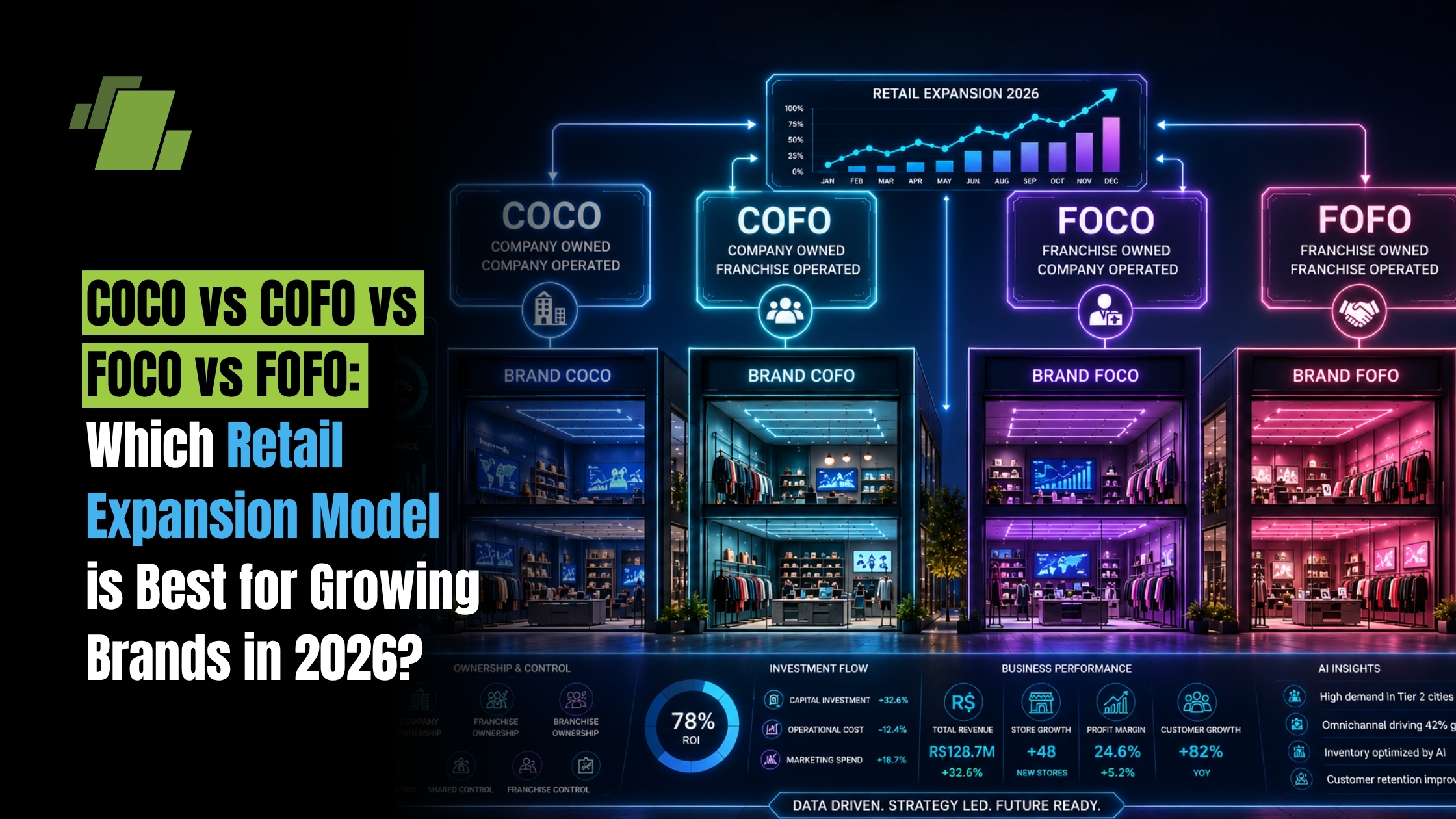
Understanding COCO, COFO, FOCO, and FOFO franchise models is essential for retailers planning expansion through the right franchise business model. Each model offers a unique balance of investment, operational control, scalability, and brand consistency. By leveraging advanced franchise management software, businesses can streamline multi-store operations, maintain brand standards, and achieve sustainable retail growth across all franchise expansion models.
Contact Us
Free Demo Request
Table of Content
- Introduction
- Understanding Retail Expansion Models and Key Features
- Company-Owned Company-Operated (COCO) Model
- Company-Owned Franchise-Operated (COFO) Model
- Franchise-Owned Company-Operated (FOCO) Model
- Franchise-Owned Franchise-Operated (FOFO) Model
- Franchise Invested Company Operated (FICO) Model
- Detailed Model Analysis and Comparison
- Investment and Capital Requirements
- Operational Control and Brand Consistency
- Scalability and Growth Speed Analysis
- Implementation Challenges and Strategic Solutions
- Advantages of Each Retail Expansion Model
- Passive Income Potential in Franchise Models
- Why Choose LOGIC ERP Software for Franchise Models?
- Conclusion
- Frequently Asked Questions
- Additional Resources
Introduction
The COCO model – Company Owned, Company Operated – is the most control-intensive retail expansion strategy available to brands today, requiring the parent company to fund, build, and directly manage every store location. But COCO is only one of four dominant franchise models shaping how brands scale across multiple locations in 2026. Understanding the differences between COCO, COFO, FOCO, and FOFO is essential for any brand planning its next phase of growth.
This article provides a comprehensive breakdown of all four retail expansion models – their investment requirements, operational structures, risk profiles, and real-world applications – so you can determine which approach best fits your brand’s capital position, growth ambitions, and control requirements. Whether you’re evaluating franchise opportunities or debating between company owned outlets and franchise operated locations, this guide covers what you need to know.
The short answer: The COCO model offers complete control over brand standards and customer experience but demands the highest capital investment. On the opposite end, FOFO stands for Franchise Owned, Franchise Operated and enables the fastest expansion with minimal financial commitment from the brand. COFO and the FOCO model fall between these extremes, balancing ownership and operational responsibility in distinct ways.
By the end of this article, you will:
- Understand how each model allocates investment, ownership, and operational control between brands and franchise partners
- Know the scalability potential and financial risk profile of COCO, COFO, FOCO, and FOFO
- See real-world examples from brands like Lenskart, Tanishq, Starbucks, McDonald’s, and Subway
- Recognize which model fits specific 2026 market conditions, including omnichannel pressure and capital constraints
- Learn how technology – particularly ERP systems – enables operational consistency across any expansion model
- Discover the key features and advantages of each franchise model, including insights on the less common FICO model
- Understand how passive income opportunities arise within franchise structures
Understanding Retail Expansion Models and Key Features
Retail expansion models are strategic frameworks that define who owns a store and who manages its day to day operations. These business models determine everything from capital allocation and staffing to supply chain management and customer experience delivery. Choosing the wrong model can stall growth, drain capital, or erode brand quality – making this one of the most consequential decisions for any retail business planning to expand.
Model selection directly impacts three critical variables: brand consistency across outlets, the capital required to open each new location, and the speed at which a brand can enter new markets. In the retail industry today, where consumers expect seamless experiences whether shopping online or in-store, the stakes of this decision have never been higher.
Company-Owned Company-Operated (COCO) Model
COCO model means Company Owned, Company Operated. In this structure, the brand retains full control over every aspect of retail operations – from real estate acquisition and store design to staffing, inventory management, pricing, and customer service. In COCO, the company retains full control over operations, and no franchise partner is involved at any level.
COCO model requires significant capital investment from the company, as the brand funds 100% of store buildout and absorbs all operational costs. However, this investment buys something invaluable: uncompromised operational consistency. Starbucks initially used the COCO model to ensure quality across its early locations, establishing the service standards and brand presentation that defined its global identity. COCO provides consistency in brand presentation to consumers, making it the preferred model for premium and luxury retail segments where the customer experience must be flawless.
Additionally, COCO models benefit from pre-trained COCO models in computer vision applications that enable faster development of custom applications, reflecting the model’s emphasis on how objects relate to their environment. COCO includes 80 common object categories and over 330,000 images with 1.5 million object instances in datasets, promoting improved generalization to real-world data. This analogy highlights the comprehensive control and detailed operational oversight inherent in the COCO retail model.
Company-Owned Franchise-Operated (COFO) Model
In the COFO model, the company owns the physical retail location – the real estate, fit-out, and infrastructure – but delegates operational responsibility to a franchise partner. The franchisee handles staffing, local marketing, and daily operations while following corporate guidelines and brand standards.
COFO reduces the operational burden compared to COCO while allowing the brand to retain asset ownership. This means the parent company still controls property selection and store design but doesn’t need to manage every store directly. The trade-off is that the company manages property-level capital risk while depending on the franchisee’s execution quality for revenue performance.
Franchise-Owned Company-Operated (FOCO) Model
FOCO stands for Franchise Owned, Company Operated. In FOCO, the franchisee invests the capital – covering the location, lease, fit-out, and sometimes initial inventory – while the company manages operations. The brand handles staffing, pricing, merchandising, and the complete customer journey.
In the FOCO model, the franchisee owns the outlet but the company operates it, creating a structure where capital risk sits with the investor while the brand maintains direct operational control. The FOCO model allows for strong operational control without full capital investment from the brand. This makes the FOCO franchise model especially attractive in premium categories like jewelry, eyewear, and electronics – sectors where consistent service delivery and professional management are non-negotiable.
FOCO enhances brand credibility through consistent customer experience, which is why brands like Tanishq deploy this model extensively across their store networks. Investment in FOCO franchises varies widely based on brand and location, with revenue-sharing or rent-based compensation structures used to align incentives between brand and investor.
Franchise-Owned Franchise-Operated (FOFO) Model
FOFO stands for Franchise Owned, Franchise Operated. Here, franchisees both invest in and run their outlets independently while the brand provides training, branding, and operational support. FOFO allows rapid expansion with minimal financial commitment from the brand, making it ideal for fast-growing retail chains.
Brands like McDonald’s and Subway use the FOFO model to achieve massive global footprints. FOFO enables entrepreneurial ownership at the outlet level, but operational oversight is limited, which can lead to variability in customer experience and brand consistency.
Franchise Invested Company Operated (FICO) Model
The FICO model is similar to FOCO but with subtle differences in operational and financial control. In FICO, the franchisee invests capital and maintains significant control over financing aspects, while the company manages operational activities. This model provides another hybrid approach offering advantages in balancing investment and control.
Detailed Model Analysis and Comparison
Building on the foundational understanding of each model’s ownership and operational structure, this section examines how COCO, COFO, FOCO, and FOFO perform in practical implementation – where capital gets deployed, who controls the customer experience, and how quickly each model lets a brand scale.
Investment and Capital Requirements
COCO model capital intensity is the highest of any expansion approach. The brand funds 100% of real estate, construction, equipment, staffing, and ongoing operations. According to FDDIQ’s State of Franchising 2026 data, the median total investment per retail franchise location in the U.S. is approximately $456,000 – and for fully company owned flagship stores, the figure can be substantially higher. Brands like Apple and Tesla operate COCO stores that cost millions per location but deliver unmatched brand immersion.
COFO model mixed investment sees the brand funding property ownership while the franchise operated partner covers operational startup costs and ongoing management expenses. The company retains the asset on its balance sheet, which can appreciate over time but ties up significant capital.
FOCO model shared capital flips the investment equation. The franchisee invests in the physical location and fit-out, while the brand bears the cost of running operations – staffing, training, inventory management, and supply chain logistics. This structure lets brands expand without heavy real estate investment while maintaining the operational control they need.
FOFO model minimal brand investment places both capital and operational costs on the franchisee. Franchisees own and operate their outlets in FOFO, and brands like McDonald’s and Subway use the FOFO model to achieve massive global footprints. FOFO allows rapid expansion with minimal financial commitment from the franchisor, whose investment is limited to brand systems, training infrastructure, and support services. The retail category in the U.S. showed approximately +40.9% average unit growth in 2025/2026, much of it driven by franchise business model expansion.
Operational Control and Brand Consistency
The COCO model delivers maximum control. Because the company operates every location directly, there is zero variance in how brand standards are implemented. Every pricing decision, merchandising display, and customer interaction follows corporate protocols. This is why Lenskart maintains nearly 80% of its 2,000+ stores as COCO locations in metro markets – ensuring premium experience consistency where it matters most.
The COFO model provides selective control. The brand controls the physical environment (store design, location, signage) but relies on franchise partners for execution of daily operations. Operational oversight comes through guidelines, audits, and performance metrics rather than direct management. This model works well in high-visibility locations where the brand wants property control but can delegate day-to-day management.
The franchise owned company operated (FOCO) model gives the brand direct control over operations – the company manages staffing, customer interactions, merchandising, and service standards – despite not owning the location. This is particularly valuable in categories like jewelry, where Tanishq uses FOCO across Tier-2 and Tier-3 cities in India to ensure that every store delivers the same customer experience regardless of who owns the property.
The FOFO model offers the least direct control. FOFO provides brand support but low operational oversight, relying instead on training programs, operational manuals, proven systems, and periodic audits. The franchisee owns the outlet, the franchisee operates it, and the brand’s influence is contractual rather than hands-on. This is where quality variance is most likely to emerge.
Scalability and Growth Speed Analysis
| Factor | COCO | COFO | FOCO | FOFO |
|---|---|---|---|---|
| Capital Needed from Brand | Highest (100%) | High (property only) | Moderate (operations only) | Lowest (support systems only) |
| Expansion Speed | Slowest | Moderate | Moderate-Fast | Fastest |
| Operational Control | Complete control | High with oversight | Direct operational control | Limited – guideline-based |
| Financial Risk for Brand | Maximum exposure | High capital risk, shared ops risk | Operational risk only | Minimal – risk sits with franchisee |
| Brand Consistency | Highest uniformity | High with some variance | High – brand runs operations | Variable – depends on franchisee quality |
| Revenue Retention | Full margins | Shared via management fees | Revenue sharing with investor | Royalty/fee-based income only |
| Best Fit | Premium flagships, luxury | High-visibility key locations | Service-intensive categories | Commodity retail, rapid geographic spread |
The fundamental trade-off is clear: speed and capital efficiency pull toward FOFO, while control and consistency pull toward COCO. The COFO and FOCO models attempt to split this difference, with COFO favoring asset control and FOCO favoring operational control. Brands entering new markets quickly often start with FOFO before transitioning key locations to higher-control models – a pattern visible across the Indian retail landscape.
Recent Franchise Return Analysis from Franchise
Stack reveals that some heavily franchise-operated brands face return compression when fee burdens grow too high. For example, Subway carries a fee load of 13.5% with average unit volume contracting approximately 4.1% year over year a cautionary signal for FOFO-dominant brands that do not invest enough in franchisee support and market management.

Implementation Challenges and Strategic Solutions
Selecting a retail expansion model is only the beginning. Each model introduces distinct operational challenges that can undermine growth if not addressed proactively. Here’s how successful brands solve the most common problems.
Capital Constraints in COCO Model
The most significant barrier to COCO expansion is the sheer capital required per location. When every store demands full investment from the brand, even well-funded companies hit limits quickly.
Solution: Adopt a phased expansion approach. Start with COCO in high-ROI flagship markets where complete control maximizes revenue and brand equity. Use these locations as operational “labs” to refine the customer experience, train leadership talent, and pilot new technology before replicating across other models. Many brands also pursue asset-light variations – leasing rather than purchasing real estate – to reduce capital lock-up while maintaining operational control. In India, Reliance Retail uses mostly COCO for its premium formats in metro cities, concentrating capital where returns are highest.
Quality Control in FOFO Model
Because franchisees own and operate their outlets in FOFO, maintaining consistent brand standards across hundreds or thousands of locations is the primary challenge. Poor local execution can erode brand equity built over decades.
Solution: Build robust training programs with certification requirements before any franchise business operates under your brand. Implement regular audits – both scheduled and mystery-shopper-based – to monitor service standards, visual merchandising, and product quality. Performance-based incentive structures that tie franchisee compensation to customer satisfaction scores and compliance metrics create alignment. DTDC, with 3,500+ FOFO outlets across India, demonstrates that standardized training and active involvement in franchisee development can maintain quality at massive scale.
Operational Complexity in FOCO Model
When the brand manages operations across locations it doesn’t own, complexity escalates rapidly. Staffing, inventory, and day to day operations must be coordinated across multiple locations with varying lease terms, local regulations, and investor expectations.
Solution: Standardized operational procedures are essential – but they’re only effective when supported by technology. ERP systems designed for multi-store retail management enable brands to centralize inventory control, workforce management, POS integration, and performance tracking across every FOCO location. With the right systems, the company manages operations with real-time visibility into sales, stock levels, and staffing – regardless of how many franchise owned locations are in the network. This centralized control is exactly what makes the FOCO model franchise structure viable at scale, and it’s why multi-store POS software has become a critical investment for expanding brands in 2026.
Advantages of Each Retail Expansion Model
Each retail franchise model offers distinct advantages that appeal to different brand strategies and investor profiles:
- COCO Advantages: Total control over brand and operations, maximum consistency, direct customer feedback, and full revenue retention.
- COFO Advantages: Asset ownership with outsourced operations, reduced operational burden, and ability to maintain property control.
- FOCO Advantages: Operational control without heavy capital investment, enhanced brand credibility, and passive income opportunities for franchisees.
- FOFO Advantages: Rapid expansion, low capital requirements for the brand, entrepreneurial franchisee ownership, and scalability.
- FICO Advantages: Balanced financial control with company-managed operations, suitable for brands seeking hybrid investment models.
Passive Income Potential in Franchise Models
Franchise models like FOCO and FICO particularly enable investors to generate passive income. In these models, franchisees invest capital but delegate daily operations to the company, receiving a share of revenue or fixed returns without active management. This appeals to investors seeking exposure to retail growth without operational responsibilities.
Why Choose LOGIC ERP Software for COFO, FOCO, COCO and FOFO Franchise Models?
Choosing LOGIC ERP software for COFO, FOCO, COCO, and FOFO franchise models empowers brands to efficiently manage complex multi-location operations with precision and ease. LOGIC ERP offers centralized control over inventory, sales, staffing, and compliance, ensuring consistent brand standards across all franchise types. Its cloud-based platform delivers real-time visibility into each outlet’s performance, enabling proactive decision-making and rapid response to market changes. For COCO and FOCO models, LOGIC ERP streamlines company-operated processes, while for COFO and FOFO models, it supports franchisee onboarding, training, and operational audits to maintain quality. Additionally, LOGIC ERP integrates seamlessly with POS systems and supply chain tools, reducing operational complexity and enhancing scalability. By choosing LOGIC ERP, growing brands gain a powerful technology partner that balances control, speed, and profitability across diverse retail expansion strategies in 2026.
Conclusion
Choosing the best retail expansion model depends on a brand’s unique goals, capital availability, and desired level of operational control. The COCO model offers unmatched consistency and control but requires the highest investment, making it ideal for premium brands focused on flawless customer experience. FOFO enables rapid growth with minimal financial risk for the brand, best suited for retailers prioritizing speed and geographic reach. COFO and FOCO models strike a balance, allowing brands to share investment and operational responsibilities while maintaining critical control points.
Retailers must explore their strategic priorities carefully whether that’s maximizing brand consistency, accelerating expansion, or optimizing capital deployment to select the model that aligns with their long-term vision. Hybrid approaches combining elements of COCO, COFO, FOCO, and FOFO can also unlock tailored advantages in diverse markets.
Technology solutions like LOGIC ERP play a pivotal role in managing complexity across all models, enabling real-time operational oversight and ensuring brand standards are met regardless of ownership or management structure.
In 2026, successful retail expansion hinges on choosing the right franchise model to fuel sustainable growth, enhance customer experience, and optimize financial returns. By understanding these models deeply and leveraging technology, brands can confidently navigate the evolving retail landscape and capitalize on emerging opportunities.
Call at +91-73411-41176/75 or send us an email at sales@logicerp.com to book a free demo today!
Next Steps for Growing Brands
- Assess your capital and operational capabilities to determine which model fits your current resources.
- Explore hybrid models to balance speed, control, and investment risk across different markets.
- Invest in technology platforms like LOGIC ERP to maintain consistency and scale operations efficiently.
- Engage with experienced franchise partners to leverage their expertise and local market knowledge.
- Continuously monitor performance and adapt your expansion strategy based on market feedback and operational data.
By following these steps, retailers can position themselves for successful expansion in 2026 and beyond.
Frequently Asked Questions
1. What Does the COCO Model Mean in Retail Expansion?
The COCO model stands for Company Owned, Company Operated. It means the company owns and directly manages all store locations, retaining full control over operations, branding, and customer experience. This model requires high capital investment but ensures maximum brand consistency.
2. How is the COFO Model Different from COCO and FOCO?
In the COFO model (Company Owned, Franchise Operated), the company owns the store property but franchisees run daily operations under strict guidelines. This contrasts with COCO where the company operates stores directly and FOCO where franchisees own the outlet but the company operates it.
3. What are the Key Benefits of the FOCO Model?
The FOCO model (Franchise Owned, Company Operated) offers strong operational control to the brand while transferring capital investment to franchisees. It enhances brand credibility by ensuring consistent customer experience through company-managed operations, making it ideal for premium retail sectors.
4. Why Do Brands Choose the FOFO Model for Expansion?
FOFO (Franchise Owned, Franchise Operated) enables rapid geographic expansion with minimal financial risk for the brand. Franchisees invest in and manage their outlets independently, supported by brand training and marketing. Brands like McDonald’s and Subway successfully use this model to scale quickly.
5. Can Brands Use a Hybrid Approach Combining COCO, COFO, FOCO, and FOFO?
Yes, many brands adopt hybrid retail expansion models to balance control, investment, and growth speed. For example, they may use FOFO for rapid market entry, FOCO for operational consistency in key regions, and COCO for flagship stores requiring full brand oversight.
6. How Does LOGIC ERP Software Support These Franchise Models?
LOGIC ERP provides centralized management tools tailored for COCO, COFO, FOCO, and FOFO models. It enables real-time inventory control, sales tracking, staffing management, and compliance monitoring, ensuring consistent brand standards and operational efficiency across diverse franchise structures.
7. What Investment Levels are Typical Across COCO, COFO, FOCO, and FOFO Models?
COCO requires the highest capital investment as the company funds all store costs. COFO involves company ownership of property with franchise-operated management, requiring moderate investment. FOCO shifts capital investment to franchisees who own the outlet, while FOFO has the lowest brand investment, with franchisees funding and operating stores.
8. Which Retail Expansion Model Offers the Best Balance of Speed and Control?
FOFO offers the fastest expansion due to franchisee-driven growth but with less operational control. COCO provides maximum control but slower growth due to capital needs. COFO and FOCO models provide intermediate options balancing operational oversight and investment risk.
9. How Do These Models Impact Brand Consistency and Customer Experience?
COCO guarantees the highest brand consistency through direct company operation. FOCO maintains strong consistency by company managing operations, despite franchise ownership. COFO offers moderate control, while FOFO’s decentralized operations can lead to variability in customer experience.
10. What are Common Challenges in Implementing These Franchise Models?
Challenges include capital constraints in COCO, quality control in FOFO, and operational complexity in FOCO. Solutions involve phased expansion, robust training and audits, and leveraging technology platforms like LOGIC ERP for operational standardization and real-time management.
11. What is a Franchise Business Model?
A franchise business model is a method of expanding a brand by allowing independent investors (franchisees) to own and operate outlets using the brand’s name, systems, and support. It defines how ownership, investment, and operational control are shared between the franchisor and franchisees.
12. How Does the FOCO Model Franchise Work?
The FOCO model franchise stands for Franchise Owned, Company Operated. In this structure, the franchisee invests in and owns the outlet, while the company manages daily operations, ensuring consistent customer experience and operational control.
13. What are the Benefits of Choosing a Foco Franchise?
A foco franchise allows investors to earn passive income by owning the location without managing day-to-day operations. It provides strong brand consistency since the company operates the store, making it ideal for investors seeking minimal operational involvement.
14. How Do Franchise Business Models Differ in Retail Expansion?
Franchise business models vary based on who owns the outlet and who operates it. Models like COCO, COFO, FOCO, and FOFO offer different balances of capital investment, operational control, and growth speed to suit various brand strategies.
15. Why Should I Consider the FOCO Model Franchise for My Investment?
The foco model franchise is attractive because it balances investment and control. Franchisees invest capital to own the store, while the company operates it, reducing operational risk for the investor and maintaining brand standards.
Additional Resources
For further exploration of retail expansion strategies and franchise models, consider these resources:
- Franchise business model case studies from top retailers
- LOGIC ERP software demo and implementation guides
- Market analysis reports on franchise growth trends in 2026
- Workshops and webinars on retail operational excellence and franchise management
- Industry forums connecting brands with franchise investors and operators
Exploring these resources can deepen your understanding and support informed decision-making as you scale your retail brand.
Author
Gurbir Singh
Co-founder & Managing Director | LOGIC ERP Solutions Pvt. Ltd.
With 30+ years of experience in the tech industry, I took the helm of technology & product development, ensuring LOGIC ERP’s continuous innovation & leadership in the evolving tech landscape.