Understanding GST Reconciliation: A Step-by-Step Guide

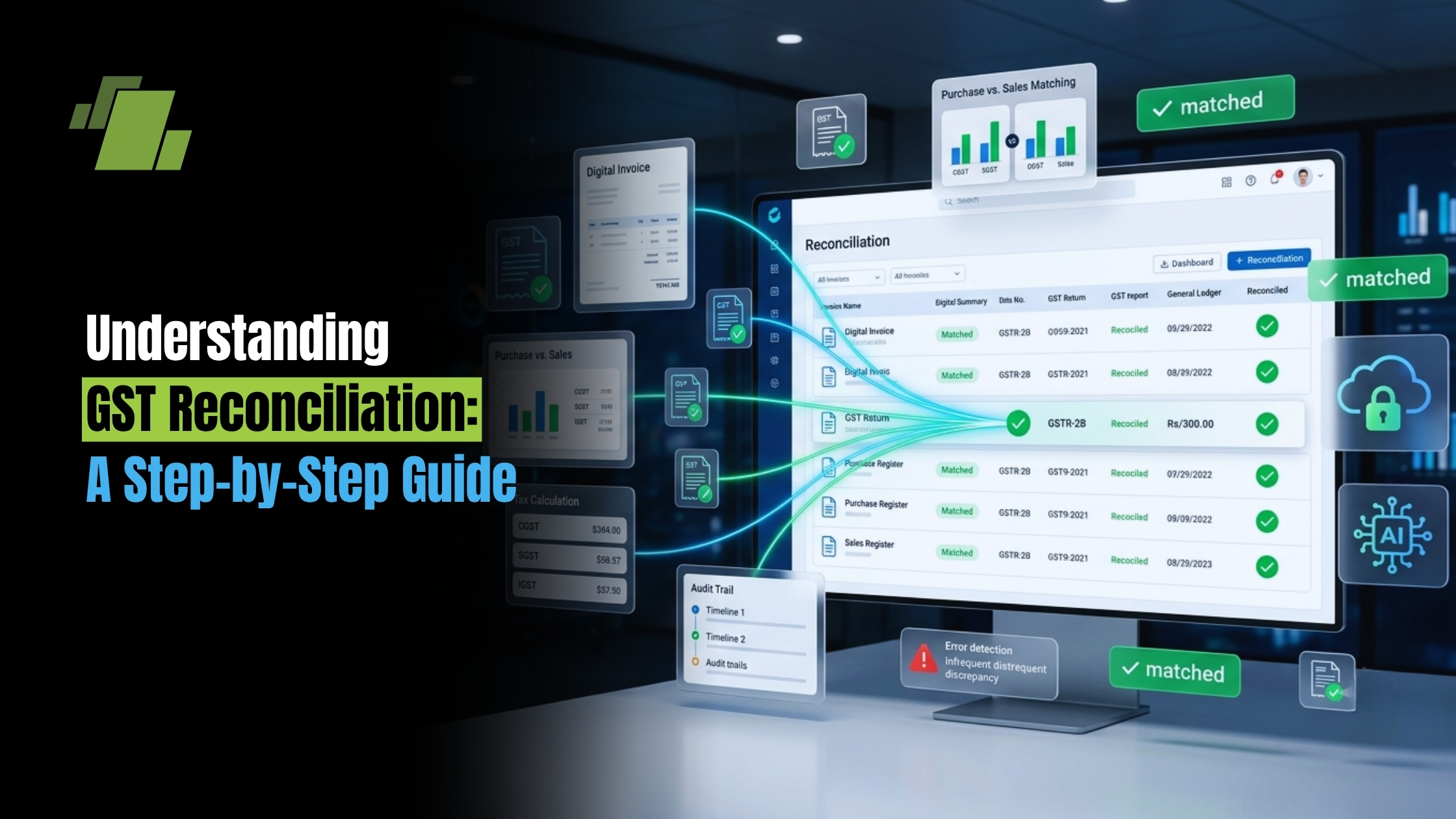
GST reconciliation is a crucial task for businesses. It ensures that your tax records align with your GST returns. This process helps in maintaining compliance and avoiding penalties.
Understanding how to do GST reconciliation can seem daunting. However, with the right guidance, it becomes manageable. This guide will walk you through each step and simplify the reconciliation process. They help in identifying discrepancies and ensuring accuracy.
Contact Us
Free Demo Request
Regular reconciliation is vital for accurate tax reporting. It aids in claiming input tax credits and maintaining financial integrity. By following this guide, you can streamline your GST reconciliation process.
Stay compliant and avoid costly errors. Learn how to do GST reconciliation effectively and efficiently.
What is GST Reconciliation? Meaning and Importance
GST reconciliation ensures that your business’s financial records match the data filed in GST returns. It involves comparing your internal records with data reported to tax authorities. This process is key for maintaining compliance.
Understanding GST reconciliation means knowing its role in tax accuracy. Regular reconciliation uncovers discrepancies between purchase records and GST filings. It also aids in identifying any mismatches or errors promptly.
The reconciliation process is vital for several reasons:
- Ensures accurate tax reporting
- Helps claim input tax credits
- Prevents penalties and notices
- Maintains financial transparency
GST reconciliation should not be overlooked. It’s a proactive approach to ensure all GST-related transactions are correctly recorded. This not only keeps your business compliant but also enhances financial reliability. By understanding its importance, businesses can better prepare for audits and improve their financial health. Regular practice of reconciliation can also boost business credibility among stakeholders.
Key GST Returns and Data Involved in Reconciliation
The GST reconciliation process requires a thorough understanding of various GST returns. Each return serves a distinct function in tax reporting. Key returns include GSTR-1, GSTR-2A/2B, and GSTR-3B.
GSTR-1 contains details of outward supplies and is filed monthly or quarterly. GSTR-2A/2B is an auto-populated return reflecting inward supplies based on suppliers’ data. GSTR-3B summarizes sales, purchases, and the tax liability. Accurate reconciliation uses these returns to match sales and purchase records.
Essential data involved in GST reconciliation include:
- Invoice numbers and dates
- GSTIN of suppliers and customers
- Tax rates and amounts
- Credit and debit notes
- Tax payment details
By reconciling these returns, businesses ensure all transactions have been correctly reported. This process confirms that the input tax credits claimed align with corresponding supplier declarations. Proper reconciliation minimizes discrepancies and enhances overall tax compliance.
The GST Reconciliation Process: Step-by-Step
GST reconciliation is a multi-step process that requires careful attention to detail. The first step involves collecting all relevant documents. Gather invoices, credit notes, and GST returns to form the basis for your reconciliation.
Next, compare your purchase register with the GSTR-2A/2B data. This step is crucial to identifying any mismatched entries. Discrepancies often arise due to unreported invoices or incorrect GSTINs.
Steps in the GST Reconciliation Process:
- Gather all necessary financial documents.
- Extract data from GSTR-2A/2B.
- Cross-check entries with your purchase register.
After ensuring data accuracy, verify that your sales data aligns with GSTR-1. Mismatches here can lead to compliance issues or lost tax credits. Regular matching of these records helps maintain proper tax filings.
Once discrepancies are identified, reach out to vendors for corrections. This step helps resolve issues before the final return filing. Timely communication is essential in ensuring that all records are accurate and complete.
Finally, calculate the final tax liability and confirm that it matches your GSTR-3B submission. Correct any errors promptly to avoid penalties. Utilize digital tools to streamline repetitive tasks and reduce human errors.
Tips for Effective Reconciliation:
- Regularly update your reconciliation records.
- Use software to automate reconciliation tasks.
- Keep track of any vendor communications regarding data corrections.
By following these steps, businesses can simplify their GST reconciliation efforts. This process not only improves accuracy but also ensures compliance with GST regulations.
How to Do GST Reconciliation in Excel: Formulas and Tips
Excel is a powerful tool for conducting GST reconciliation efficiently. Using Excel, you can leverage formulas to automate data matching and simplify the reconciliation process. This section explores some valuable Excel techniques and tips.
Begin by importing all your relevant data into Excel. Ensure your purchase and sales registers, as well as GSTR-2A/2B and GSTR-1, are well-organized in separate worksheets. A clean layout simplifies comparisons.
Excel Formulas for GST Reconciliation:
- VLOOKUP: Find and match specific data across sheets.
- Pivot Tables: Summarize and visualize data trends.
Employ conditional formatting to highlight discrepancies instantly. This visual cue helps quickly identify errors or unmatched entries. Excel’s autofilter feature is useful for sorting through large datasets effortlessly.
Regularly update your spreadsheets to reflect any adjustments. This practice ensures that your records remain accurate and up-to-date. It also aids in quick reconciliation during subsequent GST filings.
Tips for Effective Excel Reconciliation:
- Maintain a clear and logical structure.
- Use consistent naming conventions for ease of reference.
By mastering these Excel formulas and tips, you can conduct precise GST reconciliation. Excel’s flexibility and automation capabilities make it ideal for handling complex data entries.
GST Reconciliation : Automation and Best Practices
Accounting Software that simplifies GST reconciliation with its automation features. For businesses using erp software, it provides built-in capabilities to streamline the reconciliation process efficiently.
To get started, ensure your software is updated to the latest version. This allows you to utilize the software’s enhanced GST functionalities. It automates data retrieval from GSTR-2A, enabling quick comparisons with your purchase records.
Here are some best practices for GST reconciliation:
- Use Reconciliation Reports: Access in-built reports to track mismatches.
- Automate Data Entry: Leverage automated features for transaction entries.
- Regularly Review Entries: Schedule regular checks to prevent discrepancies.
By adhering to these best practices, businesses can maintain accurate and compliant records. Regular updates and training for users can further enhance these processes, making GST reconciliation effective and straightforward.
GST Reconciliation in an Audit: Checklist and Procedures
GST reconciliation during an audit is crucial for verifying data accuracy and financial integrity. An audit ensures that all reported figures align with your financial statements, preventing potential issues.
Having a thorough checklist is essential for an efficient audit process. A checklist ensures all areas are covered, leaving no room for oversight. Here are key items to include in a GST audit checklist:
- Verify Input Tax Credits: Cross-check all claimed credits.
- Review Output Tax Liabilities: Ensure liabilities are accurately reported.
The audit procedures must involve meticulous examination and cross-verification of entries. Engage in detailed scrutiny of all transactions to ensure compliance. Another essential part of the audit is identifying any discrepancies.
Below are critical audit procedures to follow:
- Cross-Verify with Vendor Records: Ensure alignment with vendor data.
- Check Compliance with Filing Deadlines: Verify that all returns are timely filed.
Regular audits, supported by a robust checklist, help maintain compliance with tax authorities. They also aid in uncovering errors that might otherwise go unnoticed. This proactive approach strengthens financial reliability and trustworthiness, crucial for any business.
Common Discrepancies and How to Resolve Them
GST reconciliation is not without its challenges. Common discrepancies often arise, causing headaches for those involved. Understanding these issues and resolving them swiftly is vital for smooth operations.
Typical discrepancies might include unmatched invoices, incorrect GSTINs, or errors in tax rates. These discrepancies can lead to significant delays and administrative burdens if not addressed promptly. Here’s how you can tackle some of the common issues:
- Unmatched Invoices: Reconcile invoices with GSTR-2A/2B.
- Incorrect GSTIN: Verify and correct GSTIN entries promptly.
- Tax Rate Errors: Cross-check with applicable tax rates.
Communicating with vendors is essential when discrepancies arise. Clear and timely communication can resolve most issues quickly. By maintaining accurate records and using automated tools, discrepancies can be minimized, ensuring smoother GST management. Regular review and timely adjustments prevent minor issues from becoming major problems.
GST Filing Tips for Accurate Reconciliation
Accurate GST reconciliation begins with diligent filing practices. Proper filing helps prevent errors and discrepancies that could lead to audits or penalties. Following these tips ensures smoother reconciliation and compliance.
First, always maintain detailed and organized records. Keeping thorough records of all transactions is crucial for easy reconciliation and audit readiness. This step cannot be underestimated, as it lays the foundation for all other processes.
Additionally, consistency and timeliness play critical roles. Timely filing aids in catching discrepancies early. To ensure accuracy, consider these tips:
- Review entries before submission.
- Double-check vendor details.
- Keep abreast of filing deadlines.
Finally, consider leveraging technology for efficiency. Using accounting software or reconciliation tools can automate many tasks. This not only saves time but also reduces human errors, leading to more accurate filings.
How to Do GST Reconciliation Easily: Tools and Automation
Simplifying GST reconciliation can save both time and effort. Automation tools are indispensable in streamlining the reconciliation process. These tools can effectively manage data, reduce manual errors, and enhance accuracy.
Utilize software that integrates with your accounting system. Here are a few features to look for:
- Automatic data import
- Real-time compliance updates
- Invoice matching algorithms
By incorporating these tools, teams can focus on resolving discrepancies rather than getting bogged down by data entry. Such an approach not only boosts efficiency but also enhances the overall financial accuracy of your business.
Conclusion: Ensuring Compliance and Accuracy in GST Reconciliation
In conclusion, GST reconciliation is a vital process for maintaining compliance and financial integrity. It helps businesses align their books with filed returns, thereby avoiding potential penalties.
By staying updated with GST laws and leveraging technology, businesses can streamline the reconciliation process. Consistently accurate reconciliation not only boosts credibility but also enhances financial planning. Embracing these practices ensures a smoother tax filing experience and bolsters business operations.

Call at +91-73411-41176/75 or send us an email at sales@logicerp.com to book a free demo today!
Frequently Asked Questions
1. What is GST reconciliation?
GST reconciliation is the process of Master GST Reconciliation: Step-by-Step Guidematching your business’s purchase, sales, and tax records with GST returns such as GSTR-1, GSTR-2B, and GSTR-3B. It helps identify mismatches, claim accurate Input Tax Credit (ITC), and ensure GST compliance.
2. Why is GST reconciliation important?
GST reconciliation helps businesses detect invoice mismatches, prevent ITC loss, avoid GST notices, and maintain accurate financial records. Regular reconciliation also ensures timely compliance with GST regulations and reduces the risk of penalties.
3. Which GST returns are used for GST reconciliation?
The primary GST returns used for reconciliation are:
- GSTR-1 for outward supplies
- GSTR-2B (or GSTR-2A) for inward supplies and ITC
- GSTR-3B for summary tax liability and ITC claims
Comparing these returns with your accounting records ensures accurate tax reporting.
4. Can GST reconciliation be automated?
Yes. Modern ERP and accounting software can automate GST reconciliation by importing GST data, matching invoices, identifying mismatches, and generating reconciliation reports. Automation saves time, reduces manual errors, and improves compliance.
5. How often should businesses perform GST reconciliation?
Businesses should ideally perform GST reconciliation every month before filing GST returns. Monthly reconciliation helps identify discrepancies early, ensures accurate ITC claims, and simplifies year-end audits and financial reporting.

Author
Gurbir Singh
Co-founder & Managing Director | LOGIC ERP Solutions Pvt. Ltd.
With 30+ years of experience in the tech industry, I took the helm of technology & product development, ensuring LOGIC ERP’s continuous innovation & leadership in the evolving tech landscape.