Effective Strategies for Stock Maintenance Management

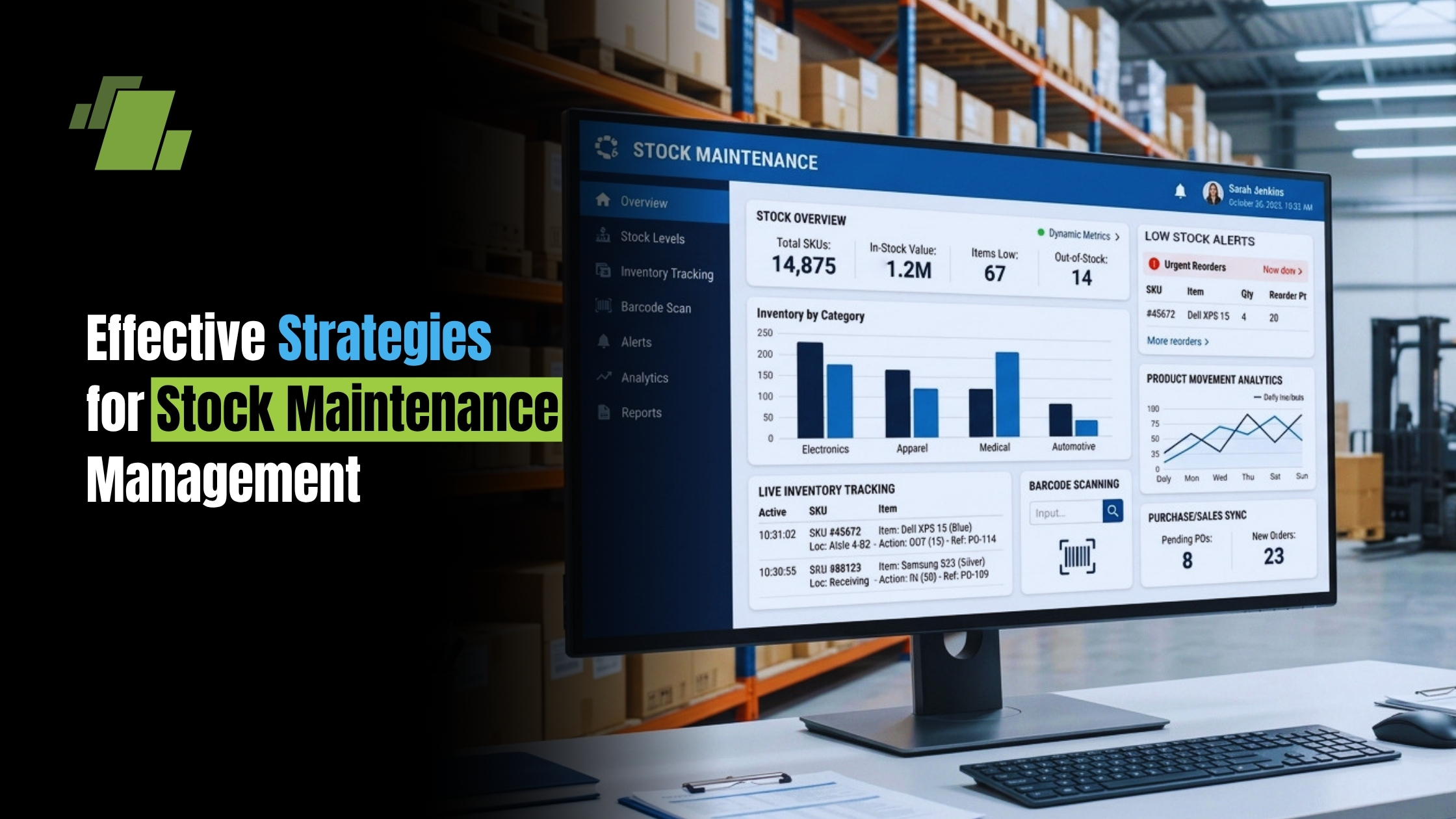
Stock maintenance is a vital part of any business dealing with inventory. It ensures that stock levels are accurate and optimized through disciplined inventory maintenance. This leads to better supply chain efficiency and cost savings.
Managing stock effectively can prevent overstocking and stockouts. Both scenarios can be costly and disruptive. By maintaining the right balance, businesses can improve their operations.
Technology plays a crucial role in modern stock maintenance. A stock maintenance app or stock maintenance software can automate many processes. This makes inventory control more efficient and less prone to errors.
Understanding and reviewing a stock maintenance system use case diagram is also beneficial. It helps visualize and plan inventory management processes. Many teams begin with a use case diagram for stock maintenance system design. This can lead to improved decision-making and system implementation.
In this guide, we will explore effective strategies for stock maintenance management. We will cover tools, techniques, and best practices. These insights will help optimize inventory control and enhance supply chain operations.
Contact Us
Free Demo Request
Understanding Stock Maintenance: Key Concepts and Importance
Stock maintenance involves the meticulous management of inventory to ensure accuracy and efficiency. This practice is critical in preventing excess stock and costly shortages, which can significantly disrupt operations.
The importance of stock maintenance cannot be overstated. Effective stock management leads to cost savings and smoother supply chain operations. It enhances inventory accuracy, which is crucial for meeting customer expectations.
Key concepts in stock maintenance include:
- Inventory Accuracy: Ensuring data matches physical stock.
- Stock Levels: Maintaining optimal inventory to meet demand.
- Inventory Control: Monitoring stock to minimize discrepancies.
- Inventory Maintenance: Routine upkeep of data, processes, and records.
Regular audits and accurate record-keeping are fundamental aspects. These efforts ensure that businesses can respond swiftly to market changes and customer needs. Embracing stock maintenance software and tools further streamlines these processes.
Overall, mastering stock maintenance enables businesses to maintain competitiveness. By leveraging insights from data and technology, companies can enhance their decision-making capabilities. This, in turn, leads to sustained growth and operational resilience.
Common Challenges in Stock Maintenance
Stock maintenance is fraught with several challenges that businesses must navigate. One major issue is inaccurate inventory records, which can lead to either overstocking or stockouts. These discrepancies are often caused by manual data entry errors or lack of timely updates.
Another common challenge is ineffective communication between departments. Misalignment between sales, purchasing, and operations can result in stock discrepancies. This miscommunication hampers inventory accuracy and disrupts supply chain efficiency.
Here are some common challenges in stock maintenance:
- Manual Errors: Lead to inventory inaccuracies.
- Communication Gaps: Between departments cause mismanagement.
- Data Delays: Affect timely stock replenishment.
Additionally, the lack of real-time data can delay response to changes in demand, affecting service levels. To overcome these challenges, businesses need to employ integrated solutions and foster strong interdepartmental coordination.
Essential Strategies for Effective Stock Maintenance
Implementing effective strategies is crucial for successful stock maintenance. Start by establishing clear processes for inventory tracking. This involves using consistent methods to record every stock movement within the warehouse. Accurate tracking aids in reducing discrepancies.
Prioritize regular inventory audits to ensure that physical stock levels match recorded data. Regular checks help identify discrepancies early, allowing for prompt correction. This enhances inventory accuracy and prevents costly errors.
Real-time data analysis is another key strategy. Utilize technology to access current inventory data, enabling informed decision-making. Data insights improve stock replenishment strategies and optimize stock levels.
Here’s a list of essential strategies:
- Inventory Audits: Conduct regularly to maintain accuracy.
- Real-Time Data: Use it to guide decisions.
- Clear Processes: Develop for consistent tracking.
Invest in employee training to improve system use and increase accuracy. Training ensures staff are knowledgeable about processes and technologies. This leads to more efficient stock maintenance and fewer errors.
Continuously review and adjust stock maintenance strategies based on business goals and market demands. Adapting strategies ensures ongoing improvement and alignment with changing requirements. This fosters a resilient inventory system.
Leveraging Technology: Stock Maintenance Apps and Software
Technology has revolutionized stock maintenance. Stock maintenance apps provide mobile access to inventory data, enabling management on the go. This improves flexibility and responsiveness, crucial in today’s fast-paced environment.
Utilizing stock maintenance software automates many processes, reducing manual errors and saving time. Automated systems ensure accuracy in inventory tracking and facilitate seamless integration with other business systems. This boosts operational efficiency and data reliability.
Key benefits of technology in stock maintenance include:
- Mobile Access: Manage inventory anywhere, anytime.
- Automation: Streamlines processes and reduces errors.
- Integration: Connects with other systems for comprehensive management.
Data analytics, a feature of many apps and software, provides valuable insights. Analyzing patterns helps identify trends and optimize stock levels, ensuring adequate supply without overstocking. This data-driven approach supports informed decision-making and inventory optimization.
Investing in technology simplifies stock maintenance tasks and enhances overall performance. From small businesses to large enterprises, leveraging these tools can lead to better inventory management and improved profitability. Embrace technology to stay competitive in the ever-evolving market landscape.
Stock Maintenance System: Use Case Diagram and Workflow
A stock maintenance system is essential for organized inventory management. It helps visualize processes and ensure all activities align with business goals. Use case diagrams play a significant role in this system.
Use case diagrams provide a visual representation of system interactions. These diagrams outline the relationships between users and system functions. This visualization helps identify requirements and streamline processes for better efficiency.
Common elements in use case diagrams for stock maintenance include:
- Actors: Users like warehouse staff and inventory managers.
- Use Cases: Functions such as stock tracking and replenishment.
- Relationships: Links between actors and use cases.
Building an effective workflow involves detailing each process step. This ensures a clear understanding of how tasks flow through the system. Documenting workflows helps reduce redundancy and improve task efficiency across the supply chain.
By using diagrams and detailed workflows, businesses can enhance stock maintenance systems. This structured approach supports accurate inventory control and aligns processes with organizational objectives.
Inventory Control Techniques for Accuracy and Optimization
Effective inventory control is crucial for stock maintenance. It ensures inventory accuracy and optimizes resources. This leads to better customer satisfaction and cost savings.
Several techniques can enhance inventory control. Among them, the ABC analysis is a popular method. It classifies inventory into three categories based on importance and turnover rate.
Inventory control techniques include:
- ABC Analysis: Prioritizes high-value stock items.
- Cycle Counting: Regular audits of inventory sections.
- Safety Stock Management: Maintains buffer stock to avoid shortages.
- Demand Forecasting: Predicts future stock needs using historical data.
Cycle counting helps identify discrepancies without halting operations. This technique ensures continuous inventory accuracy. Regular checks keep the information up-to-date and reliable.
Another key element is demand forecasting. This involves using past sales and trends to predict future needs. Accurate forecasts prevent overstocking and stockouts, optimizing inventory levels.
Adopting these techniques can significantly impact inventory accuracy. They provide a structured approach to managing stock effectively. Accurate inventory control results in improved operational efficiency and better allocation of resources.
Stock Replenishment: Best Practices for Maintaining Optimal Stock Levels
Effective stock replenishment is vital for avoiding overstock or stockouts. It requires a strategic approach based on accurate data. Predicting demand accurately is crucial to keeping stock levels optimal.
Real-time data aids in making informed replenishment decisions. It helps in recognizing sales trends and adjusting orders as needed. This ensures that supply aligns with demand effectively.
Consider these best practices for stock replenishment:
- Monitor Inventory Levels: Continuously track stock quantities.
- Use Demand Forecasting: Base decisions on accurate demand predictions.
- Plan for Lead Times: Account for the time taken to restock.
- Establish Reorder Points: Set thresholds for initiating orders.
Using these strategies allows for efficient stock maintenance. They help accommodate fluctuations in demand and avoid unnecessary holding costs. By regularly reviewing and adjusting replenishment practices, businesses can maintain optimal stock levels.
Stock Maintenance in Excel: Tips for Small Businesses
Small businesses often rely on simple tools for stock management. Excel offers a cost-effective way to track inventory. It provides flexibility for those with limited resources.
However, Excel requires careful setup to be effective. Accurate formulas and templates help in minimizing errors. Regular updates are necessary to maintain inventory accuracy.
Here are some tips for stock maintenance in Excel:
- Create Templates: Use structured templates for data entry.
- Automate Calculations: Utilize Excel formulas for automatic updates.
- Regular Updates: Frequently refresh inventory data.
Despite its simplicity, Excel can be powerful for stock tracking. With careful implementation, small businesses can manage their inventory efficiently. It serves as a stepping stone before investing in advanced software solutions.
Integrating Stock Maintenance with Warehouse and Supply Chain Management
Effective stock maintenance relies on seamless integration with warehouse management systems. This integration ensures real-time visibility of inventory movements. It allows for better coordination across the supply chain.
A well-integrated system can automate stock updates and reduce manual errors. It enhances efficiency in tracking and managing stock levels. This interconnected approach supports faster response to demand changes.
Key benefits of integration include:
- Improved Inventory Accuracy: Minimize discrepancies with synced data.
- Enhanced Efficiency: Streamline operations across different departments.
- Informed Decision Making: Use real-time data for strategic planning.
Integrating stock maintenance with warehouse and supply chain management fosters better collaboration. This collaboration ensures that all departments work from a single source of truth. The result is a more resilient and responsive business operation.
Continuous Improvement: Audits, Training, and Process Reviews
Continuous improvement is vital for stock maintenance success. Regular audits pinpoint discrepancies and uncover inefficiencies. They help ensure inventory data remains accurate and reliable.
Training staff on new processes and technologies elevates overall system utilization. It enhances the ability to tackle challenges effectively. Well-trained employees contribute to smoother operations.
Key elements of continuous improvement involve:
- Conducting Regular Audits: Identify areas for inventory accuracy improvement.
- Providing Ongoing Training: Equip staff with knowledge and skills.
- Reviewing Processes Periodically: Assess and enhance current methodologies.
Process reviews provide opportunities to refine strategies and adapt to new trends. They promote innovation and resilience in stock maintenance. Emphasizing continuous improvement leads to a stronger, more agile stock management system and supports ongoing inventory maintenance across teams.
Conclusion: Building a Resilient Stock Maintenance System
Creating a resilient stock maintenance system requires a blend of strategy, technology, and continuous improvement. By integrating these elements, businesses can achieve optimal inventory control and accuracy.
Prioritizing effective stock management fosters efficiency and agility. This approach enables organizations to adapt quickly to market changes and customer demands, ensuring long-term success in an ever-evolving supply chain landscape.

Call at +91-73411-41176/75 or send us an email at sales@logicerp.com to book a free demo today!
Frequently Asked Questions
1. What is stock maintenance and why does it matter?
Stock maintenance is the disciplined management of inventory to keep records accurate and stock levels optimized. It prevents costly overstocking and stockouts, improves supply chain efficiency, and enhances customer satisfaction. By focusing on inventory accuracy, maintaining optimal stock levels, and routinely updating data and processes, businesses gain cost savings, better decision-making, competitiveness, and operational resilience.
2. What are the most common challenges in stock maintenance, and how can we address them?
Typical challenges include manual data entry errors, communication gaps between departments, and delays in updating data often compounded by a lack of real-time visibility. Mitigation involves standardizing clear processes, conducting regular audits, adopting integrated systems for real-time data, and strengthening interdepartmental coordination. Training staff on tools and procedures further reduces errors and keeps operations aligned.
3. How can technology, use case diagrams, and workflow design improve stock maintenance?
Stock maintenance apps and software provide mobile access, automate routine tasks, reduce errors, and integrate with other business systems for end-to-end visibility. Built-in analytics reveal trends to optimize stock levels. Use case diagrams clarify how actors (e.g warehouse staff, inventory managers) interact with system functions (e.g., tracking, replenishment), while documented workflows map each process step to remove redundancy and guide better implementation and decisions. Integration with warehouse and supply chain systems synchronizes data, boosts accuracy, and accelerates responses to demand changes.
4. Which inventory control and replenishment techniques help maintain optimal levels?
Combine proven controls with disciplined replenishment: use ABC analysis to prioritize high-value items, apply cycle counting for continuous accuracy, maintain safety stock to buffer variability, and leverage demand forecasting to align supply with expected needs. For replenishment, continuously monitor inventory, plan for supplier lead times, set reorder points, and use real-time data to adjust orders. Together, these practices cut costs, avoid stockouts/overstocks, and improve service levels.
5. Can small businesses manage stock effectively with Excel, and what are best practices?
Yes, Excel is a cost-effective starting point if set up carefully. Use structured templates for consistent data entry, automate key calculations with formulas, and update records frequently to preserve accuracy. With disciplined use, Excel can handle core tracking needs and serve as a stepping stone before moving to more advanced stock maintenance software.

Author
Gurbir Singh
Co-founder & Managing Director | LOGIC ERP Solutions Pvt. Ltd.
With 30+ years of experience in the tech industry, I took the helm of technology & product development, ensuring LOGIC ERP’s continuous innovation & leadership in the evolving tech landscape.