Procurement vs Purchasing: Key Differences, Processes & Strategic Implementation

Summary
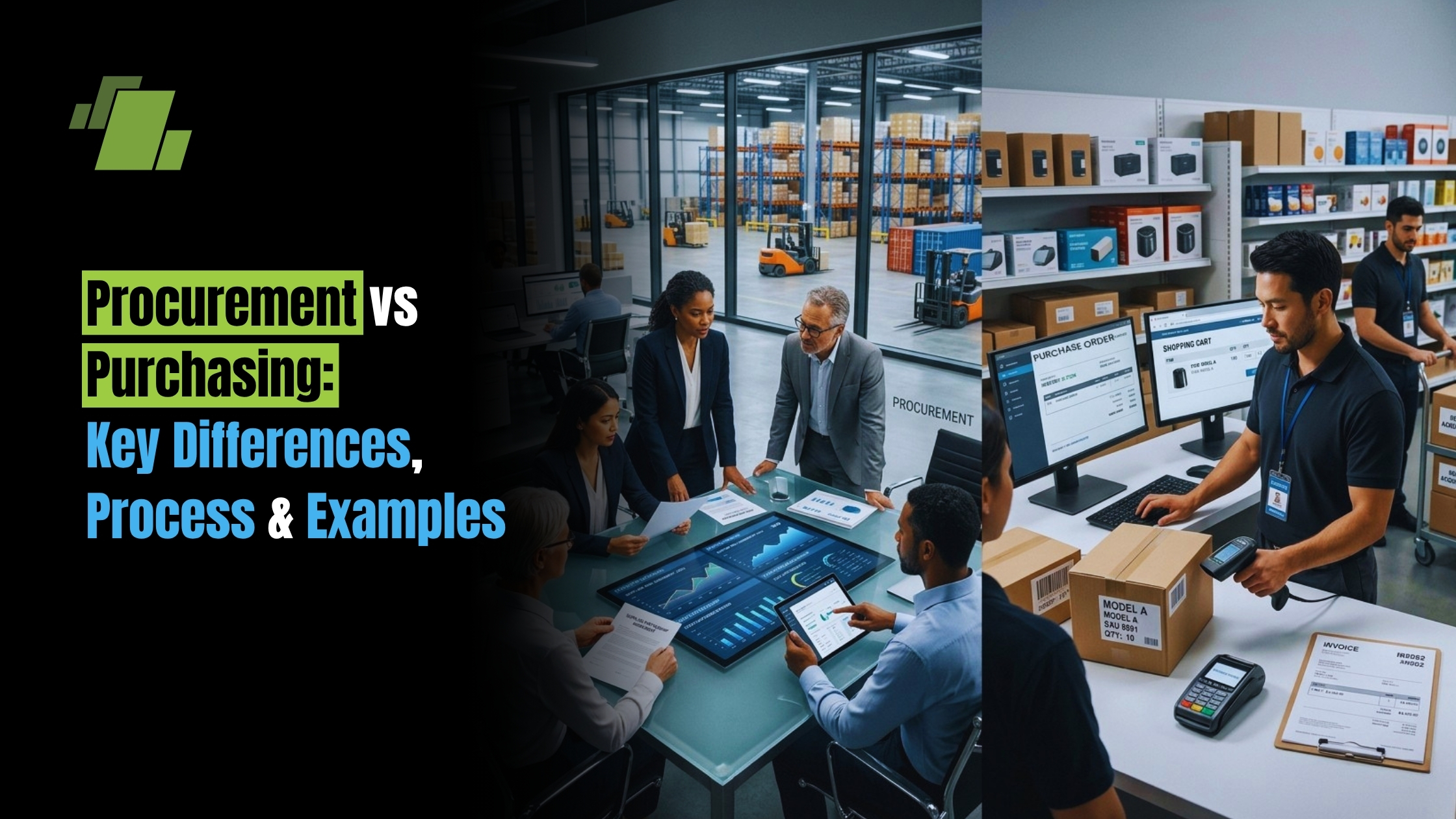
Procurement is a strategic process focused on supplier sourcing, contract negotiation, risk management, and long-term value creation, while purchasing is the transactional process of placing orders, tracking deliveries, and processing payments. Together, they help businesses optimize costs, improve supplier relationships, and ensure efficient operations. With advanced procurement management software, businesses can streamline procurement and purchasing through automation, analytics, and integrated workflow management.
Contact Us
Free Demo Request
Table of Contents
- Introduction
- Understanding Procurement and Purchasing Functions
2.1 What is Procurement?
2.2 What is Purchasing? - Key Differences Between Procurement and Purchasing
3.1 Strategic vs. Tactical Scope
3.2 Proactive vs. Reactive Approach
3.3 Relationship vs. Transaction Focus - Procurement and Purchasing Processes and Implementation
4.1 Procurement Process Steps
4.2 Purchasing Process Steps
4.3 Roles and Responsibilities Comparison - Common Challenges and Solutions
- How LOGIC ERP Automates Procurement and Purchasing Workflows
- Conclusion and Next Steps
- Frequently Asked Questions (FAQs)
- Additional Resources
Introduction
Procurement and purchasing are distinct but interconnected business functions that together govern how organizations acquire goods and services. While often used interchangeably, procurement encompasses the strategic, end-to-end process of sourcing, evaluating, and managing suppliers, whereas purchasing is the transactional subset focused on executing orders and processing payments. Understanding these differences is essential for any organization aiming to optimize spend, reduce risk, and build a resilient supply chain.
This guide covers definitions, key differences, detailed process workflows, roles and responsibilities, common challenges, and strategic implementation guidance. It is designed for procurement professionals, purchasing managers, business owners, and finance teams seeking to sharpen their spend management approach and align procurement and purchasing activities with broader corporate strategy.
The core distinction: Procurement is a strategic process that spans need identification through supplier relationship management and contract negotiation, while purchasing focuses on the tactical execution of orders-raising purchase requisitions, issuing purchase orders, tracking deliveries, and handling payment processing. Both procurement and purchasing functions are essential for business operations, but they contribute value at different levels.
By the end of this article, you will be able to:
- Clearly define and differentiate procurement vs purchasing in organizational context
- Map out procurement and purchasing workflows end to end
- Identify the right roles and responsibilities for each function
- Recognize common pitfalls and apply proven solutions
- Leverage technology and strategic sourcing for measurable cost savings
Understanding Procurement and Purchasing Functions
Procurement and purchasing sit at different points along the value chain, yet both are critical to a company’s operations. Procurement encompasses sourcing, supplier management, contract management, risk mitigation, and long-term value creation. Purchasing operates within the framework procurement establishes, executing the transactional steps that keep goods and services flowing into the organization. Grasping this relationship is the foundation for optimizing both functions.
What is Procurement
Procurement is the broader procurement process of identifying organizational needs, researching and evaluating potential suppliers, negotiating contracts, and managing supplier relationships over time. It is a strategic process that goes well beyond placing orders: procurement involves strategic planning and supplier relationship management, with a focus on total cost of ownership across the product lifecycle rather than unit price alone.
Procurement focuses on long-term value creation. This means the procurement team evaluates suppliers not just on price, but on delivery times, product quality metrics, innovation capability, ESG compliance, and supplier reliability. The goal is to build supplier partnerships that create mutual benefits over time-reducing risks, driving innovation, and aligning the supply chain with broader business needs.
Procurement encompasses activities such as direct procurement (raw materials, components for production), indirect procurement (office supplies, IT services), and services procurement. Each category may involve different sourcing strategies, contract terms, and risk management approaches. Procurement contributes to competitive advantage by optimizing supplier networks, managing costs, and ensuring supply chain resilience-tying procurement decisions directly to corporate strategy.
What is Purchasing
Purchasing is the tactical, transactional process of executing orders and managing payments within the framework established by procurement. Purchasing involves placing orders and managing deliveries, ensuring daily operations run smoothly by maintaining timely delivery of goods and services. The purchasing process includes creating purchase orders, tracking shipments, verifying received goods, and processing payments.
Purchasing focuses on the transactional aspect of acquiring goods: order accuracy, compliance with procurement contracts, adherence to delivery schedules, and invoice management. Purchasing is primarily concerned with immediate order fulfillment, responding to internal requisitions and ensuring that goods arrive on time and within budget. Purchasing handles the operational tasks needed to get goods into the organization, making it indispensable to day-to-day supply chain management.
While purchasing is a subset rather than a standalone function, it requires its own rigor. Purchasing aims to secure the best prices for goods and services within the parameters set by procurement, maintain vendor compliance, and ensure accurate three-way invoice matching. Effective procurement establishes the framework of rules, vendors, and terms for purchasing, and purchasing operates within that framework to deliver results.
Understanding both functions sets the stage for examining their differences in detail and how they interact within the procurement cycle.
Key Differences Between Procurement and Purchasing
The distinction between procurement and purchasing becomes clearer when examined across several dimensions: scope, approach, and relationship focus. These key differences directly impact how organizations manage spend, risk, and supplier performance.
Strategic vs Tactical Scope
Procurement takes a long-term, cross-functional view. It aligns sourcing strategy with business objectives, optimizes the supply base, and manages risk across the entire procurement cycle. Procurement managers engage in category management, strategic sourcing, market analysis, and contract negotiation-activities that shape the supplier landscape and drive competitive advantage.
Purchasing, by contrast, is day-to-day operational execution. The purchasing department processes requisitions, issues purchase orders, tracks deliveries, and manages payment terms. Tactical purchasing is immediate and transaction-oriented: once a purchase order fulfilled and the invoice is paid, the transaction closes. This scope difference means procurement shapes the playing field while purchasing operates on it.
The impact on business outcomes is significant. Organizations that invest in strategic procurement consistently report higher cost savings and supply chain resilience, while those that treat purchasing as their only spend management lever often miss opportunities for value creation.
Proactive vs Reactive Approach
Procurement is proactive, while purchasing is reactive. The procurement function anticipates organizational needs by forecasting demand, studying market trends, evaluating geopolitical and environmental risks, and building contingency plans. Procurement is a proactive function that anticipates organizational needs before they become urgent.
Purchasing is reactive, responding to immediate needs for goods. The purchasing department acts on internal requisitions, fulfilling orders as they arise. This reactive posture is appropriate for operational continuity-purchasing ensures daily operations by maintaining timely delivery of goods-but it does not address the strategic dimensions of supplier selection, risk mitigation, or long-term cost optimization.
For supply chain resilience, the proactive approach of procurement is essential: anticipating disruptions, diversifying the supplier base, and negotiating contracts that protect the organization against volatility. The reactive approach of purchasing keeps operations moving but does not build structural advantages.
Relationship vs Transaction Focus
Procurement focuses on building long-term supplier relationships. Managing supplier relationships is central to the procurement function-supplier evaluation, performance monitoring, co-innovation, and mutual risk mitigation are ongoing activities. Procurement aims to create mutual benefits with suppliers over time, and building strong supplier relationships reduces risks and drives innovation.
Purchasing’s interaction with suppliers is more transactional: placing orders, confirming receipt, resolving delivery issues, and processing payments. Purchasing workflows are designed for efficiency and accuracy in individual transactions, not for cultivating better supplier relationships or driving supplier development.
This difference has real consequences. Organizations with mature supplier relationship management report stronger supply chain performance, more favorable contract terms, and greater access to supplier innovation. Those relying solely on transactional purchasing miss these strategic gains.
Procurement vs Purchasing Processes and Implementation
The procurement and purchasing workflows together form the procure-to-pay (P2P) cycle. Understanding where procurement hands off to purchasing-and how both functions interact-is critical for operational excellence and spend visibility.
Procurement Process Steps
The procurement process is a sequence of strategic activities that establish the conditions under which purchasing operates. Each step builds toward a framework that maximizes value and minimizes risk.
- Need identification and requirements gathering: Stakeholders define business needs, forecast demand, and establish specifications-functional, technical, compliance, and sustainability requirements.
- Market research and supplier evaluation: The procurement team scans the market for potential suppliers, evaluating capability, financial health, ESG standing, and supplier reliability. This may involve issuing an RFI (Request for Information).
- RFP/RFQ issuance and proposal review: For critical or high-value categories, the procurement department issues formal RFPs or RFQs, inviting proposals and comparing them on cost, quality, service, and contract terms.
- Contract negotiation and terms finalization: Procurement managers negotiate price, delivery schedules, service levels, warranties, penalties, payment terms, and sustainability clauses. Legal and compliance teams participate to ensure risk mitigation.
- Supplier onboarding and relationship management: Selected suppliers are integrated into business systems, expectations and KPIs are aligned, and ongoing performance monitoring begins. Procurement aims to gain maximum value, reduce risk, and secure high-quality suppliers.
Procurement processes often involve contract negotiation and supplier management as continuous activities-not one-time events. Supplier evaluation includes delivery times and product quality metrics, with regular reviews, audits, and risk assessments feeding into renewal or exit decisions across the entire procurement cycle.
Purchasing Process Steps
The purchasing process picks up where procurement’s strategic work leaves off, handling the operational execution of acquiring goods and services.
- Purchase requisition creation and approval: Internal departments submit purchase requisitions for needed goods or services. The approval process checks alignment with budgets, policies, and procurement contracts.
- Purchase order generation and supplier communication: Approved requisitions become purchase orders, issued to suppliers with agreed contract terms and pricing. Purchase order management ensures accuracy and compliance.
- Order tracking and delivery management: The purchasing department monitors shipments, manages delivery schedules, and handles exceptions such as delays or damaged goods.
- Goods receipt and quality verification: Received goods or services are checked against the purchase order for quantities, quality, and specifications. Non-conformances are flagged for resolution.
- Invoice matching and payment processing: Invoices are matched to purchase orders and goods receipts (three-way matching), approvals are completed, and payment processing is triggered. This step closes the transactional loop.
Purchasing is a transactional process focused on executing orders, and purchasing involves placing orders and managing deliveries within the parameters procurement has established. This handoff-from strategic sourcing to operational execution-is where procurement and purchasing workflows intersect.
Roles and Responsibilities Comparison
| Criterion | Procurement Manager | Purchasing Agent |
|---|---|---|
| Primary Focus | Strategy development, supplier selection, contract negotiation, risk management | Order execution, delivery tracking, invoice processing, payment coordination |
| Scope | End-to-end procurement cycle, category management, vendor management | Individual transactions, purchase order management, purchasing workflows |
| Supplier Interaction | Long-term relationship building, performance reviews, negotiating contracts | Transactional communication, order follow-up, issue resolution |
| Risk & Compliance | Supply chain risk, ESG compliance, supplier audits, contract risk | Order accuracy, delivery timeliness, invoice compliance |
| Metrics | Total cost of ownership, supplier performance, realized cost savings | Processing costs, order accuracy, payment cycle time |
A procurement specialist or procurement manager sets the policies, supplier base, and evaluation criteria. The purchasing agent operates within those policies and contracts to execute day-to-day purchasing activities. Organizations that clearly define these roles-and the handoff points between them-reduce overlap, improve accountability, and unlock greater value from both functions.
Common Challenges and Solutions
Even well-designed procurement and purchasing functions face implementation difficulties. Addressing these barriers is essential for realizing the full potential of strategic procurement and efficient purchasing.
Role Confusion and Overlap
Many organizations have blurred lines between procurement and purchasing. Without clearly defined responsibilities, purchasing teams may drift into sourcing or contract negotiation, while procurement teams get mired in transactional tasks. This leads to duplicated efforts, missed cost savings, and process errors.
Solution: Establish clear job descriptions, defined handoff points, and governance structures. Regular training and cross-functional communication help maintain boundaries while encouraging collaboration. Effective procurement establishes the framework of rules, vendors, and terms for purchasing-formalizing this handoff is critical.
Technology Integration Gaps
According to Deloitte (2024), nearly 70% of procurement leaders report that disconnected systems and manual approvals hinder vendor efficiency. Manual workflows and siloed data limit visibility into spend, supplier performance, and compliance. E-procurement software automates sourcing and purchase order management, and 62% of procurement leaders automated manual processes in 2023.
Solution: Implement ERP and e-procurement platforms that connect procurement planning with purchasing execution. E-procurement reduces manual transactions in the procure-to-pay cycle and enhances visibility into the entire procurement process. Automated workflows, approval processes, and supplier portals streamline handoffs and reduce processing costs. Currently, 65% of procurement decision-makers use analytics tools for efficiency, reflecting the growing importance of data-driven procurement decisions.
Siloed Operations
Business units may make purchases outside negotiated contracts-a phenomenon known as maverick spend-duplicate suppliers, or lack visibility of spend across the organization. Siloed procurement teams, departments, or geographic units reduce leverage and drive up cost.
Solution: Create cross-functional team structures, shared KPIs, and integrated reporting dashboards. Regular review meetings and procurement reports ensure alignment between procurement and purchasing activities, and between procurement and finance teams. Supplier consolidation and SKU rationalization are proven remedies for siloed spend management.
Addressing these challenges positions organizations to capture the full value of both procurement and purchasing-and to close the gap between contracted savings and actual realized results.
How Does LOGIC ERP Automate Procurement and Purchasing Workflows?
Choosing LOGIC ERP software for purchasing and procurement management empowers your organization to streamline and optimize these critical functions with a unified, user-friendly platform. LOGIC ERP integrates end-to-end procurement and purchasing workflows, enabling seamless collaboration across departments and real-time visibility into spend, supplier performance, and compliance.
With LOGIC ERP, you gain access to advanced e-procurement tools that automate purchase requisitions, purchase orders, invoice matching, and payment processing—reducing manual errors and accelerating cycle times. The software supports strategic sourcing by providing analytics and supplier evaluation features to identify suitable suppliers and negotiate favorable terms, ultimately enhancing customer satisfaction through timely and quality goods procurement.
LOGIC ERP’s robust supplier management capabilities foster long-term relationships by tracking performance metrics and facilitating communication. Its customizable workflows ensure adherence to company policies and regulatory requirements, minimizing risk and maintaining control over purchasing procurement activities.
By leveraging LOGIC ERP, businesses can achieve cost savings, improve operational efficiency, and strengthen supply chain resilience. Whether your organization is scaling or seeking to refine existing procurement and purchasing processes, LOGIC ERP offers the technology foundation to align these functions with your strategic objectives effectively.
Conclusion and Next Steps
Procurement and purchasing serve complementary but distinct roles in spend management. Procurement focuses on long-term value and supplier relationships, setting the strategic framework through sourcing, negotiating, and managing contracts. Purchasing operates within that framework, executing orders, managing deliveries, and processing payments to keep daily operations running. Both are essential-neither can deliver its full potential without the other.
To begin optimizing your procurement and purchasing functions:
- Audit your current organizational structure to identify where procurement and purchasing responsibilities overlap or are undefined.
- Define clear roles and responsibilities for procurement managers and purchasing agents, including explicit handoff points and escalation paths.
- Implement appropriate technology solutions-e-procurement software, ERP integration, and spend analytics dashboards-to automate workflows, improve visibility, and enforce compliance.
For organizations ready to advance further, explore related topics such as supplier relationship management systems, category management strategies, and spend analytics for closing the gap between identified and realized cost savings.
Call at +91-73411-41176/75 or send us an email at sales@logicerp.com to book a free demo today!
Frequently Asked Questions (FAQs)
1. Is Procurement The Same As Purchasing?
No, procurement and purchasing are related but distinct functions. Procurement is a strategic, end-to-end process involving sourcing, supplier management, and contract negotiation to create long-term value. Purchasing is the tactical execution of orders, focused on transactional activities like issuing purchase orders, managing deliveries, and processing payments.
2. What Are The Main Differences Between Procurement And Purchasing?
Procurement is proactive, strategic, and relationship-focused, aiming to optimize costs, reduce risks, and build supplier partnerships. Purchasing is reactive and transactional, concentrating on immediate order fulfillment, price negotiation within established contracts, and ensuring timely delivery.
3. Why Is Procurement Broader Than Purchasing?
Procurement encompasses the entire process from identifying needs to supplier evaluation and contract management. Purchasing is a subset of procurement that handles the operational steps of buying goods and services once suppliers and contracts are in place.
4. Who Is Responsible For Procurement And Purchasing In An Organization?
Procurement managers typically handle strategy, supplier selection, and contract negotiation. Purchasing agents focus on order placement, delivery tracking, and payment processing. Clear role definitions improve accountability and operational efficiency.
5. Can Procurement And Purchasing Be Automated?
Yes, e-procurement software automates workflows such as purchase requisitions, order management, invoice matching, and supplier evaluation. Automation improves accuracy, reduces manual errors, enhances visibility, and accelerates the procure-to-pay cycle.
6. Which Is More Important For Business Success: Procurement Or Purchasing?
Both are essential. Procurement drives long-term value creation, risk management, and supplier relationships, while purchasing ensures smooth day-to-day operations through timely order execution. Effective businesses align both functions strategically.
7. How Do Procurement And Purchasing Fit Within The Procure-To-Pay (P2P) Cycle?
Procurement manages the front-end activities like need identification, sourcing, and contract setup. Purchasing handles the back-end execution, including purchase orders, goods receipt, invoice matching, and payment processing.
8. What Challenges Arise From Confusing Procurement And Purchasing?
Role confusion can lead to duplicated efforts, missed cost savings, and process inefficiencies. Without clear boundaries, procurement may get bogged down in transactional tasks, while purchasing may operate without strategic guidance, increasing maverick spend.
9. How Can Organizations Improve Procurement And Purchasing Collaboration?
By defining clear roles, integrating technology platforms, establishing cross-functional communication, and aligning KPIs, organizations can synchronize procurement strategy with purchasing execution for better cost control and supplier management.
10. What Benefits Does Strategic Procurement Bring Beyond Purchasing?
Strategic procurement enhances supply chain resilience, mitigates risks, drives innovation through supplier collaboration, and optimizes total cost of ownership rather than focusing solely on unit price.
11. What Are The Key Differences Between Procurement And Purchasing?
Procurement is a strategic function focusing on long-term value creation, supplier relationship management, and contract management. Purchasing is a tactical, transactional process concerned with order fulfillment and payment processing. Understanding these key differences helps organizations optimize spend and improve operational efficiency.
12. How Does Indirect Procurement Fit Into The Procurement Function?
Indirect procurement involves acquiring goods and services that support business operations but are not part of the final product, such as office supplies or IT services. The procurement function manages indirect procurement strategically to reduce costs and enhance supplier collaboration.
13. What Role Do Procurement Managers Play In Cost Savings And Competitive Advantage?
Procurement managers lead sourcing strategies, negotiate contracts, and manage supplier relationships to drive cost savings and build competitive advantage. Their proactive approach ensures alignment with business goals and enhances customer satisfaction through reliable supply.
14. How Can E-Procurement Software Improve Procurement And Purchasing Processes?
E-procurement software automates workflows like purchase requisitions, order management, and invoice processing. It increases transparency, reduces manual errors, and accelerates the procure-to-pay cycle, enabling procurement leaders to make data-driven decisions and achieve greater efficiency.
15. Why Is Contract Management Important In Procurement Vs Purchasing?
Contract management is a critical aspect of the procurement function, ensuring favorable terms, compliance, and risk mitigation over the supplier lifecycle. Purchasing executes orders within these contractual frameworks, maintaining operational consistency and cost control.
16. How Do Procurement Leaders Contribute To Customer Satisfaction?
Procurement leaders ensure that high-quality goods and services are sourced from reliable suppliers, which directly impacts product quality and delivery timelines. Effective procurement drives customer satisfaction by supporting consistent and timely fulfillment of customer needs.
17. Can Procurement And Purchasing Both Contribute To Cost Savings?
Yes, procurement focuses on strategic cost savings through supplier negotiation and risk management, while purchasing ensures cost efficiency by securing the best prices and timely order fulfillment. Together, they create a comprehensive approach to managing organizational spend.
Additional Resources
- Procurement vs purchasing process flowcharts and role definition templates
- ROI calculators for procurement optimization initiatives
- Industry-specific procurement and purchasing best practices guides
- Procure-to-pay workflow mapping tools for finance teams and procurement departments

Author
Gurbir Singh
Co-founder & Managing Director | LOGIC ERP Solutions Pvt. Ltd.
With 30+ years of experience in the tech industry, I took the helm of technology & product development, ensuring LOGIC ERP’s continuous innovation & leadership in the evolving tech landscape.