The Key Benefits of Embracing Omnichannel Retailing for Your Business

Summary
This blog explains how omnichannel retailing integrates all retail channels into a unified customer experience. It highlights how LOGIC ERP software enables real-time inventory, seamless integration, and centralized control. The key takeaway is that omnichannel retailing improves customer experience, efficiency, and business growth.
In today’s fast-evolving digital economy, omnichannel retailing has become one of the most important strategies for retail success. Modern customers no longer shop through a single channel they move seamlessly between physical stores, e-commerce websites, mobile apps, social media, and marketplaces. Because of this shift in consumer behavior, traditional retail models are no longer enough to stay competitive.
To meet these rising expectations, retailers must adopt an integrated approach that connects every customer touchpoint into one unified system. This is where omnichannel retailing powered by advanced ERP software plays a transformative role.
Contact Us
Free Demo Request
What Is Omnichannel Retailing?
Omnichannel retailing is a modern retail strategy that integrates all sales and communication channels into a single, unified customer experience. Instead of operating channels independently, omnichannel retailing ensures that all platforms online and offline work together seamlessly.
For example, a customer may:
- Discover a product on social media
- Check availability on an e-commerce website
- Visit a physical store to experience it
- Complete the purchase via mobile app or POS system
In an omnichannel environment, all these interactions are connected, consistent, and personalized.
Unlike multichannel retailing, where each channel functions separately, omnichannel retailing focuses on integration, synchronization, and customer-centric experience.
Why Omnichannel Retailing Is Important in Today’s Retail Industry
The retail landscape has changed dramatically due to digital transformation, increased competition, and evolving customer expectations. Today’s consumers demand:
- Instant access to product information
- Seamless switching between online and offline channels
- Real-time inventory visibility
- Personalized offers and recommendations
- Fast and flexible fulfillment options
Omnichannel retailing helps businesses meet all these expectations while improving operational efficiency and driving long-term customer loyalty.
Retailers adopting omnichannel strategies gain a significant competitive advantage by delivering consistent brand experience and frictionless shopping journeys.
The Role of ERP Software in Omnichannel Retailing
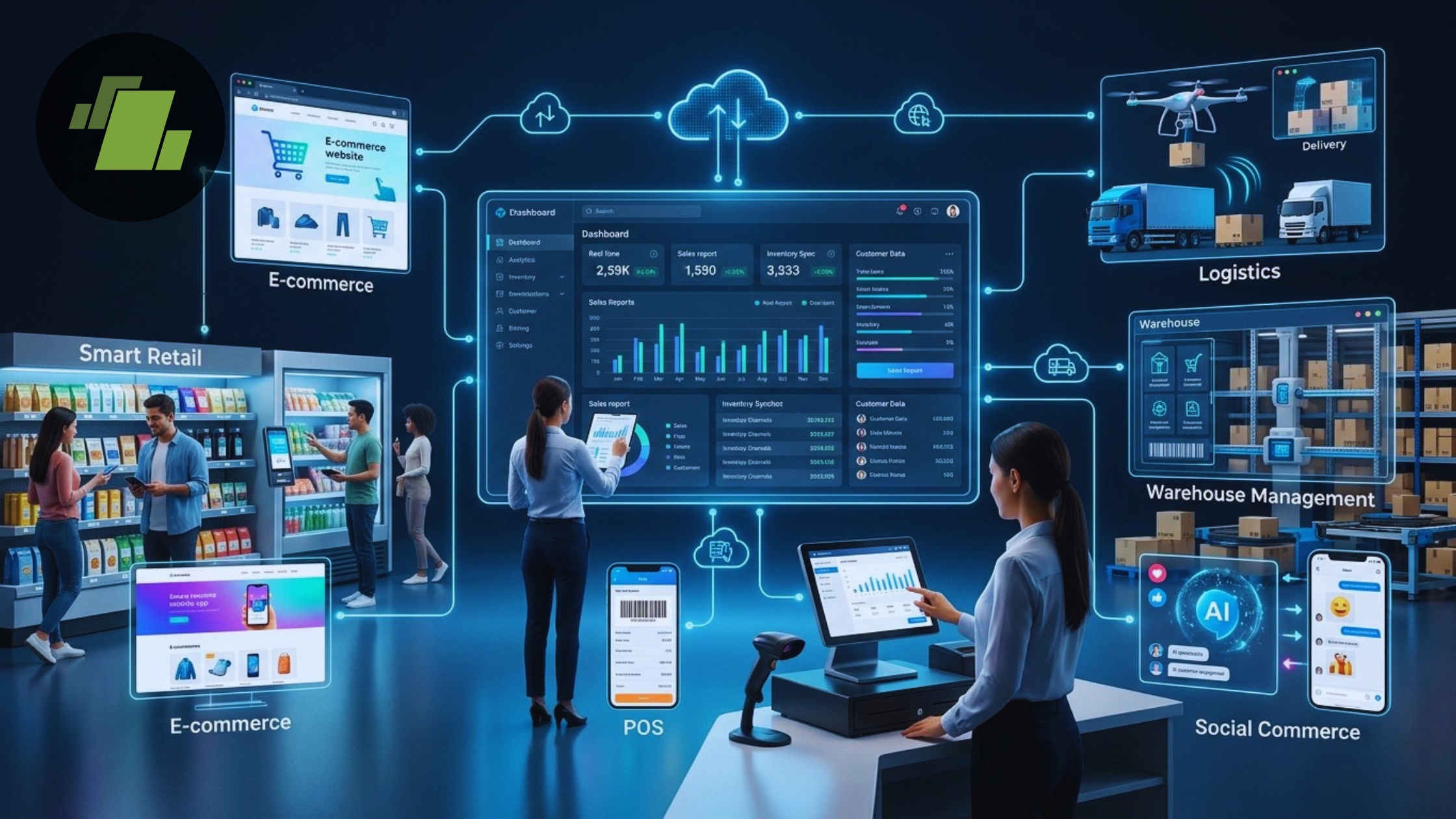
A powerful ERP (Enterprise Resource Planning) system is the backbone of successful omnichannel retail operations. It integrates all core business functions such as inventory management, sales processing, finance, procurement, and customer relationship management into a single platform.
LOGIC ERP software enables retailers to achieve true omnichannel excellence by connecting all sales channels and providing real-time data visibility across the entire organization.
With ERP integration, retailers can:
- Manage centralized and multi-location inventory
- Synchronize online and offline orders in real time
- Track customer interactions across channels
- Automate billing and order processing
- Generate actionable business insights through analytics
By eliminating data silos, LOGIC ERP ensures that every department works on the same accurate and updated information.
Key Benefits of Omnichannel Retailing with LOGIC ERP
1. Seamless and Enhanced Customer Experience
Omnichannel retailing ensures that customers enjoy a smooth journey across all touchpoints. Features like click-and-collect, buy online pickup in store (BOPIS), easy returns, and cross-channel promotions significantly enhance convenience and satisfaction.
This consistency builds stronger customer relationships and increases brand loyalty.
2. Real-Time Inventory Visibility and Control
One of the biggest challenges in retail is inventory mismatch across channels. LOGIC ERP solves this by offering real-time inventory tracking across warehouses, stores, and online platforms.
This helps retailers:
- Prevent stockouts and overstocking
- Improve product availability
- Optimize stock distribution
- Reduce inventory holding costs
3. Data-Driven Decision Making
In omnichannel retailing, data is the key to success. LOGIC ERP provides advanced analytics and reporting tools that help retailers understand:
- Customer buying behavior
- Sales performance across channels
- Product demand trends
- Seasonal patterns and forecasting
These insights allow businesses to make smarter decisions and implement more effective marketing strategies.
4. Seamless Integration Across All Channels
Modern retail ecosystems include multiple systems such as POS, e-commerce platforms, mobile apps, and marketplaces. LOGIC ERP ensures smooth integration with all these systems, enabling uninterrupted data flow.
This eliminates manual errors, reduces duplication, and improves overall operational efficiency.
5. Scalability for Business Growth
As retail businesses grow, managing multiple stores and digital channels becomes complex. LOGIC ERP offers a scalable and flexible architecture that supports expansion without disrupting operations.
Whether a business is opening new stores, expanding online presence, or entering new markets, the ERP system adapts easily to changing requirements.
Challenges Solved by Omnichannel Retailing
Without an integrated system, retailers often face:
- Inventory inconsistencies
- Poor customer experience
- Data silos across departments
- Inefficient order management
- Lack of real-time insights
Omnichannel retailing powered by ERP eliminates these challenges by creating a centralized, connected, and intelligent retail ecosystem.
Why LOGIC ERP Is the Ideal Solution for Omnichannel Retailing
LOGIC ERP software is designed specifically to help retailers manage complex omnichannel operations with ease. It provides a unified platform that connects all retail functions and ensures smooth coordination between online and offline channels.
Key advantages include:
- Centralized retail management system
- Real-time synchronization across all channels
- Advanced reporting and analytics
- Cloud-enabled scalability and flexibility
- Strong integration capabilities with third-party platforms
By implementing LOGIC ERP, retailers can transform fragmented operations into a fully integrated omnichannel ecosystem that drives efficiency, profitability, and customer satisfaction.
Conclusion
In today’s competitive retail environment, omnichannel retailing is no longer optional; it is essential for survival and growth. Customers expect a seamless and consistent experience across all platforms, and businesses must adapt to meet these expectations.
By leveraging the power of LOGIC ERP software, retailers can unify their operations, eliminate inefficiencies, and deliver a superior customer experience across every channel.
The future of retail belongs to businesses that embrace digital transformation, integrated systems, and customer-centric omnichannel strategies. With the right ERP foundation, retailers can unlock new growth opportunities and stay ahead in the ever-changing retail landscape.
Call at +91-73411-41176/75 or send us an email at sales@logicerp.com to book a free demo today!
Frequently Asked Questions (FAQs)
1. What is omnichannel retailing in simple terms?
Omnichannel retailing is a modern retail approach where all shopping channels such as physical stores, websites, mobile apps, and social media are connected to provide a seamless and consistent customer experience across every platform.
2. How is omnichannel retailing different from multichannel retailing?
Multichannel retailing uses multiple channels that work independently, while omnichannel retailing integrates all channels into a single system. This means customers get a unified experience and businesses get synchronized data across all platforms.
3. Why is ERP software important for omnichannel retailing?
ERP software is essential because it connects all retail operations inventory, sales, orders, and customer data into one system. It ensures real-time updates, reduces errors, and helps retailers manage multiple channels efficiently.
4. How does LOGIC ERP support omnichannel retailing?
LOGIC ERP supports omnichannel retailing by providing real-time inventory tracking, seamless POS and e-commerce integration, centralized order management, and advanced analytics for better decision-making and customer experience.
5. What are the main benefits of omnichannel retailing for businesses?
The main benefits include improved customer experience, better inventory control, increased sales, data-driven decision-making, and scalable business growth across multiple sales channel.