Supply Chain Optimisation: Practical Ways to Improve Flow

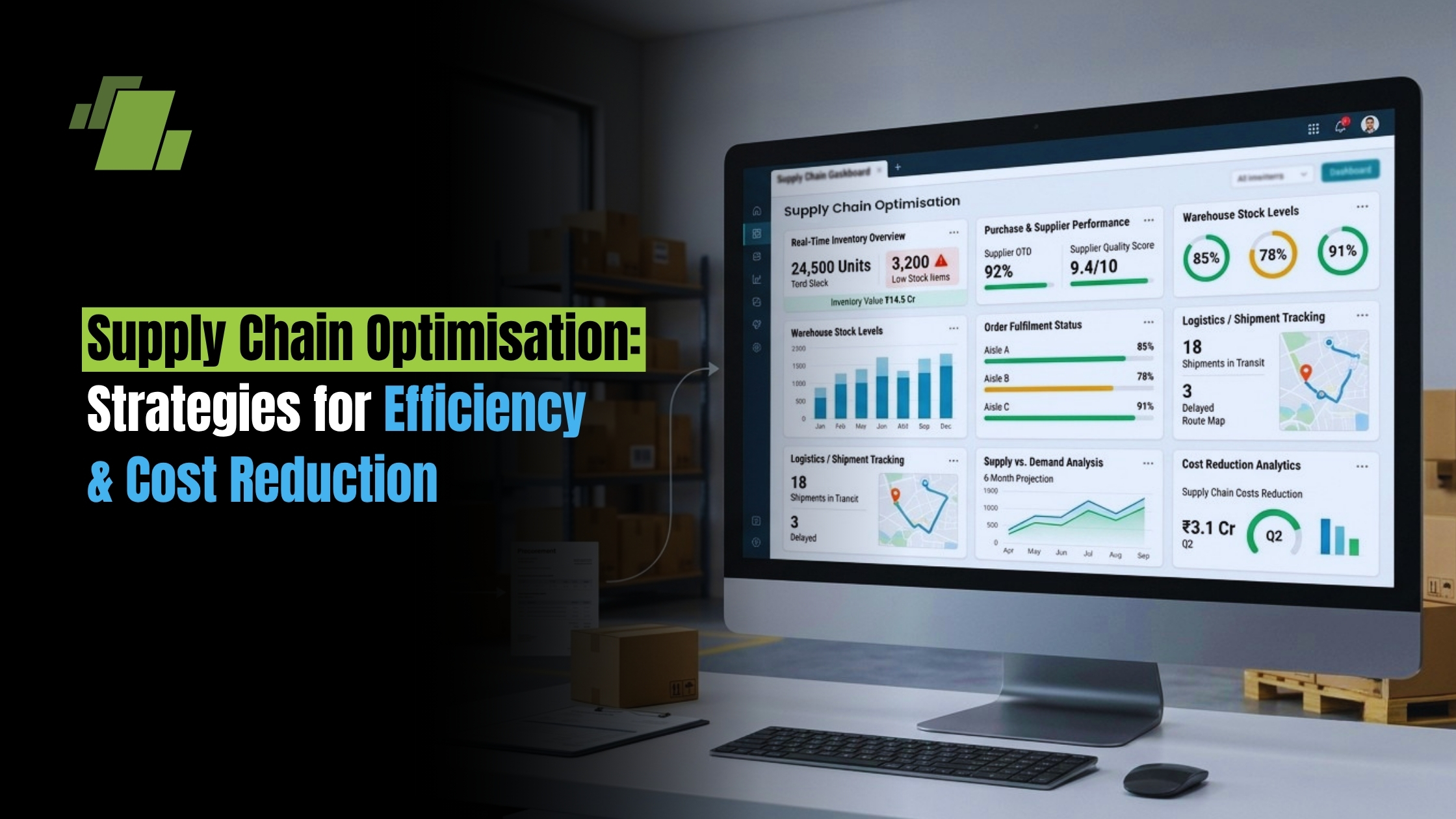
Supply chain optimisation is the practical work of making goods, information, suppliers, inventory, people, and delivery routes perform better together. For most organisations, the goal is simple: improve service, reduce waste, support cost reduction, and build a supply chain that can adapt when demand, capacity, or market conditions change. The best results come from a clear supply chain strategy, reliable data, and steady process optimization across procurement, planning, warehousing, and distribution.
Contact Us
Free Demo Request
What is Supply Chain Optimisation?
Supply chain optimisation is the structured improvement of how products, materials, and information move from suppliers to customers. It looks at the whole system rather than one isolated function, so a saving in purchasing does not create delays in production, and faster shipping does not quietly increase inventory costs. In practice, supply chain management optimisation combines planning, technology, supplier collaboration, inventory management, and performance measurement to improve supply chain efficiency without sacrificing customer experience.
A useful way to think about it is balance. Too much inventory ties up cash and storage space, but too little creates stockouts and rushed orders. A wide supplier base can reduce risk, but it may also add complexity. A strong supply chain optimisation model helps teams evaluate these trade-offs before making decisions that affect cost, service, and resilience.
Strong Optimisation Starts with Visibility
You cannot optimise what you cannot see. Many supply chains still rely on disconnected spreadsheets, delayed reports, or decisions based on departmental priorities rather than shared facts. That makes it difficult to understand where costs originate, why delays happen, or which processes are creating avoidable work.
Improving visibility means creating a clear view of suppliers, orders, lead times, stock levels, capacity, transport performance, and customer demand. This does not always require a major technology overhaul at the start. Often, the first step is agreeing on common data definitions and making sure teams are looking at the same version of the truth.
Useful visibility improvements include:
- Mapping key supply chain flows from supplier to customer, including handoffs, delays, and decision points.
- Tracking lead times by supplier, product group, transport mode, and location.
- Reviewing inventory accuracy, not just inventory value.
- Monitoring service levels alongside cost, so savings are not achieved by weakening reliability.
- Creating exception reports that show what needs action now, rather than long reports that no one uses.
Visibility also supports day-to-day excellence because it makes problems easier to diagnose. If late deliveries are caused by poor supplier performance, the response is different from a delay caused by internal approval bottlenecks or inaccurate demand forecasting.
How does Demand Forecasting Improve Supply Chain Efficiency?
Demand forecasting improves supply chain efficiency by helping teams prepare the right stock, capacity, labour, and transport before demand becomes urgent. A better forecast does not need to be perfect to be valuable; it simply needs to be reliable enough to reduce guesswork and support better planning decisions. When forecasting is combined with regular review, teams can spot demand shifts earlier and avoid costly overreactions.
Good forecasting uses more than last year’s sales. It may include seasons, promotions, customer behaviour, market signals, product life cycle changes, and input from sales or account teams. The important point is to treat forecasting as an ongoing business process, not a one-time calculation.
A practical forecasting rhythm might include:
- Collect demand data consistently. Use clean historical sales, open orders, customer commitments, and known market changes.
- Segment products by behaviour. Stable, seasonal, slow-moving, and volatile items should not all be forecast in the same way.
- Review assumptions with commercial teams. Sales insight can explain changes that data alone may miss.
- Compare forecast to actual demand. Measure forecast accuracy and bias so teams can learn where planning is too optimistic or too conservative.
- Adjust inventory and procurement plans. Forecasts only create value when they influence buying, production, and replenishment decisions.
Demand forecasting also strengthens cost reduction efforts. Fewer emergency purchases, less expedited freight, better labour planning, and fewer obsolete products all contribute to a leaner, more responsive operation.
Inventory management is Where Strategy Becomes Practical
Inventory management is one of the clearest areas where supply chain optimisation becomes visible. Stock levels affect cash flow, warehouse space, customer service, supplier orders, and production schedules. Because of this, inventory decisions should be linked to service goals and demand patterns rather than simple rules such as “keep more” or “cut stock.”
Effective inventory management starts with segmentation. High-value or fast-moving items may need close monitoring and tighter replenishment rules, while slow-moving products may need different service expectations. Safety stock should reflect demand variation, supplier reliability, and lead time risk, not habit.
Teams can improve inventory performance by reviewing:
- Which products drive the most revenue, margin, or customer importance.
- Which items are frequently out of stock and why.
- Which products are overstocked, obsolete, or moving slowly.
- Whether reorder points still reflect current demand and lead times.
- How supplier minimum order quantities affect stock levels.
The practical aim is not to minimise inventory at all costs. It is to hold the right inventory in the right place for the right reason. That is where supply chain optimisation creates a measurable business advantage: better availability with less waste.
Procurement Optimization Builds Stronger Supplier Performance
Procurement optimization is not just about negotiating lower prices. Price matters, but total cost also includes quality issues, delivery reliability, order flexibility, payment terms, compliance workload, and the administrative time required to manage suppliers. A low unit cost can quickly become expensive if it creates delays, rework, or emergency sourcing.
A more strategic approach evaluates suppliers based on value and risk. This includes understanding which suppliers are critical, which categories are exposed to shortages, and where the business has opportunities to consolidate spend or improve terms. It also means working with suppliers early when demand changes, rather than using procurement as a reactive function.
Practical procurement improvements include:
- Creating supplier scorecards that include delivery, quality, responsiveness, and commercial performance.
- Identifying single-source risks and developing backup options where appropriate.
- Reviewing order frequency and batch sizes to reduce unnecessary handling or freight costs.
- Collaborating with suppliers on forecasts, lead times, and packaging requirements.
- Standardising purchasing processes to reduce manual approvals and inconsistent decisions.
Procurement becomes a driver of supply chain efficiency when it supports resilience, service, and cost control at the same time.
Network Design Shapes Cost, Speed, and Resilience
Supply chain network optimization focuses on where facilities, suppliers, stock, and transport routes should sit within the overall supply chain. Network decisions influence distribution efficiency, delivery speed, inventory placement, and exposure to disruption. Even small changes in customer locations, fuel costs, product range, or supplier lead times can make an old network design less effective.
This is where a supply chain optimisation model can be especially useful. By modelling scenarios, teams can compare options before making expensive changes. For example, a business may test whether holding stock closer to customers improves service enough to justify the extra storage cost, or whether merging warehouses reduces cost but increases delivery times.
Key network questions include:
- Are warehouses located near demand, suppliers, transport links, or historic convenience?
- Would regional stock improve service for priority customers?
- Are transport routes planned around actual order patterns?
- Do current locations create unnecessary handling or duplicate inventory?
- How would the network respond to supplier disruption or demand spikes?
Distribution efficiency improves when goods move through the network with fewer delays, fewer touches, and clearer priorities. The best network is not always the cheapest on paper. It is the one that supports the required service level at a sustainable cost.
Where does Supply Chain Optimisation Software Fit?
Supply chain optimisation software helps teams analyse data, model scenarios, automate planning, and make faster decisions across complex operations. It can support forecasting, inventory planning, transport planning, warehouse management, procurement, and performance reporting. However, software works best when it supports a clear process rather than replacing the need for good management.
Before choosing tools, organisations should define the problems they want to solve. A business struggling with poor data quality may need better master data and reporting before advanced planning tools deliver value. A company with complex routing or multiple warehouse locations may benefit from software that supports scenario modelling and network analysis.
When evaluating software, consider whether it can:
- Integrate with existing systems and data sources.
- Provide clear dashboards for operational and leadership teams.
- Support scenario planning for cost, service, and capacity decisions.
- Improve collaboration between planning, procurement, logistics, and sales.
- Scale as product ranges, locations, or transaction volumes grow.
Technology is an enabler, not a shortcut. The strongest results come when supply chain optimisation software is paired with disciplined processes, trained users, and clear performance goals.
Process Optimization Reduces Friction Across the Chain
Many supply chain problems are not caused by one major failure. They come from small points of friction repeated hundreds or thousands of times: duplicate data entry, unclear approvals, late handoffs, inconsistent product codes, unnecessary checks, or reports that do not trigger action. Process optimization removes these obstacles so work flows more smoothly.
Start by identifying where teams lose time or where errors regularly occur. Then ask whether the step adds value, manages a real risk, or simply exists because “that is how it has always been done.” This kind of review should include the people doing the work every day because they often know where the real bottlenecks are.
A practical process improvement checklist includes:
- Define the process owner and decision rights.
- Remove duplicate approvals where risk is low.
- Standardise data entry fields and naming conventions.
- Automate repeatable tasks where accuracy and speed matter.
- Create exception-based workflows so teams focus on problems, not routine transactions.
- Review performance after changes to confirm that improvements are real.
Process optimization supports operational excellence because it makes the supply chain easier to manage, easier to measure, and easier to improve over time.
A Practical Roadmap for Better Optimisation
Successful supply chain optimisation is usually built in stages. Trying to fix everything at once can overwhelm teams and create confusion. A focused roadmap helps the business focus on the areas with the strongest impact on cost, service, risk, and customer experience.
A sensible roadmap might look like this:
- Clarify the objective. Decide whether the priority is service improvement, cost reduction, resilience, growth capacity, or a balanced combination.
- Map the current supply chain. Identify suppliers, sites, inventory points, transport flows, systems, and key decision processes.
- Measure baseline performance. Track service levels, forecast accuracy, inventory turns, supplier delivery, order cycle time, and logistics cost where relevant.
- Find the biggest constraints. Focus on the bottlenecks that have the greatest effect on customers or cost.
- Build improvement scenarios. Use data and modelling to compare options before committing resources.
- Implement in manageable phases. Pilot changes, learn quickly, and scale what works.
- Review and refine. Optimisation is ongoing because demand, suppliers, costs, and customer expectations keep changing.
This roadmap keeps supply chain strategy connected to daily execution. It also helps teams avoid isolated improvements that look good locally but weaken the wider system.
The Real Goal is a Smarter, More Adaptable Supply Chain
Effective supply chain optimisation is not about chasing one perfect number or applying a single universal method. It is about building a supply chain that can make better decisions, respond faster, reduce waste, and serve customers more reliably. That requires strong data, clear processes, practical technology, and collaboration across planning, procurement, logistics, operations, and commercial teams.
For organisations looking to improve supply chain efficiency, the best starting point is often the most visible pain point: inaccurate forecasts, excess stock, weak suppliers, slow distribution, or manual processes. From there, each improvement should support the wider goal of operational excellence. When supply chain optimisation is treated as a continuous discipline rather than a one-off project, it becomes a lasting source of cost control, resilience, and competitive strength.

Call at +91-73411-41176/75 or send us an email at sales@logicerp.com to book a free demo today!
Frequently Asked Questions
1. What Should an Organisation Improve First When Starting Supply Chain Optimisation?
The best starting point is usually the most visible pain point, such as inaccurate forecasts, excess inventory, weak suppliers, slow distribution, or manual processes. From there, the organisation should map the current supply chain, measure baseline performance, and focus on the bottlenecks that have the greatest impact on customers, cost, risk, or service levels.
2. Why is Visibility so Important Before Investing in Advanced Optimisation Tools?
Visibility gives teams a shared view of suppliers, orders, lead times, stock levels, capacity, transport performance, and customer demand. Without that shared view, software may only automate unclear or unreliable processes. Better data definitions, common reporting, and exception-based insights often need to come first so teams can make decisions based on the same facts.
3. Is Supply Chain Optimisation Mainly About Reducing Costs?
Cost reduction is important, but it is not the only goal. Effective optimisation balances cost, service, resilience, inventory, supplier performance, and customer experience. For example, cutting stock too aggressively may reduce short-term inventory costs but create stockouts, rushed orders, and weaker customer service.
4. How do Forecasting, Inventory Management, and Procurement Work Together?
Forecasting helps predict demand, inventory management turns that demand plan into practical stock decisions, and procurement ensures suppliers can support the plan with reliable delivery, quality, and commercial terms. When these functions work together, organisations can reduce emergency purchases, avoid excess stock, improve availability, and respond faster to demand changes.

Author
Gurbir Singh
Co-founder & Managing Director | LOGIC ERP Solutions Pvt. Ltd.
With 30+ years of experience in the tech industry, I took the helm of technology & product development, ensuring LOGIC ERP’s continuous innovation & leadership in the evolving tech landscape.