Components of SCM: Key Parts and Roles

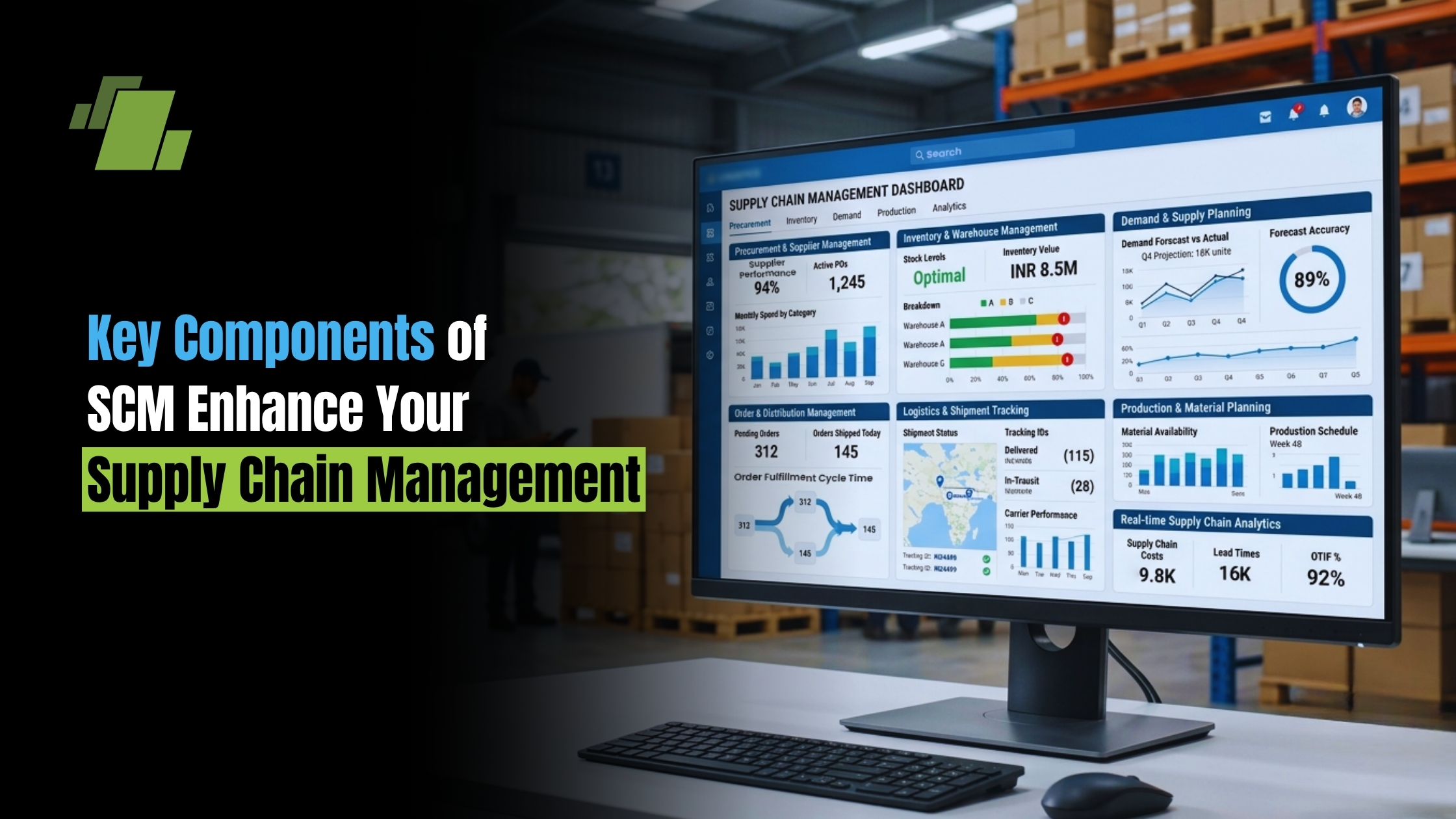
Supply chain management is the organized work of moving a product, service, or material from demand to final delivery and support. The key components of supply chain management include planning, sourcing, procurement, production, inventory, warehousing, transportation, technology, teamwork, and performance checks. When these supply chain components work together, businesses can cut waste, improve reliability, and meet customer needs better.
Contact Us
Free Demo Request
What are the main components of SCM?
The main components of SCM are the linked tasks, systems, and relationships that help a business plan demand, secure resources, make or prepare goods, move them well, and track results. In practice, the components of supply chain management are not separate departments. They work like one system. If one part fails, such as bad forecasts or weak supplier communication, cost, service, and delivery speed can all suffer.
Core supply chain elements that keep work moving
Every company has its own SCM structure, but most supply chains use the same basic components of SCM. These SCM elements help teams see what must happen, who owns each step, and where improvement may be needed.
- Planning and demand management: Planning links customer demand with available capacity. It covers forecasting, sales and operations planning, resource planning, and scenario planning. Good planning helps teams avoid too much stock, not enough stock, and rushed choices that add cost.
- Sourcing and supplier management: Sourcing is about choosing, qualifying, and managing suppliers. It covers quality, reliability, lead times, risk, and long-term fit. Supplier management is one of the most important supply chain parts because even a well-run internal operation can struggle if materials or services arrive late or unreliably.
- Procurement: Procurement turns sourcing plans into daily buying work. It includes purchase orders, approvals, contract checks, pricing terms, and vendor communication. Good procurement gives better spend visibility and fewer delays caused by unclear ordering.
- Manufacturing, production, or service fulfillment: This part covers the work that turns inputs into finished goods or delivered services. For manufacturers, it may include scheduling, quality checks, labor planning, and machine use. For service firms, it may include staffing, task flow, and delivery standards.
- Inventory management: Inventory management decides what to hold, where to hold it, and how much is enough. The goal is not just to reduce stock; it is to balance stock with cash flow, storage limits, and demand swings. Good inventory control helps teams meet demand without using too many resources.
- Warehousing and storage: Warehousing supports receiving, storage, picking, packing, and shipping. A warehouse is more than a storage space; it is a control point for accuracy, speed, safety, and customer care. Layout, labels, scanning, and worker steps all shape how products move.
- Transportation and logistics: Logistics manages the movement of goods between suppliers, sites, partners, and customers. It includes carrier choice, route planning, freight coordination, delivery tracking, and issue handling. This is one of the most visible supply chain elements because delivery performance shapes the customer experience.
- Returns and reverse logistics: Returns are often missed, but they are a key part of a full supply chain. Reverse logistics covers returns, repairs, recycling, replacements, and safe disposal. A clear returns process can protect margins, build trust, and reveal product or fulfillment issues.
- Performance measurement: Supply chain performance should be tracked with simple measures such as service levels, order accuracy, lead time, inventory health, supplier reliability, and cost trends. Measurement turns day-to-day work into insight and shows what is working and what needs attention.
Modern e-SCM adds digital speed and visibility
Electronic supply chain management, or e-SCM, uses digital tools to connect people, data, systems, and partners across the chain. The components of e SCM are similar to traditional SCM, but they add more automation, integration, analytics, and real-time communication.
For example, components of modern e SCM may include supplier portals, digital procurement systems, warehouse management software, transportation management platforms, inventory dashboards, order tracking, and analytics tools. These supply chain modules help teams replace scattered spreadsheets, email chains, and manual updates with connected workflows.
The main gain is visibility. When data moves across systems, teams can see demand shifts sooner, track shipments more easily, spot stock risks, and talk faster with suppliers or customers. E-SCM does not remove the need for good processes. It makes strong processes easier to run, monitor, and improve.
If you are building training materials, phrases such as ‘components included in the process of scm pdf’ or ‘components of e scm ppt’ usually point to the same need: a clear, shareable view of how planning, sourcing, procurement, logistics, inventory, and technology fit together.
The SCM structure links strategy with daily work
A strong SCM structure shows how decisions move from strategy to action. It makes clear which teams own demand planning, supplier ties, purchasing, inventory choices, warehouse work, transportation, and customer communication. Without that structure, people may work hard but still repeat tasks, miss handoffs, or act on bad information.
In many businesses, supply chain modules are grouped by function.
Planning teams focus on demand and capacity. Procurement teams manage buying and supplier terms. Operations teams handle production or fulfillment. Logistics teams coordinate movement and delivery.
Finance, sales, customer service, and technology teams also matter. Supply chain choices affect cost, revenue, service, and customer promises.
The best structure is not always the most complex one. A smaller company may need simple ownership rules, clean inventory records, and steady supplier communication before it buys advanced systems. A larger company may need integrated platforms, formal control, and special roles. In both cases, the goal is the same: make decisions clear, coordinated, and tied to business goals.

Which SCM components should come first?
The best place to start is usually the area causing the most friction for customers, cash flow, or reliability. If customers wait too long, review logistics, inventory accuracy, and fulfillment capacity. If costs rise, look at procurement, supplier terms, transportation choices, and waste. If teams keep reacting, improve planning and demand visibility before adding more complexity.
Use this simple checklist to set priorities:
- Map the current flow: Identify how orders, materials, information, and approvals move from start to finish.
- Find the repeated delays: Look for late supplier deliveries, stockouts, picking errors, or slow approvals.
- Check data quality: Bad inventory data, old supplier records, and unclear lead times can weaken every decision.
- Clarify ownership: Each process should have one accountable team or role, especially at handoff points.
- Measure what matters: Choose practical metrics that show service, cost, speed, quality, and reliability.
- Improve one area at a time: Focused changes are easier to manage than wide changes with weak ownership.
This approach keeps supply chain improvement practical. Instead of trying to fix every component at once, teams can work on the parts that create the biggest business gain.
Not every activity is a core SCM component
A common exam question is ‘which one is not a critical component of scm?’ The best way to answer is to ask whether the activity directly supports planning, sourcing, making, moving, storing, delivering, returning, or improving goods and services. If it does not affect those flows, it may help the business, but it is not a core SCM element.
For example, brand design, office decor, or unrelated admin tasks can be useful, but they are not usually part of the main components of SCM. By contrast, supplier choice, inventory control, transportation planning, warehouse work, and demand forecasting are central because they affect availability, cost, delivery, and customer satisfaction.
Common mistakes that weaken supply chain performance
Even good products and strong teams can run into trouble when supply chain elements are not connected. Often the problem is not one big failure. It is a set of small gaps that grow over time.
Common mistakes include:
- Treating procurement as only a buying job instead of a strategic supplier role.
- Managing inventory without reliable demand signals or accurate stock records.
- Measuring transportation cost without also looking at delivery reliability and customer impact.
- Buying technology before fixing processes and ownership.
- Focusing on internal efficiency while ignoring supplier and customer communication.
- Reviewing performance only after problems become urgent.
Avoiding these mistakes takes discipline, but not perfection. Clear processes, steady data, practical metrics, and regular cross-team communication can greatly improve how supply chain parts work together.
Bringing the components together
The key components of supply chain management work best as one connected system. Planning guides what is needed. Sourcing and procurement secure the inputs. Operations create value. Logistics and warehousing move goods well. Measurement helps the whole system improve.
Whether you are reviewing traditional SCM components or the components of e-SCM, the main idea is the same: a supply chain works best when information, materials, people, and decisions move with clarity. Start with the areas that cause the most friction, strengthen the handoffs, and build a structure that supports steady execution. That is how supply chain management becomes a real business advantage.

Call at +91-73411-41176/75 or send us an email at sales@logicerp.com to book a free demo today!
Frequently Asked Questions
1. What are the main components of supply chain management?
The main components of supply chain management include planning and demand management, sourcing and supplier management, procurement, production, order fulfillment, inventory management, warehousing, transportation and logistics, returns and reverse logistics, technology, collaboration, and performance measurement.
2. Why is inventory management important in supply chain management?
Inventory management helps businesses maintain the right amount of stock to meet customer demand while reducing excess inventory, storage costs, stockouts, and unnecessary use of working capital.
3. What is the role of logistics in SCM?
Logistics manages the movement of goods between suppliers, warehouses, business locations, and customers. It includes transportation planning, carrier coordination, route management, shipment tracking, and delivery handling.
4. What is e-SCM?
Electronic supply chain management, or e-SCM, uses digital technologies and connected systems to manage supply chain activities. It improves automation, real-time visibility, communication, data sharing, tracking, and decision-making across the supply chain.
5. How can technology improve supply chain management?
Technology can connect supply chain processes such as procurement, inventory, warehousing, production, and logistics. It helps businesses automate workflows, improve data accuracy, track operations in real time, identify potential issues, and make faster decisions.

Author
Gurbir Singh
Co-founder & Managing Director | LOGIC ERP Solutions Pvt. Ltd.
With 30+ years of experience in the tech industry, I took the helm of technology & product development, ensuring LOGIC ERP’s continuous innovation & leadership in the evolving tech landscape.