Top SCM Tools for Efficient Supply Chain Management

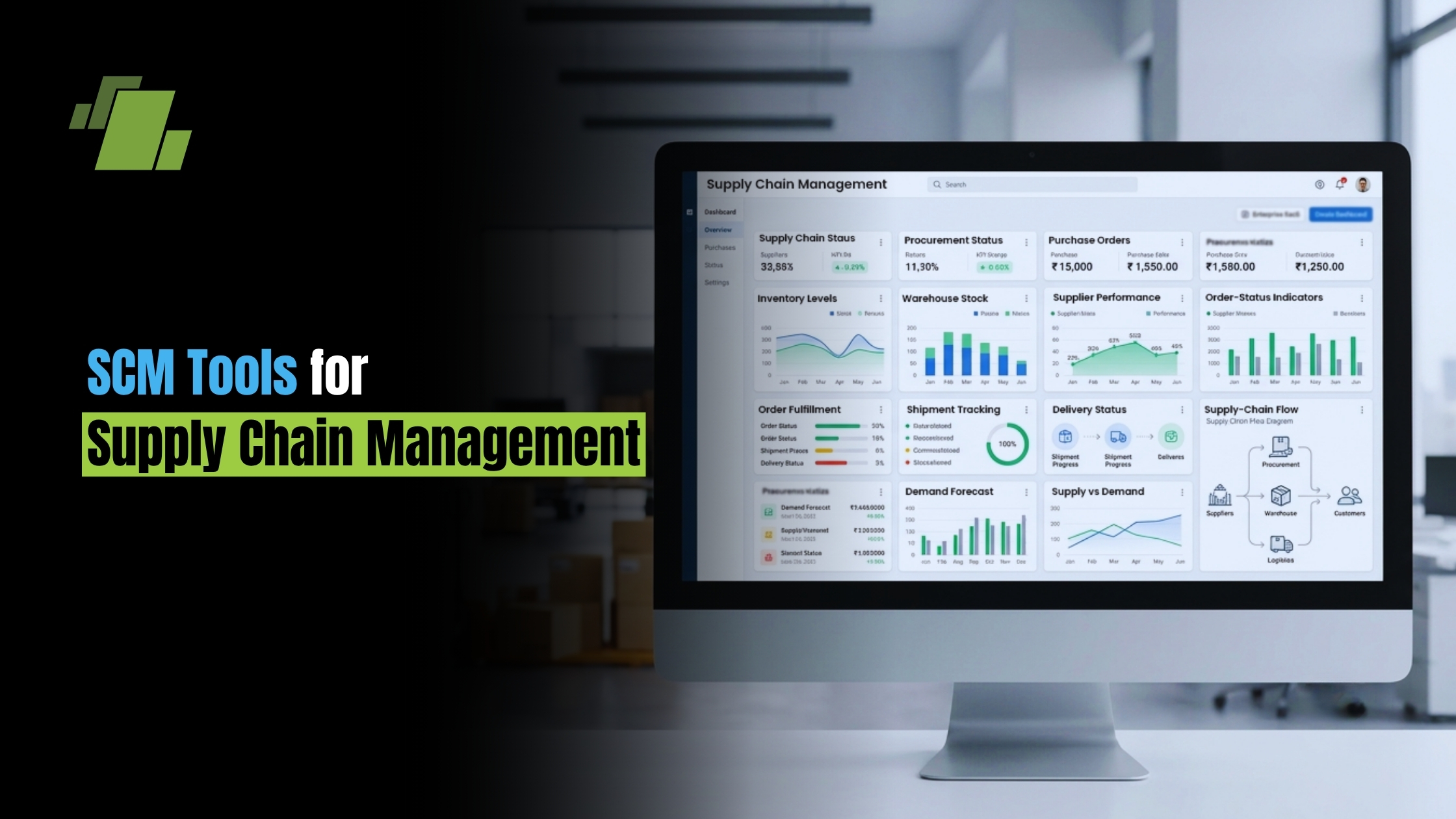
Modern supply chains move fast, and the right scm tools help teams plan demand, manage inventory, coordinate suppliers, run warehouses, and ship orders with fewer delays.
This guide explains the main types of supply chain tools, what they do, and how to choose a practical mix for stronger supply chain management.
You will also see how scm software differs from similarly named software development tools, so your search stays focused.
Contact Us
Free Demo Request
What do SCM Tools Mean for Supply Chain Teams?
In supply chain management, scm tools are digital systems that help companies plan, source, store, move, and deliver goods more efficiently.
If you have ever searched ‘scm tools means’, the simplest answer is this: they connect data, workflows, and people across the supply chain so decisions are less reactive and more coordinated.
The term can be confusing because SCM also means ‘source code management’ in software development. That is why searches like ‘scm tools git’ or ‘which scm tools does jenkins support’ often lead to results about Git, Subversion, Mercurial, and CI/CD pipelines rather than procurement, inventory, or logistics solutions.
For this article, the focus is supply chain management, with a quick note later for teams who run into the software-development meaning.
Good supply chain tools do more than store records.
They help teams spot shortages, cut manual work, compare supplier performance, prioritize orders, and improve visibility from purchase request to final delivery.
The best scm tools are not always the biggest platforms; they are the tools that fit your work, data quality, team skills, and growth plans.
The Basic Features of SCM Tools
The basic features of scm tools usually fall into a few connected areas: planning, procurement, inventory control, warehouse operations, logistics, analytics, and collaboration.
A small business may use light apps for each function, while a larger organization may choose an integrated scm software platform that connects departments and trading partners.
Core Features Often Include:
- Demand planning: Forecast future demand using sales history, seasons, promotions, market signals, and customer behavior.
- Inventory management: Track stock levels, locations, reorder points, safety stock, lots, serial numbers, and movement history.
- Inventory optimization: Balance service levels with carrying costs so the business avoids both excess stock and costly stockouts.
- Procurement tools: Manage purchase requests, supplier quotes, approvals, purchase orders, contracts, and vendor performance.
- Warehouse management: Support receiving, putaway, picking, packing, cycle counting, returns, and labor coordination.
- Shipping software: Compare carriers, generate labels, automate tracking updates, manage rates, and streamline fulfillment.
- Logistics solutions: Plan transportation, track shipments, manage freight docs, and improve delivery visibility.
- Reporting and analytics: Turn business data into useful insights for managers, buyers, planners, and finance teams.
The most useful tools reduce duplicate entry and handoffs.
For example, a demand planning system should shape purchasing and replenishment decisions.
Warehouse management data should update available inventory quickly.
Shipping software should feed tracking and delivery status back to customer service.
When systems share data well, supply chain teams spend less time chasing updates and more time preventing problems.
Leading Categories of Supply Chain Tools
There is no single tool that solves every supply chain challenge for every company.
Most organizations need a stack of connected applications, chosen around operational priorities.
The categories below are a practical starting point when comparing scm tools and techniques.
Demand Planning and Forecasting Tools
Demand planning tools help teams predict what customers will need, when they will need it, and where inventory should be placed. They can support sales and operations planning, promotion planning, replenishment, and capacity decisions. Even a basic forecast can improve purchasing discipline when it is reviewed often and adjusted with real business context.
Look for demand planning features that let users compare forecast versions, bring in input from sales or marketing, and track accuracy over time. A forecast is not useful if nobody trusts it, so the system should make assumptions visible. The practical goal is not a perfect prediction; it is a repeatable planning process that reduces surprises.
Procurement and Supplier Management Tools
Procurement tools bring structure to sourcing, approvals, supplier communication, and purchasing records. They help teams avoid uncontrolled spending, missed renewals, unclear approval chains, and scattered supplier information. For growing companies, this can be one of the fastest ways to create accountability without slowing the business down.
Strong procurement software should support supplier onboarding, purchase order workflows, contract storage, budget visibility, and performance tracking. If your team frequently buys from multiple suppliers, compare how each tool handles pricing, lead times, minimum order quantities, and supplier risk notes. These details matter when demand shifts or a key vendor cannot deliver on time.
Inventory Management and Optimization Tools
Inventory management tools show what you have, where it is, and how it moves. Inventory optimization goes a step further by helping decide how much stock to hold and where to hold it. Together, they support better cash flow, higher service levels, and fewer emergency purchases.
The right system should handle your inventory reality, whether that means raw materials, finished goods, spare parts, perishable items, serialized products, or multi-location stock. Useful features include reorder alerts, cycle counting, stock aging views, transfer management, and exception reports. For many teams, better inventory visibility is the base for every other supply chain improvement.
Warehouse Management Systems
Warehouse management software focuses on physical execution. It helps teams receive products accurately, store them well, pick orders correctly, and keep inventory records aligned with actual stock. This matters because even the best planning process fails if warehouse data is late or inaccurate.
A good warehouse management system should match the complexity of your operation. A simple warehouse may only need barcode scanning, bin locations, and pick lists. A larger operation may need wave picking, labor management, replenishment rules, returns processing, and links with automation or transportation systems.

Shipping Software and Logistics Platforms
Shipping software supports parcel fulfillment, carrier selection, label creation, tracking, and customer notifications. Logistics solutions may also include freight planning, route optimization, load combining, dock scheduling, and transport visibility. These tools are especially important for companies that manage multiple carriers, shipping methods, regions, or service levels.
When comparing options, pay attention to integration quality. Shipping data should connect with orders, inventory, customer service, and finance. If a delivery exception happens, the team should see it quickly enough to respond rather than waiting for a customer complaint.
Which SCM Tools Should your Business Choose First?
Choose the scm tools that address the biggest operational constraint first, not the tools with the longest feature list.
If stockouts are hurting sales, prioritize demand planning, inventory management, and inventory optimization.
If orders are shipping late, focus on warehouse management and shipping software.
If supplier costs, delays, or approvals are messy, start with procurement tools.
A Practical Selection Process looks like this:
- Map the current workflow. Identify where information is created, copied, delayed, corrected, or lost.
- Name the business problem. Be specific: late purchase orders, inaccurate stock counts, slow picking, poor forecast ownership, or limited shipment visibility.
- List required integrations. Consider ERP, accounting, ecommerce, marketplace, CRM, carrier, supplier, and warehouse systems.
- Check user adoption risks. A powerful platform can fail if daily users find it confusing or too slow.
- Start with measurable outcomes. Track practical indicators such as stock accuracy, order cycle time, forecast review discipline, supplier response time, or shipment exception handling.
- Plan for process change. Software improves a good process faster than it fixes an unclear one.
The best scm tools for one business may be too much for another.
A distributor with thousands of SKUs may need strong inventory optimization and warehouse controls.
A brand selling through ecommerce channels may care more about shipping software, order visibility, and replenishment alerts.
A manufacturer may need tighter procurement, materials planning, and supplier collaboration.
SCM Tools and Techniques That Improve Efficiency
Tools matter, but techniques turn software into results.
Supply chain teams get more value when they combine systems with clear rules, regular reviews, and shared accountability.
Without that operating rhythm, even advanced scm software can become a digital filing cabinet.
Useful SCM Tools and Techniques Include:
- ABC analysis: Prioritize high-value or high-velocity items so planners and warehouse teams focus attention where it matters most.
- Safety stock policies: Set buffers based on demand swings, lead time, and service expectations rather than guesswork.
- Cycle counting: Count inventory nonstop instead of relying only on large, disruptive physical counts.
- Supplier scorecards: Review delivery reliability, quality, responsiveness, and issue resolution in a steady format.
- Exception management: Use alerts to focus teams on problems that need action, such as late inbound shipments or low stock.
- Sales and operations planning: Bring sales, finance, operations, and supply chain together to align demand, supply, and capacity.
These techniques work best when they are simple enough to keep up with.
For example, a supplier scorecard with five consistent metrics is often more useful than a complex model nobody updates.
The goal is steady improvement, not admin perfection.
A quick Note on SCM Tools, Git, and Jenkins
Because SCM has two common meanings, it is worth separating supply chain management from source code management.
In software development, scm tools include systems used to manage code changes, such as Git and other version control platforms.
That is why the phrase ‘scm tools git’ points to developer workflows instead of supply chain operations.
Similarly, the question ‘which scm tools does jenkins support’ belongs to the software delivery world.
Jenkins commonly works with source code repos through plugins and integrations, while supply chain management tools handle business work such as procurement, warehouse management, and logistics.
If your team is researching supply chain software, use terms like ‘supply chain management software’, ‘inventory management tools’, or ‘procurement tools’ to avoid mixed results.
What to Look for Before Investing in SCM software
Before choosing scm software, judge fit from both a tech and a work view.
The tool should support today’s needs without forcing the team into extra complexity.
It should also give leaders better visibility without creating extra work for the people who run daily operations.
Use this checklist during evaluation:
- Process fit: Does the tool support how your business actually buys, stores, produces, and ships?
- Data quality: Can it handle your item master, supplier data, locations, units of measure, and order rules cleanly?
- Integration options: Will it connect with the systems your team already depends on?
- Ease of use: Can planners, buyers, warehouse staff, and managers complete routine tasks quickly?
- Scale: Can the tool support more locations, SKUs, suppliers, channels, or order volume as you grow?
- Visibility: Does it provide dashboards and alerts that help people act, not just reports that describe the past?
- Support and implementation: Will your team receive the guidance needed to configure, train, and improve after launch?
The strongest choice is usually the one that solves a clear business problem, links to critical data, and is realistic for the team to keep up with.
A phased rollout can also cut risk.
Start with the workflow that creates the most pain, prove value, then expand into nearby areas.
Conclusion
Efficient supply chains are built on visibility, coordination, and timely decisions.
The right scm tools can improve demand planning, procurement, inventory management, warehouse management, shipping, and logistics, but the real value comes from matching software to the way your business works.
Start with your biggest bottleneck, define the result you want, and choose supply chain tools that make daily work clearer and faster.
Whether you need focused procurement tools, better inventory optimization, modern shipping software, or a broader scm software platform, a practical approach will help you build a more resilient and responsive supply chain.

Call at +91-73411-41176/75 or send us an email at sales@logicerp.com to book a free demo today!
Frequently Asked Questions
1. What is the first step when choosing scm tools for a business?
Start by finding the biggest operational constraint, not by comparing the longest feature lists. If stockouts are the main issue, demand planning and inventory tools may come first. If late shipments are the problem, warehouse management and shipping software may be more urgent. The best choice is the tool that solves a clear, measurable business problem and fits the way the team actually works.
2. Do companies need one complete scm software platform or several linked tools?
It depends on the size, complexity, and goals of the business. A small company may use light tools for inventory, shipping, or procurement, while a larger organization may gain more from an integrated scm software platform. The key is that systems should share data well so teams avoid duplicate entry, delayed updates, and disconnected decisions.
3. Why is data integration so important for supply chain management tools?
Supply chain decisions depend on timely, accurate information across demand, purchasing, inventory, warehouses, shipping, finance, and customer service. When systems integrate well, a forecast can guide purchasing, warehouse updates can refresh available inventory, and shipping exceptions can reach customer service quickly. Without integration, teams often spend too much time chasing updates instead of preventing problems.
4. How are supply chain management tools different from ‘scm tools git’ or Jenkins-related SCM tools?
In this guide, scm tools refer to supply chain management systems for planning, procurement, inventory, warehousing, shipping, and logistics. In software development, SCM often means source code management, which includes tools like Git and links used by Jenkins. Using search terms such as ‘supply chain management software’, ‘inventory management tools’, or ‘procurement tools’ helps avoid mixing the two meanings.

Author
Gurbir Singh
Co-founder & Managing Director | LOGIC ERP Solutions Pvt. Ltd.
With 30+ years of experience in the tech industry, I took the helm of technology & product development, ensuring LOGIC ERP’s continuous innovation & leadership in the evolving tech landscape.