Understanding GST on Phone: Rates, HSN Code, Compliance

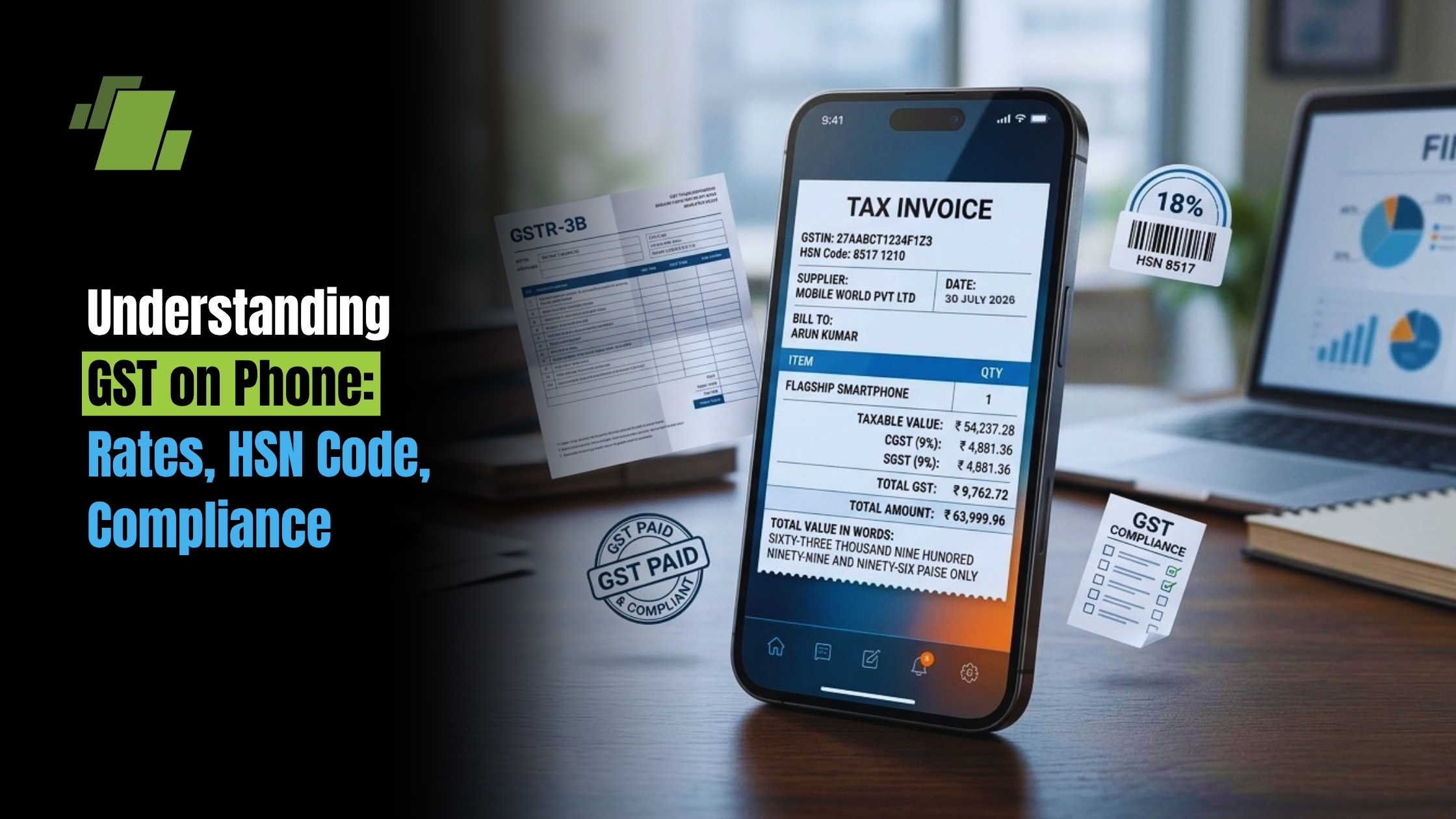
Understanding the GST implications on mobile phones is crucial for buyers and sellers. GST, or Goods and Services Tax, affects the final price of mobile devices. If you’re wondering how much gst on mobile or the exact gst on phone in India, this guide explains the essentials.
In India, the mobile phone gst rate is currently set at 18%. This gst rate on phone applies uniformly across all brands and models.
The Harmonized System of Nomenclature (HSN) code for mobile phones is 8517. This phone hsn code (hsn for mobile phone) helps categorize products for tax purposes.
Mobile accessories, however, have different HSN codes and GST rates. These rates can range from 18% to 28%, depending on the accessory type. For clarity, retailers should consult the mobile accessories hsn code and gst rate guidelines when invoicing.
Knowing these details helps consumers make informed purchasing decisions. Retailers also need to ensure compliance with GST regulations to avoid penalties. Understanding the mobile phone tax in India and the applicable mobile gst tax can minimize billing disputes.
Contact Us
Free Demo Request
What is GST and Why Does it Matter for Mobile Phones?
GST, or Goods and Services Tax, is a comprehensive tax used in India. It integrates various indirect taxes under one umbrella, simplifying the tax structure and forming the backbone of the mobile phone tax in India.
For mobile phones, GST directly impacts pricing. It affects both the retail price and purchasing decisions.
GST influences consumer spending due to its share in the total cost of mobile devices. Every phone you buy has GST included, affecting affordability.
Here are key reasons GST matters for mobile phones:
- Uniform Tax Rate: Ensures consistent pricing across different regions.
- Impact on Import Costs: Affects prices of imported mobile phones.
- Compliance for Retailers: Requires accurate GST calculations for legal compliance.
Retailers must display GST separately on invoices, offering transparency to buyers. They must also use the correct HSN codes to apply the right GST rate.
Understanding GST’s implications helps consumers and businesses plan better. They can budget more effectively and avoid unpleasant pricing surprises.
GST Rate on Mobile Phones: Current Status and History
As of now, the GST rate for mobile phones (mobile gst) in India stands at 18%. This rate significantly influences the pricing of mobile devices across the country.
Previously, the GST rate for mobile phones was lower. Initially, it was set at 12% when GST was first introduced.
In 2020, the government revised the rate. The increase to 18% was part of broader tax reforms. These changes aimed to boost revenue from electronic goods.
The decision to hike the GST rate reflects the increasing importance of mobile phones in the economy. It underscores how vital these devices are in daily life.
Mobile phones do not fall under the mobile gst rate 28 percent list. This ensures they remain somewhat affordable despite the higher tax rate.
Here is a quick overview of the GST rate history:
- Before 2020: 12%
- After March 2020: 18%
- Current Rate: 18%
The rate uniformity across brands and models simplifies transactions. Importantly, it ensures fair competition in the market. Both consumers and retailers need to stay updated on any future changes in GST rates. This awareness helps in making informed financial decisions about mobile purchases.
Understanding the current GST rate on phones is crucial for budget planning. It allows consumers to prepare for the total cost of buying a new mobile device.
HSN Code for Mobile Phones and Its Importance
The Harmonized System of Nomenclature (HSN) code for mobile phones is 8517. This code plays a crucial role in the tax framework. It helps categorize goods for taxation purposes.
HSN codes simplify the identification of products worldwide. For mobile phones, using the correct HSN code ensures the right GST rate applies. Accurate coding is vital for compliance with tax regulations. In other words, pairing the mobile phone hsn code and gst rate correctly is essential for error-free invoicing.
Using the wrong HSN code can result in legal issues. Retailers might face penalties if they do not comply. Therefore, understanding HSN codes is imperative for businesses. If in doubt, verify the hsn code for mobile (also called mobile hsn or phone hsn code) before billing.
Here’s a brief look at the significance of HSN codes:
- Identification: Globally unique codes for products
- Taxation: Determines applicable GST rates
- Compliance: Ensures adherence to tax laws
Beyond compliance, HSN codes influence pricing. They assist in maintaining uniform tax practices across different regions. Both retailers and consumers should be aware of HSN codes. This knowledge is essential for the transparent trading of mobile phones. It also fosters trust and clarity in purchase transactions, benefiting the whole marketplace.
GST on Mobile Accessories: HSN Codes and Rates
Mobile accessories like chargers and earphones have distinct HSN codes. These codes determine their applicable GST rates, which often differ from mobile phones. Mobile accessories are generally taxed at a higher rate.
The GST rate for mobile accessories can range from 18% to 28%. This variation depends on the specific type of accessory. For instance, basic accessories like chargers might have a lower rate compared to luxury cases. When classifying, align the item with the applicable mobile hsn code and gst rate to avoid mistakes.
Retailers must identify the correct HSN code for each accessory. This step is crucial to avoid discrepancies in tax calculations. Misclassification can lead to legal complications and financial penalties. Consulting an updated reference for mobile accessories hsn code and gst rate can help maintain accuracy.
Key points about mobile accessories and GST:
- Varied Rates: Different accessories have different GST rates
- HSN Specificity: Unique codes for each category
- Retailer Responsibility: Correct classification is essential
Staying informed about changes in GST rates is crucial. Both consumers and retailers benefit from understanding these classifications. Accurate knowledge ensures proper pricing and transparency at the point of sale. This approach promotes fairness in the market, enhancing consumer trust and satisfaction.
GST Calculation Example: How Much GST on Mobile Phones?
Understanding GST calculations can simplify purchasing decisions. If you’re asking “how much gst on mobile,” let’s take a closer look with a simple example. Suppose a mobile phone has a base price of ₹20,000.
The GST rate on mobile phones currently stands at 18%. To calculate the GST amount, multiply the base price by the GST rate. The calculation is as follows: 18% of ₹20,000, which equals ₹3,600.
Adding the GST to the base price gives you the final price: ₹20,000 + ₹3,600 = ₹23,600. This is the amount a consumer pays upon purchase.
Let’s illustrate this with a step-by-step list:
- Base Price: ₹20,000
- GST (18%): ₹3,600 (calculation: 20,000 x 0.18)
- Total Cost: ₹23,600
GST on mobile phones is uniform across models and brands. Import duties, if applicable, would be additional. Consumers should check invoices to ensure accuracy and transparency.
Understanding GST helps in making budget-conscious decisions. Retailers should provide detailed invoices, showing the base price and the GST amount separately. This transparency builds trust and fosters informed purchasing decisions among consumers.
GST on Popular Models: Example with iPhone 12 and Others
The GST rate on all mobile phones, including popular models like the iPhone 12, stands at 18%. This uniformity simplifies the buying process across brands. For clarity, the gst on iphone 12 follows the same percentage.
For instance, if the iPhone 12 has a base cost of ₹70,000, adding 18% GST results in ₹12,600. So, the buyer would pay a total of ₹82,600.
Here are some examples:
- iPhone 12 Base Price: ₹70,000
- GST (18%): ₹12,600
- Total Price: ₹82,600
Other models, regardless of brand, are taxed similarly under GST. This consistency aids consumers in anticipating costs. Importantly, it aligns pricing strategies across the mobile phone market in India. Understanding this tax uniformity helps consumers compare phones more straightforwardly.
GST on Mobile Bills and Service Charges
GST on mobile bills is a composite of charges. It includes both the cost of the device and associated service charges. This comprehensive approach ensures all components are taxed fairly, often labeled as gst on mobile bill on the invoice.
When looking at a mobile bill, you might find multiple components. Besides the phone’s price, services like warranties or additional support might incur GST. It’s crucial to understand these as they contribute to the overall cost.
Here’s how it breaks down:
- Device Cost: Subject to 18% GST
- Service Charges: May also carry GST if applicable
- Total Bill: Sum of all components
Understanding the elements of your mobile bill can provide transparency. It helps consumers verify that GST is applied correctly. This knowledge empowers buyers to make informed decisions about their expenses.
GST on Imported and Second-Hand Mobile Phones
Imported phones in India face GST alongside import duties. These duties are levied to protect local manufacturers. This dual taxation can increase the overall cost significantly.
Second-hand mobile phones are not exempt from GST. Reselling often involves a GST component, though it might be lower than new devices. The tax ensures fairness in trading used goods.
For imported phones, the tax structure usually includes:
- Base GST Rate: Similar to domestic phones at 18%
- Import Duty: An additional percentage based on policy
- Other Taxes: May include surcharges or cess
Understanding these taxes is vital for consumers purchasing second-hand or imported devices. It helps in calculating the true cost, making budgeting easier. Awareness of the tax implications can guide buyers in making financially sound decisions. This knowledge supports informed purchases and financial planning.
Compliance for Retailers: Billing, Reporting, and Penalties
Retailers must follow GST regulations closely when selling mobile phones. Correct billing is crucial for transparency and compliance. Mistakes can lead to legal issues and potential penalties.
Accurate reporting of GST is equally important. Retailers need to maintain precise records of sales and the applicable GST. This not only ensures compliance but also aids in periodic audits. Configure billing software with the current mobile phone tax rate to reduce errors.
Penalties for non-compliance can be severe. They may include:
- Fines: Monetary penalties for incorrect reporting
- Legal Action: For severe violations
- Reputation Damage: Impacting customer trust
Retailers should use reliable billing software to manage GST calculations. Educating staff about GST rules can prevent errors. Staying informed about tax updates ensures ongoing compliance.
Key Takeaways for Consumers and Retailers
Understanding GST on mobile phones is crucial for both consumers and retailers. It directly affects the purchase and sale dynamics. Awareness of the GST implications ensures informed decisions and compliance.
Consumers should check the GST rate listed on their purchase invoices. This helps verify the total cost and confirms adherence to tax laws. Knowledge about specific HSN codes can aid in understanding applicable rates.
Retailers, on the other hand, must ensure accurate GST and reporting
to avoid legal repercussions. Keeping up-to-date with changes in tax rates helps maintain compliance and customer trust.
Here’s a quick recap:
- Consumers: Verify GST on invoices; understand HSN codes.
- Retailers: Ensure correct billing; stay updated on tax laws.
- Both: Awareness aids in making informed decisions and compliance.
This comprehensive understanding benefits the overall mobile market ecosystem.

Call at +91-73411-41176/75 or send us an email at sales@logicerp.com to book a free demo today!
Frequently Asked Questions
1. What is the current GST rate on mobile phones in India, and how has it changed over time?
The GST rate on mobile phones is 18% today. When GST was introduced, phones were taxed at 12%, but the rate was increased to 18% in March 2020 as part of broader tax reforms. Mobile phones are not in the 28% GST slab, and the 18% rate applies uniformly across India.
2. Does the GST rate vary by brand or model (for example, iPhone 12), and how does it affect the final price?
No, the GST rate is uniform at 18% for all brands and models, including popular devices like the iPhone 12. For instance, if an iPhone 12 has a base price of ₹70,000, 18% GST adds ₹12,600, making the total ₹82,600. For imported units, any applicable import duties would be in addition to the 18% GST.
3. What is the HSN code for mobile phones, and why is using the correct code important?
The HSN code for mobile phones is 8517. Using the correct HSN ensures the proper GST rate is applied and supports legal compliance. Misclassification can lead to billing errors, legal issues, and penalties. Retailers should verify the HSN before invoicing and display GST separately on invoices for transparency.
4. Do mobile accessories have the same GST rate and HSN code as phones?
No. Mobile accessories have their own HSN codes and are generally taxed between 18% and 28%, depending on the accessory type. For example, basic items like chargers may attract a lower rate within this range, while premium cases may be higher. Retailers must classify each accessory correctly by consulting updated HSN/GST references to avoid penalties.
5. How do I calculate the GST on a mobile phone purchase, and what about imported or second-hand phones?
To calculate GST, multiply the base price by 18% and add it to the base. Example: on a ₹20,000 phone, GST is ₹3,600, so the total is ₹23,600. Imported phones attract 18% GST plus import duties (and possibly other charges), which raises the total cost. Second-hand phones aren’t exempt; resales often include a GST component, which may be lower than for new devices, depending on the transaction structure.

Author
Gurbir Singh
Co-founder & Managing Director | LOGIC ERP Solutions Pvt. Ltd.
With 30+ years of experience in the tech industry, I took the helm of technology & product development, ensuring LOGIC ERP’s continuous innovation & leadership in the evolving tech landscape.