Understanding How to Use a GST Calculator

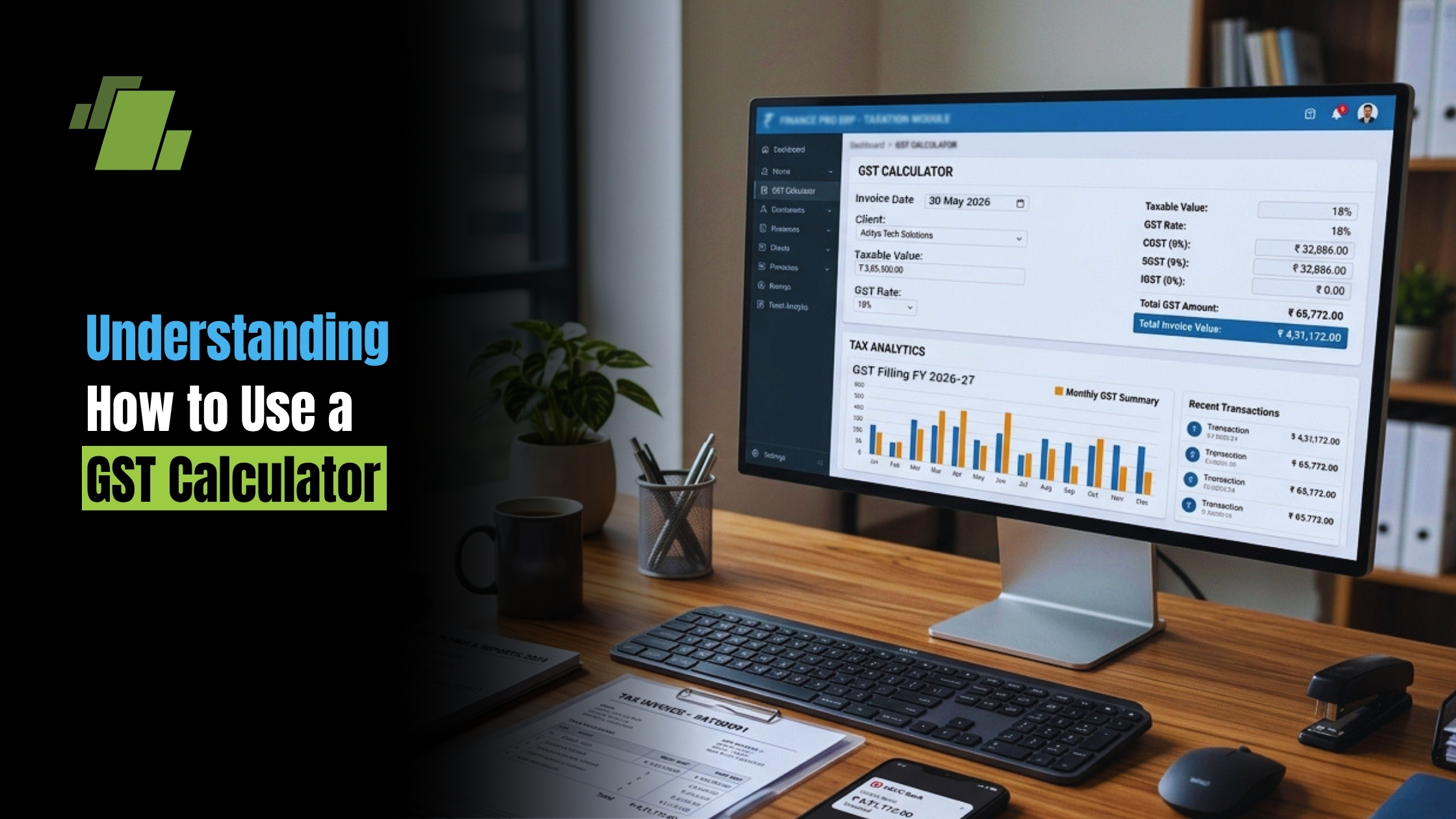
Understanding how to calculate GST is crucial for businesses and individuals in India. The Goods and Services Tax (GST) is a comprehensive tax levied on the supply of goods and services. It simplifies the tax structure by replacing multiple indirect taxes.
A GST calculator is a handy tool that helps compute the GST amount quickly and accurately. It saves time and reduces errors in tax calculations.
Using a GST calculator online can streamline the process for both businesses and individuals. It ensures compliance with tax regulations and maintains transparency in pricing. For India-specific needs, a GST calculator India resource reflects the latest rates and the CGST/SGST split.
For businesses managing large volumes of transactions, GST software further simplifies tax management by automating GST calculations, invoice generation, tax filing, return preparation, and compliance tracking. By integrating GST software with billing and accounting processes, businesses can improve accuracy, reduce manual effort, and ensure seamless GST compliance.
Contact Us
Free Demo Request
This guide will walk you through the essentials of using a GST calculator. You’ll learn about the GST formula, GST percentages, and how to apply them in various scenarios.
What is GST? An Overview for India
GST, or Goods and Services Tax, revolutionized India’s tax system. Implemented on July 1, 2017, it replaced multiple indirect taxes. It aims to create a unified market and reduce tax complexity.
This tax applies to almost all goods and services, excluding petroleum products, alcohol, and electricity. GST is levied at every sale point. It simplifies taxation by merging numerous taxes into one.
In India, GST is categorized into:
- CGST (Central Goods and Services Tax)
- SGST (State Goods and Services Tax)
- IGST (Integrated Goods and Services Tax)
These categories depend on whether a transaction is intra-state or inter-state. Intra-state transactions involve CGST and SGST, while inter-state deals involve IGST.
The GST Council, consisting of central and state government representatives, determines GST rates. They routinely review and update these rates. Understanding the basics of GST is key to managing taxes effectively. This foundational knowledge can help streamline financial planning and compliance.
Why Use a GST Calculator?
A GST calculator simplifies tax computations for both businesses and individuals. Manual calculations can be prone to errors, but a calculator ensures accuracy.
These tools save time, reducing the burden of tedious tax calculations. They are essential for businesses that deal with numerous transactions daily.
Key benefits of using a GST calculator include:
- Accuracy: Minimizes errors in tax calculations.
- Time-Saving: Speeds up the calculation process.
- Convenience: Easily accessible online or through apps.
By leveraging a GST calculator, businesses stay compliant with tax laws. It aids in transparent pricing and helps manage tax payments efficiently. Understanding its importance can enhance operational efficiency and financial planning.
GST Calculation Formula Explained
Understanding the GST formula is key to efficient tax calculations. The formula is straightforward, making it user-friendly for everyone.
The basic GST calculation formula is:
- GST Amount = (Original Cost x GST Percentage) / 100
This formula helps in finding the amount of GST to be added. Knowing the GST percentage is crucial, as it varies by product type.
In India, GST percentages typically range from 5% to 28%. Different goods and services fall under different slabs.
To calculate the total price, add the GST amount to the original cost. This gives you the final selling price of a product or service.
By mastering this formula, individuals and businesses can ensure accurate billing. It also aids in complying with legal requirements, fostering transparency in transactions.
GST Exclusive vs. GST Inclusive Calculations
Knowing the difference between GST exclusive and inclusive prices is vital. GST exclusive means the original price does not include GST yet.
To find the price including GST (GST inclusive):
- Total Price = Original Cost + GST Amount
Conversely, for GST exclusive scenarios, subtract the GST amount from the total price. This breakdown helps in understanding real costs versus taxed amounts.
Understanding these calculations aids in setting accurate pricing strategies. By distinguishing between exclusive and inclusive pricing, businesses maintain clarity in their financial records and customer communication.
Step-by-Step Guide: How to Use a GST Calculator Online
Using an online GST calculator simplifies tax calculations dramatically. Begin by ensuring you have internet access and navigate to a reliable GST calculator website.
First, input the original cost of the item or service. This is the base price before adding GST.
Next, select the appropriate GST percentage. In India, options typically include 5%, 12%, 18%, and 28%.
With these details filled in, click on the “calculate” button. The calculator will instantly provide the GST amount and the total inclusive price.
Here’s a simple checklist for using an online GST calculator:
- Enter the original price
- Choose the GST rate
- Press “calculate”
- View the GST amount and total price
Using these steps ensures an accurate calculation each time. For businesses, it streamlines the billing process, reducing manual errors.
Always verify your entries to ensure accuracy. The convenience of online calculators lies in their speed and error reduction.
Many websites offer these tools for free, making them accessible to everyone. By leveraging these tools, businesses can focus more on their core activities while maintaining financial accuracy.
Understanding GST Percentages and Rates in India
GST rates in India are pivotal for tax calculation. They vary based on the goods and services provided. Understanding these rates ensures compliance and accurate pricing.
The GST Council decides these rates. They typically range from 5% to 28%, based on product categorization.
For instance, daily necessities like food grains often incur a 5% GST. On the other hand, luxury items might attract a higher rate of 28%.
Here’s a simple breakdown of common GST rates:
- 5%: Essential commodities
- 12%: Standard items
- 18%: Majority of goods and services
- 28%: Luxury and sin goods
Recognizing these rates is vital for both businesses and consumers. It influences pricing strategies and financial planning. Leveraging GST calculators can simplify the task by helping you choose the right rates quickly. Understanding these percentages promotes better financial decisions and compliance.
Practical Examples: Calculating GST for Different Scenarios
Let’s dive into real-life examples to see how GST applies. These scenarios show how a GST calculator can simplify complex computations.
Scenario 1: Selling Electronics
Imagine selling a laptop priced at ₹50,000. If the GST rate is 18%, the GST amount would be ₹9,000. The total cost, including GST, becomes ₹59,000. This example shows how the GST calculation formula is used for electronics.
Scenario 2: Dining in a Restaurant
Consider a restaurant bill of ₹2,000 with a GST rate of 5%. Using the formula, the GST amount is ₹100, making the total bill ₹2,100. This scenario highlights its application in the hospitality sector.
Scenario 3: Purchasing Luxury Goods
For luxury items like a branded watch costing ₹10,000 with a 28% GST, the GST is ₹2,800. The total price thus becomes ₹12,800.
Here’s a summary list of GST calculations in different scenarios:
- Electronics: ₹50,000 + 18% GST = ₹59,000
- Restaurants: ₹2,000 + 5% GST = ₹2,100
- Luxury Goods: ₹10,000 + 28% GST = ₹12,800
By applying these examples, businesses and consumers can see the impact of GST. A GST calculator simplifies these processes, ensuring accuracy and ease.
Benefits of Using a GST Calculator for Businesses and Individuals
A GST calculator offers numerous advantages for both businesses and individuals. It streamlines the calculation process and ensures precision.
For businesses, using a GST calculator can save time and reduce errors. It promotes compliance with tax regulations, which is crucial for maintaining smooth operations.
Individuals benefit as well, particularly when making large purchases or understanding invoices. The tool’s accuracy aids in budgeting and financial planning.
Key benefits of using a GST calculator include:
- Time-saving: Swift computations.
- Accuracy: Reduced human error.
- Compliance: Meets regulatory needs.
- Budgeting: Better financial control.
Overall, it’s an invaluable tool for managing financial transactions and tax-related tasks efficiently.
Common Mistakes to Avoid in GST Calculation
Missteps in GST calculations can lead to financial mishaps. Understanding common errors helps prevent them.
One frequent mistake is using incorrect GST rates. This can occur when users overlook recent rate changes.
Another error involves omitting discounts or additional charges in calculations. This skews the final GST amount.
Avoid these pitfalls by:
- Double-checking rates: Stay updated with current GST rates.
- Including all charges: Don’t ignore any applicable costs.
- Using correct formulas: Ensure accuracy in application.
By being aware of these mistakes, one can ensure accurate and efficient GST calculations.
Advanced Features of GST Calculators
Modern GST calculators offer more than basic calculations. They include several advanced tools that enhance user experience and accuracy.
Some of these features include:
- Integration with accounting software: Ensures seamless financial management.
- Customizable GST rates: Adapts to specific business needs.
- Reverse charge mechanism: Calculates applicable charges quickly.
These enhancements help businesses save time and improve calculation precision. Understanding these features can streamline financial processes effectively.
Conclusion: Making GST Calculation Simple and Accurate
Using a GST calculator simplifies the complex task of tax calculation. It provides accuracy and efficiency, whether you’re a business owner or an individual. By understanding the principles behind GST and using these calculators, you can save time and reduce potential errors in your tax submissions.
For businesses looking to go beyond basic tax calculations, LOGIC ERP offers a complete solution for GST-compliant billing, invoicing, accounting, return preparation, and tax management. By automating GST-related processes, LOGIC ERP helps businesses improve accuracy, reduce manual effort, and stay compliant with evolving tax regulations.
Embracing technology in tax computations can streamline processes, making them more manageable and effective. As tax rates evolve, staying informed and using the right tools can help maintain compliance and transparency.
Call at +91-73411-41176/75 or send us an email at sales@logicerp.com to book a free demo today!
Frequently Asked Questions
1. When should I apply CGST/SGST versus IGST in my GST calculation?
Use CGST and SGST for intra-state transactions (supplier and buyer in the same state) and IGST for inter-state transactions (supplier and buyer in different states). India-specific GST calculators often handle this by splitting the tax appropriately for intra-state supplies or applying IGST for inter-state supplies, helping you stay aligned with how GST is structured nationally.
2. What’s the basic formula for calculating GST and the total price?
Start with the base (original) price and the applicable GST rate. The GST amount is (Original Cost × GST Percentage) / 100. The total (GST-inclusive) price is then Original Cost + GST Amount. Most online calculators let you enter the base price and select a rate (commonly 5%, 12%, 18%, or 28%) to instantly show both the GST amount and the final price.
3. What’s the difference between GST-exclusive and GST-inclusive prices, and how do I work with each?
A GST-exclusive price does not include tax yet; you add the GST amount to reach the final price. A GST-inclusive price already has GST in it. To move from exclusive to inclusive, add the computed GST to the base. If you’re given an inclusive price and need the exclusive price, subtract the GST amount from the total (many calculators offer an “inclusive to exclusive” mode to do this cleanly and avoid manual errors).
4. How do I choose the correct GST rate for my product or service?
Select the rate based on the GST Council’s latest categorization. In India, common slabs are 5% (often essentials), 12%, 18% (majority of goods and services), and 28% (luxury/sin goods). A reliable GST calculator for India typically lists these options, but you should verify the category-specific rate against current GST Council updates to ensure compliance.
5. Are online GST calculators reliable, and what features should I look for?
Yes—when they’re updated regularly and you enter accurate inputs. Look for features like: clear CGST/SGST vs. IGST handling, preset but customizable GST rates, inclusive-to-exclusive conversion, reverse charge support, and (for businesses) integration with accounting software. Always double-check the selected rate and any discounts or extra charges to avoid common errors.

Author
Gurbir Singh
Co-founder & Managing Director | LOGIC ERP Solutions Pvt. Ltd.
With 30+ years of experience in the tech industry, I took the helm of technology & product development, ensuring LOGIC ERP’s continuous innovation & leadership in the evolving tech landscape.