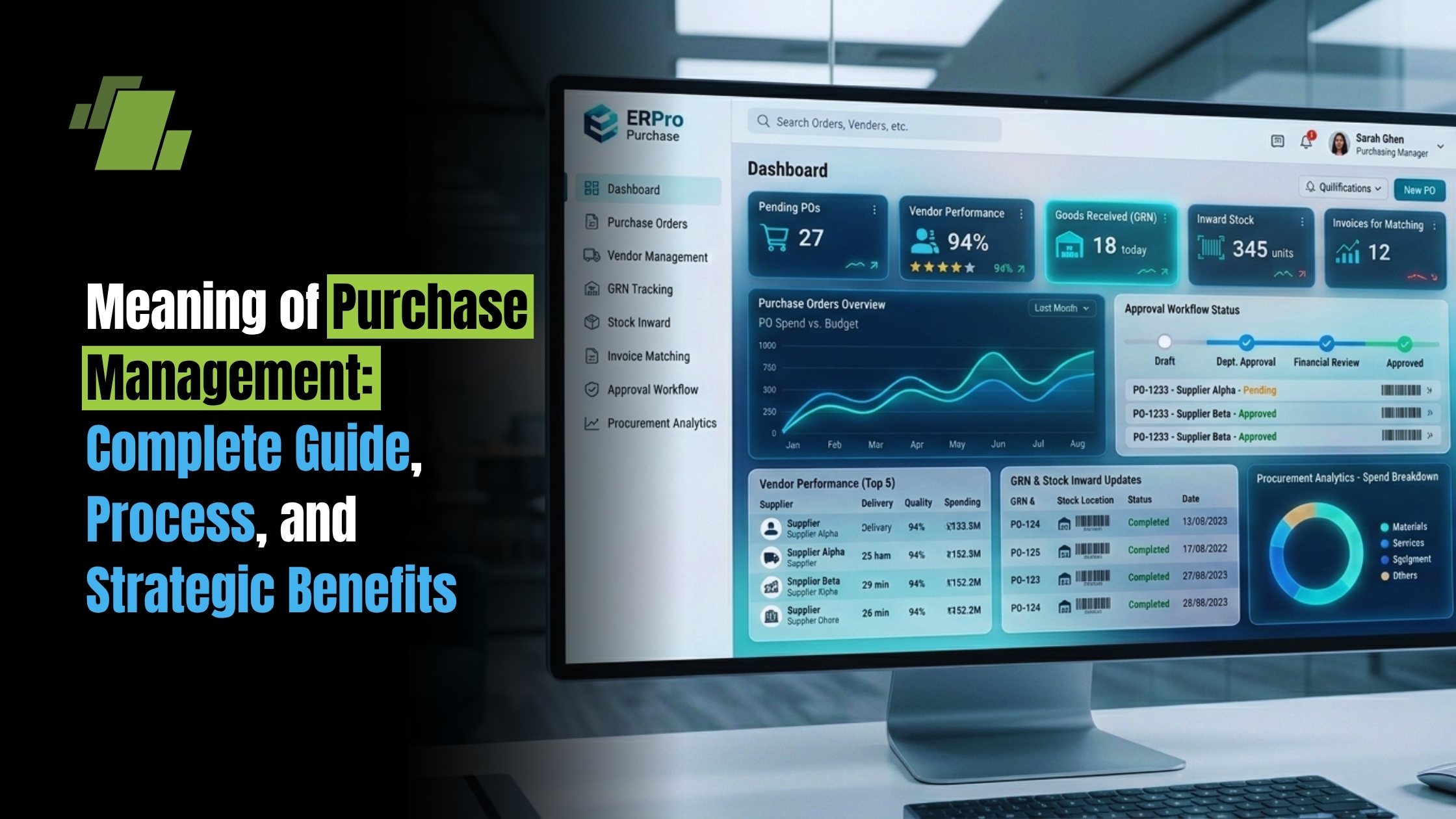
Meaning of Purchase Management: Complete Guide, Process, and Strategic Benefits

Introduction
This comprehensive guide is designed for business owners, procurement professionals, and students seeking to master the essentials of purchase management. In today’s fast-paced business environment, understanding purchase management is crucial for optimizing costs, ensuring supply chain reliability, and maintaining a competitive edge. By exploring the processes, strategies, and benefits outlined in this guide, readers will gain the knowledge needed to make informed decisions and drive organizational success.
Contact Us
Free Demo Request
Table of Content
- What Is Purchase Management? The Complete Definition
- Why Purchase Management Matters for Modern Businesses
- How Purchase Management Works: The Complete Process
- Step 1: Requirement Identification and Planning
- Step 2: Supplier Evaluation and Selection
- Step 3: Order Processing and Contract Management
- Step 4: Receipt and Quality Verification
- Core Components That Define Effective Purchase Management
- Proven Benefits of Strategic Purchase Management
- Financial Impact and Cost Optimization
- Operational Excellence and Risk Management
- Strategic Business Advantages
- Purchase Management vs Related Functions
- Best Practices for Modern Purchase Management
- Common Challenges in Purchase Management
- Why Choose LOGIC ERP Purchase Management Software for Your Retail Business?
- Conclusion
- Frequently Asked Questions
Purchase management means strategically controlling how a business identifies needs, selects suppliers, creates purchase orders, receives goods or services, verifies invoices, and makes payments-while reducing costs, improving supplier reliability, and keeping business operations running smoothly.
What Is Purchase Management? The Complete Definition
Purchase management is the strategic oversight of all procurement activities and acquiring goods from identifying needs to final payment. It is not just buying what a department asks for; it is a complete management process that connects planning, supplier selection, negotiating contracts, purchase order creation, inventory management, quality management, invoice approval, and supplier relationship management.
A strong purchase management process covers the entire purchasing cycle. It begins when an internal team raises a purchase request or purchase requisition, continues through supplier evaluation, competitive pricing, order approval, delivery verification, invoice processing, and timely payments, and ends with detailed records kept for future reference.
This is why purchase management is different from simple purchasing. Simple purchasing is transactional: someone needs an item, places an order, receives it, and pays for it. Better purchase management is strategic: it considers cost effectiveness, supplier reliability, delivery expectations, payment terms, risk management, supply chain disruptions, customer demand, and long-term organizational objectives.
From a LOGIC ERP perspective, modern purchase management should not operate in isolation. A purchase management system should integrate with inventory, finance, vendor management, accounts payable, supply chain management, and reporting tools so the purchasing department can continuously monitor spending, approvals, delivery dates, supplier performance, and purchase records in real time.
Why Purchase Management Matters for Modern Businesses
Purchase management is important because every purchasing decision affects cash flow, production, inventory levels, customer commitments, and profit margins. When the purchasing function is structured, businesses can acquire goods and services efficiently, maintain essential materials, and meet customer demand without excess stock, delayed supplies, or unnecessary expenditures.
Cost reduction is one of the clearest benefits. Effective purchasing management can save money through strategic sourcing, bulk purchases, competitive bidding, stronger supplier relations, and better payment terms. Mature procurement teams often reduce procurement expenses by 5–15% through better supplier negotiations, contract discipline, and monitoring spending across categories.
Risk management is another major reason purchasing management important for modern businesses. Overdependence on one supplier, poor vendor performance, or weak delivery planning can cause supply chain disruptions. Strong supplier relationships help companies handle unexpected challenges, such as needing additional shipments outside of a contract, urgent delivery support, or flexible terms during demand spikes.
Quality assurance also depends on efficient purchasing management. The purchasing manager and procurement team must evaluate supplier performance, check delivery quality, confirm the right quantity, and ensure that raw materials, components, and services meet approved specifications. Effective purchasing management involves evaluating vendor performance and maintaining good communication to ensure quality and timely deliveries.
A structured purchasing process also improves operational efficiency. Establishing a clear approval process, formal purchase order workflow, and purchase order system helps ensure consistency and clarity, minimizing manual errors and improving coordination among users. Implementing a structured purchasing process can minimize manual errors and improve coordination, which in turn enhances accountability and helps control costs effectively.
Compliance matters as well. Many industries require traceability, audit readiness, approved supplier records, contract compliance, and controlled invoice processing. A purchase management system like LOGIC ERP helps maintain detailed records, enforce internal policies, and ensure all the details of purchasing activities are available for review.
How the Purchase Management Process Works: The Complete Process
The purchase management process typically follows a cycle that includes steps from identifying needs to making payments, ensuring efficiency and value extraction throughout the process. In a well-designed purchasing strategy, each step is connected to budget control, supplier accountability, inventory management, and business continuity.
Step 1: Requirement Identification and Planning
The first step is identifying what the business needs. Internal teams submit a purchase request with specifications, quantity, expected delivery dates, business justification, and urgency. A purchase requisition is the initial step in the purchase management process, where teams state their needs and request internal approval for purchases.
This stage ensures that the purchasing department does not buy without purpose. The procurement team validates whether the request supports organizational objectives, whether the item is required to keep business running smoothly, and whether the purchase aligns with demand forecasting, inventory levels, and customer demand.
Budget validation is also essential. Before a formal purchase order is issued, the approval process confirms whether funds are available and whether the proposed purchase fits the company’s financial plan. This prevents unnecessary expenditures and supports cost effectiveness from the beginning of the purchasing cycle.
Step 2: Supplier Evaluation and Selection
Once the need is approved, the procurement team evaluates suppliers. Supplier selection may include market research, reviewing existing vendor management records, comparing market trends, checking supplier reliability, and requesting quotes from multiple suppliers.
For strategic or high-value purchases, the purchasing manager may issue an RFP or RFQ so suppliers prepare competitive bids. These bids are assessed based on best price, quality, lead time, financial stability, delivery capability, payment terms, after-sales support, and risk exposure.
The goal is not always to select the cheapest supplier. Effective purchasing looks for good quality, reliable delivery, strong supplier relationships, and long-term value. Building long-term relationships with trusted suppliers adds stability to a business, leading to better prices, priority service, and more flexible terms.
Step 3: Order Processing and Contract Management
After supplier selection, the business creates a purchase order. A formal purchase order confirms all the details, including item description, right quantity, agreed price, delivery expectations, delivery dates, payment terms, tax details, and terms and conditions.
Contract negotiation may also be involved, especially for recurring purchases, bulk purchases, raw materials, or essential services. Negotiating contracts helps secure competitive pricing, service levels, warranties, penalties for late delivery, and quality requirements.
A purchase order management system creates efficiencies and streamlines the ordering process, reducing manual errors and improving tracking of orders and vendor performance. Investing in a purchase order management system also improves visibility for the purchasing department, finance team, warehouse team, and suppliers.
Step 4: Receipt and Quality Verification
When goods or services arrive, the receiving team verifies quantity, condition, and quality against the purchase order. This step confirms whether the supplier delivered what was promised and whether the order meets business requirements.
Three-way matching is then used to compare the purchase order, goods receipt, and supplier invoice. The accounts payable team is responsible for processing payments after verifying that the purchase order, receipt, and invoice match, a process known as 3-way matching.
If there is a mismatch-wrong quantity, damaged goods, incorrect price, missing documentation, or late delivery-exception handling workflows help resolve the issue before payment. This protects the company from overpayment, poor supplier performance, and inaccurate purchase records.
Core Components That Define Effective Purchase Management
Effective purchase management depends on several key functions working together. These components turn routine purchasing activities into a strategic procurement framework that improves efficiency, reduces risk, and supports long-term business performance.
- Strategic sourcing focuses on long-term value creation rather than only cost minimization. It uses supplier analysis, market trends, category planning, and competitive pricing to reduce costs while improving quality and supply reliability.
- Supplier relationship management helps businesses maintain strong supplier relationships and improve collaboration. Strong supplier relationships can create better prices, priority service, more flexible terms, and faster support when supply chain disruptions occur.
- Spend analytics gives the procurement team visibility into monitoring spending by supplier, category, department, and location. This helps identify maverick spend, unnecessary expenditures, duplicate purchases, and opportunities for bulk purchases or contract consolidation.
- Technology integration connects purchasing with inventory management, finance, accounts payable, vendor management, and supply chain management. ERP systems like LOGIC ERP automate purchase requisition approvals, formal purchase order creation, invoice processing, 3-way matching, and supplier performance tracking.
- Performance measurement ensures the purchasing strategy is improving over time. Important metrics include cost savings, purchase order cycle time, supplier lead time, contract compliance, delivery reliability, quality defect rates, total cost of ownership, and supplier performance scores.
Developing a strategic procurement framework that aligns with organizational objectives can enhance procurement efficiency and mitigate unnecessary expenditures. With the right framework, the purchasing department can make decisions based on data, not assumptions.
Proven Benefits of Strategic Purchase Management
Strategic purchase management creates measurable improvements across finance, operations, supplier reliability, and customer service. It helps companies acquire goods and services efficiently while reducing avoidable costs and improving the quality of business operations.
1. Financial Impact and Cost Optimization
Effective purchasing management can lead to increased profits by optimizing production and reducing costs per unit, ultimately enhancing profit margins. This happens when the procurement team secures competitive pricing, reduces waste, improves payment terms, and controls unnecessary spending.
Purchasing management helps control costs by understanding supply chain dynamics and seeking the best possible prices for raw materials, while also reducing inefficiencies such as storage costs. It also improves total cost of ownership by considering maintenance, delivery, quality issues, warranty terms, and lifecycle expenses-not just the initial purchase price.
Budget control improves when every purchase requisition, approval, purchase order, receipt, and invoice approval is recorded in a centralized purchase management system. This gives finance and procurement teams better visibility into committed costs, future liabilities, and opportunities to save money.
2. Operational Excellence and Risk Management
Operational excellence depends on having the right materials, from the right supplier, at the right time, in the right quantity. Better purchase management supports production planning, inventory availability, and the ability to meet customer demand without emergency buying or overstocking.
Risk management improves when businesses diversify their supplier base, evaluate supplier reliability, and create backup options for essential materials. Strong supplier relationships can help businesses overcome unexpected challenges, such as needing additional shipments outside of a contract or urgent support during supply chain disruptions.
Quality management also improves through supplier evaluation, receipt checks, and performance monitoring. When companies continuously monitor delivery performance, defect rates, responsiveness, and contract compliance, they reduce production delays, customer dissatisfaction, and avoidable rework.
3. Strategic Business Advantages
Purchase management also creates strategic advantages beyond cost savings. Trusted suppliers can provide early access to innovation, alternative materials, new technologies, and market intelligence that help the business respond faster to changing customer demand.
Supplier relations can also strengthen resilience. When suppliers understand your delivery expectations, business priorities, and growth plans, they can plan capacity better and support future needs more effectively.
The result is a purchasing function that supports growth instead of only processing orders. A well-run procurement management process improves cost effectiveness, strengthens the supply chain, and gives leaders the information needed to make faster, smarter decisions.
Purchase Management vs Related Functions
Purchase management is closely connected to procurement, sourcing, and supply chain management, but each function has a different scope. Understanding the differences helps businesses design clearer roles, better workflows, and stronger accountability.
| Function | Main Scope | Primary Objective | Strategic Focus |
|---|---|---|---|
| Purchase Management | Manages the purchasing process from purchase request to payment | Acquire goods and services efficiently at the right cost, quality, and time | Supplier performance, cost control, purchase order accuracy, risk management |
| Procurement Management | Broader framework covering sourcing, contracting, purchasing, supplier management, and policy | Create total value across all procurement activities | Organizational objectives, compliance, spend strategy, supplier base optimization |
| Sourcing | Identifies, evaluates, and negotiates with suppliers before purchasing | Find the best supplier options and commercial terms | Strategic sourcing, supplier selection, competitive pricing, market trends |
| Supply Chain Management | Manages the end-to-end flow of goods, materials, logistics, production, and delivery | Keep the supply chain efficient, resilient, and responsive | Demand forecasting, inventory management, logistics, customer demand fulfillment |
Purchase management sits inside the broader procurement strategy. It is more comprehensive than simple buying because it includes approval workflows, formal purchase order control, delivery verification, supplier performance review, and invoice processing.
Sourcing happens before the purchase order is issued. It identifies suppliers, gathers bids, compares offers, and supports negotiating contracts. Supply chain management is broader still, covering inventory, logistics, production planning, warehousing, and distribution.
In modern organizations, these functions must work together. LOGIC ERP supports a unified approach by connecting purchase management, inventory management, finance, vendor management, and reporting so teams can track purchasing activities, maintain detailed records, and improve the complete purchasing cycle from one system.
Best Practices for Modern Purchase Management
The best purchase management systems combine clear policies, skilled teams, reliable suppliers, and strong technology. These best practices help companies reduce costs, improve accountability, and keep business operations running smoothly.
- Develop comprehensive procurement policies and standardized procedures: Define who can raise a purchase requisition, who approves it, when competitive bids are required, how suppliers are selected, and how purchase records are maintained for future reference.
- Implement technology for automation and visibility: A purchase order system or ERP-based purchase management system can automate approvals, reduce human errors, track delivery dates, support 3-way matching, and improve invoice approval.
- Build strategic supplier relationships: Classify suppliers by importance, maintain strong supplier relationships with critical vendors, and communicate clearly about delivery expectations, quality standards, and demand forecasts.
- Track performance metrics continuously: Measure cost savings, supplier performance, purchase order cycle time, contract compliance, delivery reliability, invoice processing speed, and total cost of ownership.
- Train procurement teams: A strong purchasing manager and procurement team need skills in negotiation, supplier evaluation, market analysis, risk assessment, procurement strategy, technology usage, and contract management.
- Create cross-functional collaboration: Procurement, finance, inventory, operations, quality, and accounts payable should work from shared data. This improves coordination, avoids duplicate work, and ensures that every purchase supports organizational objectives.
Establishing a structured purchasing process helps ensure consistency and clarity, minimizing manual errors and improving coordination among users. For growing businesses, this structure is what turns purchasing from a reactive task into a source of control, cost reduction, and strategic value.
Common Challenges in Purchase Management
Even experienced businesses face purchase management challenges when processes, people, suppliers, and systems are not aligned. These issues often appear as delays, excess costs, poor visibility, or weak supplier accountability.
Manual processes are one of the biggest obstacles. When teams rely on spreadsheets, emails, paper approvals, or disconnected tools, human errors increase and the purchasing department loses real-time visibility into purchase requests, approvals, purchase orders, receipts, and invoices.
Supplier dependency is another major risk. If a company relies too heavily on one supplier or one geography, supply chain disruptions can delay production and affect customer demand. Better vendor management requires a diversified supplier base, backup suppliers, and ongoing supplier performance reviews.
Budget pressure can also create short-term thinking. Choosing the best price without considering quality, reliability, storage costs, delivery delays, or lifecycle expenses can increase total cost of ownership. Effective purchasing balances cost savings with long-term value.
Compliance complexity creates additional challenges. Companies may need to follow internal policies, tax rules, industry standards, ESG requirements, audit controls, and documentation rules. Without detailed records and a structured approval process, compliance becomes difficult.
Technology integration is another common issue. Data silos between procurement, finance, inventory, and suppliers make it hard to track all the details across the purchasing cycle. A unified ERP such as LOGIC ERP helps connect procurement activities, purchase records, inventory data, and invoice processing.
Skills gaps can also limit results. Procurement teams need more than order-processing ability. They need strategic sourcing knowledge, negotiation skills, market awareness, supplier relations experience, risk management capability, and comfort using digital purchase management tools.
Choosing LOGIC ERP Purchase Management Software means empowering your retail business with a comprehensive, integrated solution designed to streamline procurement and maximize efficiency. LOGIC ERP offers a user-friendly platform that automates the entire purchase management cycle from purchase requisition and supplier evaluation to purchase order creation, receipt verification, invoice processing, and payment.
With LOGIC ERP, retailers gain real-time visibility into spending, supplier performance, and inventory levels, enabling smarter decision-making and tighter cost control. The software supports strategic sourcing by helping you evaluate vendors based on price, quality, and delivery reliability, fostering stronger supplier relationships that lead to better pricing and priority service.
Additionally, LOGIC ERP’s robust purchase order management system minimizes manual errors and accelerates approvals through automated workflows, ensuring compliance and accountability across departments. Its seamless integration with finance, inventory, and accounts payable modules simplifies 3-way matching and payment processing, reducing delays and improving cash flow management.
For retail businesses aiming to optimize procurement, reduce costs, and maintain uninterrupted operations, LOGIC ERP provides the tools and insights necessary to transform purchase management from a routine task into a strategic advantage.
Conclusion
Effective purchase management is a critical component for any business aiming to optimize costs, ensure timely supply, and maintain strong supplier relationships. By strategically overseeing the entire purchasing cycle from need identification to payment processing organizations can enhance operational efficiency, reduce risks, and improve profit margins. Leveraging integrated purchase management systems like LOGIC ERP empowers businesses to automate workflows, gain real-time visibility, and make informed decisions that drive long-term success. Embracing best practices and technology in purchase management transforms procurement from a routine task into a strategic advantage that supports sustainable growth and competitive edge.
Call at +91-73411-41176/75 or send us an email at sales@logicerp.com to book a free demo today!
Frequently Asked Questions
1. What is the Main Purpose of Purchase Management?
The main purpose of purchase management is to ensure that an organization acquires goods and services efficiently at the right quality, right quantity, right time, right source, and best possible value.
It also supports risk management, cost reduction, supplier reliability, timely payments, compliance, and long-term supplier relationships. In simple terms, inventory management keeps the business supplied, controlled, and financially efficient.
2. How Does Purchase Management Differ from Simple Buying?
Simple buying is transactional. It focuses on placing an order, receiving the item, and paying the supplier.
Purchase management is strategic and comprehensive. It includes purchase requisition, approval process, supplier selection, strategic sourcing, formal purchase order creation, delivery verification, 3-way matching, invoice approval, supplier performance review, and continuous improvement.
3. What Skills are Needed For Effective Purchase Management?
Effective purchasing requires negotiation, analytical thinking, market research, vendor management, supplier management, contract understanding, risk assessment, quality management, and technology proficiency.
A purchasing manager should also understand demand forecasting, inventory management, payment terms, cost effectiveness, and how procurement activities support organizational objectives.
4. How Can Technology Improve Purchase Management?
Technology improves purchase management by automating routine tasks, reducing manual errors, and giving teams real-time visibility into the complete purchasing process.
A system like LOGIC ERP can help manage purchase requests, purchase requisitions, approvals, purchase orders, supplier records, inventory availability, invoice processing, 3-way matching, timely payments, and supplier performance from one integrated platform.
5. What are the Key Metrics for Measuring Purchase Management Success?
The most important purchase management metrics include cost savings percentage, purchase order cycle time, supplier performance scores, supplier on-time delivery, quality defect rates, contract compliance, invoice processing time, total cost of ownership reduction, and spend under management.
Tracking these metrics helps the procurement team continuously monitor performance, improve supplier relationships, reduce costs, and build a more efficient purchasing process.
6. What is a Purchase Order and Why is it Important in Purchase Management?
A purchase order is a formal document issued by a buyer to a supplier detailing the products or services required, quantities, agreed prices, and delivery terms. It is crucial because it serves as a legally binding contract that ensures clarity, accountability, and traceability throughout the purchasing cycle.
7. How Does a Purchase Management System Improve Procurement Efficiency?
A purchase management system automates and streamlines the entire purchasing process from purchase requests and approvals to order tracking and invoice processing. It reduces manual errors, enhances visibility across the supply chain, improves supplier relationships, and accelerates decision-making.
8. What Role Does the Supply Chain Play in Effective Purchasing?
The supply chain encompasses all activities involved in sourcing, producing, and delivering goods. Effective purchasing depends on understanding supply chain dynamics to optimize raw materials acquisition, manage supplier relationships, and ensure timely delivery, which ultimately reduces costs and mitigates risks.
9. What is a Purchase Request And How Does it Fit into the Purchasing Cycle?
A purchase request is an internal document submitted by a department to initiate the buying process. It outlines the need for goods or services and starts the purchasing cycle by triggering approvals, supplier evaluation, and order processing within the purchase management system.
10. Why is Supplier Relationship Management Critical in Purchasing?
Strong supplier relationships foster trust, better pricing, priority service, and flexible terms. Managing these relationships effectively helps businesses navigate supply chain disruptions, improve quality, and secure reliable deliveries, which are all key functions of purchase management.
11. Why is Purchasing Management Important for Businesses Today?
Purchasing management is important because it ensures that businesses acquire the right raw materials and services at optimal costs and quality. It supports operational continuity, cost control, risk mitigation, and strategic sourcing, all of which contribute to competitive advantage and profitability.
12. How Can a Well-Defined Purchasing Strategy Benefit My Organization?
A purchasing strategy aligns procurement activities with business goals, ensuring effective supplier selection, cost optimization, and risk management. It helps standardize the purchasing cycle, improves coordination across departments, and supports sustainable supplier relationships.
13. What are the Key Functions of Effective Purchasing?
Effective purchasing includes demand planning, supplier evaluation, purchase order management, quality verification, invoice matching, and performance monitoring. These key functions ensure that procurement processes are efficient, compliant, and aligned with organizational objectives.
14. How Does Managing Raw Materials Impact Purchase Management?
Managing raw materials involves timely procurement, quality control, and cost management. Proper raw materials management within purchase management helps avoid production delays, reduce storage costs, and maintain product quality, which are essential for smooth business operations.
15. What Steps Can I Take to Ensure Effective Purchasing in My Company?
To ensure effective purchasing, establish clear policies and procedures, invest in a purchase management system, develop strong supplier relationships, implement a strategic purchasing cycle, and continuously monitor supplier performance and costs.

Author
Gurbir Singh
Co-founder & Managing Director | LOGIC ERP Solutions Pvt. Ltd.
With 30+ years of experience in the tech industry, I took the helm of technology & product development, ensuring LOGIC ERP’s continuous innovation & leadership in the evolving tech landscape.