MiniKlub Reaches 100 Stores, Expanding Its Footprint in India’s Kidswear Market with LOGIC ERP

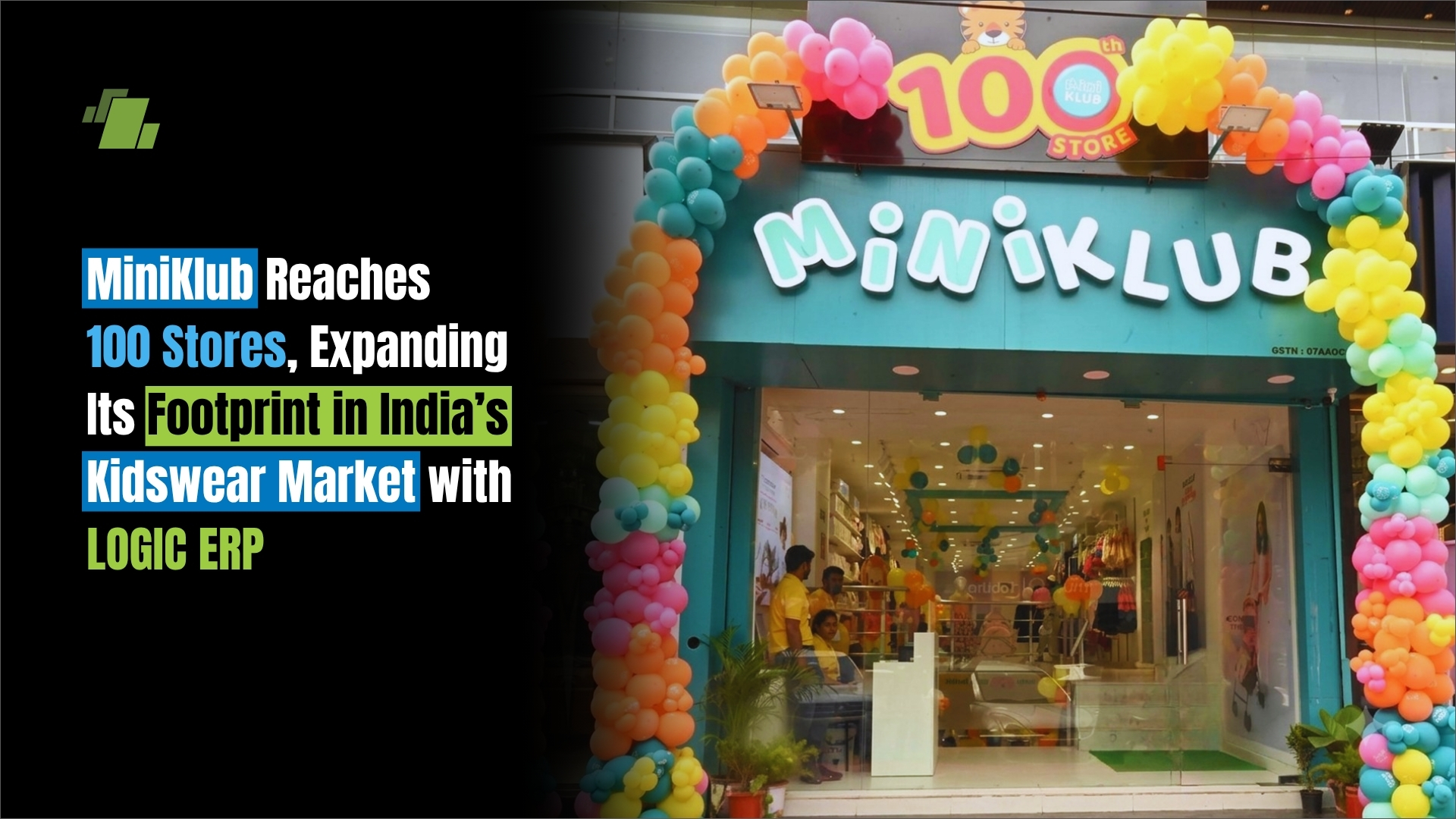
Indian kidswear brand MiniKlub has achieved a significant retail milestone by reaching 100 stores across India, strengthening its presence in the country’s growing children’s apparel and fashion retail market.
The milestone marks an important stage in MiniKlub’s retail expansion journey as the brand continues to build its offline presence and serve families looking for apparel and fashion products for children. As the business expands across multiple locations, managing inventory, product variants, sales and store operations becomes increasingly important.
To streamline its kids apparel business management, MiniKlub is using LOGIC ERP, an integrated ERP solution developed to address the operational requirements of apparel and retail businesses.
MiniKlub Strengthens Its Presence in the Kidswear Market
The Indian kidswear market has become an increasingly organized and competitive segment of the apparel industry. Parents today have access to a wider range of branded children’s clothing, while kidswear brands are expanding through exclusive stores, retail networks and multiple sales channels.
MiniKlub’s expansion to 100 stores reflects the brand’s growing retail footprint and its focus on expanding access to its products across different markets.
Operating a large network of stores, however, requires more than simply opening new retail locations. A growing kidswear business needs to maintain accurate information about products, stock availability, sales performance and inventory movement across its entire network.
This makes technology an important part of managing retail operations at scale.
Why Kidswear Retail Requires Specialized Inventory Management?
Kidswear businesses have unique inventory requirements compared with several other retail categories.
A single apparel design can be available in multiple sizes, colors, styles and variants. In addition, children’s clothing collections can be influenced by seasons, age groups, fashion trends and changing customer preferences.
For a retailer operating across 100 stores, maintaining visibility over these product variations can become challenging without an integrated inventory management system.
Key operational requirements for a growing kidswear retailer can include:
- Size-wise inventory management
- Color and style-wise stock tracking
- Barcode-based product identification
- Store-wise inventory visibility
- Stock transfers between locations
- Purchase and replenishment management
- Sales and billing management
- Stock ageing and slow-moving inventory analysis
- Centralized reporting
- Multi-store retail management
An apparel-focused ERP system can bring these functions together, helping businesses manage their retail operations from a centralized platform.
LOGIC ERP Streamlining MiniKlub’s Kids Apparel Business Management
MiniKlub is using LOGIC ERP to support its kids apparel business management and retail operations.
LOGIC ERP provides an integrated technology platform for apparel and retail businesses, covering key areas such as inventory management, purchasing, sales, retail POS, barcode management, stock transfers, multi-store operations and business reporting.
For a kidswear retailer, centralized inventory visibility can be particularly valuable because stock needs to be monitored at different stores while accounting for product variants such as size, color and style.
With an integrated ERP environment, businesses can connect their front-end retail operations with back-end inventory and business processes, reducing dependence on disconnected systems and manual processes.
Managing Apparel Inventory Across Multiple Stores
As MiniKlub reaches the 100-store mark, inventory management becomes an increasingly important part of its retail operations.
In apparel retail, having the right product available at the right store is critical. A product may be available in one location while another store experiences a stock shortage. Without centralized inventory visibility, identifying and responding to such situations can take more time.
An apparel ERP system helps businesses maintain a centralized view of stock across locations.
This can support processes such as:
Procurement → Inventory → Store Allocation → Stock Transfer → Retail Sales → Returns → Reporting
Connecting these processes gives retailers greater visibility into the movement of products throughout the business.
For a multi-store kidswear brand, this can help management teams make more informed decisions around inventory distribution, replenishment and store performance.
Handling Size, Color and Style Variants
One of the biggest challenges in apparel retail is managing product variants.
For example, a single kidswear design may be available in several sizes and colors. Each combination represents a different inventory requirement.
Instead of treating the product as one generic SKU, apparel businesses need to know exactly:
- Which size is available?
- Which color is available?
- How much stock is available?
- Which store has the stock?
- Which variants are selling faster?
- Which products are moving slowly?
- When should stock be replenished?
LOGIC ERP’s apparel-focused capabilities are designed to help retailers manage such product-level inventory requirements while maintaining visibility across stores.
This becomes increasingly important as a retail business expands its number of outlets and product assortment.
Supporting Retail POS and Store Operations
Retail billing is another important component of multi-store apparel management.
At the store level, POS systems need to process customer transactions efficiently while ensuring that sales information is reflected in inventory records.
An integrated retail POS and ERP environment can connect billing with inventory and business reporting.
For an apparel retailer, this can provide visibility into:
- Store-wise sales
- Product-wise sales
- Size-wise and color-wise movement
- Returns
- Discounts
- Stock availability
- Sales trends
- Inventory movement
Such information can help retailers understand what customers are purchasing and identify products or variants that require additional attention.
Centralized Business Visibility for a Growing Retail Network
Reaching 100 stores means that business information is generated across a large number of locations.
Without centralized systems, management teams may have to rely on information collected from multiple applications or manually consolidated reports.
An integrated ERP system can bring operational information together, allowing businesses to monitor their retail network through centralized reporting and dashboards.
This can help decision-makers analyze business performance across different stores, products and inventory categories.
For a growing kidswear business, centralized visibility can support decisions related to inventory planning, procurement, stock movement, sales performance and store operations.
Why ERP Technology Matters for Growing Kidswear Brands
The expansion of organized kidswear retail has increased the need for technology that can handle the complexity of apparel operations.
A growing brand needs to manage not only sales but also the complete flow of products from procurement and inventory to store distribution and final customer billing.
An apparel ERP can help establish a connected operational framework.
Some of the key benefits include:
1. Better Inventory Visibility
Retailers can monitor stock across multiple stores and maintain better visibility into available inventory.
2. Improved Variant Management
Size, color and style combinations can be managed more systematically.
3. Faster Retail Billing
Integrated POS functionality can help streamline billing and customer transactions.
4. Centralized Store Management
Management teams can monitor operations across multiple retail locations from a connected system.
5. Better Stock Movement
Stock transfers between stores can be managed as part of the broader inventory process.
6. Data-Driven Decision Making
Sales and inventory reports can provide insights into product and store performance.
7. Reduced Dependence on Manual Processes
Automated and integrated workflows can reduce the need for repetitive manual data entry and consolidation.
MiniKlub’s 100-Store Milestone Highlights the Role of LOGIC ERP Apparel Retail Software Implementation
MiniKlub’s expansion to 100 stores represents more than a store-count milestone. It reflects the scale and operational complexity involved in building a large kidswear retail network.
As the brand continues to expand, managing inventory accurately across stores, maintaining product availability and monitoring retail performance will remain important components of its business operations.
For apparel businesses, the combination of retail expansion and integrated ERP technology can enable greater visibility, stronger inventory control and more structured management of day-to-day operations.
The Road Ahead for Kidswear Retail
India’s organized kidswear market continues to present opportunities for brands that can combine product offerings with strong retail distribution and efficient operations.
MiniKlub’s achievement of 100 stores places the brand at an important point in its retail journey. As its store network grows, the ability to manage inventory, sales and business operations through an integrated technology platform can become increasingly important.
With LOGIC ERP supporting its kids apparel business management, MiniKlub is leveraging retail technology to manage the operational requirements associated with its growing store network.
The milestone also demonstrates a broader trend across India’s apparel industry: as retail businesses scale, integrated ERP and inventory management systems are becoming an important part of managing growth efficiently.
Key Highlights
- Brand: MiniKlub
- Industry: Kids Apparel / Kidswear Retail
- Retail Milestone: 100 Stores
- Business Focus: Children’s Apparel
- Technology: LOGIC ERP
- ERP Use Case: Kids Apparel Business Management
- Key Areas: Inventory, Retail POS, Sales, Stock Management, Multi-Store Operations and Reporting
Call at +91-73411-41176/75 or send us an email at sales@logicerp.com to book a free demo today!
Frequently Asked Questions
1. How many stores does MiniKlub have?
MiniKlub has reached the milestone of 100 stores across India.
2. What industry does MiniKlub operate in?
MiniKlub operates in the kidswear and children’s apparel retail segment.
3. Which ERP software does MiniKlub use?
MiniKlub uses LOGIC ERP to support its kids apparel business management and retail operations.
4. Why is ERP software important for kidswear retailers?
ERP software helps kidswear retailers manage complex apparel inventories, including size, color and style variants, while connecting inventory, sales, billing, purchasing and multi-store operations.
5. What does apparel ERP software help manage?
Apparel ERP software can help manage inventory, purchasing, retail POS, product variants, stock transfers, sales, returns, reporting and multi-store operations.
6. How does inventory software help a multi-store kidswear business?
It provides centralized visibility into stock across stores, helping businesses monitor availability, manage stock movement and make better replenishment and inventory decisions.