Benefits of Accounting Software For Small Businesses

Summary
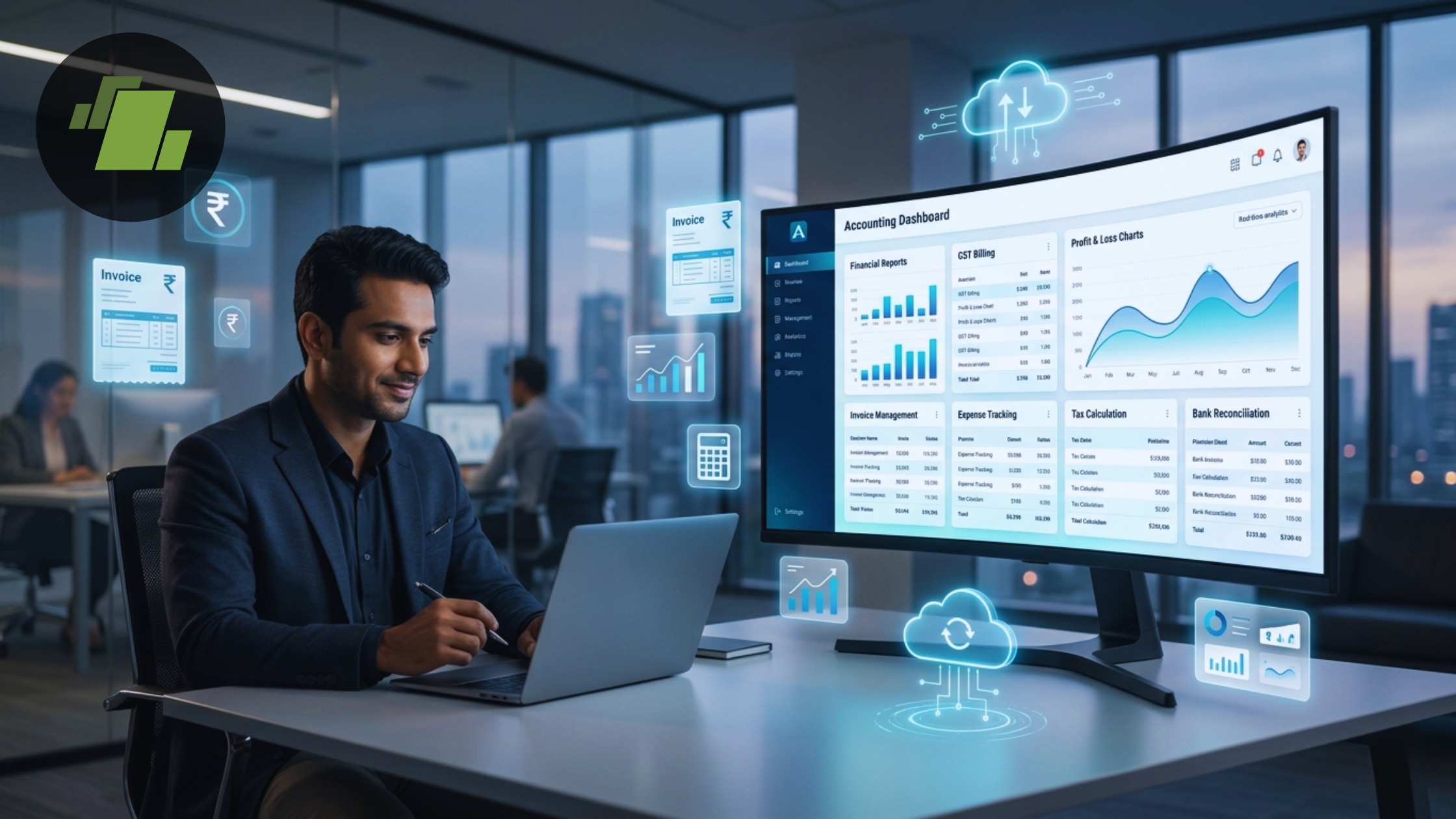
Managing finances manually can slow down retail operations and increase the risk of errors. Accounting software helps businesses automate invoicing, bookkeeping, GST compliance, payroll, inventory valuation, and financial reporting while improving accuracy and efficiency. This blog explores the key benefits and features of accounting software and explains how LOGIC ERP helps retailers streamline financial management, improve decision-making, and drive business growth.
Contact Us
Free Demo Request
Introduction
Managing finances effectively is one of the biggest challenges faced by retail businesses today. From recording daily sales transactions and managing vendor payments to handling taxation, payroll, and financial reporting, retailers must deal with numerous financial processes to keep their operations running smoothly.
As businesses grow, manual accounting methods and spreadsheets become inefficient, time-consuming, and prone to errors. This is where accounting software plays a crucial role. A modern Accounting software solution helps businesses automate financial operations, improve accuracy, maintain compliance, and gain complete visibility into their financial health.
✨ Summarize this article with AI


Whether you operate a retail store, supermarket, pharmacy, apparel outlet, distribution business, or a chain of stores, investing in the right accounting software can simplify financial management and contribute significantly to business growth.
What is Accounting Software?
Accounting software is a digital solution designed to manage and automate financial activities such as bookkeeping, invoicing, taxation, payroll, budgeting, financial reporting, accounts payable, and accounts receivable. For retail businesses, accounting software acts as a centralized financial management platform that helps streamline operations, reduce manual effort, and improve decision-making through real-time financial insights. By automating routine accounting tasks, businesses can focus more on customer service, inventory management, and business expansion rather than spending hours managing financial records.
Benefits of Accounting Software for Retail Businesses
1. Faster and More Accurate Financial Data Management
Manual accounting processes often lead to data entry errors, duplicate records, and inaccurate calculations. Accounting software automates financial transactions, reducing human intervention and improving data accuracy.
Benefits include:
- Faster transaction recording
- Reduced manual workload
- Improved financial accuracy
- Better audit readiness
- Reduced accounting errors
This enables businesses to maintain reliable financial records and improve operational efficiency.
2. Better Financial Decision-Making
Business growth depends heavily on making informed financial decisions. Accounting software provides real-time access to important financial information, helping management understand business performance at any given time.
Key reports include:
- Profit and Loss Statements
- Balance Sheets
- Cash Flow Reports
- Sales Performance Reports
- Expense Analysis Reports
- Tax Reports
With accurate and up-to-date financial information, retailers can make strategic decisions that improve profitability and long-term growth.
3. Centralized Financial Control
A cloud-based accounting software solution stores all financial information in a centralized database, making it accessible across departments and locations.
This provides:
- Improved collaboration between teams
- Better visibility into financial operations
- Elimination of duplicate data entry
- Consistent financial reporting
- Enhanced business control
For businesses operating multiple stores or warehouses, centralized financial management becomes even more valuable.
4. Simplified GST and Tax Compliance
Tax compliance can be complex and time-consuming, especially for growing retail businesses. Accounting software automates GST calculations, tax reporting, and return preparation, reducing the burden on finance teams.
Benefits include:
- Accurate GST calculations
- Faster GST return preparation
- Reduced compliance risks
- Improved audit readiness
- Simplified tax management
This ensures businesses remain compliant while minimizing errors and penalties.
5. Reduced Operational Costs
One of the biggest advantages of accounting software is its ability to reduce operating expenses through automation.
Businesses can save costs by:
- Reducing paperwork
- Eliminating repetitive manual tasks
- Improving employee productivity
- Reducing accounting errors
- Streamlining financial processes
These efficiencies contribute directly to higher profitability and a stronger return on investment.
Essential Features of Modern Accounting Software
Invoice and Billing Management
Efficient billing is essential for maintaining healthy cash flow. Accounting software helps businesses create and manage invoices quickly and accurately.
Features include:
- Automated invoice generation
- Customer billing management
- Payment tracking
- Credit and debit note management
- Due date reminders
This ensures timely collections and improved customer service.
Vendor Management
Managing supplier relationships is crucial for retail success. Accounting software helps businesses maintain detailed vendor records and track supplier transactions efficiently.
Benefits include:
- Vendor payment tracking
- Purchase history management
- Outstanding balance monitoring
- Supplier performance analysis
This improves procurement planning and vendor relationship management.
Accounts Payable and Receivable Management
Accounting software automates the management of incoming and outgoing payments, helping businesses maintain healthy cash flow.
Key capabilities include:
- Payment scheduling
- Receivable tracking
- Due date management
- Automated reminders
- Cash flow monitoring
This reduces delays and improves financial planning.
Inventory and Accounting Integration
Inventory is one of the most valuable assets for any retail business. Integrating inventory management with accounting provides complete visibility into stock valuation and business profitability.
Benefits include:
- Real-time inventory valuation
- Stock movement tracking
- Reduced stock discrepancies
- Better procurement planning
- Improved inventory control
This integration helps businesses optimize inventory costs and maximize profits.
Payroll Management
Payroll processing can be complex and time-consuming when managed manually. Accounting software automates payroll calculations and employee compensation management.
Features include:
- Salary processing
- Employee attendance integration
- Benefits management
- Payroll reporting
- Employee self-service options
This simplifies workforce management while ensuring accuracy.
Budgeting and Financial Forecasting
Planning for future growth requires accurate forecasting and budgeting tools.
Accounting software helps businesses:
- Forecast revenue and expenses
- Plan budgets effectively
- Track financial performance
- Support strategic decision-making
- Improve resource allocation
These capabilities help organizations achieve long-term financial stability.
How LOGIC ERP Accounting Software Helps Retail Businesses
LOGIC ERP provides an integrated accounting and financial management solution designed for retailers, distributors, wholesalers, supermarkets, pharmacies, and multi-store businesses. By combining accounting, billing, inventory management, GST compliance, purchasing, and CRM into a single platform, it eliminates manual processes and improves operational efficiency. With real-time financial reporting, automated tax calculations, accounts management, and centralized business data, LOGIC ERP helps businesses gain better financial visibility, improve decision-making, ensure compliance, and drive sustainable growth and profitability.
Read More: What are the Objectives of Accounting? Complete Guide
Conclusion
In today’s competitive retail environment, accounting software has become an essential business tool rather than an optional investment. By automating financial operations, improving accuracy, simplifying tax compliance, and providing real-time business insights, accounting software enables retailers to operate more efficiently and profitably.
LOGIC ERP Accounting Software empowers businesses with advanced accounting, inventory management, GST compliance, billing, reporting, and analytics capabilities all from a single integrated platform.
Whether you’re a small retailer, growing enterprise, distributor, or multi-store business, LOGIC ERP helps streamline financial management and supports long-term business growth.
Ready to Transform Your Financial Operations? Call at +91-73411-41176/75 or send us an email at sales@logicerp.com to book a free demo today!
Frequently Asked Questions (FAQs)
1. What is accounting software, and why do retailers need it?
Accounting software is a digital solution that automates financial processes such as invoicing, bookkeeping, tax management, payroll, and reporting. Retailers use accounting software to improve accuracy, reduce manual work, manage GST compliance, and gain better control over business finances.
2. What are the key benefits of accounting software for retail businesses?
Accounting software helps retailers automate financial operations, reduce accounting errors, improve cash flow management, simplify tax compliance, generate real-time reports, and make better business decisions through accurate financial insights.
3. Can accounting software help with GST compliance?
Yes. Modern accounting software like LOGIC ERP automates GST calculations, tax reporting, return preparation, and compliance tracking, helping businesses reduce errors and stay compliant with regulatory requirements.
4. How does accounting software improve inventory and financial management?
Integrated accounting software connects inventory and finance operations, allowing businesses to track stock valuation, monitor inventory costs, manage purchases, and analyze profitability from a single platform.
5. Why should retailers choose LOGIC ERP Accounting Software?
LOGIC ERP offers an all-in-one solution that combines accounting, billing, inventory management, GST compliance, CRM, purchasing, and reporting. It provides real-time financial visibility, automation, and business insights that help retailers improve efficiency, profitability, and growth.